
Reviewed · HIKING & TREKKING
Pokhara: Majestic Mardi Base Camp Guided Trek with HotSpring
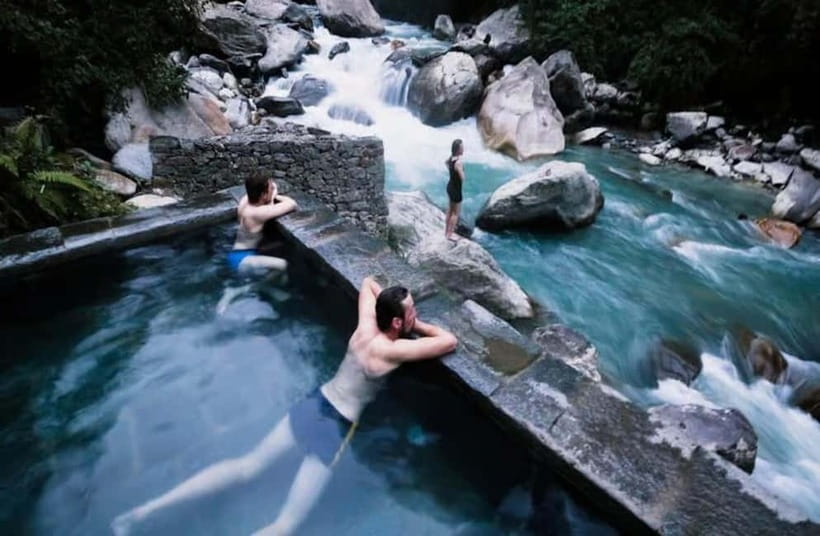
Mardi Himal gives you a rare two-part mountain experience: a high ridge with views of Machapuchare and Annapurna, followed by a warm soak beside the Modi Khola river. In five days, you move from Pokhara’s roads to rhododendron forest, alpine slopes, and a natural hot spring deep in the hills.
I like the quiet feel of the route and the way the trip finishes at Jhinu rather than simply returning to Pokhara. I also like the practical package: a private group, licensed guide, permits, transport, trekking poles, sleeping bag, and duffle bag are included. The main catch is the pace. A 4,300-meter viewpoint and several long walking days require decent fitness, and the tea houses offer basic comforts rather than hotel-style service.
Key points worth knowing
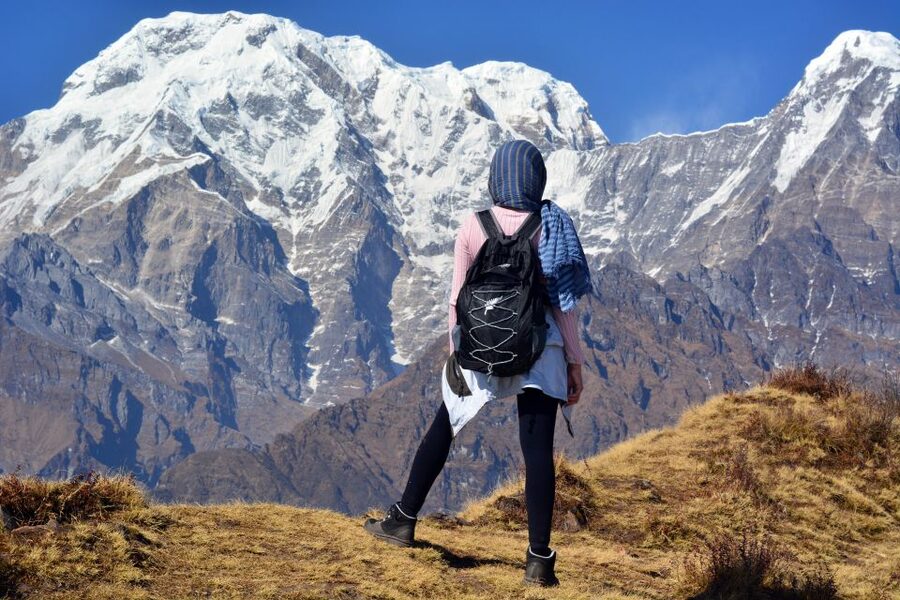
- A 4,300-meter sunrise viewpoint: Rise around 4:00 am from High Camp for broad views of Annapurna, Machapuchare, and Hiunchuli.
- Forest Camp to High Camp in one day: The five-hour climb is scenic but steady, with dense forest giving way to open mountain slopes.
- A hot-spring finish: Descend to Jhinu, cross the Modi River, and soak in warm natural water beside the river.
- Private, guide-led travel: English and Hindi-speaking guides are available, with pickup across Pokhara Valley.
- Strong guide support: Santosh, Prakash, and Jeet are named guides associated with this experience, and practical help is part of its appeal.
- Good value at $183: Permits, transport, accommodation, staff costs, and trekking gear are included, though porter service and some personal costs are extra.
Why the Mardi Himal route works in five days
Mardi Himal is a good choice if you want serious mountain scenery without committing to a two-week Himalayan trek. The route moves through several distinct zones in a short time: farmland and river views near Pokhara, shaded forest, high ridges, and then warm springs at a much lower elevation.
That variety is the real pleasure. You are not walking through the same type of scenery for five days. One morning may bring birds and thick forest, while the next gives you open views toward Machapuchare, Annapurna South, and Hiunchuli.
The trip is private, which matters on a compact trek. Your guide can set the walking rhythm for your group, help with meals and rooms, and respond if someone needs extra support. The named guides connected with this departure include Santosh, Prakash, and Jeet. Santosh and Prakash are both licensed guides, while Jeet is praised for taking care of practical details throughout the walk.
The guide can also help with local connections. One detailed account describes an emergency need being handled quickly through contacts at lower camps, with supplies brought up to a higher camp. That kind of support is hard to measure before you leave, but it can make a real difference in the mountains.
A few more Pokhara trips to weigh up
- Poon hill Trek 3 days
★ 5.0 · 176 reviews - Trekking in Annapurna/Langtang/Everest/Upper Mustang regions
★ 5.0 · 161 reviews - Pokhara: 4-Day Ghorepani, Poonhill & Ghandruk Mountain Trek
★ 5.0 · 132 reviews
Day 1: Pokhara to Forest Camp through Kande
Your morning starts with pickup at 8:00 am from your hotel in Lakeside, Pokhara, or another point in Pokhara Valley. Pickup at Pokhara Airport is also available. The drive to Kande takes roughly one to one and a half hours, depending on the exact departure point and road conditions.
The drive is part of the experience, not just a transfer. You pass green fields, forests, the Seti River, and mountain views before reaching the trailhead. The road lets you see how quickly Pokhara gives way to rural Nepal.
From Kande, you walk for about five hours toward Forest Camp. Much of the route passes through forest, with the shade a welcome feature if the day is warm. The trail introduces you to the feel of the Mardi Himal route without throwing you straight into its highest section.
Lunch is taken at a tea house along the way. Expect a simple mountain meal rather than a polished restaurant stop. Dal bhat is the dependable choice, with other food options generally available in the tea houses.
Forest Camp sits at about 2,500 meters. This first overnight stop gives you a chance to settle into the basic rhythm of the trek: walk, eat, dry your clothes, check your gear, and sleep early. Private accommodation is included, but tea houses are simple, so bring a towel, warm layers, and a headlamp.
Day 2: Forest Camp to Mardi Himal High Camp
After breakfast, you walk for about five hours to High Camp at roughly 4,000 meters. This is one of the most rewarding days because the forest changes as you climb.
The route runs through dense woodland where you may spot wild birds and animals. Rhododendron forest is a major feature of the Mardi Himal area, and the trees give the early part of the day a cool, sheltered character.
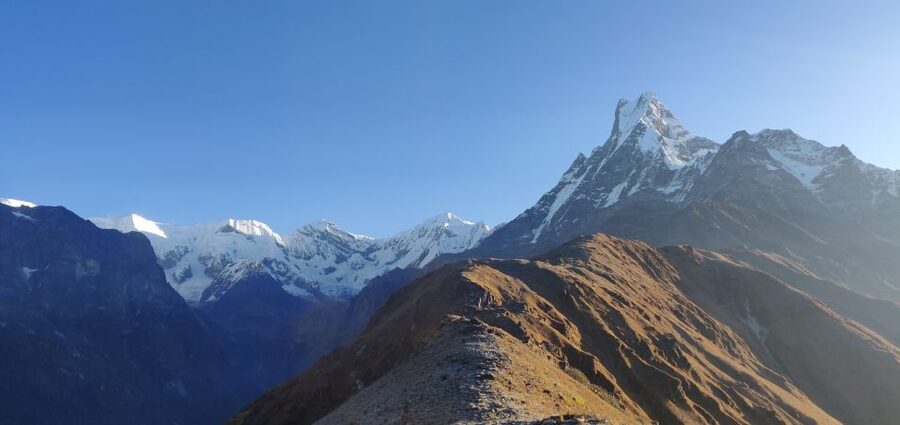
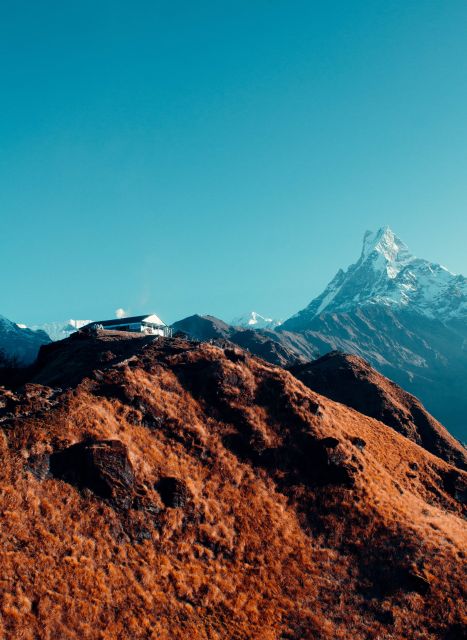
As you gain height, the trees thin and the views open. The change is gradual, which makes it more satisfying than arriving at a viewpoint by vehicle. You begin to see the mountain ridges and the sharp profile of Machapuchare more clearly.
High Camp is the highest overnight stop. The altitude makes this night important. You need to drink regularly, eat a proper meal, and pay attention to how your body feels. The trip is short, but it is not low-level. The move from Forest Camp at 2,500 meters to High Camp at 4,000 meters is a significant gain in elevation.
The accommodation remains basic. Tea houses are part of the experience, with simple rooms and shared facilities likely to be part of the stay. A sleeping bag is included, but bring your own preferred cold-weather layers as well. Mountain weather can shift from clear and sunny to rain or snow, so pack for more than one forecast.
Day 3: High Camp, the 4,300-meter viewpoint, and Rest Camp
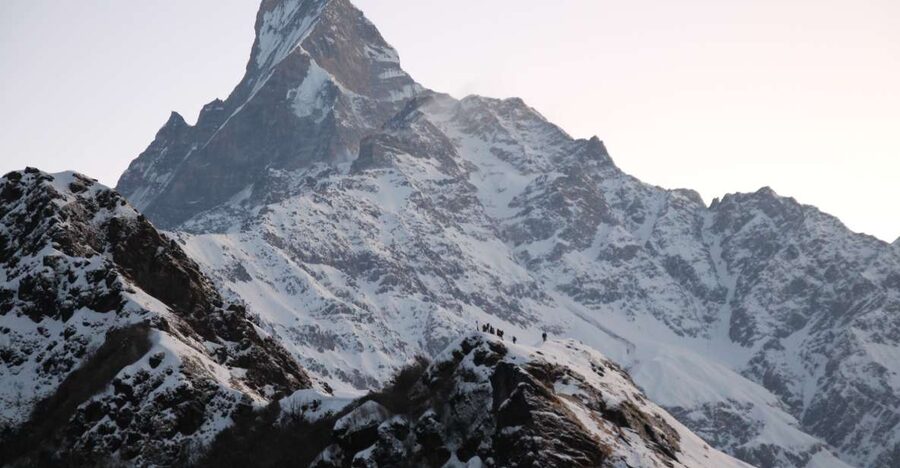
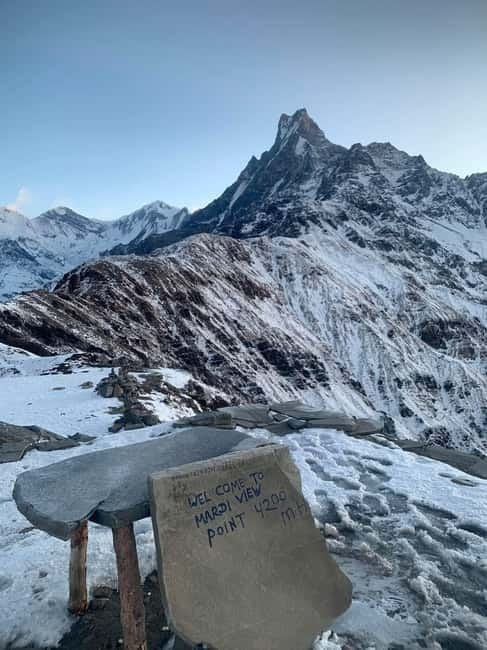
This is the biggest day of the trek. You wake around 4:00 am and walk for up to two hours to a viewpoint at approximately 4,300 meters.
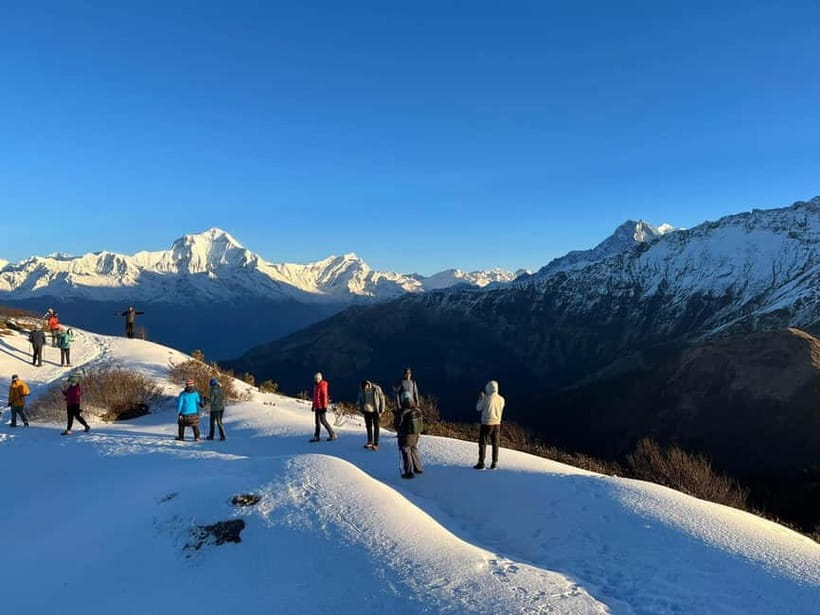
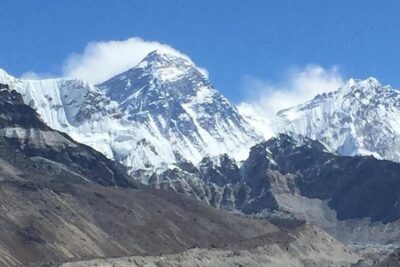
The early start is not just a scheduling choice. Sunrise often offers the best chance of clear mountain views, and reaching the viewpoint before breakfast gives the day its main purpose. From this high ridge, you can see Machapuchare, Annapurna South, Hiunchuli, and the wider Annapurna range.
This is also where fitness and altitude matter most. The path above High Camp is exposed compared with the forest sections, and the air is thinner. You do not need to be an elite hiker, but you should be comfortable with sustained uphill walking and a pre-dawn start.
After returning to High Camp, you have breakfast and a short rest. Then you retrace the route and descend toward Rest Camp at about 2,700 meters. The full day takes around seven hours.
The descent is easier on your breathing but can be tiring on your knees. Trekking poles are included and are especially useful here. Use them early rather than waiting until your legs are worn out.
Rest Camp offers a welcome change in altitude and a chance to recover. This is a good evening for a hot meal, plenty of water, and an early night. The day combines the trek’s finest views with its greatest physical demand, so do not underestimate it simply because much of the second half is downhill.
Same mountains, a completely different kind of day:
- ZipFlyer Nepal – The World’s Steepest Zip-line
★ 5.0 · 608 reviews - Bungee Pokhara by HighGround Adventures
★ 5.0 · 366 reviews - From Pokhara: Sarangkot Sunrise Himalayas Tour
★ 4.7 · 218 reviews - ATV Adventure Tour in Pokhara, Nepal
★ 5.0 · 194 reviews
Day 4: Descending to Jhinu and the natural hot spring
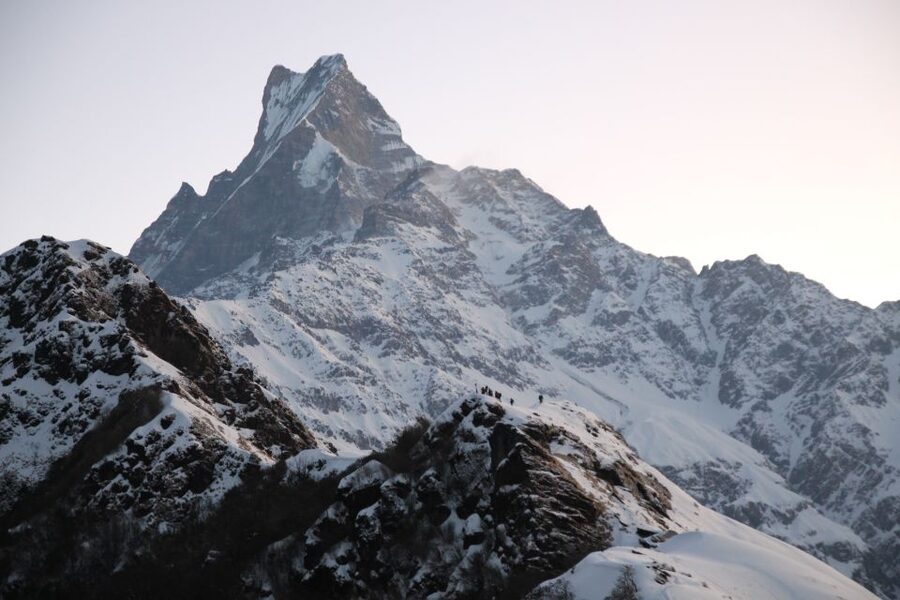
After breakfast at Rest Camp, you continue down through lush forest for about four hours. The lower elevation brings warmer air and thicker greenery, a pleasant contrast after the exposed high ridge.
You eventually reach the Modi River, which flows from the Annapurna area. Crossing the suspension bridge adds a small thrill to the day and marks the approach to Jhinu.
The natural hot spring is the reward. It sits beside the roaring river, surrounded by forest, and gives you a chance to soak tired muscles outdoors. Pack a swimsuit or practical clothing for the water, plus a towel. The supplied packing guidance specifically includes a towel, and you will be glad to have one after the walk.
Jhinu Village is the overnight stop. This is more than a convenient bed for the night. You get a closer look at village life and local hospitality, with the river and forest providing the setting.
The hot spring also changes the mood of the trek. Day 3 is about altitude and grand views. Day 4 is slower and more restorative. If you are choosing this route over a shorter out-and-back hike, the hot spring is a strong reason to keep the extra day.
Day 5: Jhinu Village, Samrung, and the return to Pokhara
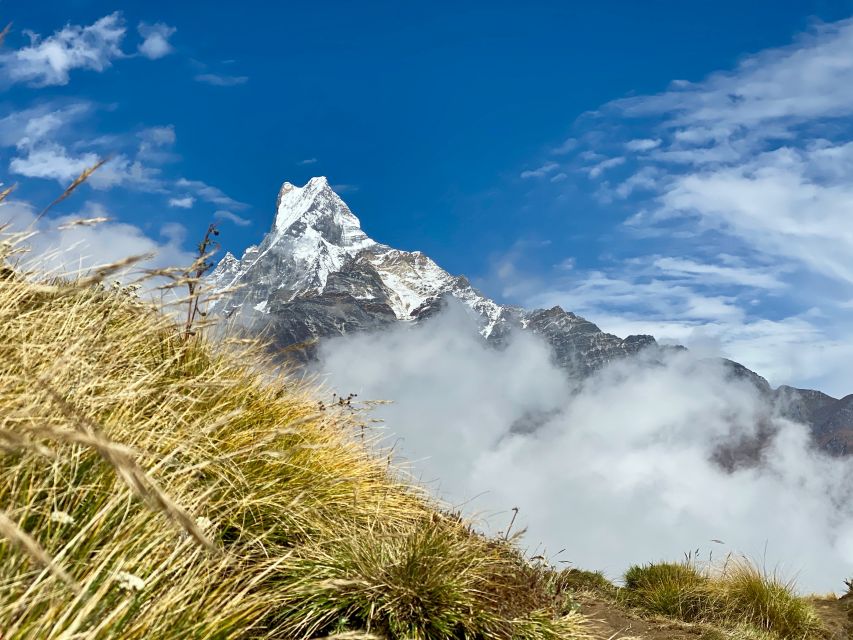
The final morning begins with a short 30-minute walk from Jhinu Village to Samrung. From there, a vehicle takes you back to Pokhara, with the drive taking about two and a half hours.
The road portion is useful because it avoids turning the last day into another long hike. You arrive in Pokhara with time to rest, sort your gear, and think back over the route.
This ending is practical, but you should know that road travel in the hills can feel long after several days on foot. Still, compared with walking the entire way back, the vehicle transfer makes the five-day schedule manageable.
Hotel drop-off is included in Pokhara. The operator can also arrange pickup from Kathmandu for an additional cost, but that is not part of the standard $183 price.
What the $183 price really covers
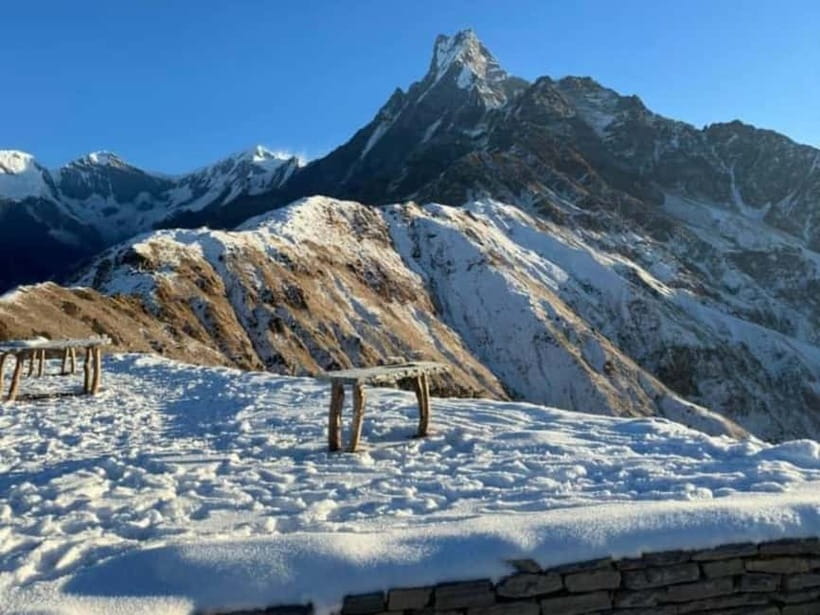
At $183 per person, this trek offers solid value if you use the included services. The package covers hotel pickup and drop-off, a licensed English-speaking guide, permits, required paperwork, government taxes, private accommodation during the trek, transportation, staff costs, and several pieces of trekking gear.
The included gear is useful if you are not carrying a full kit. Trekking poles, a sleeping bag, and a duffle bag are provided. Luggage storage is also included, so you can leave non-trekking bags in Pokhara.
Meals require a close look. Breakfast, lunch, and dinner are included on the All Inclusive Full Package only. Confirm the exact package before paying, since the headline price may not cover every meal option.
Porters are not included, but they can be arranged for an additional cost. This is important because a private guide does not automatically mean your bags will be carried. If you want to walk with a light daypack, request porter service in advance if possible.
You also pay for drinks, bottled or boiled water, showers, battery charging, laundry, phone calls, bar bills, and other personal expenses. These costs can add up in mountain villages, so carry enough Nepalese rupees and a reusable water bottle.
The price does not include travel or rescue insurance. You should arrange insurance with high-altitude coverage before the trek. International flights and Nepal visa fees are also outside the package.
Guides, group size, and the level of support
The private-group format is one of the better features here. You are not tied to the walking speed of a large mixed group, and the guide can focus on your needs.
English and Hindi are available. The guide is responsible for route support, permits, timing, and general coordination. Past guide names connected with the experience include Santosh, Prakash, and Jeet, so you may want to ask which guide is assigned before departure.
The strongest praise has been directed at the human side of the service: punctual pickup, care on the trail, good local connections, and practical problem-solving. One party arranged an extra porter and a second licensed guide only 30 minutes before departure. That kind of last-minute help may not always be possible, but it shows the value of asking early if your needs change.
The operator has a five-star score from six recorded ratings. That is encouraging, though the sample is small. I would treat the rating as a useful signal rather than a guarantee, and confirm the meal plan, porter cost, and guide assignment before booking.
What to pack for five days in the Annapurna hills
Pack light, but do not pack too little. Mountain weather can shift quickly, with rain or snow possible even when the forecast looks clear.
Bring:
- Hiking shoes with good grip
- Long pants and shorts
- T-shirts and warm layers
- A jacket
- Sunglasses, hat, and sunscreen
- Reusable water bottle
- Towel and basic toiletries
- Headlamp
- First aid kit
- Trekking poles if you prefer your own
- Passport or identification
- Sleeping bag if you do not plan to use the supplied one
Layering matters more than bringing one very heavy coat. You may feel warm on the lower forest trails and cold before sunrise at the viewpoint.
A good water routine is important. Bottled or boiled water is not included, so plan to pay for it or use an appropriate purification method. Pack out rubbish and follow local customs in villages and at the hot spring.
Who should book this trek?
I would recommend it to you if you have a reasonable level of fitness, enjoy walking several hours a day, and want mountain views without spending two weeks on the trail. It also suits people who value a private guide and want transport, permits, and basic gear handled in one package.
The route is not ideal if you dislike early mornings, basic tea-house accommodation, steep climbs, or changing weather. The 4:00 am start and 4,300-meter viewpoint are the key tests.
Pregnant women should not book this activity. Everyone else should consider medical advice if they have concerns about high altitude or strenuous hiking.
Free cancellation is available up to 24 hours before departure for a full refund, and reserve-now, pay-later booking is offered. Those policies make planning easier, but they do not replace travel insurance.
Should you book the Mardi Himal and hot-spring trek?
Book it if you want a compact Himalayan route with a strong finish. The combination of high mountain ridges, forest trails, and Jhinu’s natural hot spring gives the five days a satisfying shape.
The $183 price is attractive because it includes transport, permits, guide services, accommodation, staff costs, and trekking gear. Check whether you are choosing the All Inclusive Full Package, and budget separately for drinks, water, personal costs, insurance, and a porter.
My main advice is to prepare for Day 3. Train for long uphill walks, bring warm layers for the pre-dawn viewpoint, and use the included poles on the descent. If you are ready for basic mountain accommodation and a full day at altitude, this is a well-rounded short trek from Pokhara.
FAQ
How long is the Mardi Himal trek?
The experience lasts five days, including transport from Pokhara, four nights during the trek, and the return drive to Pokhara.
What is the highest point reached?
The highest stated point is the viewpoint at about 4,300 meters. High Camp, where you spend the second night, is about 4,000 meters.
Is the group private?
Yes. The activity is offered as a private group experience.
What languages do the guides speak?
Live guides are available in English and Hindi.
Is pickup from my Pokhara hotel included?
Yes. Pickup and drop-off are available from hotels in Lakeside, Pokhara Airport, and across the Pokhara Valley.
Are meals included?
Breakfast, lunch, and dinner are included on the All Inclusive Full Package only. Soft and hard drinks are not included.
Is a porter included?
No. Porters can be arranged for an additional cost.
What equipment is provided?
Trekking poles, a sleeping bag, and a duffle bag are provided. You should still bring suitable hiking shoes, clothing, a jacket, sunscreen, a water bottle, and other personal trekking gear.
Just added around Pokhara
- Seti George and Thrilling Suspension Bridge Tour at Pokhara★ 4.5 · 3 reviews
- Tandem Paragliding in Pokhara★ 4.8 · 8 reviews
- Pokhara: Sunrise Tour to Sarangkot★ 5.0 · 3 reviews
- Pokhara: Suspension Bridge Private Tour- 30 Min Village Walk★ 4.8 · 9 reviews
- Pokhara: Visit Best Seven Tourist Destination by Sharing Bus★ 3.4 · 10 reviews
- Pokhara Sightseeing By Bus: Day Trip★ 4.6 · 7 reviews
- Pokhara Sightseeing By Bus – Day Trip★ 3.2 · 8 reviews
- Pokhara: Sarangkot Sunrise & Panoramic Annapurna View Tour★ 4.8 · 10 reviews
Hiking & Trekking, compared.
Nagarkot Sunrise View and Day Hiking from Kathmandu
Read our review →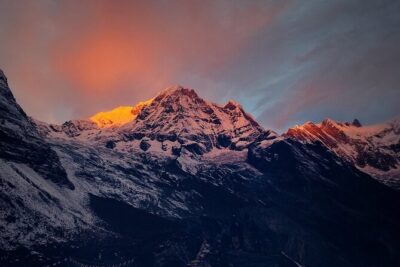
Browse the lists this tour appears in