
Reviewed · BHAKTAPUR TOURS
Patan and Bhaktapur Boutique Tour
Patan and Bhaktapur give you two different views of Kathmandu Valley’s Newar heritage. Patan feels like an artist’s city, with courtyards, Buddhist monasteries, carved water spouts, and metalwork traditions. Bhaktapur feels more like a preserved medieval town, with broad squares, brick lanes, palace buildings, and pottery drying in the sun.
I like the small maximum group of 10, which makes narrow lanes and quiet courtyards easier to handle. I also like the way the route goes beyond the famous squares, stopping at Pimbahal, Nag Baha Galli, Manga Hiti, and Dattatraya Temple. The main drawback is cost clarity: the $40 price covers transport and a guide, but important entrance fees, lunch, and coffee are extra.
Key points to know before booking
- Two ancient cities in one day: Visit Patan and Bhaktapur without arranging separate transport.
- A useful route through Patan: See Patan Gate, Pimbahal, Nag Baha Galli, Golden Temple, Manga Hiti, Patan Museum, and Patan Durbar Square.
- Bhaktapur’s working traditions: Pottery Square lets you watch local artisans shape and sell handmade clay pots.
- Strong temple and palace sights: The route includes Nyatapola Temple, the 55-Window Palace area, Golden Gate surroundings, and Dattatraya Temple.
- Transport is included: You get an air-conditioned vehicle, onboard WiFi, and a guide.
- Bring cash: Durbar Square admission is listed at NRP 1,000, about US$9, and a donation of at least NRP 100 to the Royal Kumari is recommended.
Why Patan and Bhaktapur work well together
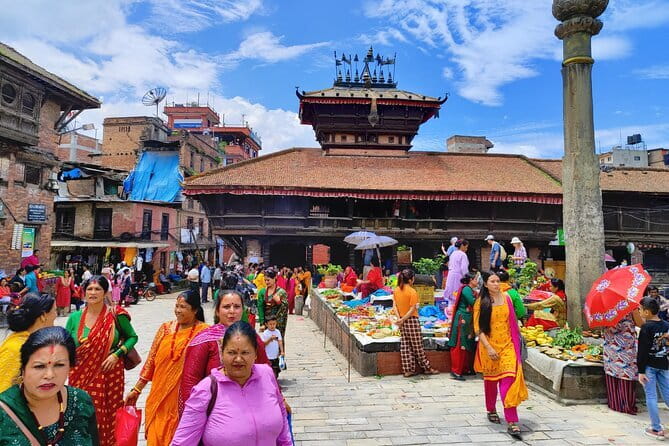
Patan and Bhaktapur are both former royal cities, but they reward different kinds of curiosity. Patan is in Lalitpur, just south of central Kathmandu, and is known for finely worked metal, stone, and wood. Bhaktapur has a more open, old-town feel, with large public squares and traditional craft areas.
Seeing both on foot in one organized day saves you from piecing together taxis, entrance gates, and directions. That matters in Kathmandu Valley, where traffic can turn a short distance into a slow ride. The nine-and-a-half-hour schedule includes transport and a break for lunch and coffee, though those meals are not part of the price.
This is not a quick photo stop tour. Each listed visit lasts about 15 to 30 minutes, and the city sections connect many smaller sites. You should still expect a full day, with plenty of walking on uneven streets and stone courtyards.
More Bhaktapur Tours in Kathmandu:
- Private Bhaktapur and Nagarkot Day Tour From Kathmandu
★ 5.0 · 305 reviews - Day Trip to Bhaktapur and Panauti from Kathmandu
★ 5.0 · 184 reviews - Bhaktapur & Patan Durbar Square Day Tours
★ 5.0 · 122 reviews
Starting at Patan Gate and Pimbahal
The day begins at 8:30 am from Filli chai near Kathmandu Guest House Road in Thamel. Pickup is also available from Boudha and KGH Hotel in central Thamel, according to the tour details. Confirm your exact pickup point when booking, since the listed meeting point is the Filli chai location.
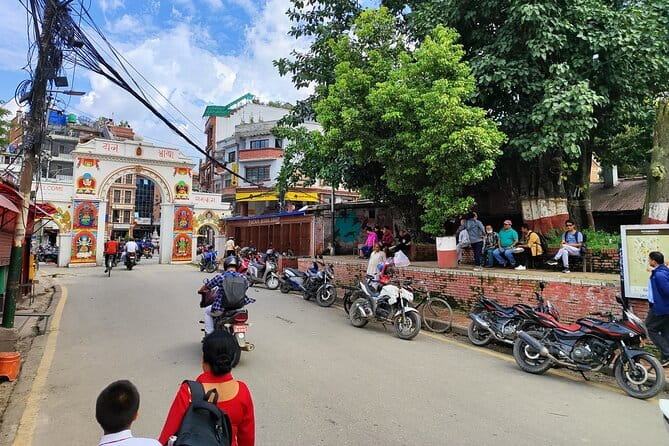
Patan Dhoka, or Patan Gate, makes a good introduction. The old gate is decorated with paintings of the Asta Matrika, the eight mother goddesses. You get only about 15 minutes here, but it helps you understand that Patan is not simply a collection of monuments. It is an old living city with entrances, courtyards, shrines, and local neighborhoods still linked by footpaths.
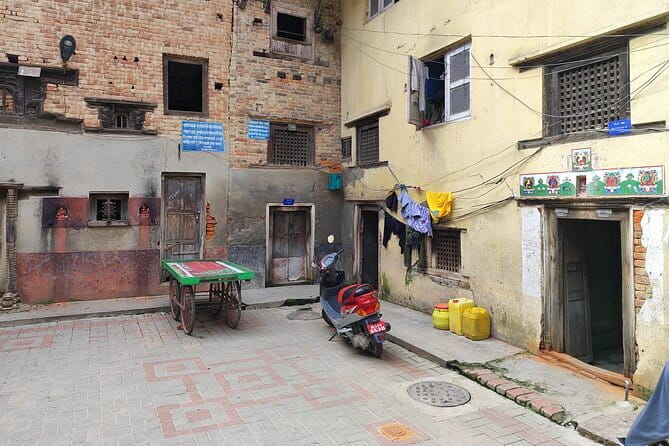
At Pimbahal, the tour shifts from grand architecture to everyday life. You see the kind of place where pilgrims, traders, and other old-time visitors cooked, fetched water, and rested. The stop also includes the story of Gaya Baje, a Hindu priest, which gives the guide a chance to connect local memory with the physical setting.
I like this early part of the route because it puts the famous palace square in context. The possible tradeoff is that the stops are short. If you prefer lingering over every carving, you may want to ask your guide how much flexibility the group has.
Nag Baha Galli and Patan’s Buddhist traditions
Nag Baha Galli leads to Nagbahal, a courtyard dedicated to serpents. It is also linked with Samyak Mahadan, a major giving festival held every five years. The festival connection gives this otherwise quiet courtyard a larger role in Patan’s religious life.
You get around 30 minutes here. That is enough for an explanation and a close look, but not a long independent wander. Pay attention to the shape of the courtyard and the way religious spaces are woven into the city rather than isolated behind a single monumental entrance.
The next important stop is the Golden Temple, formally called Hiranya Varna Mahavihar. This three-story pagoda is dedicated to Gautam Buddha and covered with a gilded roof and detailed carvings. It is one of Patan’s most memorable religious buildings, especially for anyone interested in Newar Buddhist architecture.
Admission to the Golden Temple is not included. The tour also lists Patan Durbar Square and Patan Museum admission as extra, so keep cash available. The $40 fare is easier to judge once you remember that it pays for the vehicle, guide, and route, not every ticket along the way.
Manga Hiti and the art of water
Manga Hiti, also called Manga Dhara, is a historic stone water spout in the center of Lalitpur. It dates to the Lichhavi period and features carvings of gods and other detailed designs.
You have about 15 minutes here. That sounds brief, but the stop serves an important purpose. Water spouts were practical parts of old city life, and their carved surfaces show how function and religious art could share the same public space.
This is the sort of place that is easy to miss if you only visit Patan Durbar Square. A guide adds real value by explaining what you are looking at and why a water source deserves a place on a cultural sightseeing route.
Same mountains, a completely different kind of day:
- Everest Base Camp Trek – 14 Days
★ 5.0 · 1,499 reviews - Private Kathmandu Sightseeing Tour | UNESCO World Heritage sites
★ 5.0 · 756 reviews - Everest Base Camp Helicopter Tour landing at Everest View Hotel
★ 5.0 · 668 reviews - Half day cooking class in Thamel kathmandu
★ 5.0 · 607 reviews
Patan Museum and the royal square
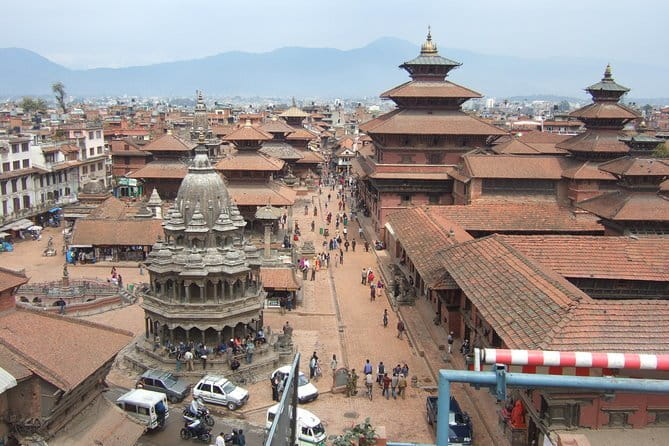
Patan Museum occupies a restored Malla-era palace. Its displays focus on Nepalese art, culture, and history, while the building itself provides much of the experience. The palace courtyard and traditional architecture make a strong setting for understanding the objects inside.
The planned visit is about 30 minutes, and admission is extra. That is enough for an introduction, but museum lovers may find the time tight. If you care more about the museum than the surrounding city walk, ask whether the schedule can be adjusted.
Patan Durbar Square follows, also with about 30 minutes planned. This former royal center is filled with carved temples, palace buildings, courtyards, and Newar design details. The square is a UNESCO World Heritage Site, but its value is not only official recognition. It brings together the artistic and religious themes you have already seen at the gate, courtyards, water spout, and Golden Temple.
The square is also one of the places where entrance costs matter most. Admission to Durbar Square is listed at NRP 1,000, or about US$9, payable in cash. A donation of at least NRP 100 to the Royal Kumari is recommended. Carry Nepalese rupees rather than relying on cards.
Crossing to Bhaktapur Durbar Square
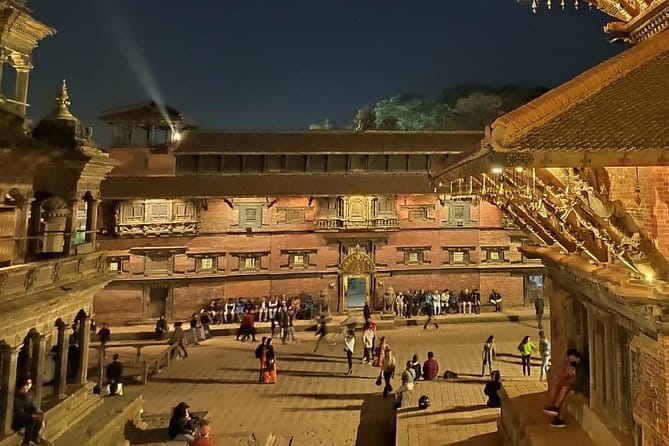
Bhaktapur brings a different rhythm. Its old center is known for traditional Newar architecture, palace courtyards, temples, and brick-paved streets. The planned visit to Bhaktapur Durbar Square lasts about 30 minutes, followed by several nearby stops.
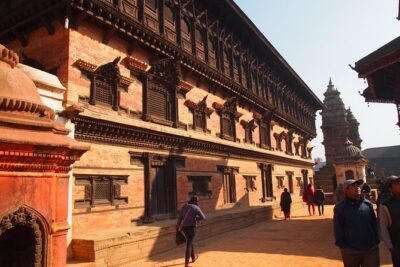
The square includes the 55-Window Palace and the Golden Gate area. These names can sound like a quick checklist, but the details are what reward close attention: carved timber, brickwork, metal fittings, temple roofs, and layered courtyards.
You should expect more entrance charges here, since the tour details list admission to Bhaktapur Durbar Square as not included. The exact cost provided for the tour is the NRP 1,000 Durbar Square figure, so ask the provider if that amount applies to the day’s full entrance arrangement or if separate charges will be collected.
Pottery Square and a working craft tradition
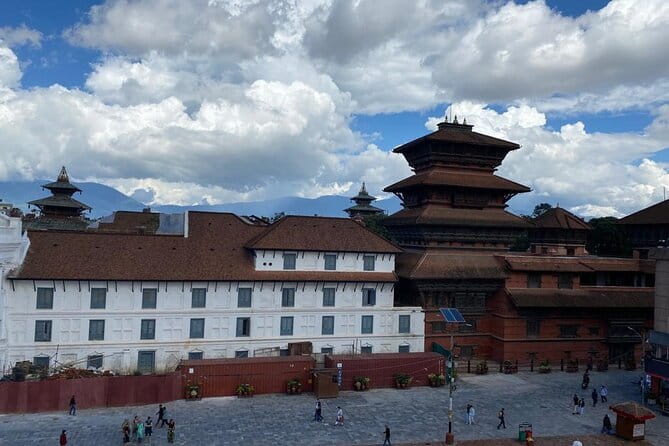
Pottery Square is one of the most engaging stops because it shows craft in progress rather than behind glass. Local artisans make and sell handmade clay pottery here. You may see pots at different stages of production, with the square functioning as a workplace as well as a place to browse.
The schedule allows 30 minutes. That is enough to watch the activity and look at the finished pieces, but it is not a dedicated workshop. If you enjoy crafts, use your time well and ask the guide what is being made and how the area fits into Bhaktapur’s older trade traditions.
The square also helps balance the grand monuments. After palace architecture and large temples, you get a direct look at a living skill. That makes Bhaktapur feel less like a museum town.
Taumadhi Square and Nyatapola Temple
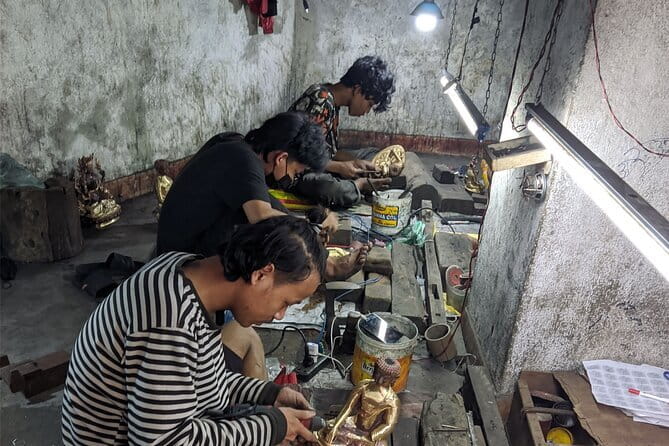
Taumadhi Square is home to Nyatapola Temple, the five-story pagoda dedicated to Siddhi Lakshmi. It is one of Nepal’s tallest and most impressive temples, with a strong vertical profile that dominates the square.
The stop lasts about 30 minutes. You can study the temple’s stacked roofs and the guardian figures leading up its steps, while the guide explains its religious role. The listing specifically highlights the temple’s height, design, and dedication, so this is one of the day’s major visual moments.
The drawback is simple: half an hour passes quickly in a square with several buildings and details. Keep your camera ready, but do not spend the entire stop looking through it. The carved figures and temple proportions are easier to appreciate at street level.
Dattatraya Temple and the Peacock Window
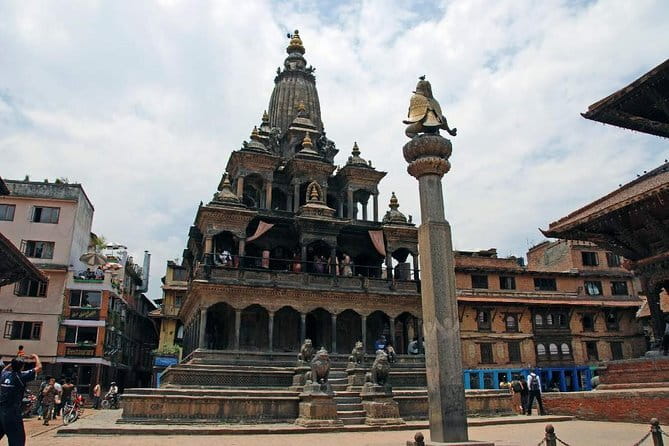
Dattatraya Square offers another view of Bhaktapur’s religious life. The Dattatraya Temple honors the Hindu deity associated with the unity of Brahma, Vishnu, and Shiva. The square is also known for the Peacock Window, a celebrated example of carved woodwork.
The planned visit is 30 minutes, and admission is listed as free. This is a good later stop because it gives you another temple setting after the large palace square and Nyatapola Temple. Look beyond the main shrine for window frames, doors, and smaller carvings.
The route then includes a broader Patan section, listed as about 30 minutes, with narrow connected paths, open spaces, an ancient palace, stupas, and peaceful temples. The schedule information places this as the final named portion of the day, though the transport plan returns you to the meeting point.
What the $40 price really covers
At $40 per person, this tour is priced as a convenient small-group day rather than a ticket bundle. You receive an air-conditioned vehicle, WiFi onboard, and a guide. You also avoid arranging separate transport between Kathmandu, Patan, and Bhaktapur.
That is useful if you have only one free day for the two cities. It is less compelling if you already have a private car, a local guide, or plenty of time to move independently.
Budget for the extras:
- Lunch is not included.
- Coffee is not included.
- Golden Temple admission is not included.
- Patan Museum admission is not included.
- Durbar Square entrance fees are not included.
- Bring cash for the listed NRP 1,000 entrance fee and the suggested NRP 100 Royal Kumari donation.
The maximum group size is 10. That is small enough for a guide to speak with the group in courtyards and lanes, while usually costing less than a private tour. The guide is the key part of the value. Names associated with this provider include Shreya Karki and Santosh. If you have a preference, ask who is scheduled before you book.
Walking, age limits, and timing
A moderate fitness level is required. You will walk through narrow streets, open squares, courtyards, and historic areas where the ground may not be smooth. The day is not described as strenuous, but it is long, and you should wear practical shoes.
The minimum age is 9. Children under 9 are not accepted for insurance reasons, and babies cannot be brought to sit on an adult’s lap. This makes the tour a better fit for older children, teenagers, couples, solo sightseers, and families who can manage a full day of walking.
The 8:30 am start gives you a full sightseeing window. Since the total time includes transport and a food break, you are not getting nine and a half hours inside monuments. Still, the route covers enough sites that you should not feel short of things to see.
Free cancellation is available if you cancel at least 24 hours before the local start time. Changes or cancellations inside that window are not accepted for a refund.
The guides and the human side of the tour
The guide can make or break a route like this. Patan and Bhaktapur contain many shrines, courtyards, festivals, and architectural details that are easy to pass without context. The tour’s strongest guide names are Shreya Karki and Santosh, both associated with praise for explaining Nepalese culture, history, and traditions.
Ask questions as you go. Why is a water spout treated as an important monument? What happens during Samyak Mahadan? How does the Royal Kumari donation work? What is the meaning of Dattatraya’s three-part identity? Those questions turn a sequence of stops into a connected picture of the valley.
The small group helps here. With no more than 10 people, you have a better chance of hearing explanations and asking follow-up questions than you would on a large coach outing.
Who should book this Patan and Bhaktapur day?
I would choose this tour if you want to cover both former royal cities in one day and prefer a guide to explain the setting. It suits first-time visitors to Kathmandu who want major landmarks plus smaller courtyards, craft areas, and water architecture.
It also works well for people who value comfort between stops. The air-conditioned vehicle and WiFi are practical advantages in Kathmandu’s traffic, even though much of the meaningful sightseeing happens on foot.
I would hesitate if you want a slow museum visit, long shopping time, or complete control over each stop. The schedule is full, and the listed 30-minute visits leave limited room for lingering. I would also compare the final cost carefully if you are on a strict budget, since entrance fees, lunch, coffee, and the suggested donation are extra.
Should you book it?
Book this tour if you want an efficient, guided introduction to Patan and Bhaktapur, with enough time to see the major squares and several less obvious sites. The combination of Golden Temple, Patan Museum, Pottery Square, Nyatapola Temple, Dattatraya Temple, and the smaller courtyards gives you more than a basic palace-square circuit.
Before booking, confirm the pickup point, the guide assigned to your date, and which entrance fees are covered by the NRP 1,000 estimate. Bring Nepalese cash, wear shoes suited to old streets, and leave room in your day for the included lunch and coffee stop. For a full cultural day at $40, the value is good if convenience and explanation matter more to you than moving at your own pace.
FAQ
Where does the tour start?
The listed meeting point is Filli chai, near Kathmandu Guest House Road in Kathmandu. Pickup is also described as available from Boudha and KGH Hotel in central Thamel.
What time does the tour begin?
The tour starts at 8:30 am.
How long does the tour last?
The experience lasts approximately 9 hours and 30 minutes. This includes transportation and time for a lunch and coffee stop.
Does the tour return to the starting point?
Yes. The activity ends back at the meeting point.
Is transportation included?
Yes. An air-conditioned vehicle, WiFi onboard, and a guide are included.
Are meals included?
No. Lunch and coffee are not included in the ticket price.
How much are the entrance fees?
Entrance to Durbar Square is listed at NRP 1,000, about US$9, and must be paid in cash at the entrance. The tour also recommends a minimum donation of NRP 100 to the Royal Kumari.
What is the minimum age?
The minimum age is 9. Babies and children under 9 are not accepted for insurance reasons.
How large is the group?
The tour has a maximum of 10 participants.
Can I cancel for a full refund?
Yes, if you cancel at least 24 hours before the experience start time. Cancellations or changes made less than 24 hours before the start are not accepted for a refund.
Just added around Kathmandu
- Private Half-Day Tour of Boudhanath and Pashupatinath Temples in Kathmandu★ 4.5 · 9 reviews
- Private Half-Day Tour of Kathmandu Durbar Square and Swayambhunath Temple★ 4.5 · 11 reviews
- Namobuddha Monastery Hiking Day Tour via Panauti from Kathmandu★ 5.0 · 15 reviews
- Private Full-Day Kathmandu City Tour★ 5.0 · 9 reviews
- Private Day Tour in Kathmandu Valley Rim with Bhaktapur Sightseeing★ 5.0 · 3 reviews
- Private Half Day Budhanilkantha Tour★ 5.0 · 6 reviews
- Private Day Tour: Patan and Bhaktapur from Kathmandu★ 4.5 · 6 reviews
- Private Day Tour – Sacred Journey to Namo Buddha★ 5.0 · 5 reviews
Bhaktapur Tours, compared.
Private Bhaktapur and Nagarkot Day Tour From Kathmandu
Read our review →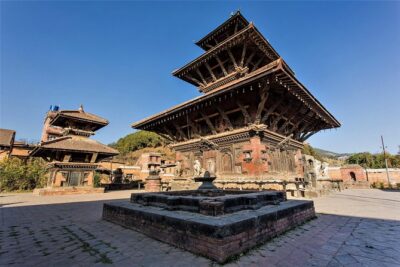
Day Trip to Bhaktapur and Panauti from Kathmandu
Read our review →

Nagarkot Sunrise & Bhaktapur UNESCO Heritage Private Tour
Read our review →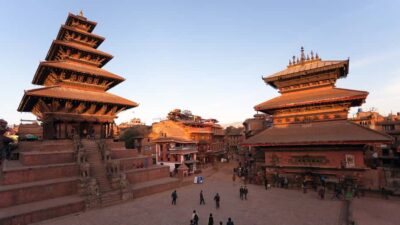

Bhaktapur & Nagarkot Day Tour with Lunch – Private/Group
Read our review →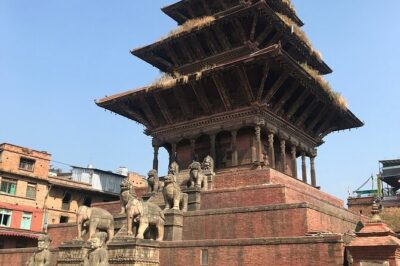
Nagarkot Sunrise & Bhaktapur Heritage Tour -Private Full Day Trip
Read our review →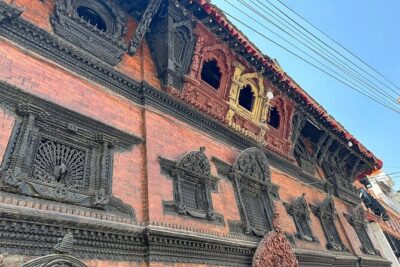
Browse the lists this tour appears in