
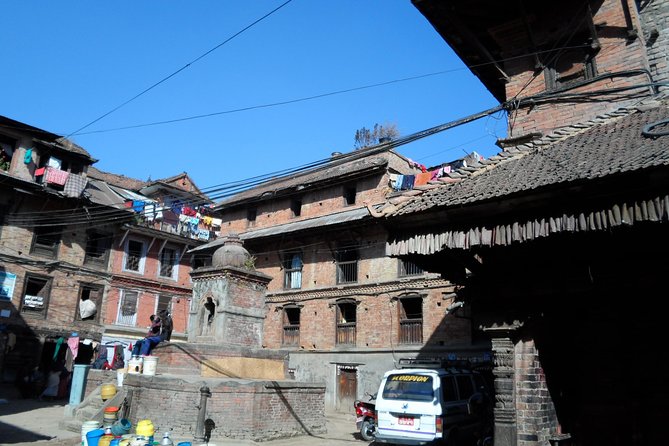
Reviewed · DURBAR SQUARE TOURS
Bhaktapur & Patan Durbar Square Day Tours
Bhaktapur and Patan give you two very different looks at old Kathmandu Valley life. Bhaktapur’s three main squares bring together palace buildings, temples, local streets, and daily activity, while Patan is prized for fine wood carving and quiet courtyards.
I like the private air-conditioned vehicle, which saves time and gives your group a comfortable base between sights. I also like the chance to work with a guide such as Rajendra Manandhar, who has been praised for patient explanations, historical context, answers to odd questions, and taking useful group photos.
The main drawback is that the $50 price does not include monument entrance tickets, food, drinks, or tips. Since the tour begins at 9:15 am and can last 6 to 8 hours, you should also be ready for a full sightseeing day.
Key points to know before booking
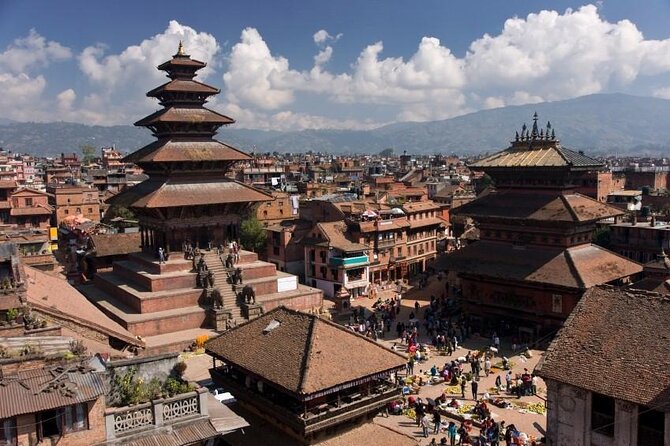
- Three Bhaktapur squares in one visit: See Dattatraya Square, Taumadhi Square, and Bhaktapur Durbar Square rather than stopping at only the best-known palace area.
- Patan’s carved courtyards: Patan Durbar Square is the artistic heart of the tour, with old courtyards and celebrated wood carving.
- A 12th-century Golden Temple: The Patan portion continues to this important Buddhist site after the main square.
- Private transport and guiding: Your group travels in a private air-conditioned vehicle with a local English-speaking guide.
- A useful guide name: Rajendra Manandhar has led this experience and is noted for patient storytelling, detailed answers, and helping with photos.
- Allow a full morning and afternoon: The advertised duration is about 6 to 8 hours, with a 9:15 am start.
Why Bhaktapur and Patan belong on the same day
If you have limited time in Kathmandu, this pairing makes sense because the two destinations complement each other. Bhaktapur gives you a broad look at royal spaces and local life. Patan follows with a more concentrated display of courtyards, metalwork, wood carving, and religious architecture.
The tour is built around the old royal cities of the Kathmandu Valley. Its central idea is simple: see how rulers once lived, then look at the streets and religious sites that still shape local life. That mix is more useful than visiting a palace in isolation.
You will spend much of the day moving through historic squares rather than sitting inside a museum. That means the experience can feel more immediate, but it also means you should expect uneven pavement, active public spaces, and a steady amount of walking. The supplied details do not give a precise walking distance, so wear shoes you can use comfortably for several hours.
The private format matters here. You are not tied to the pace of a large group, and you have one guide to help connect the buildings to the people and traditions around them. A private tour also works well if your group wants to ask frequent questions or pause for photographs.
More Durbar Square Tours in Kathmandu:
- Kathmandu Sunset Tour by Rickshaw Including Durbar Square Visit
★ 5.0 · 73 reviews - Old Kathmandu Walking Tour, Historic World Heritage Durbar Square
★ 5.0 · 22 reviews - City tour of Bhaktapur and Patan Durbar Square
★ 4.5 · 20 reviews
Bhaktapur’s Dattatraya Square and the older city
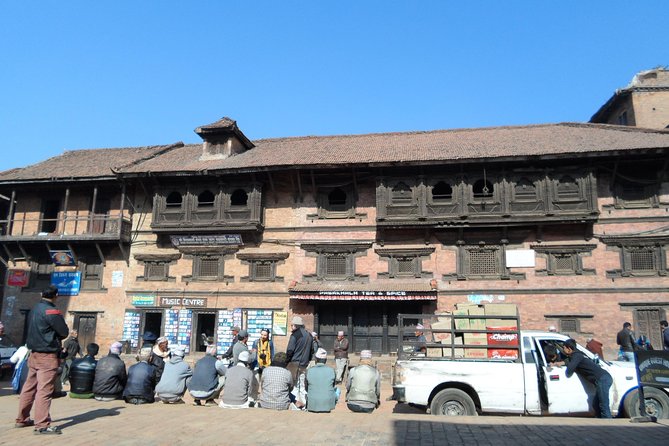
Dattatraya Square is the first of Bhaktapur’s three main areas on this route. The square introduces the city as more than a single palace complex. You are looking at a historic urban setting where religious buildings, courtyards, and local routines share the same space.
The tour’s theme of past royal life begins to take shape here. Your guide can provide the historical frame that is easy to miss when you simply walk from one monument to the next. If you are the sort of person who wants to know why a building matters, not only how old it is, this is one of the strongest reasons to book with a guide.
Dattatraya Square also helps set the rhythm for the day. Rather than rushing directly to the most photographed structures, you begin with one part of Bhaktapur and then continue through the city’s other major squares. That broader route gives you a better sense of how the old center fits together.
You should not expect a quiet archaeological site sealed off from modern life. The appeal is the meeting of historic architecture and everyday activity. Keep your camera ready, but also leave room to watch what is happening around the monuments.
Taumadhi Square and Bhaktapur’s central drama
Taumadhi Square is the second major stop in Bhaktapur. It is one of the places where the city’s scale and visual drama become especially clear, with temple architecture and open public space creating a strong contrast to narrower lanes and courtyards.
The guide is valuable here because a square can look like a collection of impressive facades without explanation. Historical context gives the buildings a role in the story of the city. A guide such as Rajendra Manandhar has been praised for patient explanations and for answering unexpected questions, which is useful when you want to move beyond a standard speech.
This is also a good place to think about the tour’s focus on local lifestyles. Bhaktapur is not presented only as a royal relic. People still use its streets and public spaces, so you get a sense of the city as a living place rather than a collection of preserved walls.
The practical concern is time. With three Bhaktapur squares followed by Patan, you cannot study every carving or enter every building at length. If you prefer a slow, single-site visit with lots of time for independent wandering, a dedicated Bhaktapur tour may suit you better. If you want a wide introduction to both cities in one day, this route is more efficient.
Bhaktapur Durbar Square and the royal story
Bhaktapur Durbar Square is the third Bhaktapur stop and the clearest expression of the tour’s royal theme. Here, the focus turns more directly to palace architecture and the spaces connected with former rulers.
The experience is designed to show you how kings lived in the past, but the value comes from seeing that royal center in relation to the other two squares. Dattatraya Square, Taumadhi Square, and Durbar Square are not three unrelated photo stops. Together, they make Bhaktapur feel like a historic city with several connected centers of worship, public life, and power.
This sequence also helps you compare different kinds of architecture. Look for the way carved details, open courtyards, and temple forms change from one square to another. Your guide can point out details that would otherwise pass quickly, especially if you are visiting Nepal for the first time.
Entrance fees are not included in the tour price, so set aside extra money for monument tickets. The exact amount is not provided here, and it may depend on the sites open on the day of your visit. Ask about the current fees when you book or before setting out.
More Bhaktapur Tours in Kathmandu:
- Private Bhaktapur and Nagarkot Day Tour From Kathmandu
★ 5.0 · 305 reviews - Day Trip to Bhaktapur and Panauti from Kathmandu
★ 5.0 · 184 reviews - Nagarkot Sunrise & Bhaktapur UNESCO Heritage Private Tour
★ 5.0 · 66 reviews - Kathmandu: Private Patan and Bhaktapur Sightseeing Tour
★ 4.7 · 64 reviews
Patan Durbar Square and its carved courtyards
After Bhaktapur, the route continues to Patan Durbar Square. Patan is famous for wood carving and old courtyards, and this shift gives the day a different feel. Bhaktapur emphasizes the breadth of an old royal city, while Patan concentrates attention on craftsmanship and the design of its enclosed spaces.
I particularly like the courtyard focus because courtyards often reward a slower look. From the outside, a building may appear formal or imposing. Once you enter a courtyard, you can see how the space is arranged and how carved details work together around it.
Patan is also a good section for travelers who enjoy close inspection. Look up, check door frames, and pay attention to wooden details rather than only taking a wide photograph of the square. The tour description singles out wood carving for good reason. It is one of the clearest ways to see the skill behind the city’s architecture.
The guide can help explain what you are seeing, especially when several shrines and courtyards sit close together. Rajendra Manandhar has been singled out for giving historical context that added value even to people who had previously visited Patan with family. That is a useful point for repeat visitors: a professional guide may show you familiar places in a more organized and meaningful way.
You should also keep expectations practical. The tour does not promise a private opening, special access, or a long workshop with local artisans. Its strength is interpretation while moving through the major historic areas.
The 12th-century Golden Temple
The final named stop is the Golden Temple, a Buddhist site dating to the 12th century. It adds a religious dimension to the Patan section and keeps the day from being only about palaces.
The temple is described as one of the richest monasteries in Patan. That description points to its importance and ornament, but the tour details do not specify which areas you will enter or how long you will spend there. Your guide should help you understand the site’s place within Patan’s religious life and explain the features you are allowed to see.
For you, the Golden Temple may be the most distinctive stop of the afternoon because it contrasts with the royal squares. Instead of focusing only on kings and palaces, the route turns toward a long-running Buddhist tradition.
As with the other monuments, entrance tickets are extra. The tour includes transport and guiding, not meals or drinks, so carry water or plan to buy refreshments during the day. No food stop is listed in the schedule, and the exact break pattern is not specified.
What the $50 price really covers
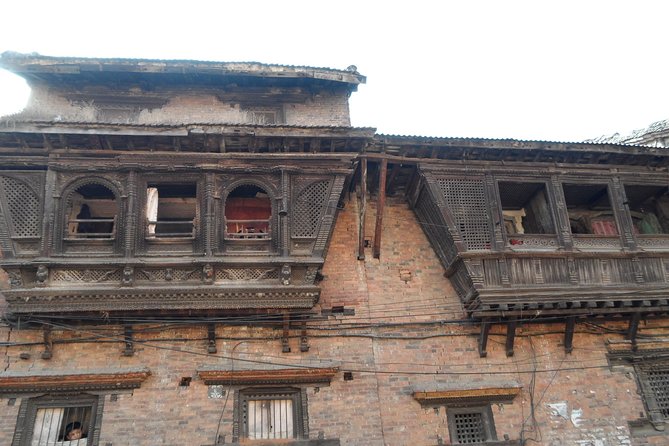
At $50 per person, this tour is best judged as a private guided day rather than as a simple transfer between two squares. The price includes a private air-conditioned vehicle and a local English-speaking guide. Those inclusions are useful in Kathmandu Valley, where having someone manage the route can save you time and reduce the effort of arranging separate transport.
The value improves if you are sharing the vehicle with family or friends. Group discounts are offered, though no discount amount is given. A solo booking may feel less economical than a booking shared by several people, while a small private group can receive more personal attention than a large scheduled outing.
You should budget beyond the headline price. Monument entrance tickets, tips, food, and drinks are excluded. Since the day lasts 6 to 8 hours, these extras are not minor details. Ask for the current entrance costs and carry money for refreshments before you leave.
The tour has received a 5 out of 5 rating from 122 reviews, with 100 percent recommended shown in the booking information. The most consistent praise centers on the guide, especially patient explanations, useful historical background, answering questions, and taking photographs. Those are practical benefits, not just pleasant extras. They can make a major difference when the sites are visually dense and you do not know which details deserve your attention.
Timing, transport, and pace
The stated start time is 9:15 am. Pickup is offered, but the information provided does not specify every pickup location or a precise return time. Confirm the pickup details when you book and plan for the day to finish somewhere between roughly 3:15 pm and 5:15 pm, depending on the final duration and traffic.
The private air-conditioned vehicle is one of the tour’s strongest practical features. You have a comfortable way to move between Bhaktapur and Patan, and your group does not have to share the vehicle with strangers. The tour is also near public transportation, which gives you another option for reaching the meeting point if pickup arrangements do not cover your location.
The experience is described as suitable for most people. Still, the itinerary includes several historic squares and religious sites, so you should expect regular walking and time on your feet. The supplied information does not give specific accessibility details, so ask the provider if you have mobility concerns.
Free cancellation is available if you cancel at least 24 hours before the local start time. Changes or cancellations inside that window are not accepted for a refund. The activity is operated by Himalayan Travel Consultant.
Who will get the most from this tour
I would recommend this outing to a first-time visitor to Kathmandu who wants a guided introduction to two major historic cities without arranging separate drivers and guides. It also suits families and small groups that value a private vehicle and the ability to ask questions along the way.
It is a particularly good fit if you enjoy architecture, palace history, Buddhist sites, wood carving, and local city life. The combination of Bhaktapur’s three squares and Patan’s courtyards gives you more range than a single-square visit.
Repeat visitors should not dismiss it. A guide such as Rajendra Manandhar can add context to places you may have already seen casually, and the organized route can reveal connections between buildings that are easy to miss on your own.
You may want a different plan if you dislike structured sightseeing, want long meals and shopping breaks, or prefer to explore one neighborhood at a very slow pace. This is a full, efficient day with several major stops.
Should you book the Bhaktapur and Patan day tour?
Book it if you want private transport, a local English-speaking guide, and a well-packed route through Bhaktapur and Patan. The strongest reason is not simply the number of monuments. It is the chance to understand the royal squares, local streets, carved courtyards, and Buddhist tradition as parts of one connected day.
Before paying, confirm the pickup point, current monument fees, and which guide will lead your group. If Rajendra Manandhar is available, his patient approach and willingness to answer questions could add real value. Bring water, allow 6 to 8 hours, and expect to pay extra for tickets, food, drinks, and tips.
FAQ
How long does the Bhaktapur and Patan tour last?
The tour lasts approximately 6 to 8 hours.
What time does the tour begin?
The stated start time is 9:15 am.
Which places are visited in Bhaktapur?
The route includes Dattatraya Square, Taumadhi Square, and Bhaktapur Durbar Square.
Does the tour visit the Golden Temple?
Yes. The Patan section continues to the 12th-century Golden Temple.
What is included in the $50 price?
The price includes a private air-conditioned vehicle and a local English-speaking tour guide.
Are entrance tickets and meals included?
No. Monument entrance tickets, tips, food, and drinks are not included.
Just added around Kathmandu
- Private Half-Day Tour of Boudhanath and Pashupatinath Temples in Kathmandu★ 4.5 · 9 reviews
- Private Half-Day Tour of Kathmandu Durbar Square and Swayambhunath Temple★ 4.5 · 11 reviews
- Namobuddha Monastery Hiking Day Tour via Panauti from Kathmandu★ 5.0 · 15 reviews
- Private Full-Day Kathmandu City Tour★ 5.0 · 9 reviews
- Private Day Tour in Kathmandu Valley Rim with Bhaktapur Sightseeing★ 5.0 · 3 reviews
- Private Half Day Budhanilkantha Tour★ 5.0 · 6 reviews
- Private Day Tour: Patan and Bhaktapur from Kathmandu★ 4.5 · 6 reviews
- Private Day Tour – Sacred Journey to Namo Buddha★ 5.0 · 5 reviews
Durbar Square Tours, compared.
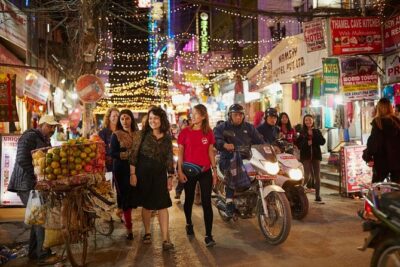
Kathmandu Sunset Tour by Rickshaw Including Durbar Square Visit
Read our review →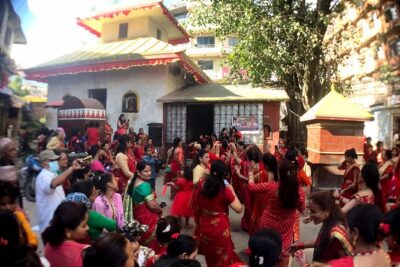
Old Kathmandu Walking Tour, Historic World Heritage Durbar Square
Read our review →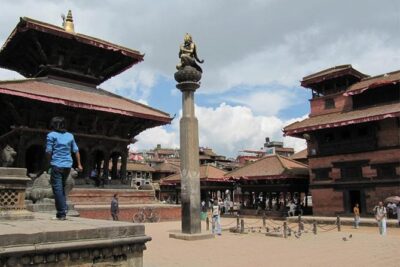
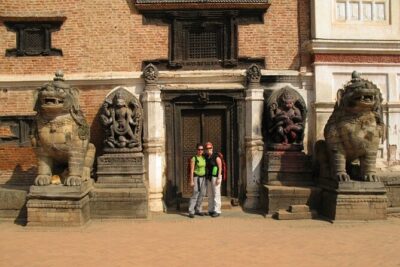
Bhaktapur Old City and Durbar Square Half-Day Tour
Read our review →
Nagarkot Sunrise & Bhaktapur Durbar Square UNESCO Heritage Tour
Read our review →
Patan & Bhaktapur Durbar Square Tour with Lunch – Private/Group
Read our review →
Private Half-Day Tour of Kathmandu Durbar Square and Swayambhunath Temple
Read our review →Browse the lists this tour appears in