
Reviewed · UNESCO WORLD HERITAGE TOURS
Kathmandu: UNESCO Heritage Site Private & Guided Tour
Kathmandu’s best monuments are spread across the valley, and this tour gathers seven UNESCO World Heritage Sites into one guided day. You move by comfortable vehicle between hilltop stupas, royal squares, Hindu shrines, and one of Nepal’s oldest temples, with local context at every stop.
I like the easy hotel pickup and the way a guide such as Nabin, Sajan, or Pranav can connect the carvings, rituals, and royal stories. I also like the range: Swayambhunath’s valley view and Boudhanath’s calm prayer circles feel very different from the grand squares of Patan and Bhaktapur. The main drawback is that the $59 price excludes entrance fees to all seven sites, so your final cost will be higher.
Key points to know before you book
- Seven major heritage sites in one route: Swayambhunath, Pashupatinath, Boudhanath, Patan Durbar Square, Bhaktapur Durbar Square, Kathmandu Durbar Square, and Changunarayan.
- A private guided format: Your guide offers personal explanations about Nepal’s religion, architecture, monarchy, and Newari culture rather than leaving you to read plaques.
- Transport is included: Hotel pickup and drop-off within Kathmandu Valley make this far easier than arranging separate taxis.
- Entrance fees are extra: The advertised $59 covers the guide and transportation, not admission to the seven sites.
- English and Hindi are available: This is useful if you want explanations in either language.
- A strong guide team: Nabin, Sajan, and Pranav are among the guides associated with the service, with particular praise for clear storytelling and courteous care.
Why this seven-site route works in Kathmandu
Kathmandu Valley can feel confusing at first. Its major monuments are not gathered in one compact old town, and traffic can make short distances take time. A private vehicle turns that challenge into a workable cultural route, taking you from one district to the next while a guide explains what you are seeing.
The tour is especially useful if you have limited time in Nepal. Instead of choosing between a stupa, a temple, and a royal square, you get all three types of place in one outing. That variety is the point. You see how Hindu and Buddhist traditions share the same valley, how Newari builders shaped temples and courtyards, and how Nepal’s royal past still appears in palace squares.
I would not think of this as a leisurely visit to each site. Seven monuments require a full, active schedule, and the attraction of the tour is its breadth. If you want long quiet stretches for photography or extended time at every museum, a shorter private tour may suit you better.
The guide matters greatly here. The sites are visually impressive, but their meaning is not always obvious. A carved doorway, a shrine covered in red powder, or a stupa’s painted eyes can seem decorative until someone explains the beliefs and local customs connected with them.
More UNESCO World Heritage Tours in Kathmandu:
- Private Kathmandu Sightseeing Tour | UNESCO World Heritage sites
★ 5.0 · 756 reviews - Kathmandu: Full Day 7 UNESCO Tour with Lunch – Private/Group
★ 5.0 · 415 reviews - Kathmandu: Full Day Top 4 UNESCO Tour with Lunch – Private/Group
★ 5.0 · 269 reviews
Swayambhunath, the hilltop start with valley views
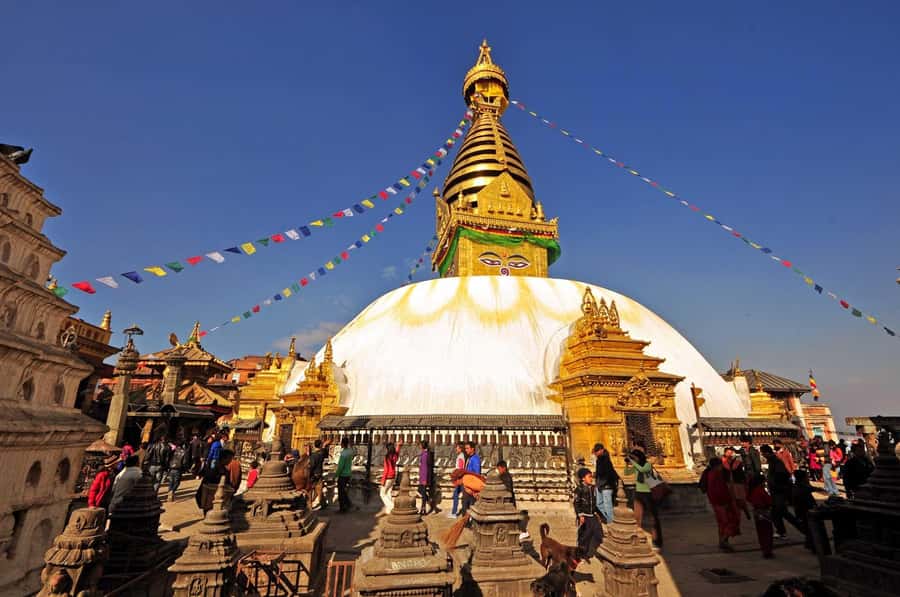
Swayambhunath Stupa, often called the Monkey Temple, gives you one of the clearest introductions to Kathmandu. The stupa sits on a hill above the valley, so the visit combines a major Buddhist shrine with broad views across the city.
The setting is memorable because the monument is not isolated from daily life. Prayer wheels, shrines, temple details, and monkeys all form part of the visit. Your guide can help you understand the symbols on the stupa and explain why this place matters to both local worshippers and visitors.
The hilltop position also gives you an immediate sense of Kathmandu’s size. From above, the valley feels far larger and more crowded than it does from a single street. Take a moment to look outward before focusing on the details around the shrine.
There is one practical point to keep in mind: a hilltop monument may involve walking and steps. The tour is not suitable for wheelchair users, and you should be ready for an active day on foot at several sites.
Pashupatinath and the Bagmati River
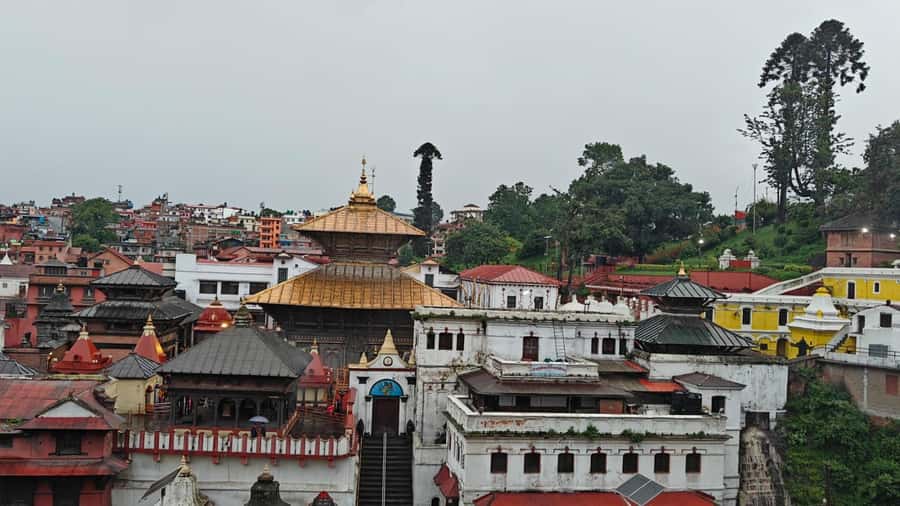
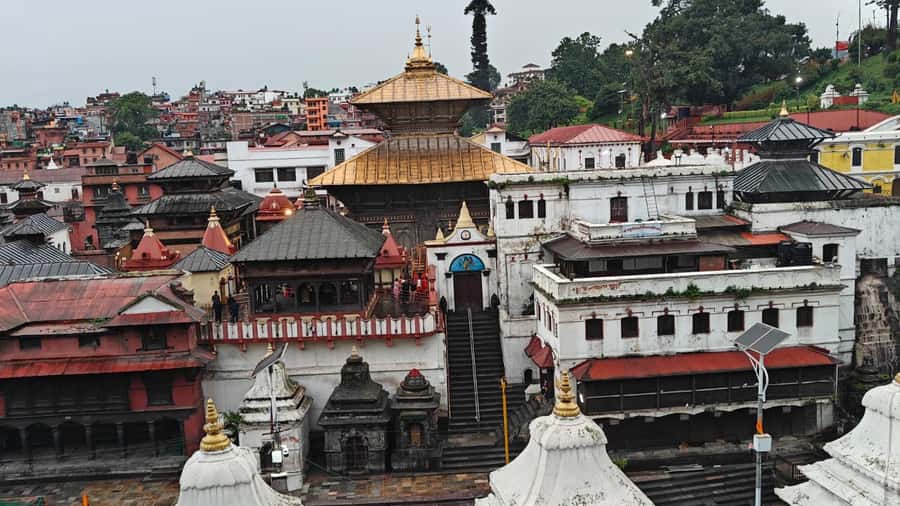
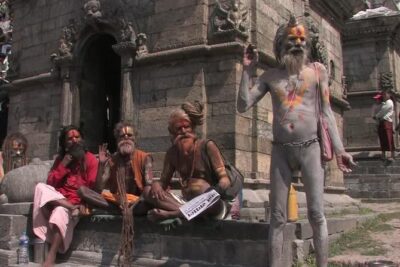
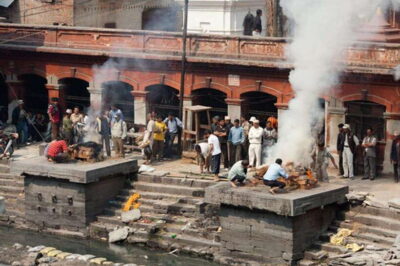
Pashupatinath Temple is one of Nepal’s most important Hindu pilgrimage sites. It lies beside the Bagmati River and offers a different atmosphere from the Buddhist stupas earlier or later in the route.
This is a sacred place, not simply an architectural attraction. A guide helps you understand the role of the temple complex, the religious practices connected with the river, and the importance of the site to Hindu worshippers. You may see rituals taking place, so respectful behavior is essential.
The principal temple is reserved for Hindus, but the wider complex can still be viewed according to local access rules. The tour description does not promise entry into every structure, so listen to your guide and follow instructions rather than treating the site like a standard museum.
I value this stop because it connects architecture with living faith. At the same time, it may feel more intense than a palace square. The riverfront setting and sacred ceremonies call for quiet attention, modest clothing, and no casual attitude toward worship.
Boudhanath, a slower pause beneath the great stupa
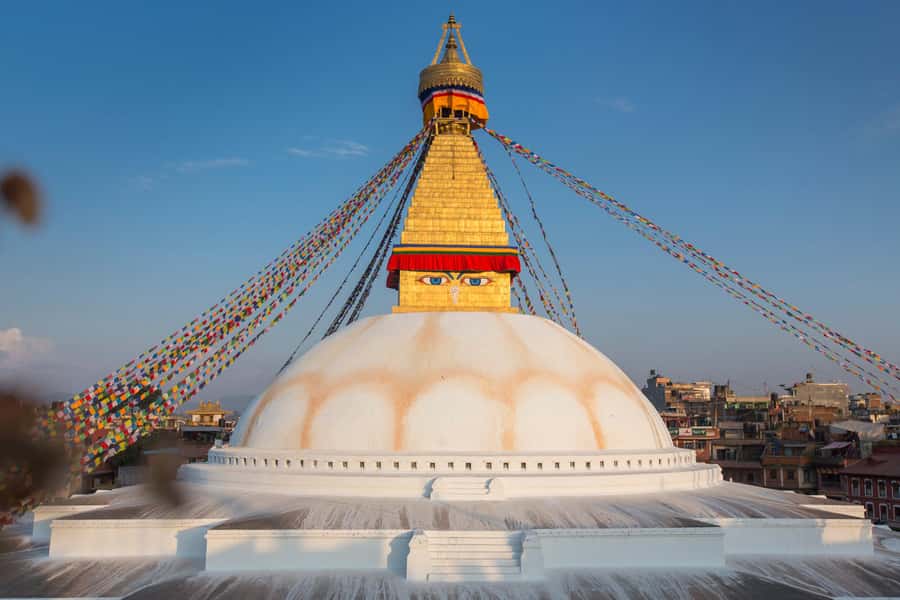
Boudhanath Stupa is one of the largest stupas in the world and a major center of Tibetan culture. Its wide white dome, painted eyes, prayer flags, and surrounding religious life create one of the most recognizable scenes in Kathmandu.
After the movement of the city and the serious atmosphere of Pashupatinath, Boudhanath can feel like a calmer pause. You can walk around the stupa while your guide explains the meaning of the structure and the traditions connected with it.
This is a good place to notice how a monument functions as part of a neighborhood. The stupa is not only something to photograph. It is a place of prayer and community, and the people moving around it are part of the scene.
Your guide is most useful here when explaining etiquette. Walk in the proper direction around the stupa, be mindful of worshippers, and ask before photographing people involved in religious practice. These small choices make your visit more respectful and more rewarding.
A few more Kathmandu trips to weigh up
- UNESCO Seven World Heritage Tour in Kathmandu
★ 5.0 · 253 reviews - Kathmandu Private Sightseeing Tour | UNESCO World Heritage Sites
★ 5.0 · 109 reviews - Kathmandu: Full Day Private Top 4 UNESCO Heritage Tour W/Lunch.
★ 5.0 · 86 reviews - Kathmandu World Heritage Tour
★ 5.0 · 74 reviews
Patan Durbar Square and Newari craftsmanship
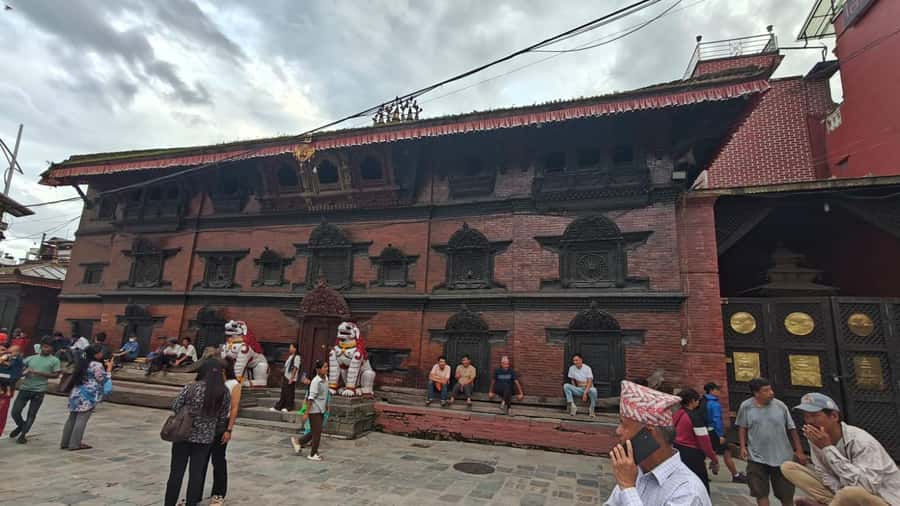
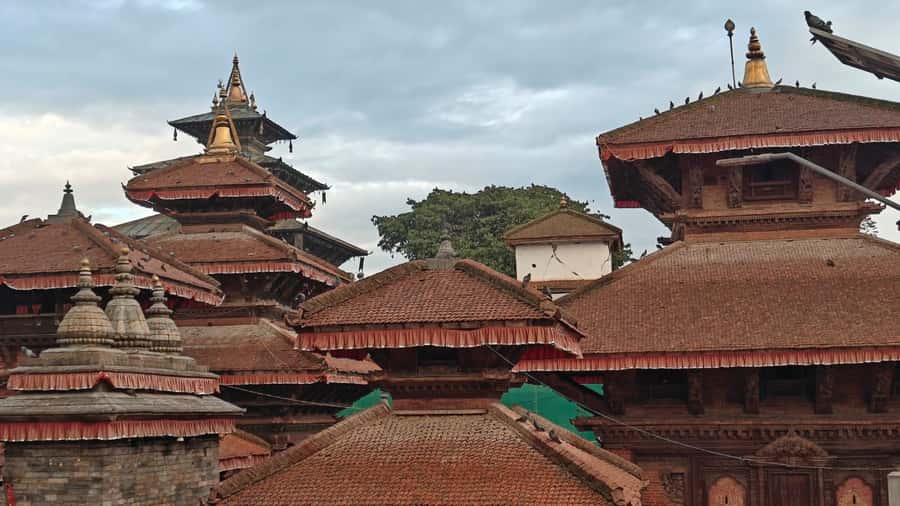
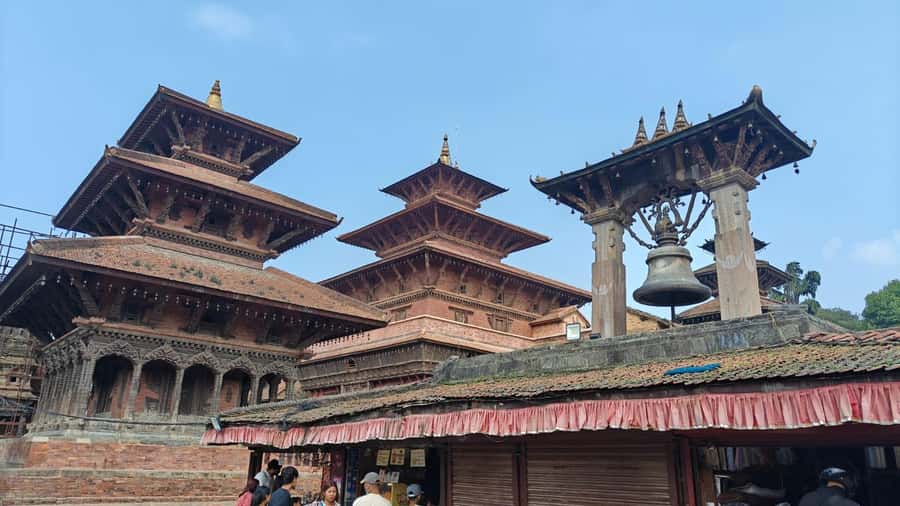
Patan Durbar Square is one of the strongest stops for architecture. Its palaces, temples, courtyards, and carved details show the skill of Newari builders and artists.
You will want to slow down here and look up, not just across the square. Rooflines, timber supports, windows, doorways, and metal or stone figures reward close attention. A guide can point out details you might otherwise pass without noticing and explain how the square related to the old royal city.
Patan is valuable because it shows that Nepal’s cultural identity is not limited to mountain scenery. The artistic tradition here is urban, highly developed, and tied to local craftsmanship. The square gives you a direct look at how religion, kingship, and city life once met in a single place.
As with all major heritage sites in Kathmandu, the condition of individual buildings and the surrounding activity can vary. The tour gives you an informed way to read the site even when restoration work or crowds affect the view.
Bhaktapur Durbar Square, the best preserved royal setting
Bhaktapur Durbar Square carries a strong medieval character. Its palaces, temples, and courtyards preserve the feel of a former royal center, and the square is one of the most rewarding places on the route for understanding old Newari city design.
I would give Bhaktapur your full attention. The buildings are not just isolated monuments lined up for inspection. They form a connected urban setting, with courtyards and open spaces that help you picture how power, worship, and public life worked together.
Your guide can explain the royal heritage sites and the architectural choices that make Bhaktapur different from Patan. Comparing the two squares is one of the best features of this tour. Patan may appeal to you for its concentrated artistic detail, while Bhaktapur offers a more complete sense of a historic royal town.
The tradeoff is time. With seven sites on the schedule, you may not linger as long as you would on a dedicated Bhaktapur visit. If you have a particular temple, museum, or carving in mind, tell your guide early so you can use your time wisely.
Kathmandu Durbar Square and the royal past
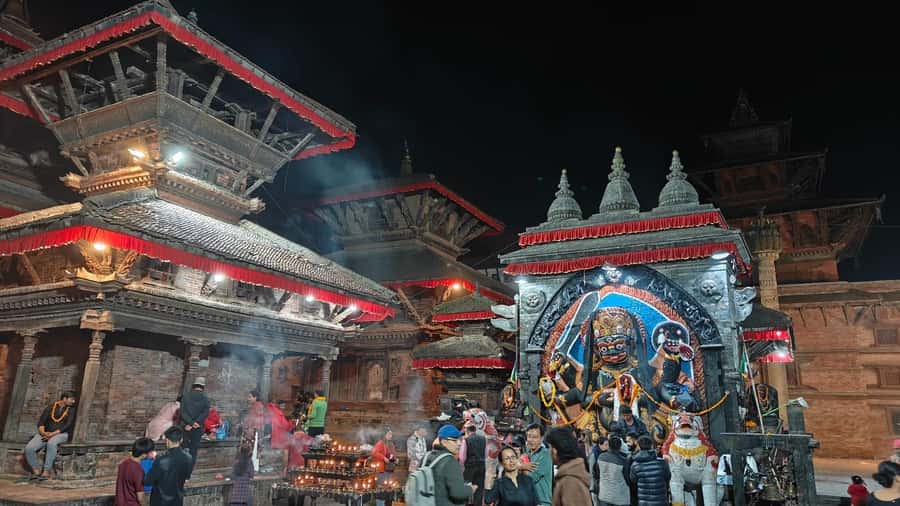
Kathmandu Durbar Square brings you into the political center of Nepal’s monarchy. The main highlights include Hanuman Dhoka Palace and Kumari Ghar, the home of the living goddess.
Hanuman Dhoka helps place Nepal’s royal story in a physical setting. Rather than receiving only a list of dates and rulers, you see the palace courtyards and temples where court life and religious tradition overlapped.
Kumari Ghar is especially distinctive. The Kumari tradition is one of the valley’s best-known religious and cultural customs, and your guide can explain its role without reducing it to a quick photo opportunity. If the Kumari appears, follow local guidance and treat the moment with respect.
Kathmandu Durbar Square is also a useful reminder that heritage sites can be living places, not frozen museum displays. People still pass through these areas, worship at shrines, and use the surrounding streets. That living quality is part of the appeal, though it can also make the square feel busy and less polished than a controlled historic site.
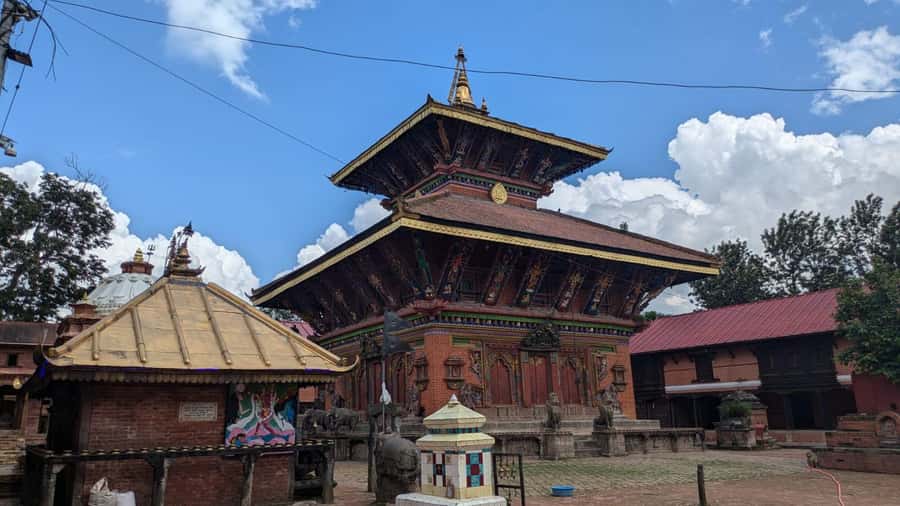
Changunarayan, an older temple away from the main circuit
Changunarayan Temple completes the route with a quieter stop. It is described as one of the oldest Hindu temples in the Kathmandu Valley and is presented as a less familiar part of the heritage circuit.
Its value comes from the contrast with the larger, more visited squares. After grand palaces and famous stupas, Changunarayan gives you another view of Nepal’s religious architecture and long Hindu tradition.
Because the tour information does not provide a detailed schedule or exact time at each stop, you should ask the operator how much time is planned here. That is especially important if Changunarayan is high on your list. A short stop can introduce you to the temple, but a longer visit will give you more time to study the carvings and setting.
What the guide and vehicle add
The service includes an expert English-speaking guide for each UNESCO site, with Hindi also available. That wording suggests the tour is built around guided interpretation rather than simply dropping you at the monuments.
Guides connected with the service include Nabin, Sajan, and Pranav. Nabin is particularly associated with detailed explanations of art, culture, architecture, and local food, while Sajan has been praised for working well with the driver and keeping the day organized. Pranav is noted for a friendly manner.
You should still confirm your guide’s name and language when booking, since the available person may vary. The best use of your guide is to ask questions. Ask what a symbol means, why a temple is laid out in a certain way, or how Hindu and Buddhist customs overlap in the valley.
Transportation is another real advantage. A comfortable vehicle with hotel pickup and drop-off within Kathmandu Valley saves you from negotiating separate rides between distant districts. It also gives you a place to rest between stops, which matters on a packed cultural route.
Drinks are not allowed in the vehicle, and alcohol or drugs are prohibited. Meals are not specified, so do not assume food is included. Personal expenses and any extra activities are also your responsibility.
Is $59 a good value?
At $59 per person, the price is appealing for a private guided route that includes transportation, hotel pickup, and drop-off. You are paying for access to a local guide’s time and for the practical work of connecting seven sites across Kathmandu Valley.
The important catch is that entrance fees to all seven UNESCO World Heritage Sites are not included. Add those costs before comparing this tour with a package that advertises a higher all-in price. The final value depends on the admission charges on your travel date and how much you value private transport and interpretation.
I consider the tour good value if you want broad coverage in limited time. It is less compelling if you plan to visit only one or two squares, or if you already have transportation and a guide arranged.
You can reserve now and pay later, which helps if your Nepal plans are still shifting. Cancellation is allowed up to 24 hours before the tour for a full refund. Those policies are useful, but the bigger booking question is whether you want a wide overview or a slower visit focused on fewer places.
Who should book this Kathmandu tour?
I would recommend it to first-time visitors who want a clear introduction to Kathmandu’s major cultural sites. It also suits history and architecture fans, people interested in Hindu and Buddhist traditions, and anyone who prefers a guide to explain what they are seeing.
The route is not ideal for wheelchair users, and it may feel demanding if you dislike walking, steps, or a full schedule. It is also not the best choice for someone who wants an unhurried photographic tour.
If you book, wear comfortable shoes and modest clothing for religious sites. Keep your expectations realistic: the $59 rate does not include entrance fees or meals, but it does solve the difficult transport problem and gives you a local voice across a wide range of monuments.
FAQ
How many UNESCO World Heritage Sites does the tour visit?
The tour covers seven UNESCO World Heritage Sites in and around Kathmandu Valley.
Which sites are included?
The route includes Swayambhunath Stupa, Pashupatinath Temple, Boudhanath Stupa, Patan Durbar Square, Bhaktapur Durbar Square, Kathmandu Durbar Square, and Changunarayan Temple.
Is transportation included?
Yes. Comfortable transportation between sites is included, along with hotel pickup and drop-off within Kathmandu Valley.
Are entrance fees included in the $59 price?
No. Entrance fees to all seven UNESCO World Heritage Sites are excluded, so you should budget for them separately.
Which languages are available?
Guiding is available in English and Hindi.
Is a guide included?
Yes. The tour includes an expert English-speaking guide for each UNESCO heritage site. Guides associated with the service include Nabin, Sajan, and Pranav.
Is the tour suitable for wheelchair users?
No. The experience is listed as unsuitable for wheelchair users.
Can I cancel for a full refund?
Yes. You can cancel up to 24 hours in advance for a full refund.
Are meals and hotel accommodation included?
No. Meals are not specified as included, and hotel accommodation in Kathmandu is not part of the tour.
Should you book it?
Book this tour if you want to see Kathmandu’s major sacred sites, royal squares, and older temples in one well-supported route. The combination of private transport and personal explanations is its strongest feature, especially when a guide such as Nabin, Sajan, or Pranav helps connect the buildings to Nepal’s customs and past.
Skip it if you prefer to spend a whole day at one square or want an all-inclusive price with admissions already covered. For most first visits, though, this is a practical way to get your bearings, understand the valley’s traditions, and see far more than you could manage comfortably by arranging each stop on your own.
Just added around Kathmandu
- Private Half-Day Tour of Boudhanath and Pashupatinath Temples in Kathmandu★ 4.5 · 9 reviews
- Private Half-Day Tour of Kathmandu Durbar Square and Swayambhunath Temple★ 4.5 · 11 reviews
- Namobuddha Monastery Hiking Day Tour via Panauti from Kathmandu★ 5.0 · 15 reviews
- Private Full-Day Kathmandu City Tour★ 5.0 · 9 reviews
- Private Day Tour in Kathmandu Valley Rim with Bhaktapur Sightseeing★ 5.0 · 3 reviews
- Private Half Day Budhanilkantha Tour★ 5.0 · 6 reviews
- Private Day Tour: Patan and Bhaktapur from Kathmandu★ 4.5 · 6 reviews
- Private Day Tour – Sacred Journey to Namo Buddha★ 5.0 · 5 reviews
UNESCO World Heritage Tours, compared.
Private Kathmandu Sightseeing Tour | UNESCO World Heritage sites
Read our review →
Full Day 7 UNESCO Tour with Lunch – Private/Group
Read our review →
Full Day Top 4 UNESCO Tour with Lunch – Private/Group
Read our review →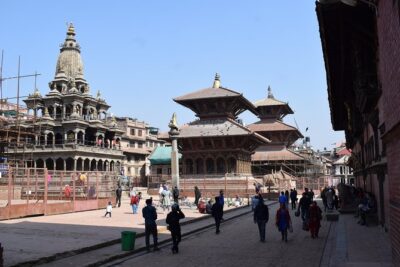
Kathmandu Spiritual Sites: Bodhnath & Pashupatinath Tour
Read our review →
Kathmandu Private Sightseeing Tour | UNESCO World Heritage Sites
Read our review →Full Day 7 UNESCO Tour with Lunch – Private/Group
Read our review →Browse the lists this tour appears in