
Reviewed · UNESCO WORLD HERITAGE TOURS
Kathmandu: 7 UNESCO-Listed city sites group day trip
Kathmandu’s seven UNESCO-listed sites pack an astonishing amount of culture into one long day. You move from the hilltop eyes of Swayambhunath to the cremation ghats of Pashupatinath, then through three old royal centers and two major Buddhist sanctuaries. I like the clear sweep of the day: you see the valley’s main cultural landmarks without arranging seven separate visits. I also like the private-group format, since guides such as Karma and Pooja can adjust their explanations and answer your questions.
The trade-off is pace. Eight hours, traffic, walking, stairs, and seven stops leave little room for lingering. Admission tickets and food cost extra, and this is not a good fit for wheelchair users, pregnant women, children under 10, or anyone prone to motion sickness.
Seven Kathmandu sites in one carefully packed day
- Swayambhunath begins the day with valley views, Buddhist shrines, prayer flags, and a hilltop setting.
- Kathmandu Durbar Square brings royal Nepal close, with carved temples and palace courtyards.
- Patan shows Newari artistry at its finest, blending Hindu and Buddhist traditions in one compact square.
- Bhaktapur gets the longest stop, giving you two hours among medieval streets and courtyards.
- Changu Narayan adds ancient sculpture and inscriptions, though its visit is brief.
- Pashupatinath offers a direct look at Hindu ritual, including activity along the Bagmati River.
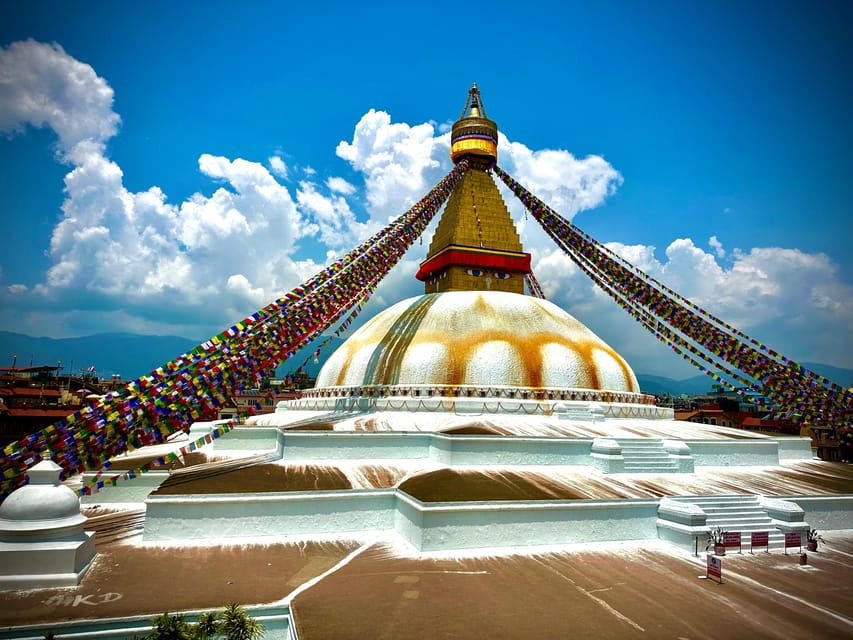
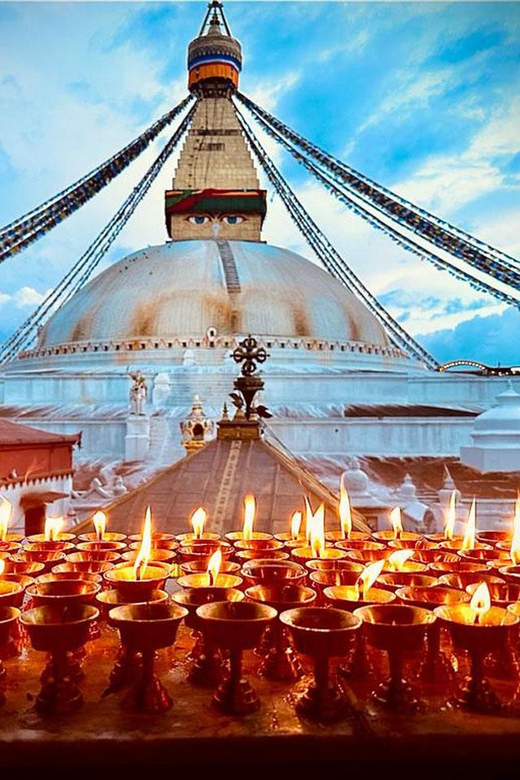
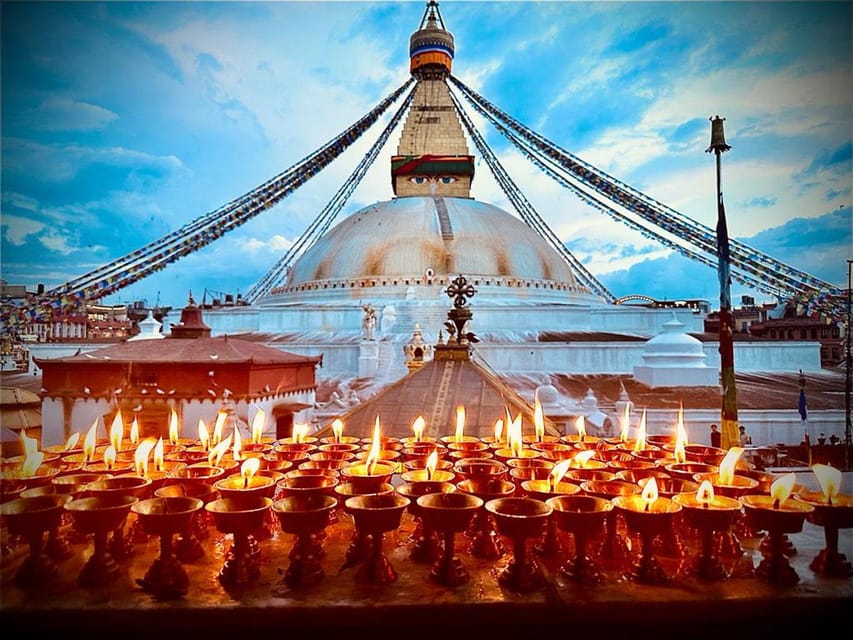
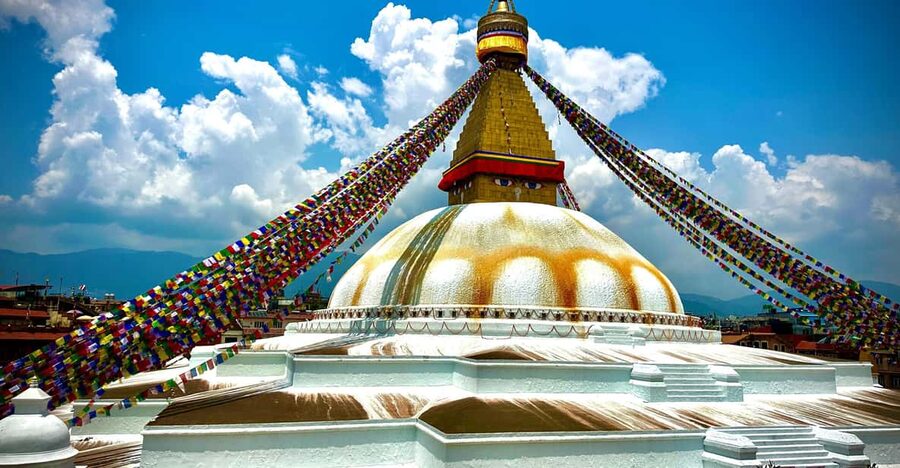
- Boudhanath closes the cultural circuit, with devotees walking around a huge Buddhist stupa.
Why this route works for a first Kathmandu visit
I see this tour as a fast but useful introduction to the Kathmandu Valley. The seven sites are not all in one neighborhood, so arranging them independently can mean juggling taxis, entrance points, opening times, and traffic. Here, a van and guide connect the dots, leaving you free to focus on what you are seeing.
The route also covers more than monuments. At the squares, you see royal architecture and Newari woodcarving. At Swayambhunath and Boudhanath, you encounter Buddhist practice. At Pashupatinath, you see Hindu worship and cremation rituals beside the Bagmati River. That range matters because Kathmandu is not simply a collection of old buildings. Its sacred places are still used.
The private-group setup is another real advantage. You are not tied to a large coach crowd, and the guide can respond to your interests. Manuel particularly valued the guide’s willingness to answer questions and respond to personal preferences. Karma received strong praise for explaining the history and culture of each stop, while Pooja was noted for linking old Nepalese customs with modern life.
Still, you should set the right expectations. This is a survey tour, not a slow photography walk. You will have time to see each place, hear its main stories, and take photographs, but not unlimited time for every shrine, courtyard, shop, or side street.
More UNESCO World Heritage Tours in Kathmandu:
- Private Kathmandu Sightseeing Tour | UNESCO World Heritage sites
★ 5.0 · 756 reviews - Kathmandu: Full Day 7 UNESCO Tour with Lunch – Private/Group
★ 5.0 · 415 reviews - Kathmandu: Full Day Top 4 UNESCO Tour with Lunch – Private/Group
★ 5.0 · 269 reviews
Swayambhunath, where Kathmandu opens below you
The first stop is Swayambhunath Temple, reached after about 20 minutes by van from Kathmandu. The visit lasts roughly 75 minutes and includes a guided walk, free time, photographs, and some shopping.
The hilltop setting is the main reward. From here, you get broad views across the Kathmandu Valley, making it a useful first stop for understanding the city’s setting. The stupa itself gives you the familiar Buddhist visual language of a white dome, a golden spire, prayer flags, and watchful painted eyes.
Expect stairs and uneven walking. The schedule includes a safety briefing, which is a useful reminder that this is an active visit rather than a simple roadside photo stop. Take your passport or ID card with you, and wear shoes you can walk in comfortably.
Your guide can help explain how the site functions as a place of worship, not just a viewpoint. Watch the movement around the stupa, notice the devotional details, and allow a little quiet time after the main explanation. The 75-minute stop is long enough to appreciate the setting, though you may wish it were longer if you enjoy religious architecture.
Kathmandu Durbar Square and the old royal center
A 15-minute van ride takes you to Kathmandu Durbar Square for about 90 minutes. This is your first major look at royal Nepal, with old palaces, temples, carved details, and courtyards shaped by the Newari building tradition.
The value of a guide is especially clear here. A square filled with carved windows and tiered roofs can blur into a string of attractive views if you do not know what you are looking at. An English-speaking guide can point out the details that carry political, religious, and artistic meaning.
You get time for sightseeing, photographs, shopping, and a guided visit. That mix suits you if you want both context and room to look around on your own. The possible drawback is that 90 minutes goes quickly. Kathmandu Durbar Square rewards close attention, and you may need to choose between lingering over architecture and browsing nearby shops.
This is also a good point to ask questions about the valley’s shared artistic traditions. Later, Patan and Bhaktapur will show related forms in different settings. Seeing the three squares in one day lets you compare them rather than treating each as an isolated attraction.
Patan Durbar Square, a showcase of Newari craft
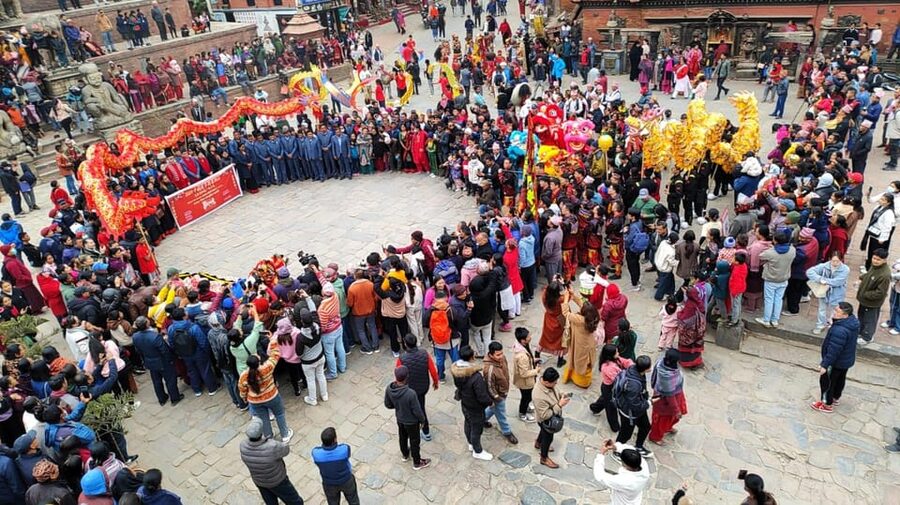
The next transfer takes about 20 minutes, followed by a 90-minute visit to Patan Durbar Square. Patan is known for carefully preserved traditional architecture and its blend of Hindu and Buddhist influences.
I would pay close attention to the workmanship here. The square is not only about grand royal buildings. Look at the repeated carved patterns, metalwork, shrines, and the way religious sites sit beside palace spaces. Your guide can explain how the area reflects several layers of cultural practice.
Patan is a strong stop for anyone interested in design, religious art, or urban history. It also gives you a chance to see how Buddhist and Hindu traditions share the same city space without becoming identical. The visit includes free time, photographs, shopping, and sightseeing, so you can step away from the main explanation and study the details at your own speed.
By this point, the day may begin to feel demanding. You have already climbed at Swayambhunath and walked through two major historic areas. Keep water handy, pace yourself, and do not feel obliged to examine every corner. The goal is to leave with a clear sense of Patan, not tired feet and a camera full of rushed pictures.
A few more Kathmandu trips to weigh up
- Kathmandu: 7 UNESCO Sites Tour in 1 Day (Private Tour)
★ 4.9 · 204 reviews - Day Trip to Bhaktapur and Panauti from Kathmandu
★ 5.0 · 184 reviews - The Most Beautiful 1 Day Experience in Kathmandu Nepal
★ 5.0 · 84 reviews - Nagarkot Sunrise & Bhaktapur Heritage Tour -Private Full Day Trip
★ 4.0 · 42 reviews
Bhaktapur, the longest and most atmospheric stop
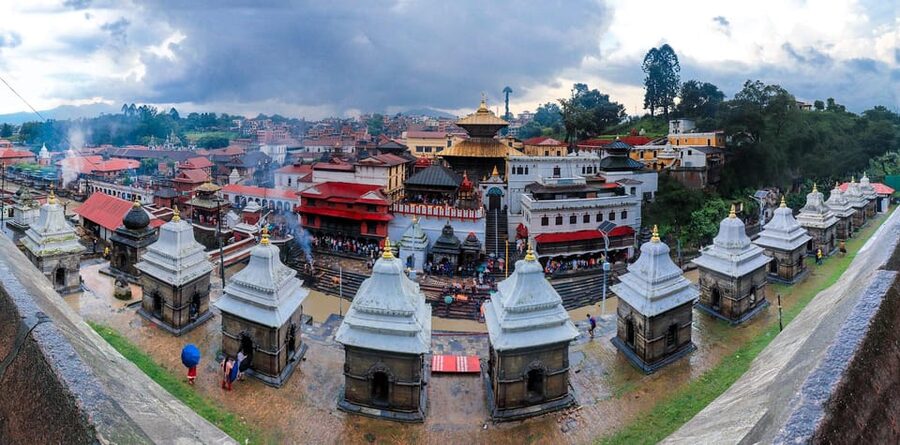
After about 30 minutes in the van, you reach Bhaktapur Durbar Square. The visit lasts two hours, the longest stop of the day, and includes guided sightseeing, walking, photographs, free time, shopping, and a class or explanation.
That extra time matters. Bhaktapur is a broad historic setting rather than one single monument, with medieval streets, squares, temples, and traditional architectural details. The schedule gives you a better chance to absorb the place instead of simply checking it off.
Twilight is described as the final part of the Bhaktapur visit, though exact light and timing can depend on the day. If the schedule holds, the changing light should give the old streets a different mood from the sharper midday visits at Kathmandu and Patan. You can also use this stop for a more relaxed look at Newari culture.
Bhaktapur is likely to be the highlight for you if you enjoy walking through old urban spaces. It is also the stop where the tour’s pace feels most reasonable. Two hours gives the guide room to explain the square and gives you time to wander, shop, and take photographs.
Do not mistake the longer visit for a fully leisurely afternoon. The day still has Changu Narayan, Pashupatinath, and Boudhanath ahead. If you become tired, use some of the free time to sit, observe, and let the place come to you.
Changu Narayan and the limits of a 30-minute visit
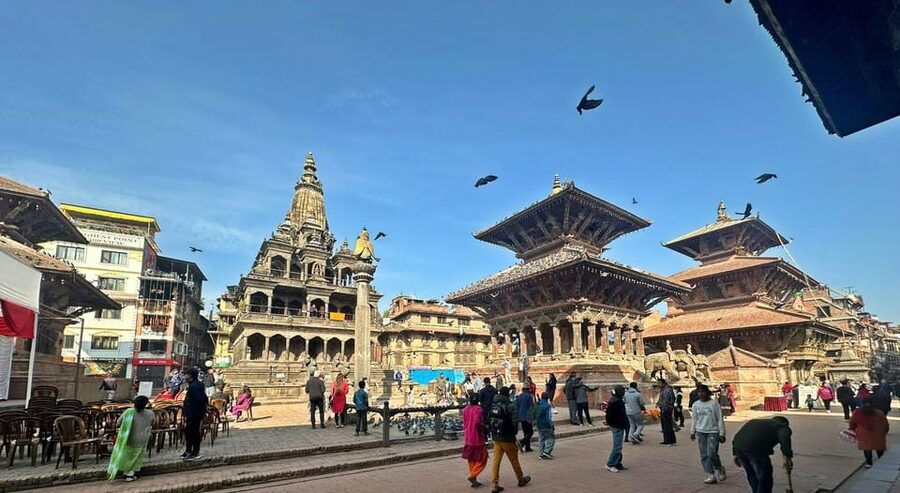
Changu Narayan Temple comes after another 20-minute drive. The visit itself lasts about 30 minutes, with time for a guided look, photographs, sightseeing, and some explanation of the site’s sculptures and ancient inscriptions.
This is the briefest heritage stop, so keep your expectations modest. You will get an introduction and a chance to see the key features, but not a long, unhurried examination. Its appeal lies in the contrast with the larger squares. Instead of a broad royal center, you get a more focused temple visit with carved stone and historic writing.
The short stop makes the overall route possible, but it is also one of the itinerary’s clearest compromises. If Changu Narayan is your main reason for visiting the valley, you should seek a separate, slower visit. If your goal is to understand the seven-site UNESCO grouping in one day, 30 minutes gives you a worthwhile taste.
Pashupatinath beside the Bagmati River
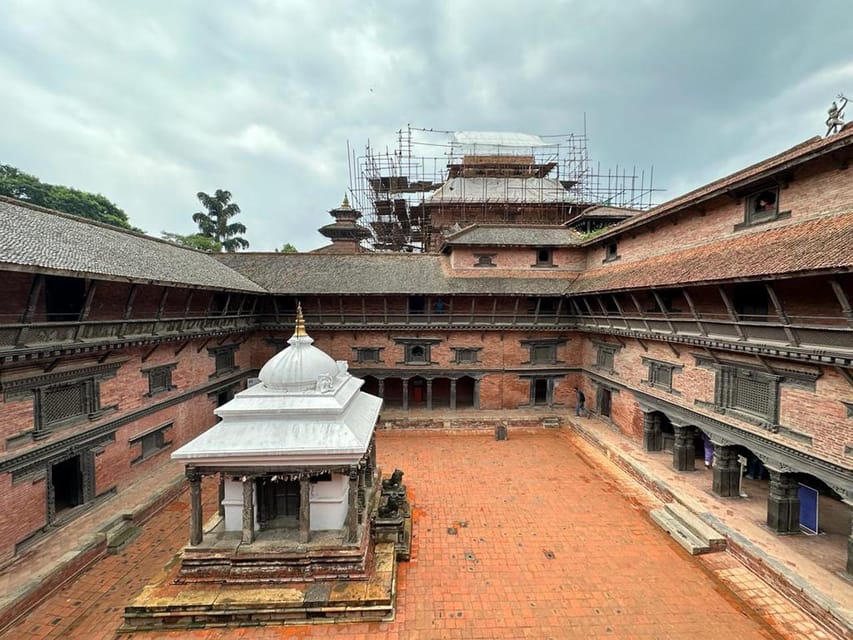
The longest transfer of the day, about 40 minutes, leads to Pashupatinath Temple. You have around 40 minutes here for photographs, a guided visit, free time, and sightseeing.
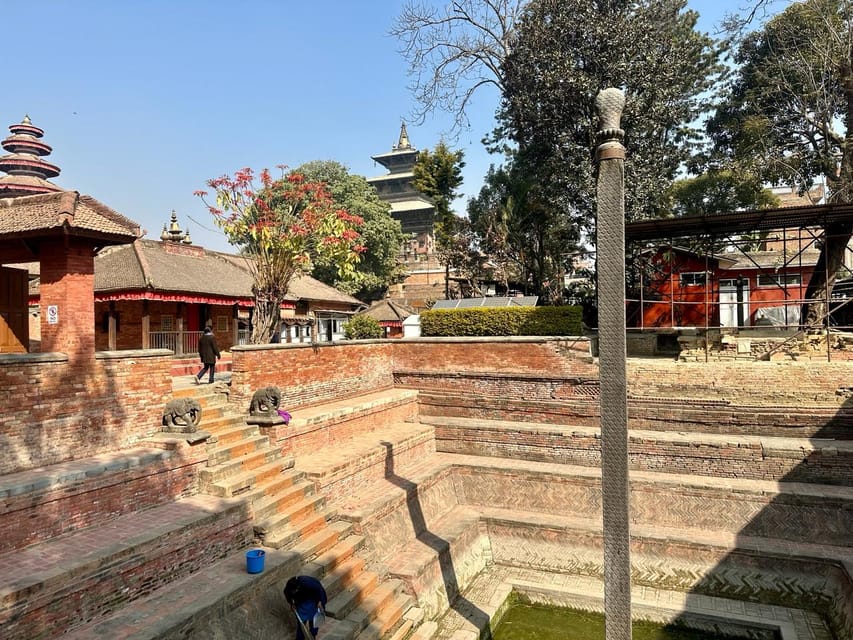
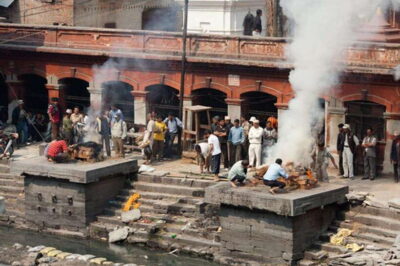
This is the tour’s most direct encounter with Hindu ritual. Along the Bagmati River, you may see cremation activity and other religious practices. That can be powerful, but it also calls for care. Follow your guide’s instructions, behave quietly, and remember that this is an active sacred and mourning place, not a performance arranged for visitors.
Pashupatinath is valuable because it connects architecture with living belief. The guide can explain what you are seeing and help you understand why the river, temple grounds, and rituals matter. Without that context, the stop could feel confusing or intrusive.
Forty minutes is enough for an introduction, but it is not generous. You will not have time to explore every part of the complex. If you need a slower visit, this is another place where an additional visit on a separate day would help.
Boudhanath, finishing with the rhythm of the stupa
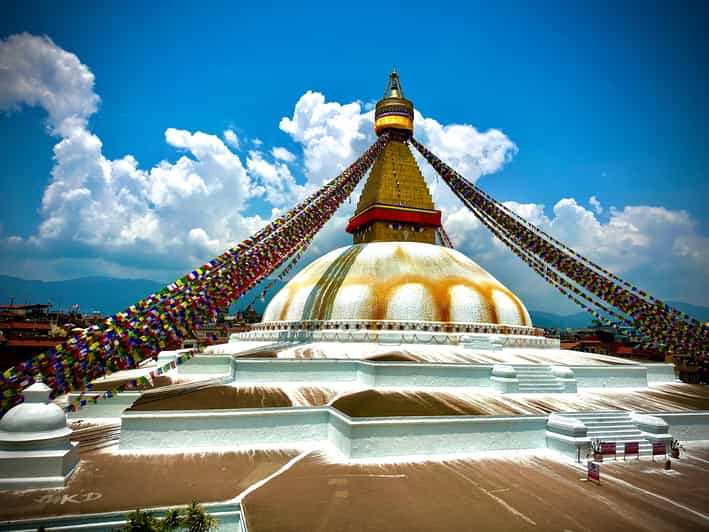
A 10-minute van ride brings you to Boudhanath Stupa for about one hour. This is the final major stop before a roughly 30-minute return to Kathmandu.
Boudhanath gives the day a strong ending. The huge stupa forms a mandala, and the experience centers on the steady movement of people walking around it, along with chants and devotional activity. After the royal squares and the solemn setting of Pashupatinath, Boudhanath offers a different kind of sacred atmosphere.
Use the hour to walk around the stupa, listen, take photographs, and browse if you wish. The guide’s role is useful here because the symbols and ritual movements can be easy to miss. A good explanation helps you see why people circle the stupa and how the site fits into Nepal’s Buddhist traditions.
By this point, fatigue is the main concern. The final stop can feel either peaceful or demanding, depending on how much energy you have left. I would save a little attention for it rather than treating Boudhanath as a quick final photograph.
What the $64 price really covers
At $64 per person, the price is reasonable if you value a private group, hotel pickup and drop-off, transport, and a licensed English-speaking guide. The route covers a great deal of ground, and the van saves you from arranging separate rides between Kathmandu, Patan, Bhaktapur, Changu Narayan, and the two major Buddhist and Hindu sites.
The important catch is that heritage-site tickets are not included. Food and personal expenses are also extra, so your final cost will be higher than the advertised amount. The tour does offer skip-the-ticket-line access, but that does not mean admission is free. Check the total budget before booking.
For a solo visitor, $64 can be good value because transport and guiding are bundled into one day. For a private group, the value may be stronger, since you receive a more personal experience without joining a large public group. The included hotel pickup and drop-off also matter in Kathmandu, where saving time on transport can make the difference between seeing all seven sites and cutting one short.
The provider offers free cancellation up to 24 hours ahead and reserve-now, pay-later booking. Those terms are useful when your Nepal plans are still shifting.
Who should choose this full-day route
I would recommend it to a first-time visitor who wants a strong overview of Kathmandu Valley culture in a single day. It suits you especially well if you want an English-speaking guide to explain religious customs, royal architecture, Newari craftsmanship, Buddhist symbols, and present-day ritual.
It also works for solo visitors and small private groups who prefer personal attention. The guide names associated with this experience include Karma and Pooja, and both are praised for clear explanations, warm communication, and thoughtful answers.
I would hesitate if you want a slow photographic tour, have limited stamina, or dislike long van transfers. The day involves walking and stair climbing, and the route can be difficult for anyone with mobility problems. It is not suitable for children under 10, pregnant women, wheelchair users, or people with motion sickness. Alcohol, drugs, and party groups are not allowed.
Bring your passport or ID card, wait in your hotel lobby for the confirmed pickup, and wear practical shoes. Since food is not included, plan for your own meals and personal purchases.
Should you book it?
Book this tour if your Kathmandu time is short and you want the valley’s seven UNESCO sites explained in one organized day. The strongest reasons are the private group, hotel transport, local guiding, and the unusually broad mix of royal, Hindu, and Buddhist sites.
Skip it if you want to linger at each monument or avoid a full day of driving and walking. The 30-minute Changu Narayan visit and 40-minute Pashupatinath visit are brief, while admission fees add to the $64 price. For a first look, though, this is a practical and culturally serious way to get your bearings.
FAQ
How long does the tour last?
The activity lasts eight hours, including transportation between the seven sites and the return to Kathmandu.
Which sites are included?
The route includes Swayambhunath Temple, Kathmandu Durbar Square, Patan Durbar Square, Bhaktapur Durbar Square, Changu Narayan Temple, Pashupatinath Temple, and Boudhanath Stupa.
Is hotel pickup and drop-off included?
Yes. Pickup and drop-off in Kathmandu are included. The driver or guide will call to confirm your details, and you should wait in your hotel lobby.
Is the tour private?
Yes. It is offered for a private group with transportation and a licensed English-speaking guide.
Are entrance tickets included in the price?
No. Tickets to the heritage sites are not included. Food and personal expenses are also separate.
What should I bring?
Bring your passport or another form of identification. Comfortable footwear is sensible because the day includes walking and stair climbing.
Can I cancel or pay later?
You can cancel up to 24 hours in advance for a full refund. Reserve-now, pay-later booking is also available.
Just added around Kathmandu
- Private Half-Day Tour of Boudhanath and Pashupatinath Temples in Kathmandu★ 4.5 · 9 reviews
- Private Half-Day Tour of Kathmandu Durbar Square and Swayambhunath Temple★ 4.5 · 11 reviews
- Namobuddha Monastery Hiking Day Tour via Panauti from Kathmandu★ 5.0 · 15 reviews
- Private Full-Day Kathmandu City Tour★ 5.0 · 9 reviews
- Private Day Tour in Kathmandu Valley Rim with Bhaktapur Sightseeing★ 5.0 · 3 reviews
- Private Half Day Budhanilkantha Tour★ 5.0 · 6 reviews
- Private Day Tour: Patan and Bhaktapur from Kathmandu★ 4.5 · 6 reviews
- Private Day Tour – Sacred Journey to Namo Buddha★ 5.0 · 5 reviews
UNESCO World Heritage Tours, compared.
Private Kathmandu Sightseeing Tour | UNESCO World Heritage sites
Read our review →
Full Day 7 UNESCO Tour with Lunch – Private/Group
Read our review →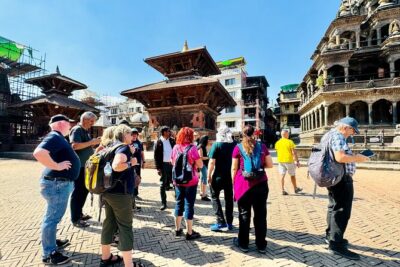
Full Day Top 4 UNESCO Tour with Lunch – Private/Group
Read our review →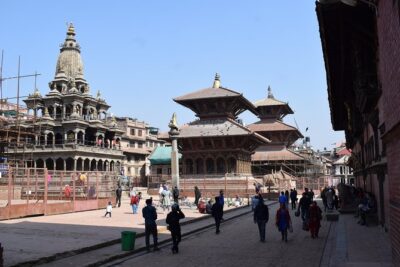
Kathmandu Spiritual Sites: Bodhnath & Pashupatinath Tour
Read our review →
Kathmandu Private Sightseeing Tour | UNESCO World Heritage Sites
Read our review →Full Day 7 UNESCO Tour with Lunch – Private/Group
Read our review →Browse the lists this tour appears in