
Reviewed · LANGTANG VALLEY TREKS
Explore The Beauty Of Langtang Valley In 8-Days Trek
Langtang Valley gives you a compact Himalayan trek with a real sense of progress. In eight days, you travel from Kathmandu to Syabrubesi, walk through forest and mountain villages, reach Kyanjin Gompa at 3,870 meters, and return by the same valley route. The optional climb to Tserko Ri, at 4,984 meters, is the trip’s toughest and most rewarding choice.
I like the flexible pace, which lets you stop for photos, breakfast, and rest rather than march to a fixed rhythm. I also like the small private format, with one licensed guide for up to five people and meals, lodging, salary, and insurance covered for the guide. The main drawback is the long shared-Jeep rides on the first and last days, each about six hours, plus the need to take altitude seriously.
Key points to know before you book
- Kyanjin Gompa is the high point of the main route: You reach 3,870 meters without needing to attempt the optional summit.
- Tserko Ri adds a demanding mountain day: The climb reaches 4,984 meters and is best for strong walkers who are adjusting well.
- The guide-to-group ratio is practical: One licensed English-speaking guide can lead a group of up to five trekkers.
- Meals and teahouse lodging are included: Breakfast, lunch, dinner, and some seasonal fruit are provided during the walking days.
- The trip is private and adjustable: You can request a slower rhythm, added breaks, and changes suited to your interests and experience.
- Personal support is a real part of the service: Coordinator Sobit helped one customer deal with lost luggage and shopping needs in Thamel, while guide Garap received praise for patient support on a first high-altitude trek.
Why Langtang works well in eight days
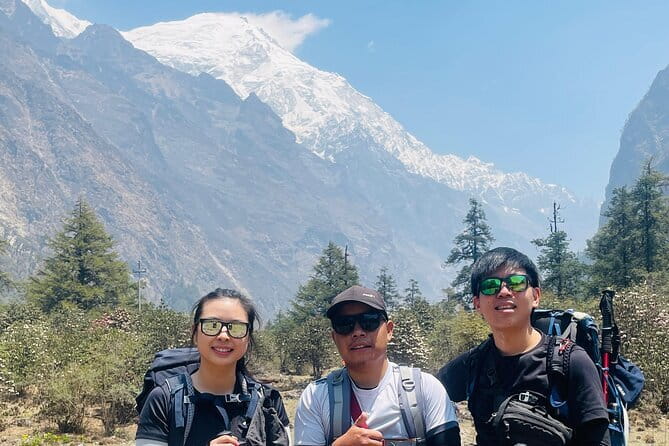
Langtang is a good choice if you want a Himalayan trek without committing to a much longer route. The walking begins at Syabrubesi and follows the valley upward, so each day has a clear purpose: forests first, then wider mountain views, then the high settlement of Kyanjin Gompa.
The route is not flat or easy. Day two takes about 5.5 hours, day three about six hours, and the optional Tserko Ri day can run to seven hours. Still, the schedule leaves room for breaks, and the company says the pace can be adjusted for beginners.
That flexibility matters. At altitude, walking too fast can turn a beautiful day into a miserable one. You are specifically advised to walk at your own pace, giving your body more time to adjust to the higher mountain conditions.
The trip is listed at $270 per person, which is a strong price if the stated inclusions are delivered as described. That price covers a guide, teahouse accommodation, meals during the trek, pickup and drop-off, and a cultural show with farewell dinner. You should still budget for personal spending and bar bills, which are not included.
More Langtang Valley Treks in Kathmandu:
- Langtang Valley Trek
★ 5.0 · 140 reviews - Private 8 – Day Langtang Trekking
★ 5.0 · 29 reviews - Kathmandu: 6-Day Limitless Langtang Trek
★ 5.0 · 21 reviews
Kathmandu pickup and the long road to Syabrubesi
The first day begins with pickup at Tribhuvan International Airport in Kathmandu. From there, you travel by shared Jeep to Syabrubesi, a drive of roughly six hours.
This is not a throwaway transfer. The road takes you through mountain valleys, villages, rivers, and waterfalls, giving you an early look at rural Nepal before the walking starts. It is also a long day in a vehicle, and shared transport means you will not have the same control over stops that you would in a private car.
Syabrubesi is the starting point for the trek. The first day includes no listed trekking meal, so check the exact meal arrangement with the operator if you arrive around lunchtime or in the evening. The plan is simple: reach the trailhead, settle in, and be ready to walk after breakfast the next morning.
Pickup and drop-off are included, which is useful after an international flight or a tiring return from the mountains. Kathmandu hotel accommodation is not included in the $270 price, though three-star to five-star hotel and resort options can be arranged at an additional cost.
Day two: suspension bridges and Lama Hotel
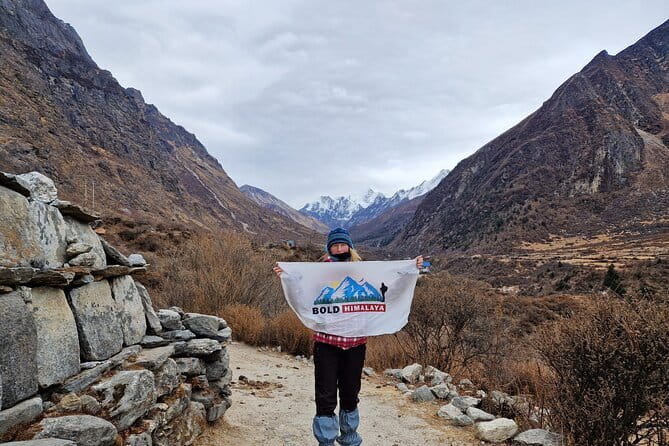
After breakfast, you walk from Syabrubesi to Lama Hotel at 2,380 meters. The day takes about 5.5 to six hours and introduces the basic rhythm of the trek: steady uphill walking, short breaks, river crossings, and changing views.
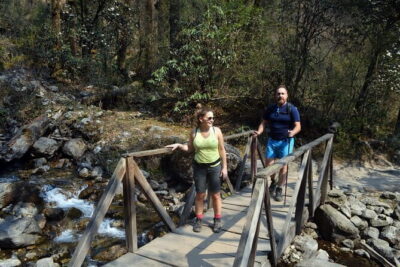
The route crosses suspension bridges over the Bhote Koshi and Langtang rivers. These crossings add character to the day, but they also remind you that this is a mountain walk, not a paved sightseeing outing. Shoes with a firm sole and a small day pack will make the route more comfortable.
Lama Hotel is an important overnight stop because it breaks up the climb toward Langtang Village. The forested route can feel shaded and enclosed compared with the open views higher up. I would treat this as a conditioning day rather than chase big photographs from start to finish.
Your guide can help set a sensible rhythm. Since the trip is designed for mixed ability levels, you do not need to match the fastest person in the group. Regular refreshments and breaks are part of the plan, though personal snacks remain a good idea if you prefer a particular brand or flavor.
Day three: moving through the Langtang Valley
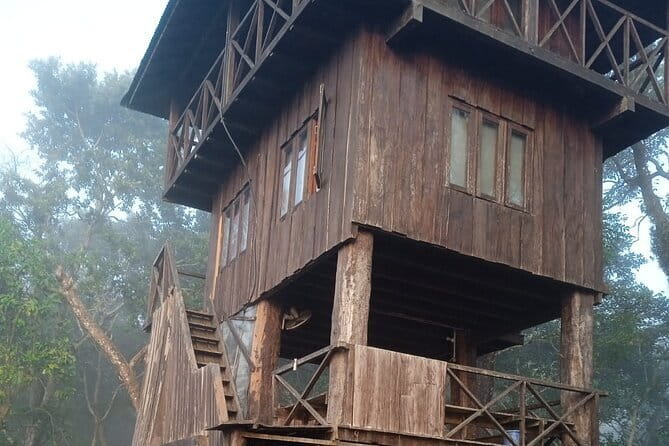
The walk from Lama Hotel to Langtang Village takes about six hours and reaches 3,430 meters. This is one of the more important days for altitude awareness because you gain considerable height while also putting in a full day on foot.
The trail passes through forests and meadows, with mountain views opening as you move higher. The setting changes gradually rather than all at once, which makes the walk feel like a journey through several zones. You leave the lower river corridor behind and begin to see a broader Himalayan world.
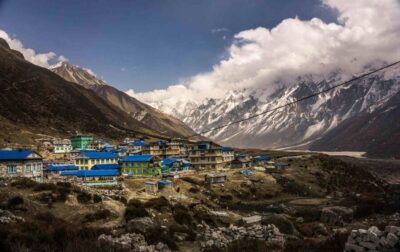
Langtang Village is a major overnight point. At 3,430 meters, you may notice thinner air, especially if this is your first high-altitude trek. The best approach is plain: walk slowly, drink regularly, take breaks, and tell your guide if you feel unwell.
The guide’s role is especially valuable here. Guide Garap received strong praise for patience and support during a first solo high-altitude trek, while coordinator Sobit has been described as attentive from the first welcome. Those details matter more on a mountain route than polished talk in Kathmandu. You want a guide who watches the group and responds when someone needs help.
A few more Kathmandu trips to weigh up
- Everest Base Camp Trek – 14 Days
★ 5.0 · 1,499 reviews - Everest Base Camp Trekking
★ 5.0 · 485 reviews - Nagarkot Sunrise View and Day Hiking from Kathmandu
★ 5.0 · 471 reviews - Annapurna Circuit Trek with Tilicho Lake
★ 5.0 · 368 reviews
Day four: the short climb to Kyanjin Gompa
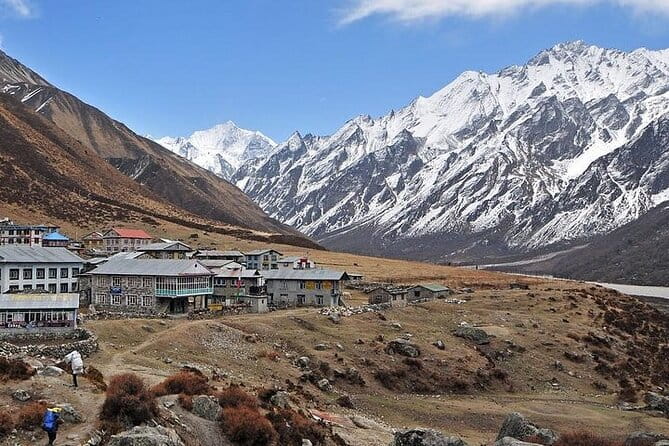
Day four takes you from Langtang Village to Kyanjin Gompa at 3,870 meters. The walk lasts about 4.5 hours, making it shorter than the previous two trekking days.
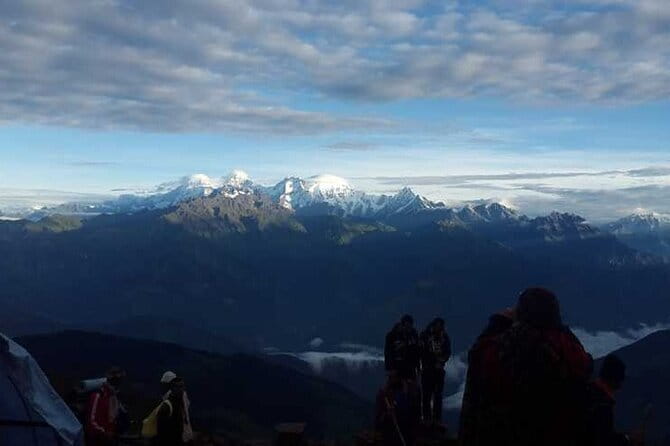
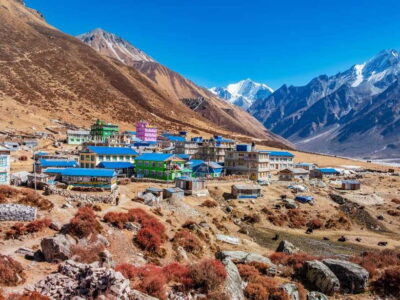
This is a smart place for a shorter day. You gain more altitude, and the extra time can help you arrive without rushing. The route offers broad views of Langtang Lirung and Gangchenpo, along with the high mountain setting around the gompa.
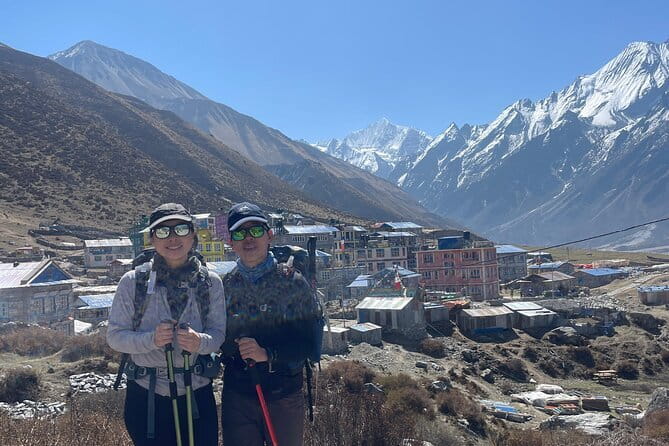
Kyanjin Gompa is the main destination of the trek. You do not need to climb Tserko Ri to make the route worthwhile. Reaching the settlement, spending time among the surrounding peaks, and taking a slower day can be enough for many people.
At 3,870 meters, comfort is not guaranteed. The accommodation is in teahouses, not city hotels, and the price does not promise luxury along the trail. You should expect a basic mountain stay, with the practical benefit that lodging and meals are already included.
Day five: choosing the Tserko Ri challenge
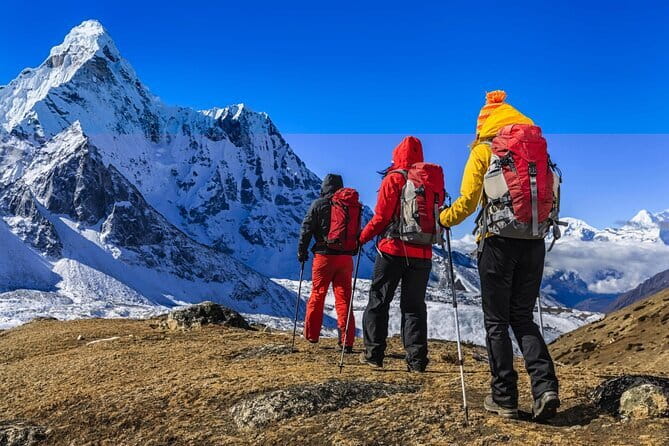
Day five is the trip’s flexible centerpiece. You wake near Kyanjin Gompa and can enjoy the high mountain views without taking on the optional hike. For stronger walkers who are acclimating well, the route to Tserko Ri reaches 4,984 meters and takes about seven hours.
A climb at that height should not be treated as a casual add-on. The difference between Kyanjin Gompa and Tserko Ri is more than a number on a schedule. You gain over 1,000 meters and spend a long day at high elevation. If you have a headache, unusual fatigue, nausea, or other altitude concerns, the sensible choice is to skip the summit and rest near Kyanjin Gompa.
The reward for attempting it is a 360-degree view of the Himalayas. The attraction is not only the summit itself, but also the sense of seeing the full valley and surrounding peaks from a high point.
The itinerary says the trip can be tailored to your ability and interests. That makes this day useful for mixed groups: one person can take the optional climb while another can enjoy a quieter day. Confirm how the guide handles this arrangement before departure, since the tour includes one guide for up to five trekkers.
Days six and seven: returning through the same valley
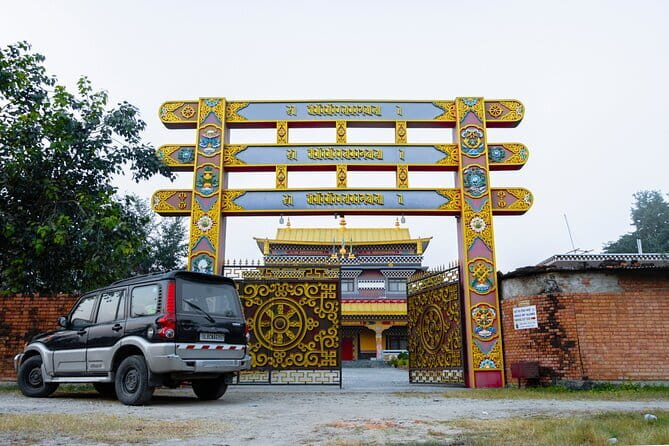
On day six, you retrace the route from Kyanjin Gompa to Lama Hotel, a walk of about six hours. Returning by the same trail may sound repetitive, but the valley often looks different when viewed downhill. You also walk with a better sense of distance and terrain after reaching the high point.
The day includes views of the mountains and glaciers as you descend. The lower elevation should feel easier for many people, though tired knees can make downhill walking demanding. Trekking poles are a practical choice, especially on a route with bridges, uneven ground, and long descents.
Day seven continues from Lama Hotel to Syabrubesi and takes about five hours. You pass through green forest and rolling hills, with rivers providing a steady soundtrack along the way.
This final walking day is shorter, but do not underestimate it. After several days on foot, even a moderate route can feel long. Keep your pace steady and save some energy for the return drive the next day.
Day eight: six hours back to Kathmandu
The final day is a roughly six-hour drive from Syabrubesi to Kathmandu. You can watch the mountain towns and valleys pass by while thinking over the walk.
The trip includes drop-off, which removes one small but useful task after a tiring return. If you arrange extra Kathmandu accommodation through the company, remember that it costs more than the tour price.
The company also includes one cultural show and farewell dinner program. This gives the trip a social finish, though you may want to confirm the timing and exact location before booking, since those details are not specified.
What the $270 price really covers
For an eight-day trek, $270 is attractive because the major trail costs are bundled together. You receive:
- Teahouse accommodation along the trek
- Breakfast, lunch, and dinner during the walking portion
- Some seasonal fruit
- A licensed English-speaking guide
- Guide salary, meals, lodging, and insurance
- Pickup and drop-off
- Cultural show and farewell dinner
The meal count is listed as seven breakfasts, seven dinners, and eight lunches. That suggests food is covered across the main trek and travel schedule, though day one and day eight arrangements should be confirmed because the daily outline does not spell out every meal.
The exclusions are limited but worth noting. Bar bills and personal expenses are not included. You should also clarify any extra costs connected with Kathmandu hotels, since those are offered separately.
The guide arrangement is one of the better value points. A licensed guide can lead up to five trekkers, and the guide’s own expenses are covered. Because this is a private activity, your group is not combined with unrelated customers.
Comfort, preparation, and practical limits
You should arrive ready for basic teahouse accommodation and long walking days. The company provides regular breaks and refreshments, but the route still asks you to spend several hours on foot at increasing altitude.
Beginners can take part, according to the supplied information, but the advice to walk at your own pace should be taken seriously. The Tserko Ri hike is optional, so you can enjoy the main route without making the highest climb.
After booking, you need to send a copy of your passport so the necessary documents can be prepared. You are also advised to check your phone and get a local SIM card on arrival. That is useful for communication, though the experience details do not promise mobile coverage throughout the mountains.
The meeting point is Tribhuvan International Airport. Confirmation is received at booking, and the activity is near public transportation. The stated information says most people can participate, but it does not provide a detailed medical or accessibility assessment, so ask direct questions if you have a health condition or mobility concern.
Cancellation is free up to 24 hours before the start time. Cancel within 24 hours, or request changes inside that period, and the amount paid is not refunded.
Who will get the most from this trek
I would choose this trip if you want a private introduction to the Himalayas, prefer having meals and a guide arranged, and like the option to adjust the pace. It is also a good match for a first high-altitude trek if you are prepared to walk slowly and communicate clearly with your guide.
It suits people who want mountain scenery, forest paths, suspension bridges, villages, and a high settlement without signing up for a much longer expedition. The optional Tserko Ri climb gives experienced walkers a harder target without forcing everyone in the group to attempt it.
I would think twice if you want private transport throughout, hotel-level comfort on the trail, or a relaxed holiday with little physical effort. The shared Jeep rides are long, the trekking days are real walking days, and the upper route reaches nearly 4,000 meters before the optional summit.
Should you book the Langtang Valley trek?
Book it if the combination of small-group support, included meals, teahouse stays, and a flexible pace fits your priorities. The itinerary gives you a clear route to Kyanjin Gompa, while the Tserko Ri option lets you decide how hard day five should be.
The strongest practical reason to choose it is the personal service built around the guide and coordinator. Sobit has helped with problems beyond the trail, including lost luggage and shopping support in Thamel, while Garap has been praised for patience on a first high-altitude trek. You should still confirm the exact guide assigned to your departure.
At $270, this is a good-value package for a private eight-day trek, provided you are comfortable with shared road transport, basic teahouses, and mountain conditions. Go at your own pace, treat the optional summit as optional, and you will be making the sensible choice.
FAQ
Where does the trek start?
The meeting point is Tribhuvan International Airport in Kathmandu, Nepal. Pickup and drop-off are included.
How long does the experience last?
The trek lasts approximately eight days, including the drives from Kathmandu to Syabrubesi and back.
How much does the trek cost?
The listed price is $270 per person.
Is this a private activity?
Yes. Only your group participates in the activity.
How many trekkers can one guide lead?
One licensed trekking guide can lead up to five trekkers.
Is an English-speaking guide included?
Yes. An in-person English-speaking guide is included.
What meals are included?
Breakfast, lunch, and dinner are included during the trek, along with some seasonal fruit. The listed meal count is seven breakfasts, eight lunches, and seven dinners.
Where do you stay during the trek?
Accommodation is provided in teahouses along the trekking route. Kathmandu hotel accommodation is available at an extra cost, with options from three-star to five-star hotels and resorts.
Is the Tserko Ri hike required?
No. The hike to Tserko Ri is optional. It reaches 4,984 meters and is scheduled for day five near Kyanjin Gompa.
Can beginners join the trek?
Yes, most people can participate, and beginners are advised to walk at their own pace to adjust to high mountain conditions.
What is not included?
Bar bills and personal expenses are not included. Kathmandu hotel accommodation also costs extra if arranged through the company.
Can I cancel for a full refund?
Yes, if you cancel at least 24 hours before the experience start time. Cancellations made within 24 hours are not refunded.
Just added around Kathmandu
- Private Half-Day Tour of Boudhanath and Pashupatinath Temples in Kathmandu★ 4.5 · 9 reviews
- Private Half-Day Tour of Kathmandu Durbar Square and Swayambhunath Temple★ 4.5 · 11 reviews
- Namobuddha Monastery Hiking Day Tour via Panauti from Kathmandu★ 5.0 · 15 reviews
- Private Full-Day Kathmandu City Tour★ 5.0 · 9 reviews
- Private Day Tour in Kathmandu Valley Rim with Bhaktapur Sightseeing★ 5.0 · 3 reviews
- Private Half Day Budhanilkantha Tour★ 5.0 · 6 reviews
- Private Day Tour: Patan and Bhaktapur from Kathmandu★ 4.5 · 6 reviews
- Private Day Tour – Sacred Journey to Namo Buddha★ 5.0 · 5 reviews
Langtang Valley Treks, compared.
Browse the lists this tour appears in