
Reviewed · DURBAR SQUARE TOURS
City tour of Bhaktapur and Patan Durbar Square
Bhaktapur and Patan give you the Kathmandu Valley at its most rewarding: royal courtyards, tiered pagodas, carved windows, and old Newari craftsmanship packed into two very different historic cities. I like the private vehicle and hotel pickup, which remove a lot of traffic and planning stress from an eight-hour day. I also like the chance to compare Patan’s fine metalwork and museum with Bhaktapur’s broad squares and traditional streets.
The main catch is cost. At $110 per person, you still pay roughly $20 to $30 more for entrance fees, and food is not included. The tour is a strong buy if you want a guide and private transport, but less so if you prefer to explore at your own pace or are watching every dollar.
Key points at a glance
- Two royal cities in one day: Visit Patan in Lalitpur and Bhaktapur, both UNESCO World Heritage sites.
- Private transport and hotel pickup: Pickup and drop-off are offered inside Kathmandu’s ring road, including the Boudha area.
- Newari architecture up close: See Krishna Mandir, the 55-Window Palace, Nyatapola Temple, and Dattatreya Temple.
- A helpful guide makes the difference: Guides including Kabita and Shanti Karki have led highly praised visits, with flexible pacing and clear explanations.
- Extra fees matter: Admission is not included, and the listed estimate is about $20 to $30 per person.
- Flexible booking: You receive confirmation at booking and can cancel for a full refund up to 24 hours before the start time.
Why these two royal cities belong on one day
Patan and Bhaktapur were once separate Newar kingdoms, and their palace squares still feel distinct. Patan, also called Lalitpur, is often linked with fine arts and careful metalwork. Bhaktapur feels more like a preserved medieval city, with larger open squares, old brick lanes, pottery traditions, and imposing pagoda temples.
That contrast gives the day a clear shape. You are not simply visiting two similar temple compounds. You are seeing two former royal centers and comparing how each one expresses Newari design.
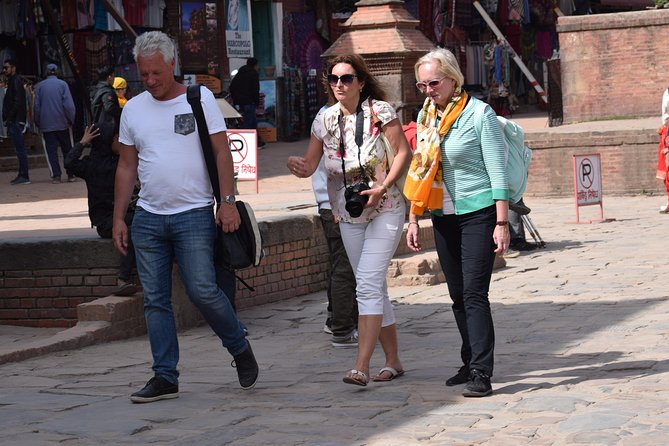
This is a private tour, so only your group participates. That matters in places where a guide’s timing can shape the whole visit. You can ask for more explanation at a temple, take a slower look at a courtyard, or move along when a site has given you enough.
The exact guide assigned to your booking is not specified. Past departures have been led by Kabita and Shanti Karki, both praised for clear explanations and a warm manner. One particularly useful feature of Shanti’s guiding style was allowing the visitor to start and stop as needed. If that sort of flexibility matters to you, mention it when booking.
More Durbar Square Tours in Kathmandu:
- Bhaktapur & Patan Durbar Square Day Tours
★ 5.0 · 122 reviews - Kathmandu Sunset Tour by Rickshaw Including Durbar Square Visit
★ 5.0 · 73 reviews - Old Kathmandu Walking Tour, Historic World Heritage Durbar Square
★ 5.0 · 22 reviews
Starting at Patan Durbar Square
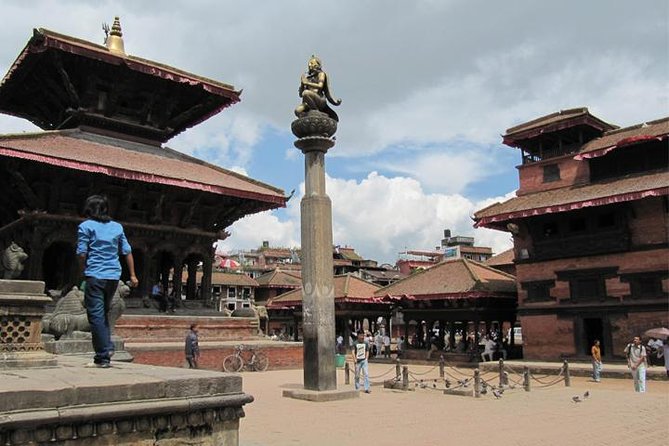
Patan Durbar Square is the first major stop listed for the day. It is the royal heart of Lalitpur, filled with palace buildings, temple platforms, courtyards, and carved details that reward a slow look.
Plan on about an hour for the main guided visit, though the private format may make the pace feel less rigid. Your guide can help you sort out the main buildings from the many smaller shrines and point out the details that are easy to miss when you walk through alone.
Patan is a good place to begin because it introduces the style of the Kathmandu Valley without overwhelming you all at once. Look closely at the wood carving, brickwork, and metal decoration. The square is not just a backdrop for photographs. It shows how royal power, religious practice, and skilled local craft were placed side by side.
The tour description notes that some sites suffered major damage in the April and May 2015 earthquakes. Restoration and visible damage are part of the present-day setting, so do not expect every structure to look untouched. That can be disappointing if you are seeking a perfectly preserved monument, but it also gives you a more honest sense of what Nepal has worked to protect.
Admission to Patan Durbar Square is not included. Keep the extra entrance cost in mind when comparing the total price with a self-guided visit.
Patan Museum and Krishna Mandir
The Patan Museum is one of the day’s best stops for anyone who wants context rather than a quick tour of buildings. It occupies a historic setting within the palace area and focuses on Newari art, including religious objects and traditional craftsmanship.
The scheduled visit is only about 15 minutes, which is short for a museum of this quality. I would treat that timing as a brief introduction rather than a full museum visit. If you care deeply about sculpture, metalwork, or Himalayan religious art, ask your guide whether the schedule allows extra time.
The museum helps explain what you are seeing outdoors. After looking at carved temples and palace details, you get a chance to consider the art itself more closely. This is especially useful in Patan, where fine craft is one of the city’s central themes.
Krishna Mandir, also called Chayasim Deval, receives a separate visit of about 10 minutes. This stone temple is different from the surrounding Newari pagodas, making it an important comparison point within the square.
A short stop is enough to admire the building and hear its main story, but it will not leave much time for lingering. If photography or architectural detail matters to you, use the private format to ask for a few extra minutes when possible.
Bhaktapur Durbar Square and the 55-Window Palace
Bhaktapur is often considered the largest and most beautiful of the Kathmandu Valley’s three royal cities. The main square has a grander, more open feel than Patan, while nearby lanes lead toward smaller courtyards and traditional areas.
The guided visit is listed at about one hour. You will see royal palace buildings, temple structures, and the 55-Window Palace, the most recognizable building in the square.
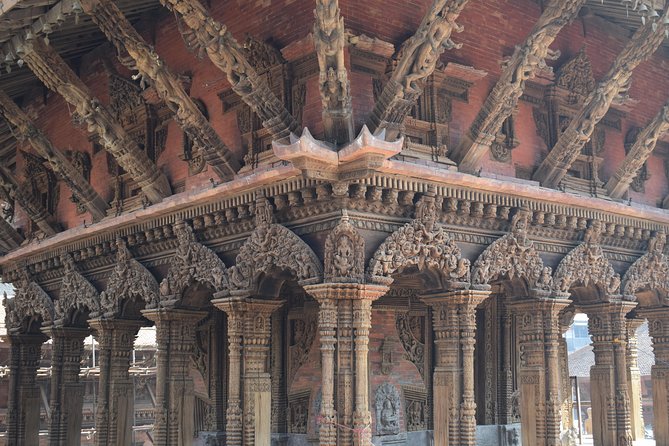
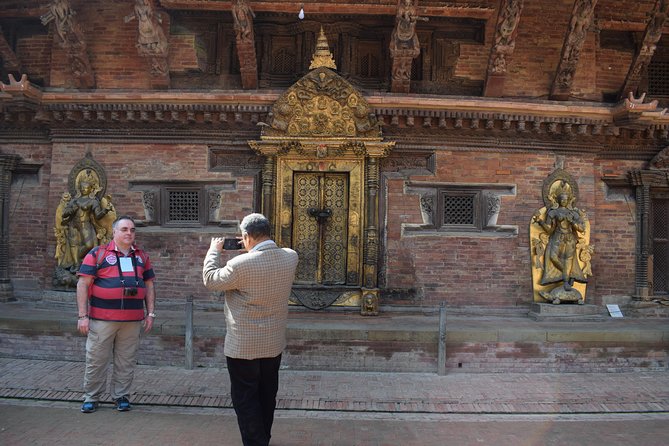
The palace gets about 15 minutes of focused attention. Its name comes from the many carved windows set into the upper facade, a fine example of the woodwork associated with Bhaktapur. Take time to study the repeated patterns rather than treating the palace as a quick photo stop.
Bhaktapur suffered earthquake damage as well, and some structures may show repairs or loss. The square remains powerful, but it is important to arrive with realistic expectations. The value is not only in seeing old buildings in perfect condition. It is also in seeing how a living city has protected and rebuilt its historic center.
Bhaktapur is the place where I would most want a guide who explains what is original, what has been repaired, and what each building was used for. Without that help, a palace facade can become just another attractive wall. With the right explanation, the square becomes easier to read.
More Bhaktapur Tours in Kathmandu:
- Private Bhaktapur and Nagarkot Day Tour From Kathmandu
★ 5.0 · 305 reviews - Day Trip to Bhaktapur and Panauti from Kathmandu
★ 5.0 · 184 reviews - Nagarkot Sunrise & Bhaktapur UNESCO Heritage Private Tour
★ 5.0 · 66 reviews - Kathmandu: Private Patan and Bhaktapur Sightseeing Tour
★ 4.7 · 64 reviews
Nyatapola, Dattatreya, and the smaller squares
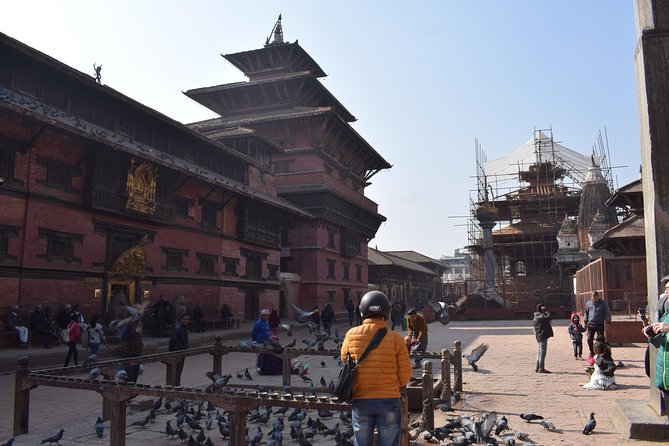
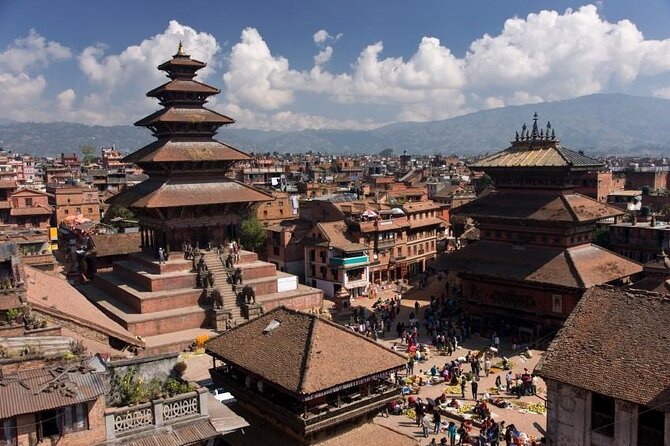
Nyatapola Temple is Bhaktapur’s signature monument. Its name means five stories, and its tall pagoda form dominates the area around Taumadhi Square.
The scheduled stop is about 10 minutes, enough to see the temple and understand its scale. The stairway and stacked guardian figures create a strong upward view, so this is one of the places where stepping back can help you take in the full structure.
The short visit may feel rushed if you want detailed architectural photographs. On a private tour, you can ask whether there is room to pause longer, but the overall day still has several major stops to cover.
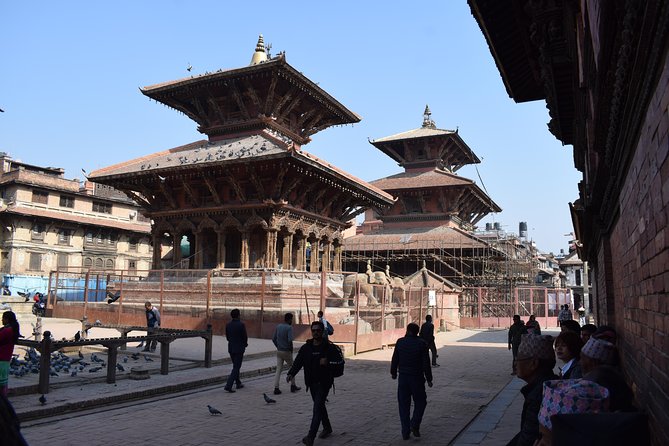
Dattatreya Temple is in the historic Dattatreya Square and receives about 15 minutes. It is described as one of the valley’s oldest pagodas and a major example of Newari craftsmanship.
This stop broadens the Bhaktapur visit beyond the main royal square. You see another part of the old city and gain a better sense of how temples were placed within neighborhood life, not only around the palace.
The route also includes Nyatapole Temple Square and Dattatreya Square. The supplied schedule does not assign separate times to every square, so you should think of them as part of the connected Bhaktapur visit rather than guaranteed long stops at each location.
If you enjoy wandering old lanes, Bhaktapur may be the emotional high point of the day. One past visitor especially enjoyed the small streets, Taumadhi Square, and Pottery Square. Pottery Square is not listed as a formal timed stop, so do not assume you will have a long workshop visit there, but you can ask whether the route allows a look.
What the private format really adds
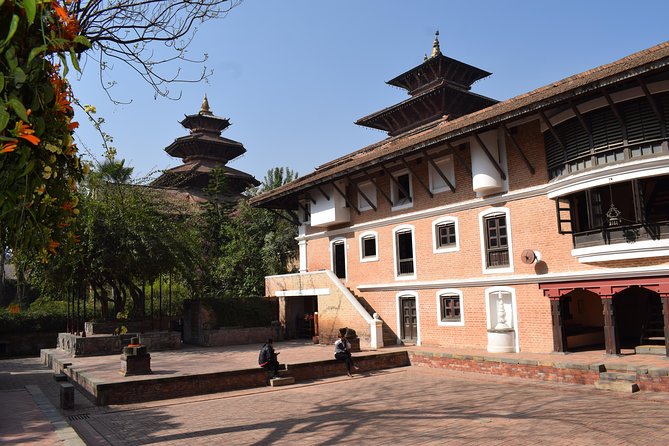
The private vehicle is more than a comfort feature in Kathmandu. It gives you a fixed base for a long day that includes two cities and several sites, while hotel pickup inside the ring road saves you from arranging separate transport.
Pickup includes the Boudha area, a useful detail for people staying near the large Buddhist stupa. Locations outside the ring road are not included in the stated pickup area, so confirm your hotel location before booking.
Your guide is the main reason to choose this rather than simply hiring transport. The strongest feedback has focused on clear explanations, friendly service, and the ability to adjust the pace. Kabita was praised for explaining what the group saw, while Shanti Karki was described as charming, informative, and willing to let the visitor stop and start.
Those names do not guarantee who will lead your departure. Still, they show the kind of guiding that suits this itinerary: someone who can explain religion, architecture, royal life, and local art without turning the day into a string of dates and names.
A private tour also works well if your group has mixed interests. One person can spend longer at the Patan Museum, another can focus on temple photography, and nobody has to match the pace of a large coach group.
Is $110 a fair price?
The listed price is $110 per person. That includes a professional guide, private vehicle, and hotel pickup and drop-off within the stated area. It does not include meals, drinks, or entrance fees, estimated at about $20 to $30 per person.
That puts the likely total above the advertised rate. I would judge the price by asking what you value more: independence or simplicity.
For a solo visitor, $110 plus admissions is a considerable outlay for one day. You are paying for private service, not just access to the squares. If you want to avoid arranging transport, learn what you are seeing, and keep some control over the pace, the cost can make sense.
For couples, families, or small groups, the value is easier to defend because the private vehicle and guide serve everyone in your party. Group discounts are offered, though the amount is not stated, so ask for the current rate before paying.
Food and drinks are not included. Bring money for those expenses, and remember that the day is about eight hours long. The tour is best compared with the cost of hiring a private guide and vehicle separately, not with the price of entering one monument.
Timing, comfort, and practical limits
The full day is approximately eight hours, with several stops lasting 10 to 15 minutes and major square visits lasting about an hour. That gives you a useful overview, but it is not a slow study tour of every courtyard and museum room.
The schedule may also feel uneven. Patan Museum gets only 15 minutes, while the two palace squares receive longer visits. If art is your main interest, say so at the start and ask where the day can be adjusted.
The tour is described as suitable for most people, but the itinerary includes historic squares, temple areas, and old streets. The provided details do not specify accessibility features, so anyone with mobility concerns should ask the operator for current conditions before booking.
The mobile ticket makes it easy to keep booking details with you. Confirmation is received at the time of booking, and free cancellation is available until 24 hours before the start time. Cancellations made inside that window are not refunded, and late changes are not accepted.
Who should book this Kathmandu day trip?
I would recommend it to first-time visitors who want to see both Patan and Bhaktapur without managing Kathmandu transport on their own. It also suits anyone who values explanation, since the temples and palace squares make much more sense with someone pointing out their purpose and design.
It is a good match for couples, families, and small groups that want a private pace. The reported flexibility with guides such as Shanti Karki is especially useful if you dislike being hurried from one monument to the next.
Art lovers should book it only after checking the museum timing. The Patan Museum is important, but 15 minutes may not satisfy you. Ask if the visit can be extended.
You may want to skip it if you have already arranged a private guide, prefer long unplanned walks, or want the lowest possible cost. Entrance fees are extra, and the day’s timetable leaves limited room for every side street and courtyard.
Should you book it?
Book this tour if you want an efficient, well-explained day covering the Kathmandu Valley’s two most important royal cities. The strongest reasons are the private transport, hotel pickup, guide-led context, and the clear contrast between Patan’s art-focused setting and Bhaktapur’s broad squares and tall pagodas.
Before booking, confirm the pickup point, current group discount, admission costs, and how much time can be given to Patan Museum. If those details suit your plans, this is a practical way to see Krishna Mandir, the 55-Window Palace, Nyatapola, and Dattatreya Temple in one focused day.
FAQ
How long does the tour last?
The tour lasts approximately eight hours.
Is hotel pickup included?
Yes. Pickup and drop-off are included for hotels inside Kathmandu’s ring road, including the Boudha area.
Is this a private tour?
Yes. Only your group participates in the activity.
Are entrance fees included?
No. Admission fees are extra and are estimated at about $20 to $30 per person.
Is food included?
No. Food and drinks are not included in the tour price.
Which places are visited?
The tour visits Patan Durbar Square, Patan Museum, Krishna Mandir, Bhaktapur Durbar Square, the 55-Window Palace, Nyatapola Temple, and Dattatreya Temple. It also includes Dattatreya Square and Nyatapole Temple Square.
Can I cancel for a full refund?
Yes. You can cancel at least 24 hours before the experience start time for a full refund. Cancellations or changes made less than 24 hours before the start time are not accepted for a refund.
Just added around Kathmandu
- Private Half-Day Tour of Boudhanath and Pashupatinath Temples in Kathmandu★ 4.5 · 9 reviews
- Private Half-Day Tour of Kathmandu Durbar Square and Swayambhunath Temple★ 4.5 · 11 reviews
- Namobuddha Monastery Hiking Day Tour via Panauti from Kathmandu★ 5.0 · 15 reviews
- Private Full-Day Kathmandu City Tour★ 5.0 · 9 reviews
- Private Day Tour in Kathmandu Valley Rim with Bhaktapur Sightseeing★ 5.0 · 3 reviews
- Private Half Day Budhanilkantha Tour★ 5.0 · 6 reviews
- Private Day Tour: Patan and Bhaktapur from Kathmandu★ 4.5 · 6 reviews
- Private Day Tour – Sacred Journey to Namo Buddha★ 5.0 · 5 reviews
Durbar Square Tours, compared.
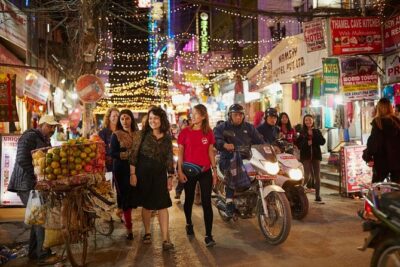
Kathmandu Sunset Tour by Rickshaw Including Durbar Square Visit
Read our review →
Old Kathmandu Walking Tour, Historic World Heritage Durbar Square
Read our review →
Bhaktapur Old City and Durbar Square Half-Day Tour
Read our review →
Nagarkot Sunrise & Bhaktapur Durbar Square UNESCO Heritage Tour
Read our review →
Patan & Bhaktapur Durbar Square Tour with Lunch – Private/Group
Read our review →
Private Half-Day Tour of Kathmandu Durbar Square and Swayambhunath Temple
Read our review →Browse the lists this tour appears in