
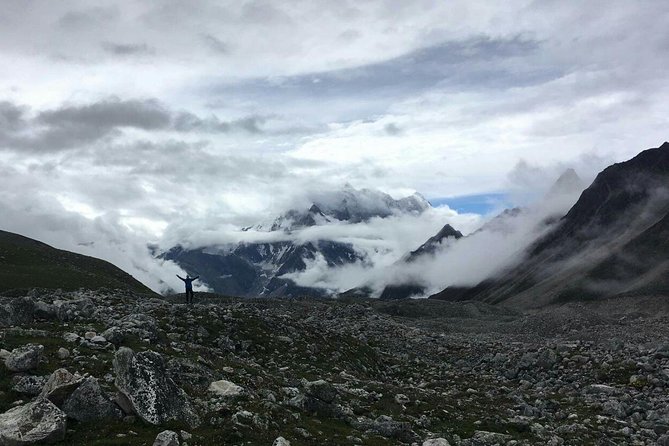
Reviewed · ANNAPURNA BASE CAMP TREKS
Annapurna base camp -9 days
The big draw here is the steady climb into the Annapurna Sanctuary, where trees give way to a stark mountain bowl surrounded by Annapurna South, Hiunchuli, Machhapuchhre, and other high peaks. You also get the human side of the trek: stone villages, terraced fields, Gurung and Magar communities, simple teahouses, and a sunrise start that rewards an early wake-up.
I like the private format, since your group can set its pace and adjust plans when needed. I also like the practical package: meals, permits, guide costs, transport, a sleeping bag, and a down jacket are included. The main consideration is the physical demand. Five to six hours of walking per day, with repeated descents and steep stone steps, is not a casual holiday.
Key points before you book
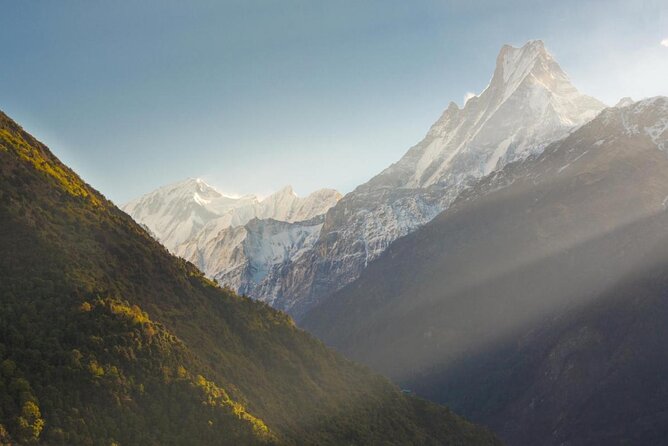
- Annapurna Sanctuary at sunrise: Leave Machhapuchhre Base Camp early and reach the Annapurna Base Camp area for huge mountain views and first light.
- Gurung village culture: Dhampus, Landrung, Chhomrong, and Jhinu provide a closer look at village life than a quick mountain photo stop.
- Private trekking support: An English-speaking guide leads your group, with the option to add a porter for $220 per person.
- Meals and mountain lodging included: Nine breakfasts, nine lunches, nine dinners, and nine nights of accommodation are covered.
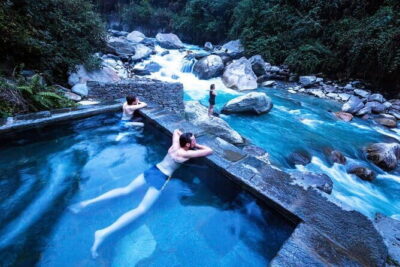
- Hot springs at Jhinu: The final mountain section includes time to visit natural hot springs, a welcome treat after the long descent.
- Transport is part of the plan: Airport pickup, Kathmandu to Pokhara transport, and the return journey are arranged, though the exact Pokhara and Kathmandu transfers should be confirmed.
What the $693.34 price really covers
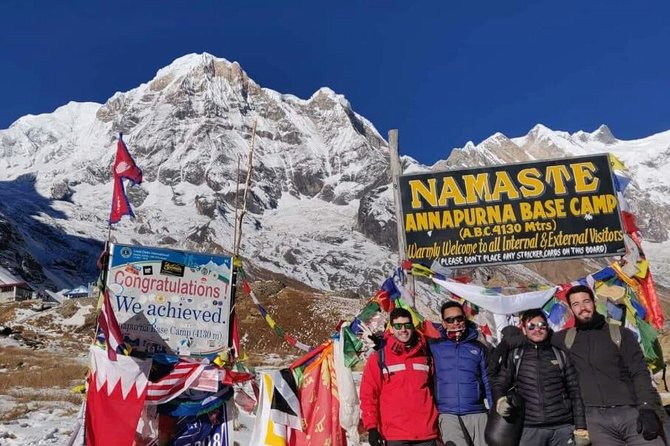
At $693.34 per person, this trek offers a solid amount for the money. You are not paying only for a guide and a route. The price includes airport pickup and drop-off in a private vehicle, tourist bus transport between Kathmandu and Pokhara, trekking permits, a licensed English-speaking guide, food and lodging during the trek, and guide insurance.
You also receive a first-aid kit carried by the guide, a returnable down jacket, and a sleeping bag. Those last two items matter. Nights at altitude can be cold, and renting or buying warm gear in addition to the trek price can quickly add to your budget.
The price does not include a porter. That costs $220 per person. You will also pay for international airfare, your Nepal visa, personal insurance, Kathmandu food and lodging, hot showers, laundry, phone use, drinks, shopping, tips, and emergency costs such as a chartered helicopter.
The best way to judge the price is to look at what you would need to arrange alone. A private guide, permits, three meals a day, mountain accommodation, equipment, and ground transport are already organized. Still, budget for the porter if you do not want to carry your own larger bag, and keep a reserve for delays or medical problems.
The package mentions nine days and nine nights, but the day-by-day schedule has a few moving parts. It begins with airport pickup in Kathmandu, says the main package starts the next day, and includes transport through Pokhara. Before paying, ask for the exact hotel nights, the Kathmandu to Pokhara departure, and how the return to Kathmandu is handled.
More Annapurna Base Camp Treks in Kathmandu
- Annapurna base camp trek 5 Days
★ 5.0 · 252 reviews - Annapurna Base Camp Trek
★ 5.0 · 111 reviews - Kathmandu to Annapurna Base Camp (ABC) 5-Day Trek
★ 5.0 · 102 reviews
Day 1: Kathmandu pickup and the journey toward Pokhara
Your arrival begins at Tribhuvan International Airport, where a private vehicle takes you to your hotel. The listed meeting time is 6:30 am, so confirm how that applies to your flight and arrival date.
The schedule labels the first stop as Poon Hill, but the description focuses on airport arrival and hotel transfer, with the package starting from the second day. That mismatch is worth clearing up before departure. Poon Hill is associated with a different section of the Annapurna region, while this route is built around Annapurna Base Camp.
The next major move is from Kathmandu to Pokhara by tourist bus. An optional flight is available for an extra charge. The bus costs less and keeps the package affordable, but it also takes longer and may feel tiring before several days of walking. A flight saves time but changes the budget.
Pokhara is the practical gateway for the trek. The plan gives you a chance to organize your pack, meet the guide, and prepare for the trail.
Day 2: Phedi to Dhampus and the first mountain views
From Pokhara, you drive to Phedi and begin walking toward Dhampus. The trek lasts about four hours, making this a useful first day on the trail rather than a punishing start.
Dhampus is a Gurung village with views toward Hiunchuli, Annapurna South, and Machhapuchhre, often called Fishtail because of its distinctive double summit. These are the first major peaks to frame your route, and the village setting gives the views more meaning than a roadside lookout.
You walk through terraced fields and village paths, with the trail rising and falling rather than simply climbing in a straight line. That matters because even a shorter day can leave your legs working hard when the route includes stone steps.
I like this opening because it mixes scenery with local life. You are not dropped straight into an isolated high-altitude camp. You begin among working villages and cultivated hills, then gradually move toward the higher sanctuary.
Day 3: Landrung, Jhinudanda, and Chhomrong
This is a five-hour day through oak forest and terraced farmland. The route descends to Landrung, a village associated with Gurung, Magar, and Brahmin communities, then continues toward Jhinudanda and Chhomrong.
Landrung is one of the more interesting cultural stops because several communities live along the same route. The village sections also break up the walking. You get changing views, forest shade, and cultivated slopes instead of one long mountain corridor.
The route then moves down again before climbing toward Chhomrong. This repeated up and down is a pattern you should expect on the trek. The distance may look manageable on paper, but descents can be hard on knees, and every descent usually means another climb later.
Chhomrong is a key point on the Annapurna Base Camp route. The schedule lists Chhomrong Cottage as a stop, and this area is used as a base before the trail turns more directly into the Modi Khola valley.
Same mountains, a completely different kind of day:
- Everest Base Camp Trek – 14 Days
★ 5.0 · 1,499 reviews - Private Kathmandu Sightseeing Tour | UNESCO World Heritage sites
★ 5.0 · 756 reviews - Everest Base Camp Helicopter Tour landing at Everest View Hotel
★ 5.0 · 668 reviews - Half day cooking class in Thamel kathmandu
★ 5.0 · 607 reviews
Day 4: Sinuwa, rhododendron forest, and the Seti River section
From Chhomrong, you cross a bridge and climb toward Sinuwa Danda. The walking time is about five hours, with thick rhododendron forest leading to Khuldighar.
The forest is one of the pleasures of this middle section. Annapurna is known for a wide range of plant life, and the route passes through changing vegetation as it gains height. In season, rhododendrons add color, but the forest is useful even without flowers because it offers shade and a cooler feel.
After Khuldighar, the path drops down a long, steep set of stone steps. This is one of the days where good footwear and a controlled pace matter more than speed. I would keep your water accessible and avoid racing downhill, since the next days still require strong legs.
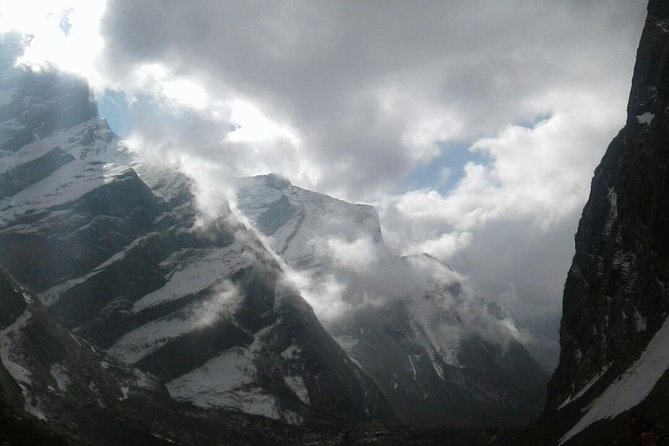
The route also follows the Seti River area. Water, forest, bridges, and stone stairways give this part a more enclosed feel than the open views around Dhampus. You are moving deeper into the valley now, and the mountains begin to feel less like distant scenery and more like walls around the route.
Day 5: Bamboo, the sacred valley, and Machhapuchhre Base Camp
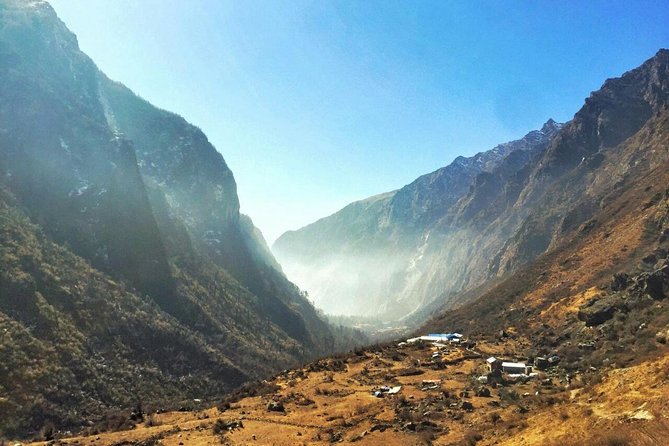
This is a six-hour day and one of the most scenic sections. You follow the river through a sacred valley, passing bamboo trees and continuing toward Machhapuchhre Base Camp.
The valley has religious importance, and meat and fish are not allowed in this area because of Buddhist and Hindu beliefs. That rule is a reminder that this is not only a route to a viewpoint. The valley has meaning for local communities, and your guide can help explain the customs as you pass through.
The trail gradually climbs beside the river. Bamboo gives way to more open ground as you gain height. The transition is part of the experience: the trees thin, the air feels colder, and the route becomes more exposed.
Machhapuchhre Base Camp is not the final goal, but it is an important overnight point before Annapurna Base Camp. You will want to keep this day steady. Six hours of uphill walking at increasing altitude can be tiring, even if the pace is moderate.
Mountain accommodation here is basic. The package includes lodging and meals, but do not expect city comforts. Hot showers, phone use, laundry, snacks, and drinks are personal expenses, and facilities become more limited as you move higher.
Day 6: Into the Annapurna Sanctuary and Base Camp
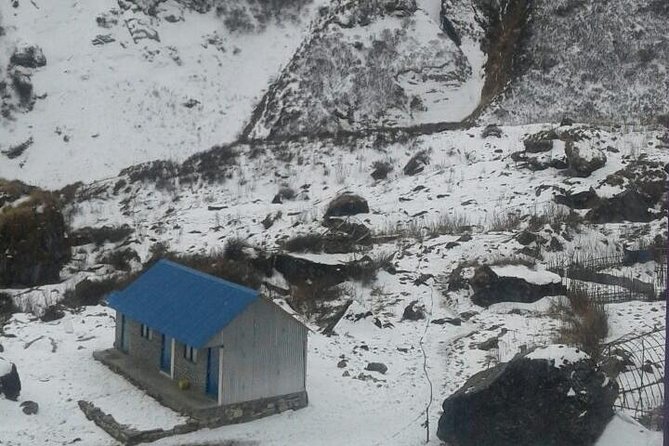
From Machhapuchhre Base Camp, you leave the remaining trees behind and enter the high, open area known as the Annapurna Sanctuary. The walk takes about five hours.
This is the core of the trek. The route enters a broad mountain bowl surrounded by high peaks, with Annapurna Base Camp as the main destination. The open setting feels very different from the forested valley below. There is less shelter, less plant life, and a greater sense of altitude.
The surrounding Annapurna range is the reason to accept the long climbs and basic lodging. You may see Annapurna South, Hiunchuli, Machhapuchhre, and other peaks from different angles as the route turns through the sanctuary.
Your guide’s role becomes especially useful here. The walk is not just about finding the path. You need sensible pacing, warm clothing, regular food and water, and attention to how your body feels. The package includes a first-aid kit, but it does not replace personal travel and medical insurance.
At the base camp area, keep your expectations practical. Weather can change, visibility can vary, and mountain views are never guaranteed on a strict schedule. The value of the day is also the setting itself, not only a clear photograph.
Day 7: Sunrise over the Annapurna Mountain Range
The day starts early with a wake-up call for sunrise in the Annapurna Sanctuary. This is a smart part of the plan because the first light can change the appearance of the surrounding peaks, and morning often gives you the best chance for clear views.
After sunrise, you begin descending along the Modi Khola River toward Bamboo Hut. The walk lasts about six hours. Descending sounds easier than climbing, but long downhill sections can be demanding, especially after reaching the highest part of the route the day before.
The river provides a natural line through the valley, while the return through lower areas brings back more vegetation. You will notice the route changing again as the altitude drops.
This is a good day to use trekking poles if you have them and to keep your pace even. The temptation is to rush downhill because the hard climb is over. That can leave your knees sore before the final two days.
Day 8: Chhomrong and the hot springs at Jhinu
The eighth day combines a climb to Sinuwa, a descent to the Chomrong Khola River, another ascent to Chhomrong, and a final descent to Jhinu. The walking time is about six hours.
This section shows why the Annapurna Base Camp route is not simply a long uphill walk followed by an easy finish. You keep gaining and losing height. The repeated climbs are manageable if you walk slowly, but they can surprise anyone who has judged the day only by its distance.
Jhinu is the reward at the end. You can visit the natural hot springs, which offer a pleasant way to loosen tired muscles after the trail. The stop is not a luxury resort experience, and the hot springs do not erase the day’s effort, but they add a welcome change of pace.
The schedule allows flexibility. One guide, Binod, has adjusted a trek to eight days for a tight travel plan and included a night at the hot springs. That suggests you should discuss timing early if you need a custom version, rather than assuming every group follows the same overnight pattern.
Day 9: Nayapul, Pokhara, and the return journey
The final trekking day is an easier descent along the Modi Khola toward Nayapul, taking about five hours. From Nayapul, a private car takes you to Pokhara in roughly one and a half hours.
This is a sensible finish. You leave the trail gradually rather than ending beside a road at the highest point. The river route and lower valley provide a calm close to the walking portion.
The supplied arrangements say transport continues back to Kathmandu by tourist bus, while the final day description focuses on returning to Pokhara and transferring to your hotel. Confirm the final transport plan, since this affects your last night, onward flight, and luggage arrangements.
Guides, porters, and the private format
The trek includes a licensed English-speaking guide. The guide leads the walking, handles route logistics, carries a first-aid kit, and helps manage permits and mountain accommodation.
Named guides connected with this experience include Binod and Sona, while porters have included Rajendra, Rahul, and Bikash. You should not assume a particular person will be assigned, but you can ask the company who will lead your group before departure.
The private format is valuable for solo hikers, couples, and families who want more control. One solo trekker was carefully supported by a guide and porter, while another pair had their schedule changed to fit their travel plans. That flexibility is one of the stronger reasons to choose a private trip instead of a fixed group departure.
A porter costs $220 per person and is not included. If you use one, pack with respect for the weight limit and remember that the porter is doing a demanding job over steep terrain. If you carry your own bag, keep it light. The down jacket and sleeping bag supplied for temporary use reduce the amount of bulky gear you need to bring.
Who should book this trek?
You should consider this trek if you want a focused nine-day route to Annapurna Base Camp with village scenery, mountain views, meals, lodging, permits, and a guide arranged in one package.
It suits people with a moderate level of fitness who can handle five to six hours of walking on several days. You do not need to be a technical climber, but you do need to be comfortable with steep stone steps, repeated climbs, basic mountain lodging, and changing weather.
The trek is also a good match for solo hikers who prefer support without joining a large group. Couples and families may like the private pacing, especially if they need to adjust a day.
You may want another option if you dislike long bus rides, basic teahouses, or carrying a personal pack. You should also avoid treating the listed times as guarantees. Weather, trail conditions, and personal pace can change the day.
Free cancellation is available if you cancel at least 24 hours before the local start time. Cancellations inside that window are not refunded, and late changes are not accepted.
Should you book the Annapurna Base Camp trek?
I would book this trek if you want the Annapurna Sanctuary without arranging every permit, meal, bed, transfer, and piece of cold-weather gear yourself. The strongest value comes from the private guide service and the number of essentials included in the $693.34 price.
Before booking, confirm three things: the exact start date after your Kathmandu arrival, the Pokhara to Kathmandu return plan, and the added $220 porter charge. If those details fit your schedule and budget, this is a practical, scenery-heavy route with genuine village contact and a memorable sunrise at the high point.
FAQ
Is airport pickup included?
Yes. Airport pickup and drop-off in a private vehicle are included. The listed starting point is Tribhuvan International Airport in Kathmandu, with a 6:30 am start time shown.
How long does the Annapurna Base Camp trek take?
The experience is listed as nine days. Walking days generally take about four to six hours, with the longest scheduled days lasting around six hours.
Is transportation from Kathmandu to Pokhara included?
Yes. Tourist bus transportation from Kathmandu to Pokhara and back to Kathmandu is included. An optional flight is available for an additional cost.
Is a porter included in the price?
No. A porter costs $220 per person. The package does include guide costs, guide insurance, meals, lodging, permits, a sleeping bag, and a returnable down jacket.
Are meals included during the trek?
Yes. The package includes nine breakfasts, nine lunches, and nine dinners. Food and accommodation in Kathmandu are not included.
What cancellation terms apply?
You can receive a full refund by canceling at least 24 hours before the experience start time. Cancellations or changes made less than 24 hours before the start are not accepted or refunded.
Just added around Kathmandu
- Private Half-Day Tour of Boudhanath and Pashupatinath Temples in Kathmandu★ 4.5 · 9 reviews
- Private Half-Day Tour of Kathmandu Durbar Square and Swayambhunath Temple★ 4.5 · 11 reviews
- Namobuddha Monastery Hiking Day Tour via Panauti from Kathmandu★ 5.0 · 15 reviews
- Private Full-Day Kathmandu City Tour★ 5.0 · 9 reviews
- Private Day Tour in Kathmandu Valley Rim with Bhaktapur Sightseeing★ 5.0 · 3 reviews
- Private Half Day Budhanilkantha Tour★ 5.0 · 6 reviews
- Private Day Tour: Patan and Bhaktapur from Kathmandu★ 4.5 · 6 reviews
- Private Day Tour – Sacred Journey to Namo Buddha★ 5.0 · 5 reviews
Annapurna Base Camp Treks, compared.
Kathmandu to Annapurna Base Camp (ABC) 5-Day Trek
Read our review →
Kathmandu/Pokhara: 5-Day Annapurna Base Camp (ABC) Trek
Read our review →
11-Day Hike Tour to Annapurna Base Camp Bliss in Kathmandu
Read our review →
Browse the lists this tour appears in