
Reviewed · UNESCO WORLD HERITAGE TOURS
UNESCO Seven World Heritage Tour in Kathmandu
Kathmandu’s seven UNESCO sites are scattered across the valley, so seeing them all in one day takes smart routing and stamina. This private tour handles the long transfers by car and puts an English-speaking guide beside you for the temples, courtyards, shrines, and rituals.
I especially like the door-to-door service, which saves you from arranging taxis in Kathmandu’s famously tricky traffic. I also like the flexible pace reported by guests who toured with guides such as Shanti, Pankaj, Kabita, Sarita, and Som. The main catch is simple: twelve hours, many stairs, and a great deal of information make this a whirlwind rather than a leisurely visit.
Key points to know before booking
- Seven UNESCO sites in one day: Swayambhunath, Kathmandu Durbar Square, Patan, Bhaktapur, Changu Narayan, Pashupatinath, and Boudhanath all fit into one ambitious route.
- Private car and hotel transfers: You spend less time finding transport and more time at the monuments.
- A strong guide matters: Guides including Shanti, Pankaj, Kabita, Sarita, and Som are praised for explaining both Hindu and Buddhist traditions.
- Bhaktapur gets proper attention: The route includes Nyatapola Temple, Dattatreya Temple, the 55 Window Palace, and Siddha Pokhari.
- Entry fees are included: Admission to the seven heritage sites is covered in the $180 price.
- Prepare for a long walking day: Comfortable shoes, water, and sun protection are essential.
What this Kathmandu heritage day is really like
This is not a gentle introduction with one or two monuments and a long café stop. It is a carefully packed sweep through Kathmandu Valley’s major sacred and royal centers. You move between sites in a private vehicle, then walk through courtyards, temple squares, shrines, and pilgrimage grounds.
The route works best for you if your time in Nepal is short. It gives you a useful first look at the valley, and it can help you decide where to return for a slower visit. If you have several days in Kathmandu, I would still prefer spreading these places over two or three days. You would see more detail and spend less time watching the clock.
The tour costs $180 per person. That is not a bargain basement price, but the value is easier to understand when you add up private transport, hotel pickup and drop-off, a full day with a guide, and entry to seven heritage areas. For a solo visitor or a small group with only one sightseeing day, it can be a sensible use of money. Group discounts are offered, which improves the price for families or friends traveling together.
More UNESCO World Heritage Tours in Kathmandu:
- Private Kathmandu Sightseeing Tour | UNESCO World Heritage sites
★ 5.0 · 756 reviews - Kathmandu: Full Day 7 UNESCO Tour with Lunch – Private/Group
★ 5.0 · 415 reviews - Kathmandu: Full Day Top 4 UNESCO Tour with Lunch – Private/Group
★ 5.0 · 269 reviews
Swayambhunath and Amideva Buddha Park begin the day
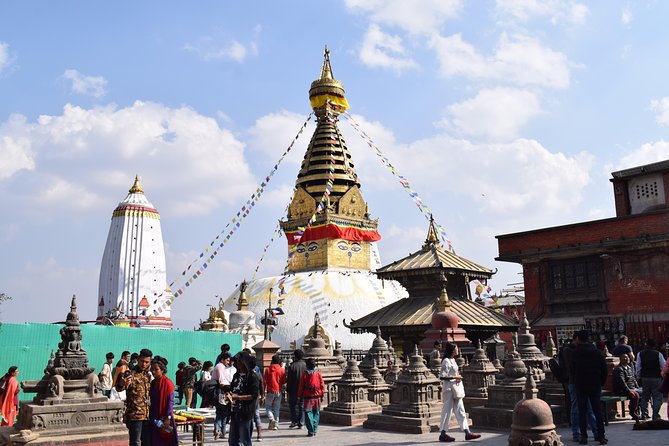
Swayambhunath, often called the Monkey Temple, sits on a hill above Kathmandu. The approach includes 365 stairs, so this is an early test of your legs. At the top, the stupa gives you a broad view over the city, along with prayer wheels, small shrines, Hindu images, and Buddhist features sharing the same sacred ground.
That mixture is one of the best reasons to have a guide here. The site is not simply a Buddhist monument with a single story. You will see Hindu and Buddhist practices existing side by side, and a good guide can explain what you are looking at without reducing it to a quick photo stop.
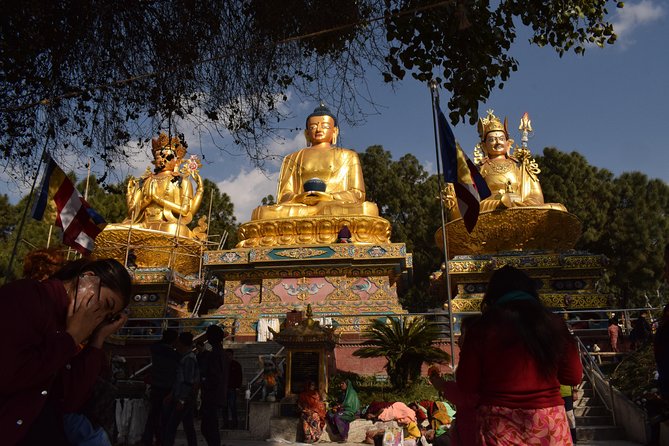
The published timing here is short, with about 15 minutes at Swayambhunath and another 10 minutes at Amideva Buddha Park. In practice, the stairs and the hilltop setting may make this portion feel more substantial than those numbers suggest. Amideva Buddha Park, on the far side of the hill, has three large Buddha statues and is easy to miss if you visit Swayambhunath alone.
You should wear shoes with a firm grip. The steps, uneven surfaces, and constant movement make sandals a poor choice for this day.
Kathmandu Durbar Square and the living Kumari
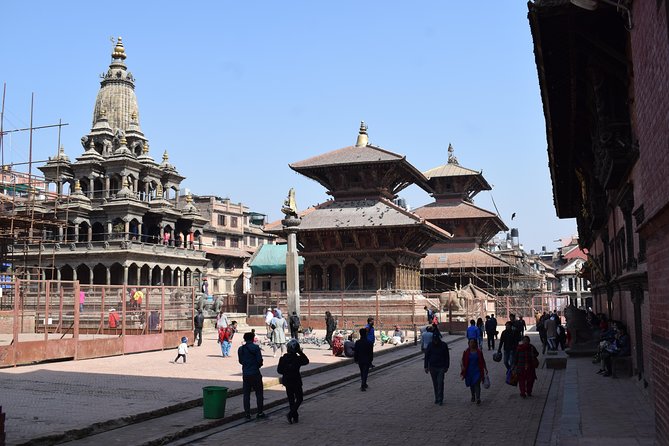
Kathmandu Durbar Square was once the royal center of the capital. Its courtyards and temples show the fine brick, timber, stone, and metal work associated with Newar building traditions. Some structures remain under repair, so do not expect every corner to look untouched.
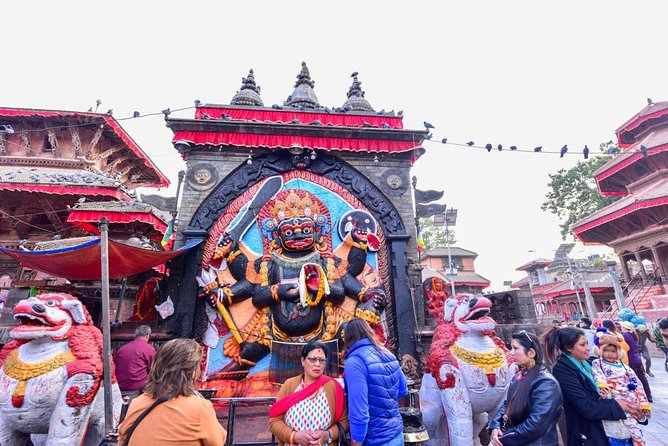
The Kumari Chowk is one of the most unusual stops. It is a courtyard inside a red-brick, three-level building that was home to the Kumari, a girl chosen to serve as the city’s living goddess until puberty. The visit is brief, listed at about 10 minutes, but the subject gives your guide a chance to explain a tradition that is still part of Kathmandu’s religious life.
The short timing also means you should set realistic expectations. You may see the courtyard and learn the basic story, but this is not an extended study of Kumari tradition. Keep your camera ready, listen carefully, and let the guide point out what matters.
Patan brings the finest concentration of Newar art
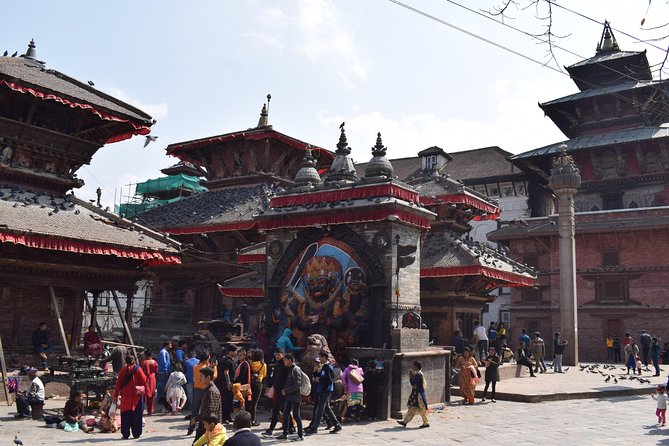
Patan Durbar Square, in Lalitpur, is one of the day’s strongest sections. The former Malla palace area is surrounded by courtyards and temples, with red brick, carved wood, and detailed metalwork everywhere you look.
The central square includes Krishna Temple, a stone-built structure with 21 shrines. Its material and design make it different from the pagoda-style temples elsewhere on the route. I would pay close attention here to the contrast between the stone temple and the brick-and-timber buildings around it.
The tour also includes the Golden Temple, formally Hiranya Varna Mahavihar. This 12th-century pagoda-style temple has bronze statues, silver details, and a more enclosed feel than the open palace square. It is a working religious site, so your guide’s advice about respectful behavior is useful.
Patan Museum occupies Keshav Narayan Chowk and adds an indoor portion to a day otherwise spent outside. The museum presents objects and information connected with Nepalese tradition and history. The listed stop is about 15 minutes, which is enough for an introduction but not a museum specialist’s visit.
Allow about 25 minutes for the central Patan square, 10 minutes for the Golden Temple, and 15 minutes for the museum. Those are tight intervals. If you care most about architecture, tell your guide early. Guides are described as adjusting time for personal interests, shopping, and photography, but the full route still requires compromises.
A few more Kathmandu trips to weigh up
- Kathmandu Private Sightseeing Tour | UNESCO World Heritage Sites
★ 5.0 · 109 reviews - Kathmandu: Full Day Private Top 4 UNESCO Heritage Tour W/Lunch.
★ 5.0 · 86 reviews - Kathmandu World Heritage Tour
★ 5.0 · 74 reviews - Nagarkot Sunrise & Bhaktapur UNESCO Heritage Private Tour
★ 5.0 · 66 reviews
Bhaktapur is the day’s most rewarding old city
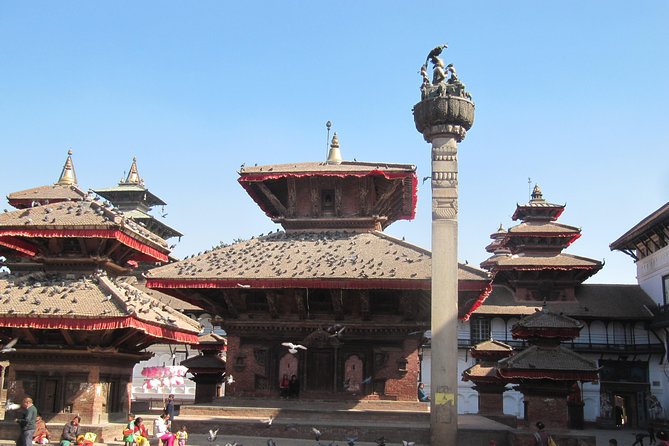
Bhaktapur, known as the City of Devotees, feels different from the capital’s central districts. Many traditional houses and older structures remain intact, and the city’s squares are easier to appreciate as connected urban spaces rather than isolated monuments.
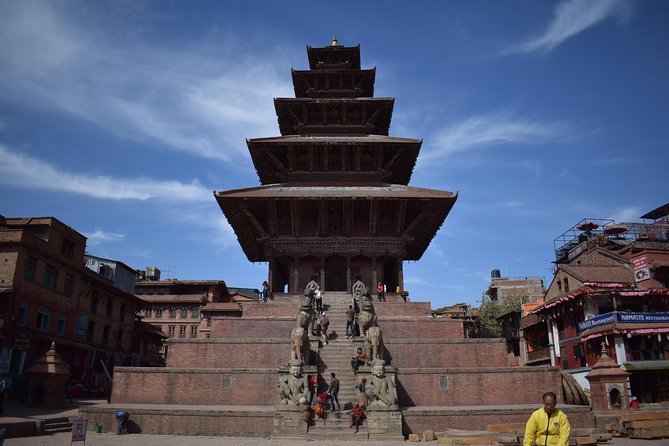
Nyatapola Temple is the visual centerpiece. This five-level pagoda has carefully carved details and is regarded as one of the tallest pagodas in Nepal. The stairs leading up give you a useful view across the square, but the listed visit is only about 10 minutes, so you will need to move with purpose.
Dattatreya Temple sits in Dattatreya Square and is traditionally said to have been built from the wood of a single tree. The temple’s unusual origin story is exactly the sort of detail that can turn a quick stop into a memorable one. Plan on another 10 minutes.
The 55 Window Palace is one of Bhaktapur’s major architectural sights. Its name comes from the 55 carved windows in the palace facade. Again, the schedule allows about 10 minutes, enough to see the structure and hear its basic story, but not enough to linger over every carving.
Siddha Pokhari, a man-made pond near the old town gate, is a short five-minute stop. It offers a change of pace after the temple squares, though it is not likely to be a major highlight if you prefer architecture.
Lunch in Bhaktapur is not included. That is useful rather than inconvenient because you can choose from the many eateries in the city, but lunch takes time from an already crowded schedule. If you want a relaxed meal, tell your guide. If your priority is all seven UNESCO sites, keep the break practical.
Changu Narayan adds a hilltop temple and older carvings
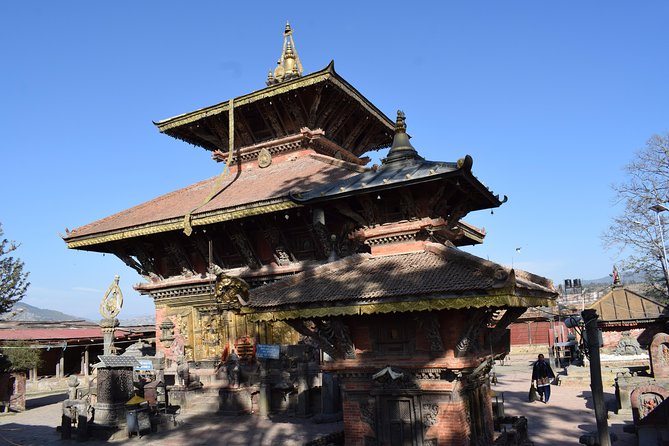
Changu Narayan sits away from the denser city sights and requires the longest listed visit, about one hour. It is described as the oldest temple in Kathmandu Valley and dates to the Licchavi period of Nepal’s history.
The temple is known for stone and wooden carvings, and its hilltop setting gives this part of the day a different mood from the royal squares. You are not simply checking off another courtyard. You are visiting an older sacred site with a more remote feel.
This stop also shows why a private car matters. Changu Narayan is not naturally paired with the central Kathmandu sights on foot. Private transport keeps the route possible in one day, though road conditions and traffic can still affect the schedule.
Pashupatinath requires respect and attention
Pashupatinath is one of Nepal’s largest temple complexes, covering about 0.64 hectares and containing more than 500 temples and shrines. It is a major Hindu sacred area on the banks of the Bagmati River.
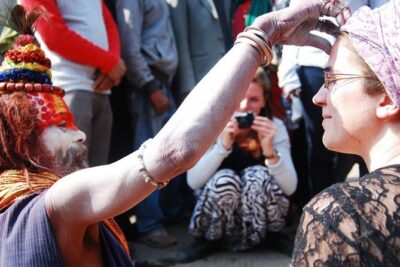
The main temple is not open to non-Hindu visitors, but the wider complex can still be viewed and understood. A guide is especially useful here because religious customs, shrine etiquette, and cremation practices require sensitivity. One account describes seeing Hindu cremation activity in the evening, but that is not something you should treat as guaranteed or as a spectacle. It is a sacred rite, and you should behave quietly and respectfully.
The planned visit lasts about an hour. Use the time to look beyond the most famous structure. Small shrines, images, courtyards, and the movement of worshippers explain why Pashupatinath is more than a single temple building.
Dress smart casual for the full day. Clothing that covers your shoulders and knees is the safer choice at religious sites, and you should follow any instructions about photography.
Boudhanath closes the route with a giant Buddhist stupa
Boudhanath Stupa is another one-hour stop and a fitting final major sight. The stupa is about 36 meters tall, with more than 50 gompas around it. It is one of Nepal’s most important Buddhist pilgrimage sites.
The circular layout encourages you to walk around the stupa, often while turning prayer wheels and observing the surrounding monasteries. After a day of royal squares and Hindu temple complexes, Boudhanath gives you a clear look at Tibetan Buddhist practice in Kathmandu.
This is also a good place to ask your guide to connect the day’s themes. You have seen Hindu and Buddhist sites, ancient royal centers, living religious traditions, and different forms of Newar design. Without explanation, the day can blur into a procession of roofs and statues. With a good guide, the contrasts become much easier to remember.
Why the guide and driver shape the experience
The guide is the difference between a long sightseeing circuit and a useful cultural introduction. Pankaj is praised for explaining both Hinduism and Buddhism and for answering questions about Nepal and the Himalayan region. Shanti is repeatedly described as friendly, flexible, helpful with photographs, and able to adjust the schedule. Kabita is noted for placing the sites in historical, cultural, and religious context while allowing a relaxed pace.
Sarita and Som are also described as warm, professional, and well informed about Nepalese history, religion, and architecture. You cannot assume which guide you will receive, but these names give you an idea of the kind of service the operator aims to provide.
The driver matters just as much. Kathmandu traffic can turn short distances into slow ones, and the route covers a wide area. The private vehicle is described as clean and comfortable, with drivers praised for safe handling and careful navigation. That does not remove traffic from the day, but it does spare you the work of arranging a new ride at every stop.
The real drawbacks: pace, walking, and information overload
The biggest weakness is the schedule. Seven UNESCO sites in roughly 12 hours is an achievement, but it leaves limited time at several individual monuments. You will see the main features, hear the important background, and move on.
You will also walk a lot. Swayambhunath has 365 stairs, and the temple squares include uneven paving, steps, and extended periods on your feet. Bring water, sun protection, and comfortable walking shoes. Several accounts specifically warn that the day is long, even when the guide keeps it comfortable.
The information load is another consideration. Kathmandu’s religious symbols, royal names, temple forms, and legends can run together by late afternoon. I suggest taking a few notes or marking the places you want to revisit. The tour works well as an overview, not as a substitute for slow exploration.
The private format helps. Only your group participates, so you can ask questions, request photos, and discuss a personal interest without holding up a large bus group. Guides have adjusted timing for shopping and other personal requests, though every extra stop means less time elsewhere.
Who should book this $180 tour?
I would choose this tour if you have one free day in Kathmandu, are visiting Nepal as part of a larger trip, or want help getting oriented before exploring alone. It is particularly useful for first-time visitors who find the city’s size and traffic intimidating.
It also suits solo visitors and small groups who value a private vehicle and personal attention. Group discounts may make the price more attractive when several people share the day.
I would not choose it if you want long museum visits, quiet photography, or an unhurried study of each temple. In that case, split the sights across multiple days and arrange shorter local visits.
Booking confirmation is provided at the time of booking. Hotel pickup and drop-off are included, as are the required entry fees for the seven heritage sites. Lunch and tips are extra. Free cancellation is available up to 24 hours before the start time, while cancellations or changes inside that window are not refunded or accepted.
Should you book it?
Book it if your Kathmandu schedule is tight and you want the valley’s seven UNESCO sites handled in one organized day. The combination of private transport, included admissions, hotel transfers, and a flexible guide gives the $180 price solid value for a short visit.
Skip it, or split it into several shorter outings, if you have more time and care about lingering. For most first visits with only one serious sightseeing day, I would book it, start early, wear good shoes, and treat the tour as your broad introduction to Kathmandu rather than your final word on the valley.
FAQ
How long does the UNESCO Seven World Heritage Tour last?
The tour lasts approximately 12 hours. It is a full-day experience covering seven UNESCO heritage sites across Kathmandu Valley.
Which UNESCO heritage sites are included?
The route includes Swayambhunath, Kathmandu Durbar Square, Patan Durbar Square, Bhaktapur, Changu Narayan, Pashupatinath, and Boudhanath.
Is hotel pickup and drop-off included?
Yes. Hotel pickup and drop-off are included in the tour.
Are entrance fees included?
Yes. The required entry fees for the seven heritage sites are included.
Is lunch included?
No. Lunch in Bhaktapur is not included. You can choose from the available eateries there.
Is this a private tour?
Yes. This is a private activity, and only your group participates. A private vehicle and an English-speaking guide are included.
Just added around Kathmandu
- Private Half-Day Tour of Boudhanath and Pashupatinath Temples in Kathmandu★ 4.5 · 9 reviews
- Private Half-Day Tour of Kathmandu Durbar Square and Swayambhunath Temple★ 4.5 · 11 reviews
- Namobuddha Monastery Hiking Day Tour via Panauti from Kathmandu★ 5.0 · 15 reviews
- Private Half Day Budhanilkantha Tour★ 5.0 · 6 reviews
- Private Full-Day Kathmandu City Tour★ 5.0 · 9 reviews
- Private Day Tour in Kathmandu Valley Rim with Bhaktapur Sightseeing★ 5.0 · 3 reviews
- Private Day Tour: Patan and Bhaktapur from Kathmandu★ 4.5 · 6 reviews
- Private Day Tour – Sacred Journey to Namo Buddha★ 5.0 · 5 reviews
UNESCO World Heritage Tours, compared.
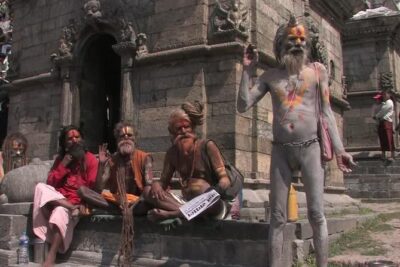
Private Kathmandu Sightseeing Tour | UNESCO World Heritage sites
Read our review →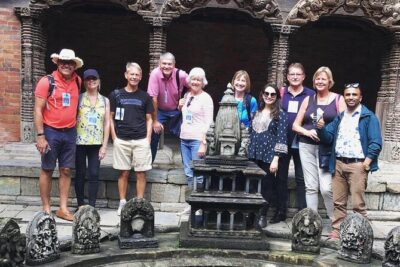
Full Day 7 UNESCO Tour with Lunch – Private/Group
Read our review →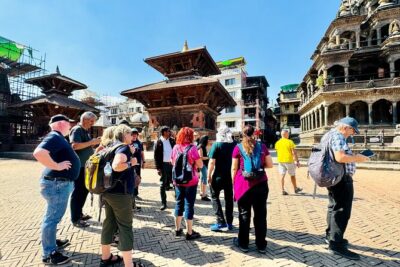
Full Day Top 4 UNESCO Tour with Lunch – Private/Group
Read our review →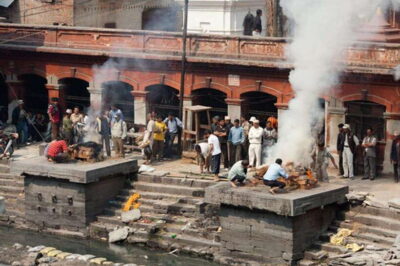
Kathmandu Spiritual Sites: Bodhnath & Pashupatinath Tour
Read our review →
Kathmandu Private Sightseeing Tour | UNESCO World Heritage Sites
Read our review →Full Day 7 UNESCO Tour with Lunch – Private/Group
Read our review →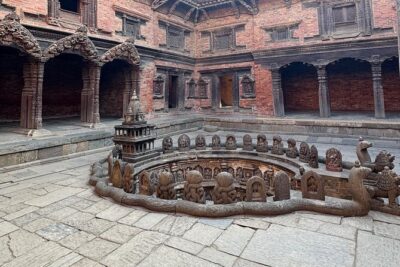
Full Day Private Top 4 UNESCO Heritage Tour W/Lunch.
Read our review →Browse the lists this tour appears in