
Reviewed · UNESCO WORLD HERITAGE TOURS
Pashupatinath: Evening tour of temple and Aarati ceremony
The most striking part of this three-hour visit is the moment the Bagmati River ghats shift from solemn cremation rites to the glowing Pashupati Aarati. Priests raise oil lamps, chant mantras, and move to the beat of drums as dusk settles over one of Nepal’s most sacred sites.
I like the private format, which gives you room to ask questions about the temple, shrines, and customs without trying to keep up with a large group. I also like that transportation, entry fees, and an English-speaking guide are included, making this a simple way to reach Pashupatinath and skip the ticket line. The main consideration is that the visit includes active cremation ceremonies, so you should be ready for a serious and emotional setting. It is also not suitable for wheelchair users.
Key points to know before booking
- Sunset Aarati: Watch priests offer lamps, prayers, and music beside the Bagmati River.
- Cremation ghats: See Hindu funeral rites from a respectful distance in an active sacred setting.
- Private three-hour visit: Spend the evening with your own group and an English-speaking guide.
- Temple architecture: Explore pagoda-style buildings, shrines, statues, and the golden-spired main temple.
- Good practical value: The $57 price includes transportation, entry fees, guiding, and skip-the-line access.
- A small human touch: The visit includes time for tea, described as especially tasty after the ceremony.
Why Pashupatinath feels different at sunset
Pashupatinath is not a museum where old objects sit behind glass. It is a working Hindu temple complex, a pilgrimage site, and a place where families carry out final rites for relatives. That combination gives the evening a seriousness you will not find on a standard architecture tour.
The site carries UNESCO World Heritage status and centuries of religious importance. The main temple is devoted to Pashupatinath, a form of Lord Shiva, and its golden spire is one of the first details you notice as you approach the complex.
At sunset, the setting helps shape the visit. Light softens across the temple roofs and riverbanks, while incense, bells, chanting, and drumbeats gradually become more noticeable. You get a cultural visit, but also a changing mood as the evening ritual draws closer.
I would not book this simply to tick off another Kathmandu sight. I would book it if you want to understand how worship, architecture, family duty, death, and daily life meet in one place.
More UNESCO World Heritage Tours in Kathmandu:
- Private Kathmandu Sightseeing Tour | UNESCO World Heritage sites
★ 5.0 · 756 reviews - Kathmandu: Full Day 7 UNESCO Tour with Lunch – Private/Group
★ 5.0 · 415 reviews - Kathmandu: Full Day Top 4 UNESCO Tour with Lunch – Private/Group
★ 5.0 · 269 reviews
Beginning with the temple complex and its sacred buildings
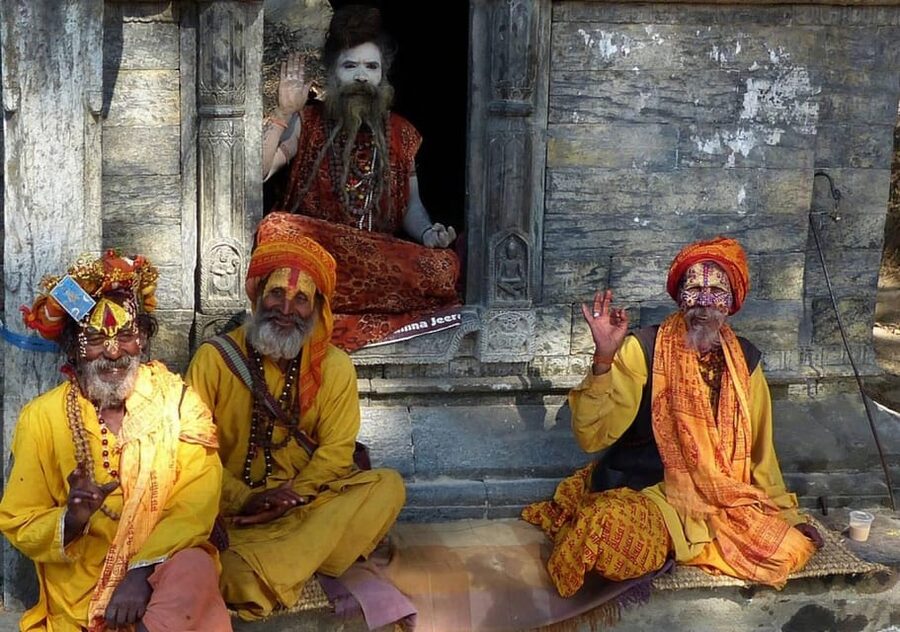
Your guide leads you through the temple grounds, where shrines and murtis appear throughout the complex. Each has its own religious meaning and artistic details, and the guide helps connect what you see with Nepalese traditions rather than leaving you to guess at the symbolism.
The pagoda-style architecture is a major part of the visit. Look for the layered roof forms, carved details, and the temple’s golden spire. The buildings are not presented as a single grand monument. Instead, the complex unfolds through smaller shrines, statues, paths, and gathering places.
This is where having a guide matters. A short visit can otherwise become a blur of unfamiliar figures and buildings. With an English-speaking guide, you can ask what a particular shrine represents, why devotees gather in certain areas, and how the complex functions as a living place of worship.
The main Pashupatinath Temple houses the sacred lingam of Pashupatinath. The visit gives you a closer view of the temple setting and its religious role, though the activity information does not specify access rules for every part of the complex. Follow your guide’s instructions and treat the site as a place of worship first.
The atmosphere can feel busy with devotees, pilgrims, and other people visiting the grounds. That is part of the point. You are seeing religious life in use, not a carefully staged historical display.
Walking beside the Bagmati River
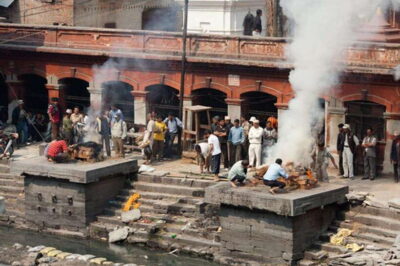
The route continues toward the Bagmati River, whose banks contain the cremation ghats. This is the most emotionally demanding part of the visit, but also one of the most important for understanding Pashupatinath.
Funeral ceremonies take place at the ghats, with families saying farewell to loved ones while priests chant and carry out traditional rites. You may see the ceremony from the riverbank as part of the evening visit. The customs can feel unfamiliar, but the purpose is clear: the site brings spiritual belief and the practical work of death into the open.
You should approach this part with restraint. Keep your attention on the guide’s explanation rather than treating the ceremony as a spectacle. The supplied details describe the rites as solemn and dignified, and that is the right tone to carry with you.
This section may not suit everyone. If you prefer a light sightseeing outing, Pashupatinath can feel heavy. If you are comfortable confronting a different approach to death and reincarnation, the ghats can give the visit lasting meaning.
The river setting also adds a quiet visual contrast to the temple grounds. The Bagmati is not just scenery here. It is part of the religious life of the site, closely tied to prayer, cremation, and the cycle of life.
The Pashupati Aarati beside the river
As daylight fades, the focus moves to the Pashupati Aarati ceremony. This is the centerpiece of the evening.
Priests in traditional clothing perform a set sequence with oil lamps, or diyas. They raise and turn the lamps while mantras are chanted and drums keep a steady rhythm. The ceremony gathers sound, movement, fire, and prayer into one concentrated moment.
You will likely find this more engaging than simply watching a performance because the Aarati is a religious offering. It has a purpose for the people taking part, not just an appeal to an audience. Your guide can help you understand that difference.
The ceremony builds toward a shared offering of prayers to Lord Pashupatinath. The lamps become the visual focus, especially against the darker riverbank. Incense and bells add to the setting, while the chanting gives the ritual a measured pace.
I like that the visit places the Aarati after the temple and river walk. You first see the buildings and shrines, then the funeral ghats, and finally the evening ritual. That order gives the ceremony more context. It is not an isolated show squeezed into a short photo stop.
Bring patience to this part of the tour. The ceremony’s appeal comes from its rhythm and repetition, not from constant action. Watch closely, listen, and let the ritual unfold.
A few more Kathmandu trips to weigh up
- Kathmandu Sunset Tour by Rickshaw Including Durbar Square Visit
★ 5.0 · 73 reviews - 3 Nights 4 Days Chitwan National Park with Tower Night Stay
★ 5.0 · 41 reviews - 3 night 4 Day Yoga & Ayurveda Retreat to Detox the Body & Mind, Nepal
★ 5.0 · 37 reviews - Kathmandu: Pashupatinath Temple Evening Aarati Tour
★ 5.0 · 36 reviews
What the private guide adds to three hours
A private group is one of the strongest reasons to choose this activity. You are not sharing the guide with a large crowd, and you can ask for clarification when a custom or symbol is unfamiliar.
The guide speaks English, and guiding is included in the price. One guide was described as especially caring, which fits the needs of this visit. Pashupatinath requires more tact than a quick walk through a market or monument, particularly around the cremation ghats.
A good guide can also help you judge when to observe quietly. That matters here. The most useful guidance is not just a list of dates and names. It is knowing how to behave around worshippers, funeral rites, and ceremonial spaces.
The tour lasts three hours. That is long enough to cover the temple grounds, riverbank, cremation area, and Aarati without turning the visit into an all-day commitment. It is also short enough to fit into a Kathmandu evening.
Transportation is included, which improves the value for anyone who does not want to arrange a separate ride to and from the temple. Entry fees are included as well, and skip-the-line access removes one practical delay at the start.
Is $57 a fair price?
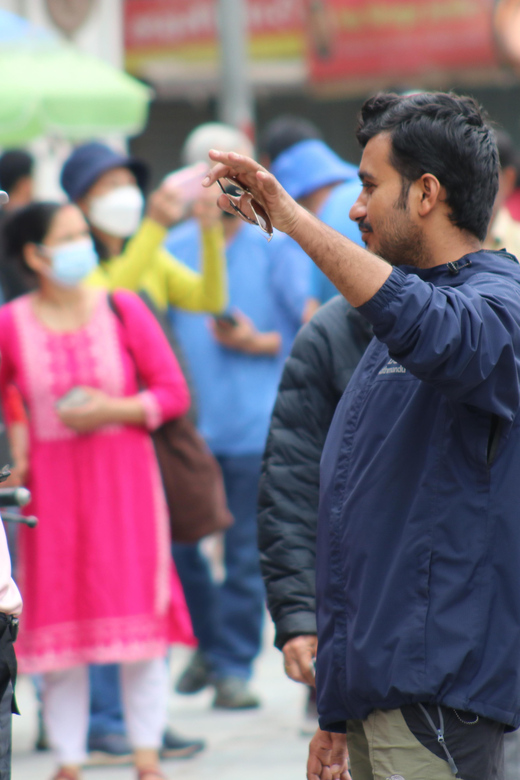
At $57 per person, this is not the cheapest possible way to see Pashupatinath. You are paying for more than entry. The package includes transportation, admission, an English-speaking guide, private-group service, and skip-the-line access.
I see the value mainly in the structure. Pashupatinath is a large religious complex with many layers of meaning. Arriving alone can give you access to the setting, but not necessarily the context. This tour turns the visit into a planned evening with a guide who can explain what you are seeing and help you move through the key areas.
The private format also matters more here than it would at a simple viewpoint. You may want to ask about the Aarati, the shrines, the role of the Bagmati River, or funeral customs. A private group gives you a better chance to do that.
The price makes the most sense if you value convenience and interpretation. If you already have transport, know the complex well, and prefer to explore without a guide, you may find the package less essential. For a first visit to Pashupatinath, the included services make the cost easier to justify.
Tea, conversation, and the human side of the visit
One small detail helps soften the intensity of the evening: tea is part of the experience, and it was described as very tasty. Do not expect this to turn the visit into a food tour. The tea is better understood as a simple pause after an emotionally powerful ceremony.
That break can give you time to discuss what you have seen. The subject of death and reincarnation can raise questions, and a private guide is well placed to explain the cultural setting in plain terms.
A French-speaking participant described the visit as a total immersion and praised the guide’s pleasant manner. Another account called the entire experience a must-see and said it changed their view of death, life, and reincarnation. I would not assume the same personal response from every person, but those reactions point to the tour’s central strength: it asks you to think, not just look.
The visit received a top rating across three published bookings, with praise focused on the spiritual quality, the caring guide, the ceremony, and the overall experience. That pattern is useful because it shows what this activity does best. It is not a technical architecture tour. It is a guided encounter with living religious practice.
Who should book this Pashupatinath tour?
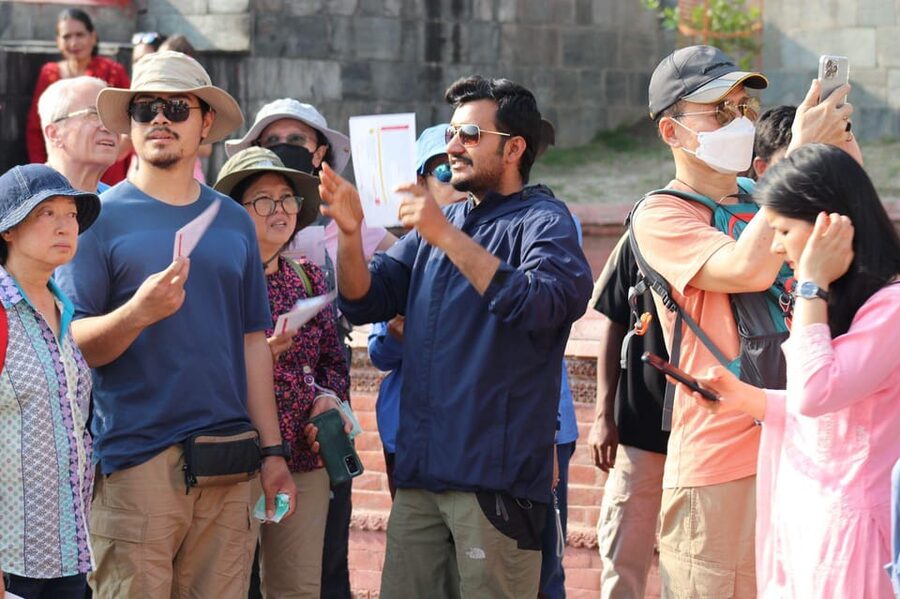
I would recommend this tour to you if you want cultural context, a private guide, and a planned evening around one of Kathmandu’s most important religious sites. It suits first-time visitors who want the main temple, river ghats, and Aarati brought together in one outing.
It is also a good match if you are interested in Hindu traditions, Nepalese architecture, ritual music, or different ideas about death and reincarnation. The tour gives you several ways into the site, so you do not need to be seeking a religious experience to find it meaningful.
I would think twice if you want a relaxed sightseeing stop with cheerful photo opportunities. The cremation rituals are real and serious. You should also know that the activity is not suitable for wheelchair users.
The private group makes this a better choice for couples, families, or small parties who prefer conversation over a fixed crowd. Since no individual guide name is provided, you cannot choose a named guide in advance, but the English-language service and private format are clear.
The activity offers free cancellation up to 24 hours before departure and lets you reserve now while paying later. Starting times depend on availability, so check the evening slot when you book.
Should you book the evening Aarati visit?
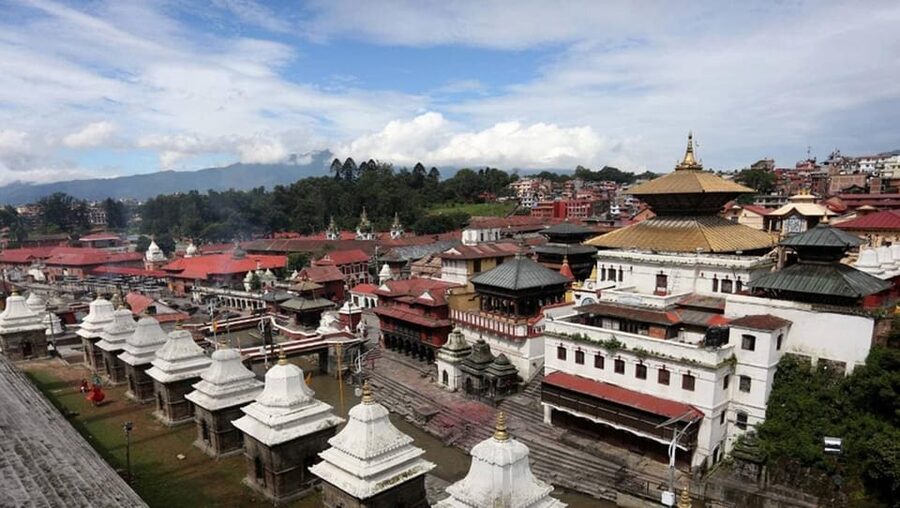
Book it if you want to see Pashupatinath as a living place of faith, not just an impressive temple. The strongest parts are the carefully timed sunset visit, the solemn Bagmati River ghats, and the Aarati with lamps, chanting, and drums.
The $57 cost is reasonable when you use the included transport, admission, guide, and private-group service. The main tradeoff is emotional rather than financial: cremation ceremonies are part of the visit, and the setting deserves quiet respect.
For a short Kathmandu itinerary, this is a focused way to encounter Nepalese religious culture. Go with an open mind, listen to your guide, and allow the evening to be more serious than a standard sightseeing tour. If that sounds worthwhile, I would book it.
FAQ
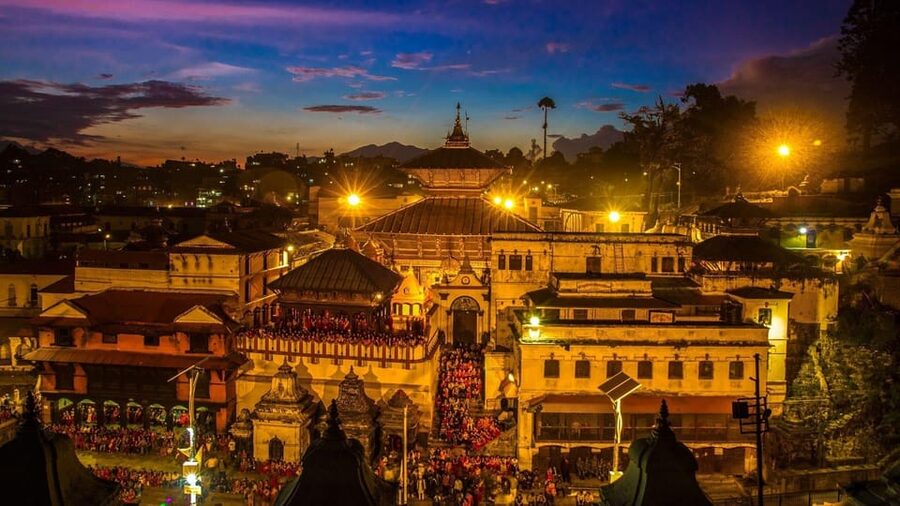
Where does the evening tour take place?
The tour takes place at Pashupatinath Temple in Nepal’s Bagmati Zone, including the temple complex and the banks of the Bagmati River.
How long does the Pashupatinath visit last?
The activity lasts three hours. Starting times depend on availability.
What is included in the $57 price?
The price includes transportation, entry fees, an English-speaking guide, and skip-the-line access.
Is the tour private?
Yes. The activity is organized as a private group.
What language does the guide speak?
The live guide speaks English.
Does the tour include the Pashupati Aarati ceremony?
Yes. The evening visit includes the Pashupati Aarati, with priests, oil lamps, mantras, prayers, and drums beside the river.
Will I see cremation rituals?
The route includes the river ghats, where cremation ceremonies take place. This is an active sacred setting and should be approached respectfully.
Is the tour suitable for wheelchair users?
No. The activity is listed as not suitable for wheelchair users.
Can I cancel or pay later?
You can cancel up to 24 hours in advance for a full refund. You can also reserve your place and pay later.
Just added around Kathmandu
- Private Half-Day Tour of Boudhanath and Pashupatinath Temples in Kathmandu★ 4.5 · 9 reviews
- Private Half-Day Tour of Kathmandu Durbar Square and Swayambhunath Temple★ 4.5 · 11 reviews
- Namobuddha Monastery Hiking Day Tour via Panauti from Kathmandu★ 5.0 · 15 reviews
- Private Full-Day Kathmandu City Tour★ 5.0 · 9 reviews
- Private Day Tour in Kathmandu Valley Rim with Bhaktapur Sightseeing★ 5.0 · 3 reviews
- Private Half Day Budhanilkantha Tour★ 5.0 · 6 reviews
- Private Day Tour: Patan and Bhaktapur from Kathmandu★ 4.5 · 6 reviews
- Private Day Tour – Sacred Journey to Namo Buddha★ 5.0 · 5 reviews
UNESCO World Heritage Tours, compared.
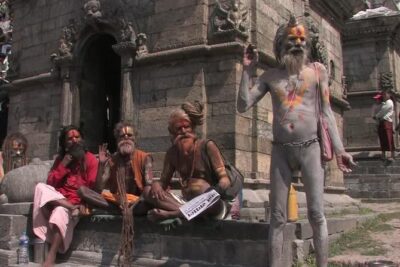
Private Kathmandu Sightseeing Tour | UNESCO World Heritage sites
Read our review →
Full Day 7 UNESCO Tour with Lunch – Private/Group
Read our review →
Full Day Top 4 UNESCO Tour with Lunch – Private/Group
Read our review →

Kathmandu Spiritual Sites: Bodhnath & Pashupatinath Tour
Read our review →
Kathmandu Private Sightseeing Tour | UNESCO World Heritage Sites
Read our review →Full Day 7 UNESCO Tour with Lunch – Private/Group
Read our review →Browse the lists this tour appears in