
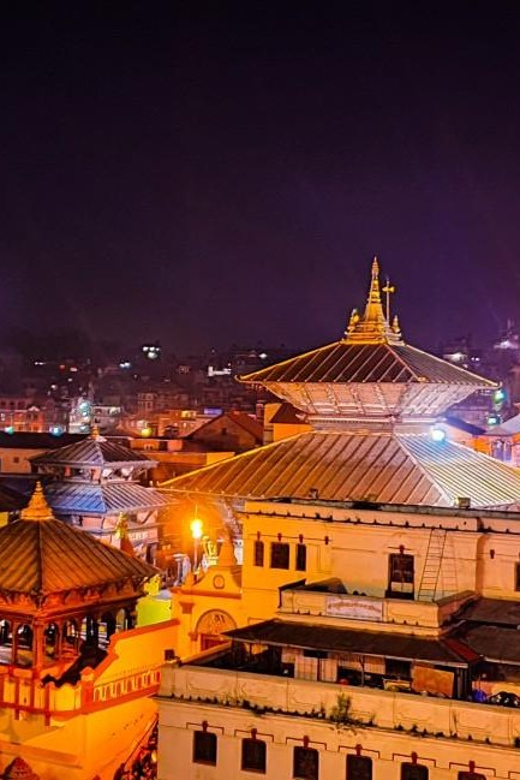
Reviewed · UNESCO WORLD HERITAGE TOURS
Kathmandu: Pashupatinath Temple Evening Aarati Tour
The most powerful part of this three-hour outing is the Aarati beside the Bagmati River, when priests chant Vedic mantras, ring bells, burn incense, and move oil lamps in time with devotional music. The light, sound, and gathering make Pashupatinath feel less like a sightseeing stop and more like a living place of worship.
I like two things here. First, the guide gives you a way into Hindu ritual that you would likely miss on your own. Guides such as Ramesh, Rajat, and Anjan have been especially praised for clear explanations and patient answers. Second, the timing is smart: you arrive in the late afternoon, see the complex before dark, then stay for the ceremony around 6 p.m.
The main consideration is that this is a religious gathering, not a staged cultural show. Crowds gather along the river, the ceremony follows its own rhythm, and photography is allowed only in permitted areas. If you need a quiet, private viewing or dislike busy public rituals, this may not be your best Kathmandu evening.
Key points to know before you book
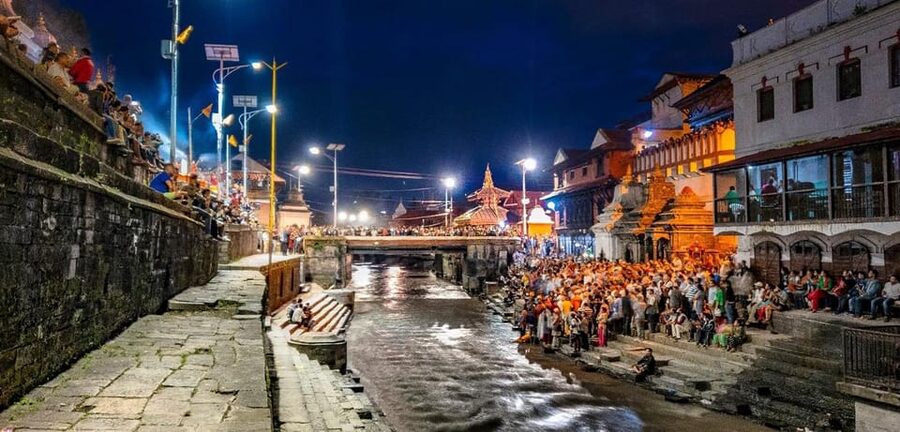
- Aarati begins around 6 p.m.: Arrive before sunset for the temple visit and a better sense of place before the lights come on.
- The Bagmati River is the setting: The ceremony takes place on the riverbank on the eastern side of the temple complex.
- Private group format: You receive personal attention rather than joining a large shared excursion.
- English-speaking guides add meaning: Ramesh, Rajat, and Anjan have been praised for explaining Hindu customs in an accessible way.
- The $45 price covers the essentials: Hotel pickup and return, transport, entry, guide, taxes, and service charges are included.
- Photography needs restraint: You can take pictures in permitted areas, but the religious setting calls for care and respect.
Why the evening Aarati matters at Pashupatinath
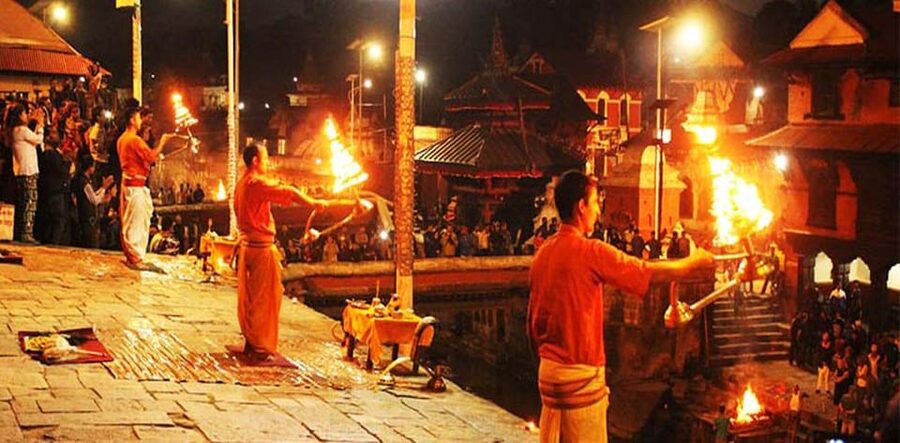
Pashupatinath is one of Nepal’s important Hindu temples, and the nightly Aarati gives you a direct look at religious practice rather than a quick photo stop. The ceremony is built around light, prayer, sound, and offerings. Priests chant prayers and wave oil lamps before Lord Shiva, while bells, incense, classical instruments, and hymns fill the riverfront.
You do not need to know Hindu theology to appreciate what is happening. A good guide helps you notice the order of the ritual and explains why the lamps, prayers, music, and incense matter. That context turns a visually striking ceremony into a more thoughtful cultural experience.
I find the setting especially effective at dusk. Daylight lets you take in the temple area and riverbank, while the approaching darkness makes the lamps and incense more noticeable. The experience has a clear progression, from walking and listening to watching and absorbing the ceremony.
Still, keep your expectations grounded. This is not a theatrical performance arranged for visitors. It is a public act of worship attended by local people, and the crowd’s attention belongs to the ceremony. Your guide can help you understand it, but you should remain an observer and follow the atmosphere around you.
More UNESCO World Heritage Tours in Kathmandu:
- Private Kathmandu Sightseeing Tour | UNESCO World Heritage sites
★ 5.0 · 756 reviews - Kathmandu: Full Day 7 UNESCO Tour with Lunch – Private/Group
★ 5.0 · 415 reviews - Kathmandu: Full Day Top 4 UNESCO Tour with Lunch – Private/Group
★ 5.0 · 269 reviews
Late-afternoon pickup keeps the schedule simple
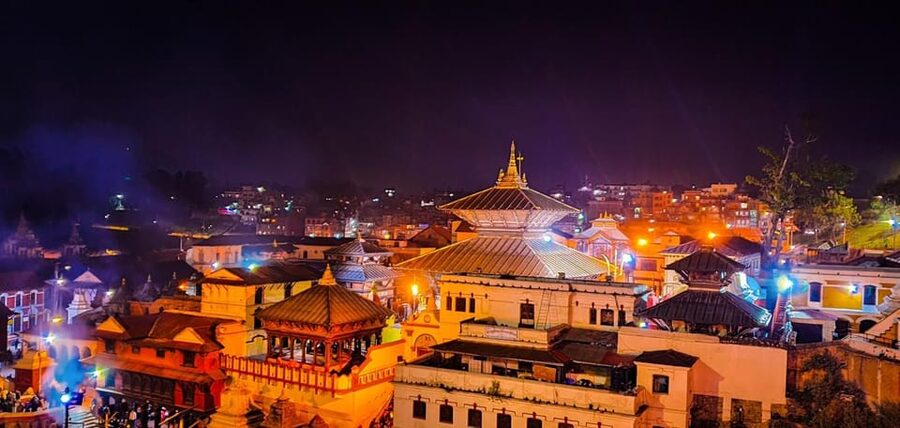
The tour begins with pickup from your hotel in Kathmandu. Transport to and from Pashupatinath is included, which removes the need to arrange a separate taxi for an evening visit.
That matters more than it might seem. The tour is only three hours, and the ceremony has a fairly fixed place in the schedule. Having a driver take you to the temple, wait through the visit, and return you to Kathmandu keeps the evening focused.
The exact start time depends on availability, but the activity begins in the late afternoon. This is the right window for the experience because you have time to see the temple complex before the Aarati begins around 6 p.m.
The transport is also one of the strongest practical parts of the package. Every transport rating supplied for the activity was perfect, and several comments specifically describe the driver as polite, safe, and welcoming. Santosh is one driver named in the feedback, alongside guide Ramesh. Since roads in Kathmandu can make short distances feel slow, included transport is useful even when the drive itself is not the main attraction.
Your guided look around Pashupatinath Temple
Once you arrive, the guide leads a tour of the temple complex. This first portion gives you the basic setting for the ceremony and explains the temple’s religious importance.
The visit is described as including sightseeing, a guided tour, and time for independent exploration. That combination works well. You get interpretation when you need it, then some freedom to look around and take in the surroundings before the evening ritual begins.
This is where guide quality matters most. Ramesh has been praised for adding cultural detail beyond the standard explanation, while Rajat has been described as friendly and able to answer questions clearly. Anjan has also been singled out for helping explain Hindu religion and the Aarati ceremony in good English.
You should use this time to ask questions. The temple complex can be difficult to understand if you only look at buildings and crowds. Ask what the ritual means, how the ceremony fits into local religious life, and what you should do as an observer. The guides are described as conversational and patient, so this is more than a walk past monuments.
The tour also suits different interests. If you care about photography, say so early. One guide, Ramesh, worked patiently with a visitor who wanted time for travel photos and helped with questions and concerns. That does not mean every viewpoint is available, but it does suggest the private format gives you room to discuss what you hope to see.
Watching the Aarati beside the Bagmati River
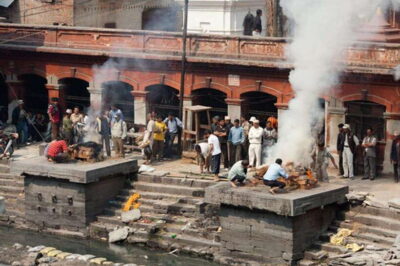
The central event takes place on the Bagmati River’s bank on the eastern side of the temple area. People gather for the Aarati, and the atmosphere changes as evening comes on.
The ceremony includes Vedic mantras, ringing bells, oil lamps, incense, classical instruments, and hymns to the gods. Priests wave the lamps before Lord Shiva as part of the worship. You may find the combination of synchronized movement, music, smoke, and fire far more affecting than a standard temple visit.
The riverbank setting also gives you a useful visual frame. You can see the temple area while the ceremony unfolds in front of you, and the fading daylight allows the lamps to become the visual focus. A guide can point out what is happening without requiring you to follow a long lecture during the ritual itself.
A good viewing position matters, and one experience specifically highlighted having a great view. Because this is a private group, your guide can help you find an appropriate place within the permitted viewing areas. That said, do not expect a reserved seat or a silent, controlled space. People gather for the Aarati, and the public nature of the ceremony is part of what makes it authentic.
Photography requires judgment. The activity permits photography in allowed areas, but the ceremony is not simply a backdrop for portraits. Keep your camera or phone secondary to the moment, follow your guide’s advice, and avoid treating worshippers as props.
A few more Kathmandu trips to weigh up
- Kathmandu Sunset Tour by Rickshaw Including Durbar Square Visit
★ 5.0 · 73 reviews - 3 Nights 4 Days Chitwan National Park with Tower Night Stay
★ 5.0 · 41 reviews - 3 night 4 Day Yoga & Ayurveda Retreat to Detox the Body & Mind, Nepal
★ 5.0 · 37 reviews - Kathmandu: Pashupatinath Temple Aarti Night Tour
★ 4.8 · 29 reviews
What the private format changes
A private group is a real advantage here. You can ask more questions, move at a pace that fits your interests, and tell the guide if you want more time for photography or explanation.
That flexibility appears in the guide feedback. One person booked mainly for photos and received the time needed to work carefully. Others valued the chance to ask about ritual, history, and local customs without rushing through a fixed group commentary.
The format is also useful for first-time visitors to Nepal. Hindu ritual can be easy to misread if you do not know the symbols or sequence. A guide gives you a respectful way to watch without guessing what is happening.
The tradeoff is cost. At $45 per person, this is not the cheapest way to reach Pashupatinath. You are paying for a three-hour private experience, hotel pickup and return, transport, admission, an English-speaking guide, taxes, and service charges. If you only want to see the lamps for a few minutes, you may find the price hard to justify.
If you want context, reliable evening transport, and time to ask questions, the value is stronger. The tour combines several small costs and decisions into one short outing, which is useful when your Kathmandu schedule is tight.
How the timing works from start to finish
The sequence is straightforward:
- You are picked up at your Kathmandu hotel in the late afternoon.
- You drive to Pashupatinath Temple.
- Your guide leads you around the temple complex and explains its importance.
- You have time to explore independently before the ceremony.
- Around 6 p.m., you watch the Aarati at the Bagmati River.
- Afterward, you return to your hotel in Kathmandu.
The three-hour duration is long enough to include both the temple visit and the ceremony without turning the evening into a major commitment. I like that balance. You receive more than a quick stop, but you still have the rest of the night available.
The exact start time should be checked when booking because availability affects the schedule. The activity offers free cancellation up to 24 hours in advance and allows you to reserve without paying immediately, which helps if your Kathmandu plans may shift.
Food and drinks are not included. That is not a serious problem for a three-hour evening tour, but you should plan your meal separately rather than expecting refreshments at the temple.
Who will get the most from this tour
This experience is a good fit if you want a first introduction to Hindu worship in Nepal and prefer explanation over simply wandering through a major religious site. It also suits photographers who want to discuss suitable viewing spots and work within the rules.
I would recommend it to couples, families, and solo visitors who value a private guide. The activity is conducted in English, and the guide names connected with the experience include Ramesh, Rajat, and Anjan. Individual guide assignments may vary, but the supplied feedback repeatedly emphasizes friendly conversation, clear cultural explanations, and patience.
It is also a strong choice for anyone who wants to finish a Kathmandu stay with something different from the usual daytime sightseeing. The ceremony offers a direct look at local religious life, and one useful tip is to choose the evening visit if you want both a temple tour and the Aarati in one outing.
I would be more cautious if you mainly want a quiet architectural tour. The ceremony draws a crowd, and the public worship setting can feel busy. I would also reconsider if you expect unrestricted photography or a performance designed around visitor comfort.
Is $45 a fair price?
For a private three-hour outing, $45 per person is reasonable if you use what is included. Hotel pickup and drop-off, transport, entry, a licensed English-speaking guide, taxes, and service charges are all covered.
The value rests mainly on interpretation. Admission alone will not explain the ritual, and reaching the site independently does not guarantee that you will understand the ceremony or know where to watch. The guide is the part that changes this from a visit into a cultural lesson.
The perfect overall rating, based on 36 reviews, is encouraging, but I would focus less on the number and more on the repeated themes: friendly guides, clear answers, helpful explanations, good viewing positions, and smooth transport. Those are exactly the details that matter during a short religious evening.
My call: book it if you want context, not just spectacle
I would book this tour if Pashupatinath is on your Kathmandu list and you want the temple visit to mean more than a few photographs. The late-afternoon arrival, guided orientation, private format, and evening Aarati fit together well.
Book it especially if you are curious about Hindu customs, want a guide who can answer questions, or prefer not to arrange evening transport yourself. If you are a serious photographer, mention that goal early and remember that permitted areas and religious respect come first.
Skip it if you only want a fast, inexpensive glimpse or if public ceremonies make you uncomfortable. For everyone else, this is a thoughtful way to spend three Kathmandu hours, with the lamps, chanting, and riverbank setting providing the evening’s lasting memory.
FAQ
How long does the Pashupatinath Aarati tour last?
The tour lasts three hours, including hotel pickup, transport, the guided temple visit, time for exploration, the Aarati ceremony, and the return to Kathmandu.
What time does the Aarati begin?
The ceremony commences around 6 p.m. The tour begins in the late afternoon so you can visit the temple complex before the ritual starts.
Is hotel transportation included?
Yes. Hotel pickup and drop-off in Kathmandu, along with transportation to and from Pashupatinath Temple, are included.
Is an English-speaking guide provided?
Yes. The tour includes a licensed, live English-speaking guide. Guides named in the supplied experience details include Ramesh, Rajat, and Anjan, though the assigned guide can vary.
Are temple entry tickets included?
Yes. Entry to Pashupatinath Temple, along with taxes and service charges, is included in the price.
Can I take photographs during the Aarati?
Photography is possible in permitted areas. You should follow the guide’s instructions and respect the religious setting during the ceremony.
Just added around Kathmandu
- Private Half-Day Tour of Boudhanath and Pashupatinath Temples in Kathmandu★ 4.5 · 9 reviews
- Private Half-Day Tour of Kathmandu Durbar Square and Swayambhunath Temple★ 4.5 · 11 reviews
- Namobuddha Monastery Hiking Day Tour via Panauti from Kathmandu★ 5.0 · 15 reviews
- Private Half Day Budhanilkantha Tour★ 5.0 · 6 reviews
- Private Full-Day Kathmandu City Tour★ 5.0 · 9 reviews
- Private Day Tour in Kathmandu Valley Rim with Bhaktapur Sightseeing★ 5.0 · 3 reviews
- Private Day Tour: Patan and Bhaktapur from Kathmandu★ 4.5 · 6 reviews
- Private Day Tour – Sacred Journey to Namo Buddha★ 5.0 · 5 reviews
UNESCO World Heritage Tours, compared.
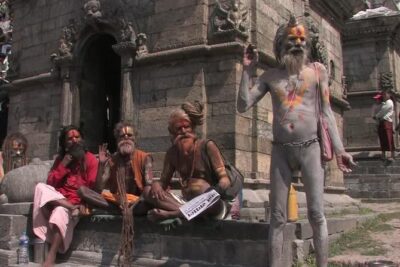
Private Kathmandu Sightseeing Tour | UNESCO World Heritage sites
Read our review →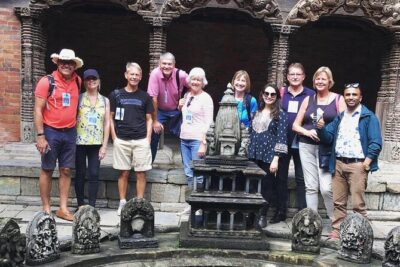
Full Day 7 UNESCO Tour with Lunch – Private/Group
Read our review →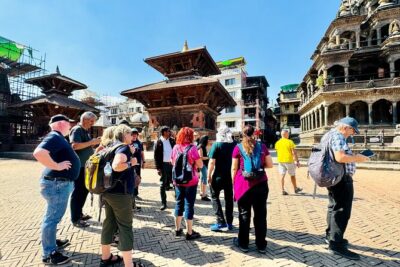
Full Day Top 4 UNESCO Tour with Lunch – Private/Group
Read our review →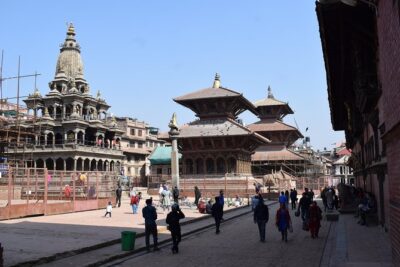

Kathmandu Spiritual Sites: Bodhnath & Pashupatinath Tour
Read our review →
Kathmandu Private Sightseeing Tour | UNESCO World Heritage Sites
Read our review →Full Day 7 UNESCO Tour with Lunch – Private/Group
Read our review →Browse the lists this tour appears in