
Reviewed · PRIVATE
Private Half Day Tour Highlights of Pokhara by Car
Pokhara packs lakes, temples, caves, and mountain views into a spread-out valley. This private half-day tour gives you a car and driver-guide, so you can reach seven major sights without wrestling with local transport or losing half the day between stops. Phewa Lake and the Peace Pagoda are the big visual rewards.
I like the flexible start time, which runs from early morning to early afternoon, and I like that entrance fees and bottled water are already covered. You can also arrange pickup from your hotel or Pokhara Airport. The main concern is coordination: some bookings have had late pickup or a driver with limited English, while guide Moti has been praised for excellent English and adapting the route.
Key points at a glance
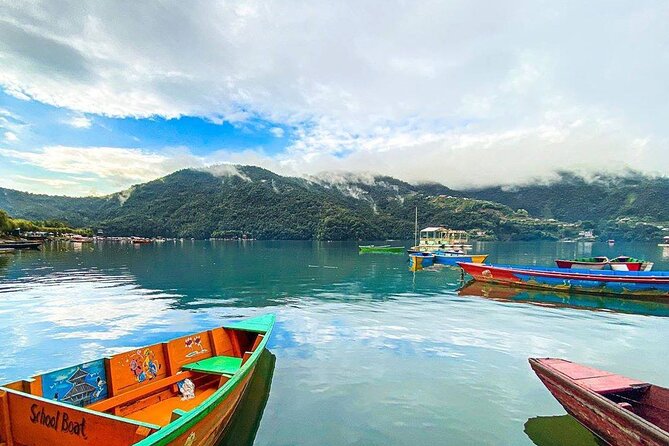
- Seven major stops in about four to five hours: The route covers Phewa Lake, Devi’s Fall, Gupteswar Gupha, Bindhyabasini Temple, Seti River Gorge, Pokhara Museum, and the Peace Temple.
- A private car saves valuable time: Pokhara’s sights are spread across the valley, making private transport useful on a tight schedule.
- Moti is a guide to request if available: His clear English and willingness to adjust the visit have been singled out as strengths.
- Entry fees and water are included: You do not need to keep stopping for small payments at each attraction.
- The schedule is flexible: You can start from early morning through early afternoon, depending on the arrangement.
- Communication needs confirming: Pickup and guide language have not been perfect every time, so a quick confirmation before the day matters.
A smart way to see Pokhara when time is short
I see this tour as a first look at Pokhara rather than a slow, in-depth study of the city. In roughly half a day, you move from a freshwater lake to a waterfall, cave, Hindu temple, river gorge, cultural museum, and Buddhist peace monument.
That range is the main reason to book it. You get nature, religion, local culture, and city history in one compact outing. You also avoid the practical headache of arranging separate taxis for places that are not close together.
The pace is brisk. The listed visits add up to about four hours and twenty-five minutes before accounting for driving, so you should expect short stops rather than long stretches of free time. That works well if you have just arrived in Pokhara, have a flight later, or want a broad introduction before choosing which places deserve a second visit.
The private format makes the pace easier to manage. You are not tied to a large group, and only your party participates. Still, private does not mean leisurely by default. If you want extra time at the lake or museum, discuss that at the start, since seven stops in one half-day leaves little room for delays.
A few more Pokhara trips to weigh up
- Pokhara: Full-Day Private Tour on 7 Iconic Destination
★ 4.8 · 108 reviews - The Best of Pokhara: Full-Day Private Tour with Sarangkot Sunrise
★ 5.0 · 66 reviews - 4-Day Private Poon Hill Trekking Tour
★ 5.0 · 58 reviews
Phewa Tal, Pokhara’s essential first look
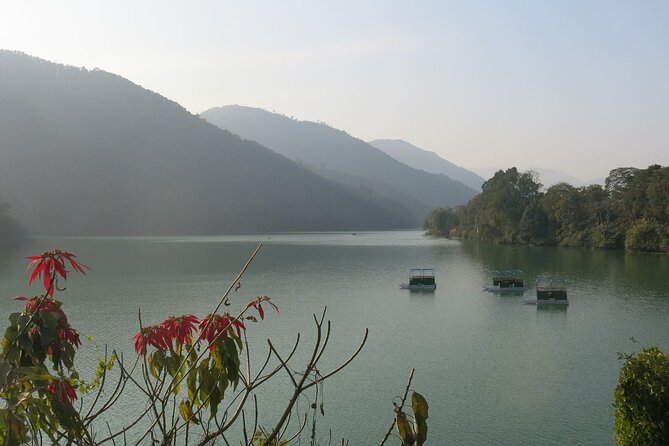
The visit begins with about 30 minutes at Phewa Tal, also called Phewa Lake or Fewa Lake. It is a freshwater lake in the southern part of the Pokhara Valley, close to the city and central to the feel of Pokhara.
I like starting here because the lake gives you an immediate sense of place. After a drive through town, open water changes the mood. You can use this stop to take photographs, look across the lake, and get your bearings before the tour turns to temples, caves, and museums.
Thirty minutes is enough for a snapshot, not a full lake outing. The tour description does not include a boat ride, so do not assume you will have time on the water. If your main reason for visiting Pokhara is Phewa Lake, you may want to return later for a longer visit.
The included entrance fee removes one small chore, although the package details do not specify separate activities beyond the listed stop. Bottled water is also included, a useful touch during a tightly timed route.
Devi’s Fall and the water below the city
Next comes Devi’s Fall, a natural waterfall in Pokhara. The water runs into a tunnel after reaching the bottom, with the tunnel described as approximately 500 feet long and about 100 feet below ground level.
You get about 30 minutes here. That is a sensible amount of time for viewing the waterfall and taking pictures, but it is not a long nature walk. The appeal is the unusual underground route of the water, not simply the height of the fall.
I would pay attention to footing and the viewing area rather than rushing through for a quick photograph. The supplied information does not describe the walking surface or exact viewing arrangements, so your driver-guide is the right person to ask about the safest and best place to look.
This stop pairs naturally with Gupteswar Gupha, which is opposite Devi’s Fall. That close relationship gives the route some useful logic: first you see the water, then you visit the cave associated with its passage underground.
Gupteswar Gupha, a cave with a religious purpose
Gupteswar Gupha, also called Gupteshwor Mahadev Cave, receives about 45 minutes. It is in Chhorepatan, Pokhara-17, opposite Devi’s Fall, and the water from the waterfall passes through the cave.
The cave adds a religious layer to what might otherwise be a simple waterfall stop. The name refers to Mahadev, a name for the Hindu god Shiva, and the cave is treated as a sacred place. You should expect a different kind of visit here, with natural rock formations and religious meaning sharing the same space.
Forty-five minutes gives you more time than the waterfall stop. That matters because caves are not places you appreciate well from the entrance alone. At the same time, the provided details do not specify the exact route, lighting, or number of steps, so ask your guide before setting off if you have any mobility concerns.
I like this pairing because the two stops explain each other. Devi’s Fall shows the force of the water above ground. Gupteswar Gupha gives you a look at the underground passage and a major local place of worship.
Same mountains, a completely different kind of day:
- ZipFlyer Nepal – The World’s Steepest Zip-line
★ 5.0 · 608 reviews - Bungee Pokhara by HighGround Adventures
★ 5.0 · 366 reviews - From Pokhara: Sarangkot Sunrise Himalayas Tour
★ 4.7 · 218 reviews - ATV Adventure Tour in Pokhara, Nepal
★ 5.0 · 194 reviews
Bindhyabasini Temple, Pokhara’s oldest temple
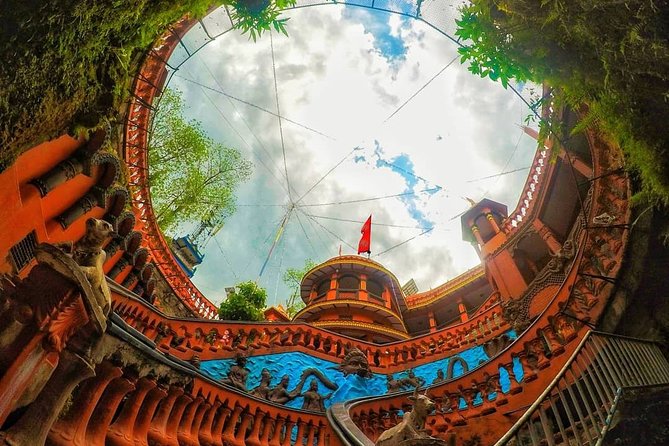
The 30-minute stop at Bindhyabasini Temple shifts the focus to living religious culture. The temple is described as the oldest temple in Pokhara and sits in Ward No. 2, Miruwa.
It regularly draws local worshippers as well as Nepalis from other parts of the country. That makes it more than a photo stop. You are seeing a place still used for worship, not a monument preserved only for sightseeing.
The tour information describes it as a temple with a top view, so you may get a useful look across the surrounding city area. I would keep your clothing and behavior respectful, follow any posted rules, and let your guide explain what is appropriate inside the temple area.
Half an hour is enough to see the site without making the religious visit feel rushed. It is also a useful counterpoint to the natural attractions earlier in the route. Pokhara is not only a base for mountain trips. Its temples remain part of ordinary local life.
Seti River Gorge and the force beneath Pokhara
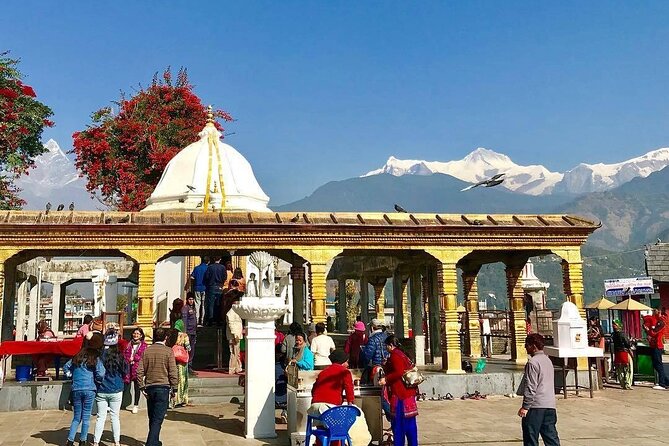
The Seti River Gorge is another 30-minute stop. The Seti Gandaki, also known as the Seti River or Seti Khola, is a western Nepal river and a tributary of the Trishuli River. Its gorges around Pokhara are a major local attraction.
The word gorge matters here. This is not a broad riverside stroll. The interest comes from seeing a powerful white-water river cut through the valley, often from a viewpoint rather than from the river itself.
I would treat this as a short scenic and geological stop. The tour does not give a named viewpoint or a detailed walking route, so your guide will be important in showing you where to look and explaining what you are seeing.
Together, the waterfall, cave, and gorge give the natural part of the tour a clear theme: water shapes Pokhara in dramatic ways. The stops are short, but they are varied enough to keep the morning moving.
Pokhara Museum and the story behind the scenery
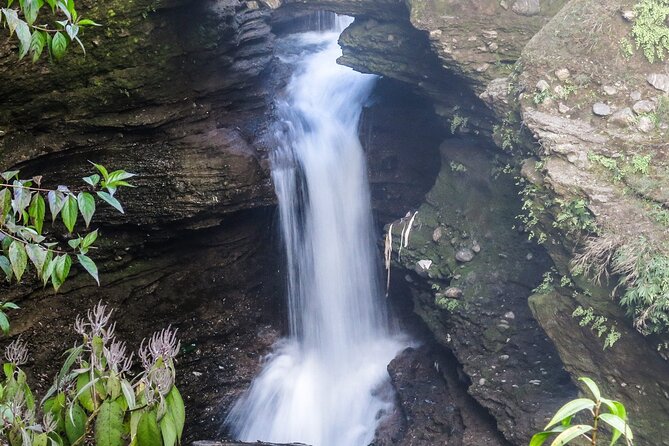
The Pokhara Museum gets about 40 minutes. Its focus is Nepali nature, culture, and adventure, with displays intended to explain the region’s older traditions and character.
This is the stop I would value most if you want context rather than more photographs. A temple or cave can be memorable, but a museum can help connect what you see in Pokhara with the wider culture of Nepal.
Forty minutes is enough for a purposeful visit, though not for a slow reading of every display. If you prefer outdoor sights, this may feel quieter than the waterfall or lake. I would still keep it in the plan because the tour otherwise moves quickly from one visual attraction to the next.
The museum also gives you a break from being outside. That can help on a warm day, especially when the schedule includes seven stops. Your driver-guide is described as an English-speaking guide, so ask questions as you go rather than treating the museum as a quick walk-through.
Peace Temple, the grand finish
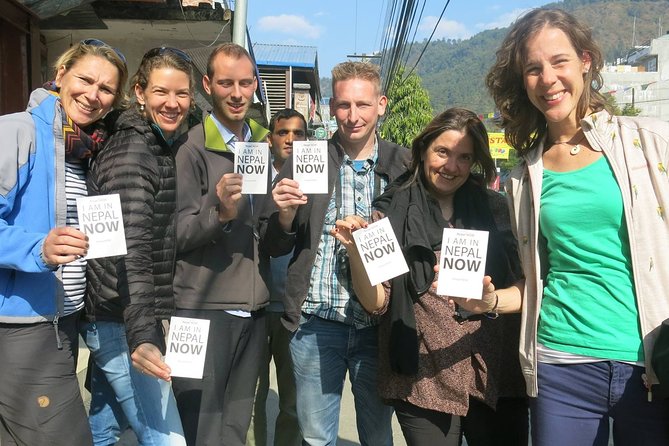
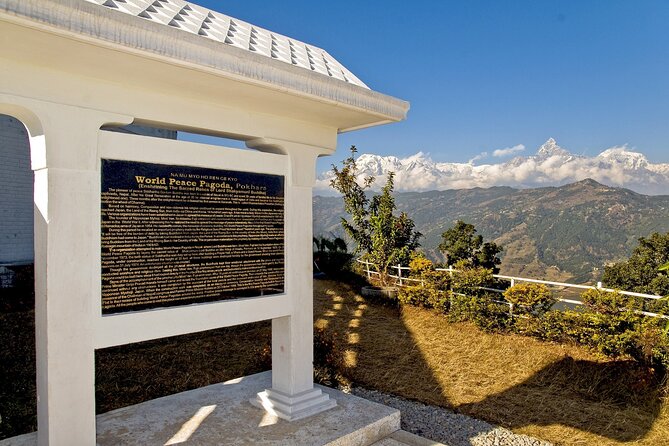
The final listed stop is the Peace Temple, a pagoda-style Buddhist monument with views of the mountains and lake. The scheduled visit is one hour, the longest stop of the day.
That extra time makes sense. A peace monument is not simply another building to photograph. The setting and the view are central to the experience, and you need a few quiet minutes to take them in.
The temple offers a strong contrast with Bindhyabasini Temple. One is a Hindu site tied to local worship in the city. The other is a Buddhist monument focused on peace, with the lake and mountains providing the backdrop.
The views depend on conditions, and the supplied information does not promise clear skies. Even so, this is likely to be the most spacious part of the tour. Use the hour for photographs, looking over Pokhara, and listening to the guide’s explanation rather than trying to hurry to the next stop.
Because the Peace Temple closes the route, it gives the half-day a satisfying shape. You begin with water at Phewa Tal and finish above the city with a wide view.
What the private car changes
The car is the practical heart of this experience. Pokhara’s key sights are spread across the valley, and covering them independently would require repeated transport arrangements. A private vehicle lets you move directly from one stop to the next and keeps the outing limited to your own group.
Hotel pickup is offered, and airport pickup is also available. That is especially useful if you have just arrived in Pokhara and want to use your first few hours well. Drop-off is included too.
The private setup also gives you a better chance to discuss the pace. One traveler described guide Moti as having perfect English and adjusting the tour for a dislike of heights while still providing a worthwhile morning. That example is useful: tell the guide about your limits early, rather than waiting until you reach a difficult stop.
The catch is that service can depend on the individual driver-guide and the handoff between the operator and the local team. Some bookings have involved confusion, late arrival, or a driver who could not communicate well in English. In one case, an English-speaking guide was sent after the operator was contacted.
I would confirm the pickup time, meeting point, driver name, and English-speaking guide before the tour day. That small step protects the main advantage of booking a private outing: a smooth, personal schedule.
Price, inclusions, and practical value
At $80 per person, the tour is not the cheapest way to see Pokhara. Its value depends on how many people are in your private group and how much you value saved time.
The price includes pickup and drop-off, an English-speaking driver-guide, all entrance fees, and bottled water. Those inclusions make the cost easier to judge because you are not starting with a low headline price and then adding admission fees and transport.
For a solo participant, $80 may feel high for four to five hours. For a couple, family, or small group, the private vehicle and shared guide service can make the price more reasonable. Group discounts are offered, though the amount is not specified.
I would especially consider it if you have limited time in Pokhara, are arriving by air, or do not want to arrange several short rides. If you are staying longer and prefer to linger at Phewa Lake, spend more time in the museum, or visit fewer places in greater depth, booking separate outings may suit you better.
The strong points are clear: private transport, a broad route, included admissions, flexible start time, and no need to manage the day yourself. The weak point is consistency in communication and pickup. The tour’s published rating is 4.7 out of 5, with 92 percent recommending it, but the lower scores show why confirmation matters.
Who will get the most from this half-day route
I would recommend this tour to you if you want a fast introduction to Pokhara and prefer a private car to arranging local transport. It suits first-time visitors, people with a half-day free, and anyone connecting through Pokhara Airport.
It also works well for people who want variety. You will see religious sites, natural attractions, a museum, a river gorge, and a Buddhist monument in one outing. That range helps you decide what to revisit later.
You may want another plan if you dislike a tight schedule or want long periods at each stop. Seven locations in four to five hours is efficient, but it is not slow travel.
The tour is described as easy and comfortable, and most people can participate. Still, the details do not spell out accessibility at each cave, temple, or viewpoint. If steps, uneven ground, or walking distance are important for you, ask before booking.
Should you book it?
I would book this tour if your priority is seeing the main Pokhara sights in one organized half-day. The combination of private transport and included entrance fees gives you a clear, convenient package, while the Peace Temple, Phewa Lake, and Gupteswar Gupha provide more than a routine city drive.
Before paying, send a message to confirm the pickup arrangement and that an English-speaking guide will accompany you. If Moti is available, his clear English and flexible approach make him an appealing choice based on the information available.
Skip it if you want a relaxed day built around one or two places. Book it if you want a broad first taste of Pokhara, have limited time, and are willing to stay alert about coordination.
Free cancellation is available if you cancel at least 24 hours before the start time. Cancellations or changes made within 24 hours are not refunded or accepted.
FAQ
How long does the private Pokhara tour last?
The tour lasts approximately four to five hours.
What places are included?
The route includes Phewa Tal, Devi’s Fall, Gupteswar Gupha, Bindhyabasini Temple, Seti River Gorge, Pokhara Museum, and the Peace Temple.
Is hotel pickup available?
Yes. Pickup and drop-off from your hotel are included, and pickup from Pokhara Airport is also offered.
Are entrance fees included?
Yes. All entrance fees listed for the experience are included in the price.
Is a guide included?
Yes. An English-speaking driver-guide is included. You should confirm the guide arrangement before the tour because guide communication has not been consistent in every booking.
Is this a private activity?
Yes. Only your group participates in the tour.
What is the cancellation policy?
You can cancel for a full refund up to 24 hours before the experience start time. Cancellations or changes made less than 24 hours before the start time are not accepted and are not refunded.
Just added around Pokhara
- Seti George and Thrilling Suspension Bridge Tour at Pokhara★ 4.5 · 3 reviews
- Tandem Paragliding in Pokhara★ 4.8 · 8 reviews
- Pokhara: Sunrise Tour to Sarangkot★ 5.0 · 3 reviews
- Pokhara: Suspension Bridge Private Tour- 30 Min Village Walk★ 4.8 · 9 reviews
- Pokhara: Visit Best Seven Tourist Destination by Sharing Bus★ 3.4 · 10 reviews
- Pokhara Sightseeing By Bus: Day Trip★ 4.6 · 7 reviews
- Pokhara Sightseeing By Bus – Day Trip★ 3.2 · 8 reviews
- Pokhara: Sarangkot Sunrise & Panoramic Annapurna View Tour★ 4.8 · 10 reviews
Private, compared.
Private Kathmandu Sightseeing Tour | UNESCO World Heritage sites
Read our review →
Full Day 7 UNESCO Tour with Lunch – Private/Group
Read our review →
Private Bhaktapur and Nagarkot Day Tour From Kathmandu
Read our review →
Full Day Top 4 UNESCO Tour with Lunch – Private/Group
Read our review →
Private Half-Day Chandragiri Cable Car Tour in Kathmandu
Read our review →
Nagarkot Sunrise & Hike with Lunch -Private/Group
Read our review →Browse the lists this tour appears in