
Reviewed · UNESCO WORLD HERITAGE TOURS
The Boudhanath Yoga Experience in Nepal
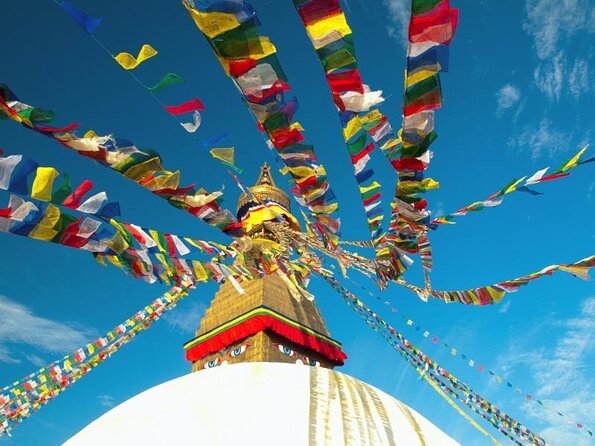
Boudhanath is one of Kathmandu’s most meaningful places for a yoga class: the world’s largest Buddhist stupa sits across from the yoga center, giving the session a strong sense of place. You work through postures, breathing, hand gestures, concentration, and meditation, rather than treating yoga as simple stretching.
I like the built-in hotel pickup and private transport, since Kathmandu traffic can make a short city trip feel like a small expedition. I also like the teacher’s patient, move-by-move approach, which makes it easier to ask questions and settle into the practice. The main consideration is price: at $110 per person, this is a costly four-hour activity unless the spiritual setting and private transfers matter to you.
Key points to know before you book
- Yoga beside Boudhanath Stupa: Practice across from one of Nepal’s most important Buddhist pilgrimage sites.
- A full 2.5-hour class: The session covers asanas, mudras, pranayama, concentration, and meditation.
- Private hotel transfers: Pickup and drop-off are included, with transport by private vehicle.
- Smallish maximum group: The class can have up to 14 people, enough for a shared setting without a huge crowd.
- Loose clothing is essential: Comfortable, flexible clothes will make sitting, bending, and holding postures easier.
- A morning start: Plan for a 9:00 am departure and roughly four hours from pickup to return.
Practicing yoga across from Boudhanath Stupa
The best part of this experience is its setting. You are not taking a generic yoga class in a hotel room. You practice near Boudhanath, the great white Buddhist stupa that anchors one of Kathmandu’s most important religious areas.
The stupa is directly across from the yoga center, so the setting remains part of the experience even while you are working through the class. Boudha is also home to a large Tibetan community living in exile, giving the neighborhood a strong Buddhist character that fits the workshop’s teachings.
That does not mean you should expect a sightseeing tour with a yoga demonstration added on. The class takes about two and a half hours, and the focus is on learning and practice. You have the chance to visit Boudhanath Stupa, but the main event is the extended yoga session.
I like this balance. You get a real physical class, but the surrounding religious setting gives the work more context. For someone who wants a quiet morning with a connection to Kathmandu’s spiritual life, the location does much of the heavy lifting.
The tradeoff is that Boudha is still an active city neighborhood. You may notice nearby movement and city sounds. One person found the area busy but not distracting, and that is a useful expectation to carry with you. This is not a silent mountain retreat. It is a focused class in an important urban pilgrimage center.
More UNESCO World Heritage Tours in Kathmandu:
- Private Kathmandu Sightseeing Tour | UNESCO World Heritage sites
★ 5.0 · 756 reviews - Kathmandu: Full Day 7 UNESCO Tour with Lunch – Private/Group
★ 5.0 · 415 reviews - Kathmandu: Full Day Top 4 UNESCO Tour with Lunch – Private/Group
★ 5.0 · 269 reviews
What the 9:00 am schedule looks like
The activity begins at 9:00 am, with hotel pickup included. Your transport is by private vehicle, and round-trip transfers are part of the package. That matters in Kathmandu, where arranging your own route can add hassle before you have even reached the mat.
The exact amount of time spent in the vehicle will depend on your hotel and traffic. The advertised duration is about four hours, including transport, the class, and the stupa visit. You should keep the rest of your morning fairly open rather than planning a tight appointment immediately afterward.
Once you reach the yoga center, the class lasts about two and a half hours. The remaining time allows for transfers and the Boudhanath portion of the outing. Since food and drinks are not included, have breakfast before pickup or plan your next meal after returning.
The private vehicle is a practical benefit, but it does not turn the outing into a fully private tour. The class can include up to 14 people. That is a manageable maximum for a workshop, though the feel will depend on how many people book that day.
Asanas, mudras, and the physical work
The class begins with asanas, or body postures. These are the movements and positions most people associate with yoga, but the teaching here presents them as one part of a larger system.
You should wear loose-fitting clothing. That is not just a packing suggestion for comfort. You will be bending, sitting, breathing, and holding positions, so restrictive clothes can make the session harder than it needs to be.
The class is described as hands-on, with movements explained step by step. That is useful if you are new to yoga or unsure about form. One attendee found the instructions clear and felt comfortable asking questions, which suggests the teacher allows room for interaction rather than rushing through a set routine.
The available information does not identify the instructor by name, so you should not book this expecting a particular teacher. You can expect a trained and qualified yoga instructor, with guidance on each part of the practice.
Yoga experience is not listed as a requirement. Most people can participate, and the class is designed around a broad approach to yoga. Still, you should judge your own physical limits. If a posture causes pain, ask for an adjustment or stop. The description supports general participation, not a promise that every pose suits every body.
Mudras and pranayama: the less familiar parts
Two parts may be less familiar if your experience with yoga has mostly involved stretching: mudras and pranayama.
Mudras are hand gestures used to support the flow of energy. They require little physical strength, but they add a symbolic and mental layer to the class. Pranayama refers to breathing techniques intended to relax you and purify the body and energy.
I see these sections as a good reason to choose this workshop instead of an ordinary fitness class. The focus is not only on flexibility or exercise. Breathing and hand positions help connect the physical work with the Buddhist and Himalayan setting.
The breathing practice may also be the most useful part for someone who is stiff, tired, or not especially athletic. You do not need to be able to perform advanced postures to take part in controlled breathing and meditation. The description does not promise a medical benefit, so treat the class as a wellness and cultural experience, not a cure for any condition.
Same mountains, a completely different kind of day:
- Everest Base Camp Trek – 14 Days
★ 5.0 · 1,499 reviews - Everest Base Camp Helicopter Tour landing at Everest View Hotel
★ 5.0 · 668 reviews - Half day cooking class in Thamel kathmandu
★ 5.0 · 607 reviews - Everest Base Camp Trekking
★ 5.0 · 485 reviews
Concentration and meditation in a Buddhist setting
The workshop also introduces dharana and dhyana. Dharana is presented as a method for controlling the mind and directing it toward positive energy. Dhyana is described as a form of divine meditation intended to liberate the mind.
These terms give the session a clear philosophical aim. You are not simply learning a sequence of poses. The teaching connects body, breath, attention, and meditation through an Eight-Fold Path associated with Buddha and seven disciplines.
The language is spiritual, so this activity will suit you best if you are open to that approach. If you want a strictly secular exercise class, you may find the emphasis on liberation, energy, and Buddhist teachings more than you need.
For me, the location makes this part more meaningful. Boudhanath is a working pilgrimage center, not a theme park built for a yoga class. Practicing meditation near the stupa gives the session a strong connection to place, even if the city around you remains active.
The available information does not spell out how long each segment lasts or provide a detailed pose list. Expect an introduction to the different areas of yoga rather than a specialist course in one school or technique.
Visiting the stupa without losing the morning
Boudhanath Stupa entry is included. That makes the outing more than a classroom visit and removes one small extra cost from the morning.
The stupa is the visual and spiritual anchor of Boudha. You can see it from the yoga center, and the workshop takes place directly across from it. This arrangement lets you connect the practice with the site without spending the entire activity on formal sightseeing.
The stupa visit is not described as a long guided circuit, so keep your expectations sensible. You are not buying a full cultural tour of Kathmandu or a detailed architectural lecture. You are combining a yoga class with time at one major Buddhist site.
That combination is valuable if your schedule is short. You get a structured activity and a glimpse of Boudhanath in one morning, with transport arranged from your hotel. If you already plan to spend a full day exploring Boudha, compare this experience with simply visiting the stupa on your own and booking a less expensive class.
Is $110 a fair price?
At $110 per person, this is not a budget yoga class. The value comes from the package: hotel pickup and drop-off, a private vehicle, stupa entry, a qualified instructor, and a 2.5-hour class.
The price makes more sense if you are staying somewhere inconvenient, dislike negotiating local transport, or want one organized morning with no route planning. Private transfers can be especially useful in Kathmandu, where traffic and unfamiliar streets can eat into your day.
It is harder to justify if you are already near Boudhanath, comfortable using local transport, and mainly want to stretch for an hour. In that case, you are paying for convenience, setting, teaching, and the longer Buddhist-inspired program, not just time on a yoga mat.
Group discounts are offered, though the amount is not specified. If you are traveling with friends or family, ask about the discount before booking. With a maximum of 14 people, the class is not guaranteed to be private, even when your transport is private.
The fact that the experience is often booked 113 days ahead suggests you should not leave it until the last morning of your Nepal trip. That average does not guarantee availability or explain demand, but it is a useful reason to check dates early, especially if your Kathmandu stay is short.
Who will enjoy this experience most?
I would recommend the Boudhanath Yoga Experience to you if you want three things at once: a guided yoga class, a Buddhist setting, and easy transport from your hotel.
It is a good match for:
- A first-time yoga participant who wants clear, step-by-step instruction
- Someone interested in meditation and breathing as well as physical postures
- A visitor who wants to see Boudhanath without planning a separate outing
- Couples, friends, or small groups who may qualify for a group discount
- People with a free morning who prefer an organized activity
- Anyone who values a qualified instructor and a class lasting 2.5 hours
I would hesitate if you want a silent retreat, a private teacher, or a short and inexpensive workout. The neighborhood is active, the group can reach 14 people, and the spiritual language may not suit every style of yoga student.
You should also consider your own mobility and comfort. Most people can participate, but the activity includes postures, sitting, breathing work, and meditation. Loose clothes will help, and you should tell the instructor if you need to modify anything.
Practical details that make the morning easier
Wear loose-fitting clothing and arrive ready to take part rather than watch. The long class makes comfort more important than appearance.
Hotel pickup and drop-off are included, but the experience starts at 9:00 am. Confirm your pickup details when you book, and allow some flexibility after the advertised four-hour duration in case Kathmandu traffic slows the return.
Food and drinks are not included. Eat beforehand and carry whatever you normally need for a morning activity, unless your own hotel or guide gives you different instructions.
Confirmation is provided at booking. Free cancellation is available if you cancel at least 24 hours before the local start time. A cancellation or change made less than 24 hours before the start is not accepted for a refund.
The activity is near public transportation, though your package already includes a private vehicle. The maximum group size is 14, and most people can participate.
Should you book the Boudhanath Yoga Experience?
Book it if you want yoga tied to a real Buddhist place, not an interchangeable studio. The combination of Boudhanath Stupa, Tibetan Buddhist surroundings, breathing practice, meditation, and hotel transfers gives the morning a clear purpose.
I especially like it for a first visit to Kathmandu, when transport and planning can be tiring. You can spend a meaningful morning near one of the city’s major religious sites without having to arrange every step yourself.
Skip it if your priority is low cost, complete silence, or an advanced private yoga lesson. At $110, the value depends on using the full package. For the right person, the setting and convenience make the price worthwhile. For everyone else, visiting Boudhanath separately may leave more money for the rest of Nepal.
FAQ
Where does the yoga experience take place?
It takes place near Boudhanath Stupa in Kathmandu, with the yoga center located across from the stupa.
What time does the activity start?
The stated start time is 9:00 am.
How long does the experience last?
The experience lasts approximately four hours, including transportation, the stupa visit, and the yoga session.
How long is the yoga class?
The included yoga class lasts 2.5 hours.
Is hotel pickup included?
Yes. Hotel pickup and drop-off are included, along with transport by private vehicle.
Is entry to Boudhanath Stupa included?
Yes. The entry fee at Boudhanath Stupa is included.
What should I wear?
Loose-fitting clothing is advised to make the yoga practices more comfortable.
How many people can join the activity?
The maximum group size is 14 people.
Are food and drinks included?
No. Food and drinks are not included in the price.
Just added around Kathmandu
- Traditional Momo Making Class★ 5.0 · 10 reviews
- Kathmandu to Pokhara Premium sofa bus ticket★ 4.0 · 17 reviews
- Women Empowerment Project(Nepali cooking class & jewelry workshop★ 5.0 · 15 reviews
- Walking tour of Kathmandu with awesome local guides★ 5.0 · 4 reviews
- Wildlife Adventure in Chitwan Nepal★ 4.0 · 4 reviews
- Kathmandu 2 Nights 3 Days Chitwan Jungle Safari Tour★ 5.0 · 9 reviews
- Kathmandu Street Food Walking Tour – Eat Like a Local★ 5.0 · 3 reviews
- Walking tour of real Kathmandu through back streets.★ 5.0 · 3 reviews
UNESCO World Heritage Tours, compared.
Private Kathmandu Sightseeing Tour | UNESCO World Heritage sites
Read our review →
Full Day 7 UNESCO Tour with Lunch – Private/Group
Read our review →
Full Day Top 4 UNESCO Tour with Lunch – Private/Group
Read our review →
Kathmandu Spiritual Sites: Bodhnath & Pashupatinath Tour
Read our review →
Kathmandu Private Sightseeing Tour | UNESCO World Heritage Sites
Read our review →Full Day 7 UNESCO Tour with Lunch – Private/Group
Read our review →Browse the lists this tour appears in