Reviewed · TOURS
Temples and Stupas Tour in Kathmandu Valley
Pashupatinath, Patan Durbar Square, and Boudhanath give you three very different views of Kathmandu Valley in one day: Hindu ritual, royal Newari architecture, and Tibetan Buddhist devotion. The strongest part of this tour is the cultural range, with an English-speaking guide helping you make sense of places that can feel overwhelming on your own.
I like the small maximum group of 10, which should make it easier to ask questions, and I like the air-conditioned vehicle between sites. Guides named Deepa and Kalpana have been praised for explaining Nepalese culture clearly. The main drawback is that entrance fees are not included, and the quality of the day depends heavily on how actively your guide teaches during the drives.
Key points to know before booking
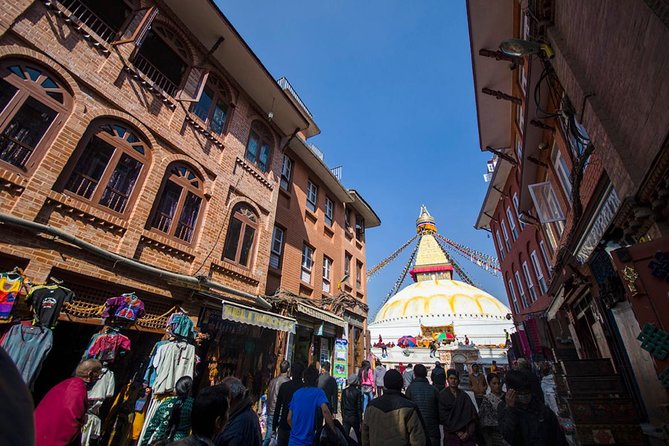
- Three UNESCO-listed sights in one day: You visit Pashupatinath, Patan Durbar Square, and Boudhanath.
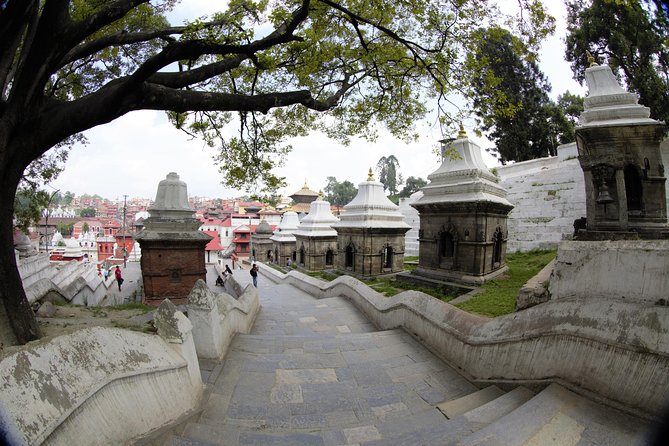
- Pashupatinath is a working religious site: You may see Hindu holy men and, depending on the day, cremation rites along the river.
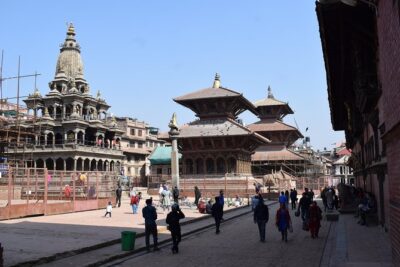
- Patan is the architecture stop: The square is filled with Newari temples, palace courtyards, and carved details.
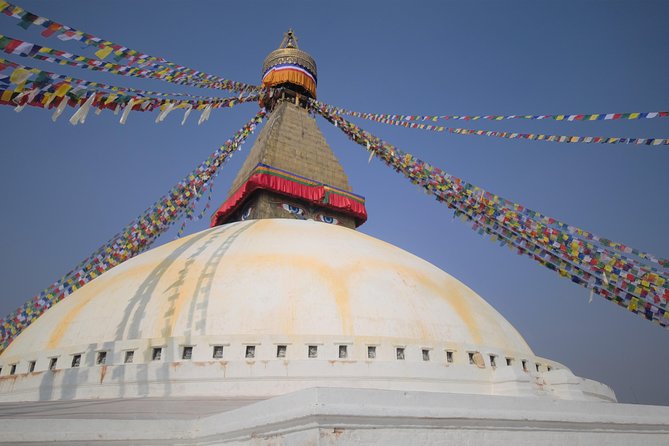
- Boudhanath brings a calmer Buddhist rhythm: The great stupa is a place of prayer and respect for both Buddhists and Hindus.
- Budget for extra costs: Food, drinks, entrance fees, and hotel pickup or drop-off are not included.
- The pace is efficient: Each main stop receives about two hours, with the full outing lasting around seven hours.
Three major traditions in one Kathmandu day
This is a useful first look at Kathmandu Valley because the three stops are not variations of the same attraction. Pashupatinath introduces you to Hindu worship and death rituals. Patan shows the artistic and political world of the Newari kings. Boudhanath shifts the mood toward Buddhist prayer and pilgrimage.
You meet at Royal Mountain Travel on Lal Durbar Marg at 9:00 in the morning. From there, transport is provided in an air-conditioned vehicle suited to the group size. The group can be as large as 10 people, small enough for a more personal outing but not so small that you should expect a private tour.
The route lasts about seven hours, with roughly two hours at each attraction. That is a sensible amount of time for a first visit. You will see the main areas without trying to cram every temple and courtyard in Kathmandu Valley into one exhausting day.
The tour has earned a 4.8 rating from 36 reviews, with 94 percent recommending it. That is a strong record, but the spread of individual experiences points to one important truth: the guide makes a big difference. Guides such as Deepa and Kalpana have been singled out for answering questions and explaining local culture at length. On a less engaged day, the vehicle rides may feel like simple transfers.
Other Kathmandu days worth booking alongside this:
- Everest Base Camp Trek – 14 Days
★ 5.0 · 1,499 reviews - Private Kathmandu Sightseeing Tour | UNESCO World Heritage sites
★ 5.0 · 756 reviews - Everest Base Camp Helicopter Tour landing at Everest View Hotel
★ 5.0 · 668 reviews
Pashupatinath, where worship and cremation meet
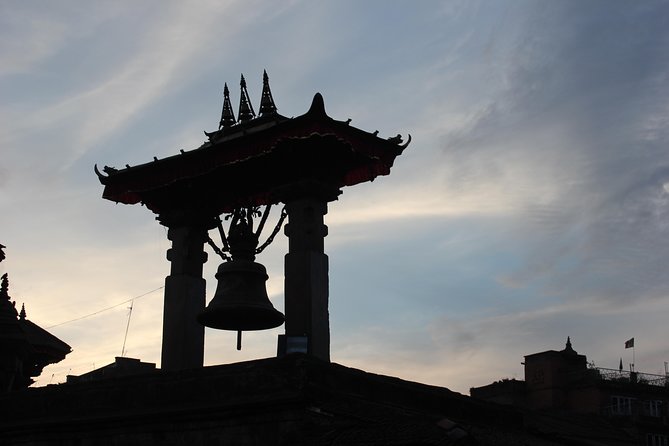
The first stop is Pashupatinath Temple, dedicated to Shiva in his form as Pashupatinath, or Lord of Animals. It is one of Nepal’s most important Hindu religious sites and a final destination for Hindu devotees.
This is not simply a monument to admire from a distance. Pashupatinath is an active place of worship, and that changes how you should approach it. You may see Hindu holy men, religious activity, and cremation ceremonies along the river. A cremation is a serious family and religious event, so your guide’s instructions about respectful behavior matter.
The planned two hours gives you time to take in the temple area and its surrounding structures without rushing. The site can be emotionally powerful, especially if you have not previously encountered public cremation rites. It can also feel confronting. You should be prepared for an honest look at an important part of Hindu life, not a polished museum presentation.
The activity description does not promise that you will see a cremation, and conditions can change. Treat it as a possibility, not a scheduled performance. Photography and personal behavior should be handled with care, particularly near mourners and religious ceremonies.
Pashupatinath is also the stop where a guide’s cultural explanation matters most. Shiva, temple practice, holy men, and cremation customs are easy to misunderstand if you only walk around taking photographs. A strong guide can connect what you see to Nepalese religious life and help you observe without getting in the way.
Entrance fees are extra. One tour account put the cost at about 2,000 Nepalese rupees in total for fees at two stops, with around 1,000 rupees at each. Fees can change, so carry enough local currency and confirm the current amount before setting out.
Patan Durbar Square and the world of the Malla kings
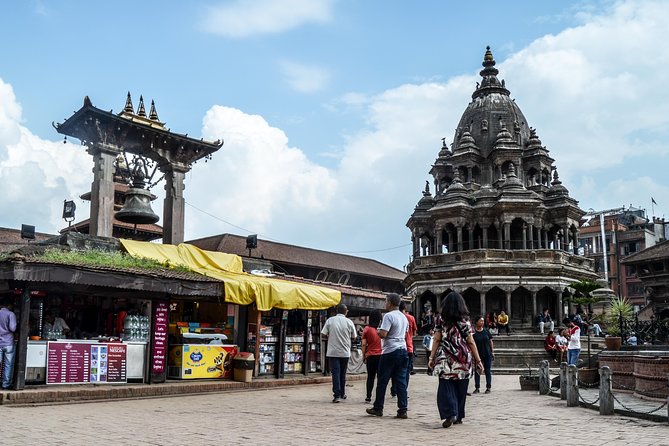
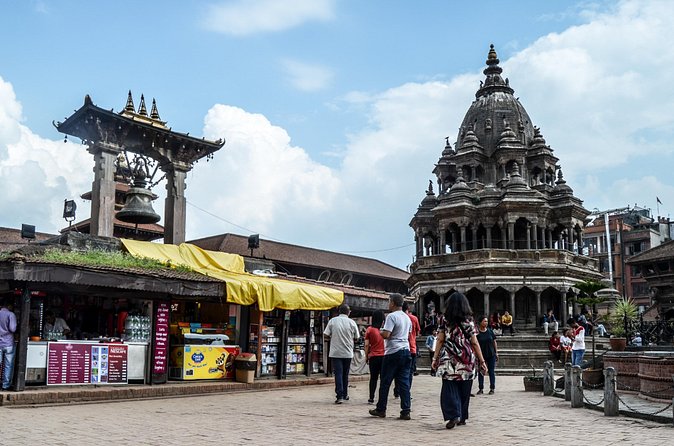
The second stop is Patan Durbar Square, in the city of Lalitpur. This is the tour’s best stop for architecture, royal history, and close-up detail.
Patan was once the seat of the Malla kings, and the square preserves palace buildings, temples, courtyards, and Newari craftsmanship. You will find carved wood, brick construction, and layered temple roofs that reward a slower look. The appeal is not one single building. It is the way the square brings palace life, religious practice, and skilled local art together.
The tour frames the square as a place to follow in the footsteps of kings. That is a helpful starting point, but you should also pay attention to the artisanship. Newari architecture is full of small features that disappear when you only take a quick photo: carved doorways, figures on temple struts, metalwork, and the arrangement of courtyards.
Two hours is enough for a guided introduction to the central square and its key structures. It may not be enough for every museum, side courtyard, and nearby street. If you are especially interested in architecture, you will want to use the guide’s explanations to decide what deserves your own attention.
This is also a good place to ask questions. A guide who keeps teaching, as Deepa and Kalpana have been praised for doing, can turn the square from a series of attractive buildings into a readable historic center. Ask about the Malla kings, Newari culture, temple design, and the relationship between royal power and religious buildings.
Again, admission is not included. The tour price covers guiding and transport, not entry to the attractions. That makes the advertised price look low at first, so include entrance fees in your day’s budget.
Boudhanath and the sound of Buddhist devotion
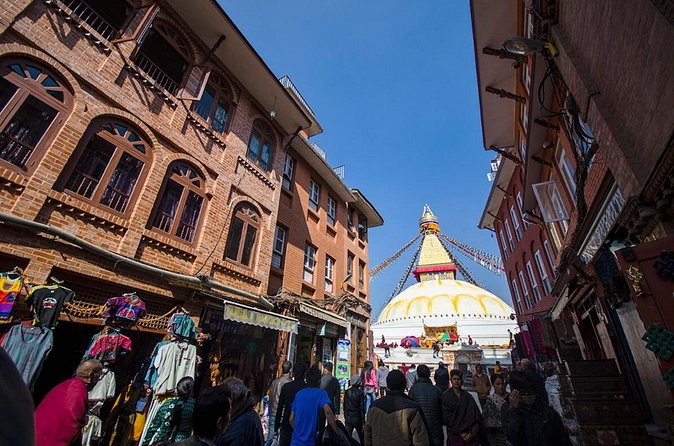
Boudhanath Stupa brings a different atmosphere to the route. It is one of Nepal’s holiest Buddhist sites, and Hindus also pay their respects there. The huge stupa, with its white dome and watchful Buddha eyes, is the visual anchor of the area.
Your two hours here should give you time to understand the site as a place of pilgrimage rather than just a landmark. The stupa’s importance comes from the acts of devotion taking place around it. Prayer, respect, and ritual movement are central to the experience.
Your guide can help explain the Buddhist meaning of the stupa and the way it is honored by people from more than one religious tradition. That shared respect is one of the most interesting parts of Kathmandu Valley. You are not being shown three isolated attractions. You are seeing how Hindu and Buddhist practice overlap in everyday Nepalese life.
Boudhanath is likely to be the easiest stop for quiet observation and photography, but it still deserves respectful behavior. Follow the guide’s lead, especially around worshippers. A little patience will give you a better sense of the place than rushing from one viewpoint to the next.
The two-hour stop also gives you time to absorb the change in mood after Pashupatinath and the royal setting of Patan. The route works because each attraction has a clear identity.
Same mountains, a completely different kind of day:
- Half day cooking class in Thamel kathmandu
★ 5.0 · 607 reviews - Everest Base Camp Trekking
★ 5.0 · 485 reviews - Nagarkot Sunrise View and Day Hiking from Kathmandu
★ 5.0 · 471 reviews - Kathmandu: Full Day 7 UNESCO Tour with Lunch – Private/Group
★ 5.0 · 415 reviews
What the guide adds to the day
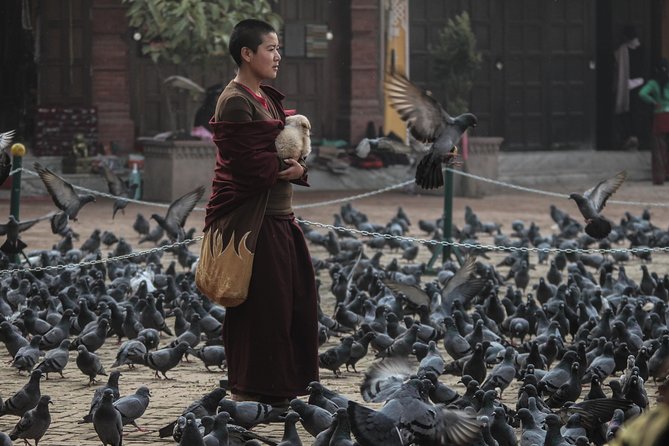
The tour includes an English-speaking guide, and the best feedback focuses on explanation rather than sightseeing alone. One guide was praised for teaching about Nepalese history and local culture throughout the day, even while lunch was taking place. Lunch itself is not included, so any meal is your own expense.
That level of attention is exactly what you should want from this tour. Transport between famous sites is easy to arrange. Understanding why those sites matter is harder. The guide should explain what you are seeing, answer questions, and provide context while you move between the attractions.
Still, you should not assume every minute in the vehicle will include commentary. One less positive account described the guide and driver speaking to each other in Nepali during the drives, with little information offered between stops. That is the clearest weakness in the experience. If you want a running lesson from hotel departure to return, this tour may not always deliver that.
You can improve your day by asking direct questions. Ask what to watch for at each site, which buildings are most important, and how Hindu and Buddhist practice shape the valley. The guide’s response will quickly tell you how much depth you can expect.
Named guides Deepa and Kalpana have received especially strong praise for their cultural knowledge and willingness to answer questions. You cannot guarantee who will lead your group, but those names give you a useful picture of the best version of this experience.
Is $34 good value for this Kathmandu route?
At $34 per person, the tour is reasonably priced for about seven hours of guiding and vehicle transport. You are paying for convenience as much as for sightseeing. Instead of arranging separate taxis, explaining destinations to several drivers, and negotiating fares, you have one planned route covering three major sites.
The price does not include admission fees, food, drinks, or hotel transfers. That matters. One account put admission at roughly 2,000 rupees for two stops, so your final cost will be higher than the headline price. Exact charges may change, and the supplied details do not give a separate fee for every attraction.
The value is strongest if you are new to Kathmandu, have limited time, or want cultural explanation rather than independent wandering. It is less attractive if you already know the valley, prefer setting your own pace, or want extensive time at each location.
The air-conditioned vehicle is a practical benefit. Kathmandu sightseeing can be tiring, and a vehicle saves you from arranging transport between widely separated areas. The trade-off is that the day remains tied to the group schedule. Each stop receives about two hours, and the tour returns to the original meeting point.
The official end point is Royal Mountain Travel, not your hotel. A guide once dropped a group at its hotel even though this was not required, but you should treat that as a courtesy rather than a promised service.
Timing, group size, and practical planning
The tour starts at 9:00 in the morning and lasts about seven hours. Since there is no hotel pickup, plan extra time to reach Royal Mountain Travel on Lal Durbar Marg. The meeting point is near public transportation.
The maximum group size is 10. That is a useful middle ground. You avoid the scale of a large coach excursion, yet the tour may cost less than hiring a private guide and vehicle. If you are hoping for a very intimate experience, remember that the group may still include nine other people plus the guide and driver.
Wear comfortable clothing suitable for visiting religious sites. The supplied information does not specify a dress code, but Pashupatinath and Boudhanath are active sacred places, so modest, respectful clothing is a sensible choice.
Bring water and money for food, drinks, and admission. These are not included. Also bring questions. The route covers substantial material, and you will get more from it if you treat the guide as a cultural interpreter rather than simply someone who leads you from gate to gate.
Mobile tickets are supported, and booking confirmation is received at the time of booking. Most people can participate, and children aged 10 and above are charged an entrance fee. The information does not provide a separate child tour price.
Free cancellation is available if you cancel at least 24 hours before the 9:00 start time. Cancellations or changes inside that window are not accepted for a refund.
Who should book this experience?
I would choose this tour for a first visit to Kathmandu when I wanted to see the valley’s major religious and royal sites in one organized day. It is particularly useful if you are not comfortable haggling with taxi drivers or piecing together transport on your own.
You should also consider it if cultural context matters to you. The strongest guides, including Deepa and Kalpana, have been praised for answering questions and explaining local life. That can make a major difference at Pashupatinath and Boudhanath, where the meaning of what you see is more important than the buildings alone.
I would hesitate if you want a slow, specialist visit to one site. The itinerary gives each attraction about two hours, and the route is designed for range. It is a sampler, not an exhaustive study of Patan architecture, Hindu ritual, or Tibetan Buddhism.
I would also ask about the day’s guiding style at the start. If the guide offers active commentary and welcomes questions, the experience can be excellent value. If the day turns into three stops with quiet vehicle rides between them, the $34 price still buys useful transport, but much of the tour’s potential is lost.
Should you book the Temples and Stupas Tour?
Book it if you want a practical introduction to Kathmandu Valley, prefer a small organized group, and accept that entrance fees and meals cost extra. The three-stop design is smart, the transport removes hassle, and the religious and architectural contrast is genuinely worthwhile.
Skip it if you need hotel pickup, a private guide, or long, unhurried visits. Before booking, set aside money for admissions and ask plenty of questions during the day. With an engaged guide, this is a strong first-day orientation. With minimal commentary, it becomes mainly a convenient transfer service between three important places.
FAQ
How long does the Temples and Stupas Tour last?
The tour lasts approximately seven hours, with about two hours planned at each of the three main stops.
What sights does the tour visit?
It visits Pashupatinath Temple, Patan Durbar Square, and Boudhanath Stupa, all listed as UNESCO World Heritage sites.
What time does the tour start?
The tour starts at 9:00 in the morning.
Where does the tour begin?
It begins at Royal Mountain Travel on Lal Durbar Marg, Kathmandu 44601, Nepal.
Where does the tour end?
The activity ends back at the original meeting point.
Is hotel pickup included?
No. Hotel pickup and drop-off are not included, although a guide may occasionally provide a courtesy drop-off.
Are entrance fees included in the price?
No. All entrance fees and taxes are excluded. One tour account reported paying about 2,000 Nepalese rupees for admission at two stops, but fees can change.
Is food included?
No. Food and drinks are not included in the tour price.
What is the maximum group size?
The tour accepts a maximum of 10 travelers.
Can I cancel for a full refund?
Yes, if you cancel at least 24 hours before the experience start time. Cancellations or changes made less than 24 hours in advance are not refundable.
Just added around Kathmandu
- Private Half-Day Tour of Boudhanath and Pashupatinath Temples in Kathmandu★ 4.5 · 9 reviews
- Private Half-Day Tour of Kathmandu Durbar Square and Swayambhunath Temple★ 4.5 · 11 reviews
- Namobuddha Monastery Hiking Day Tour via Panauti from Kathmandu★ 5.0 · 15 reviews
- Private Full-Day Kathmandu City Tour★ 5.0 · 9 reviews
- Private Day Tour in Kathmandu Valley Rim with Bhaktapur Sightseeing★ 5.0 · 3 reviews
- Private Half Day Budhanilkantha Tour★ 5.0 · 6 reviews
- Private Day Tour: Patan and Bhaktapur from Kathmandu★ 4.5 · 6 reviews
- Private Day Tour – Sacred Journey to Namo Buddha★ 5.0 · 5 reviews
Tours, compared.
Private Kathmandu Sightseeing Tour | UNESCO World Heritage sites
Read our review →
Everest Base Camp Helicopter Tour landing at Everest View Hotel
Read our review →
Full Day 7 UNESCO Tour with Lunch – Private/Group
Read our review →
Private Bhaktapur and Nagarkot Day Tour From Kathmandu
Read our review →
Full Day Top 4 UNESCO Tour with Lunch – Private/Group
Read our review →