Reviewed · TOURS
Shamanism Tour in Nepal – One-to-one Consultation with Sharmans
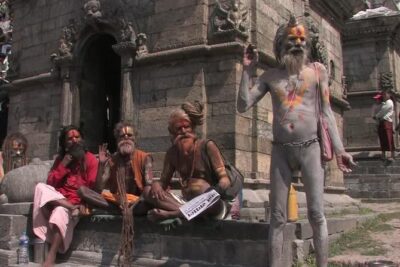
Kathmandu’s Himalayan Bon Shamanism is not a staged dance for tourists. Near Thamel, you enter a working temple and healing center where a traditional Shaman offers divination, ritual, and counseling. I like the chance to see local ceremonies and the careful introduction from guide Siddartha, who explains what the Shaman can and cannot do. I also like the private, one-to-one format, though you should know that the session may be shorter and less dramatic than the description suggests.
The main consideration is expectation. You may hear about your past, present, or future only if the Shaman senses negative energy or spirits. If nothing troubling is found, the consultation may remain brief. At $40, plus a possible donation and guide tip, this is best judged as a cultural and spiritual encounter, not a medical service or guaranteed fortune-telling session.
Key points before you book
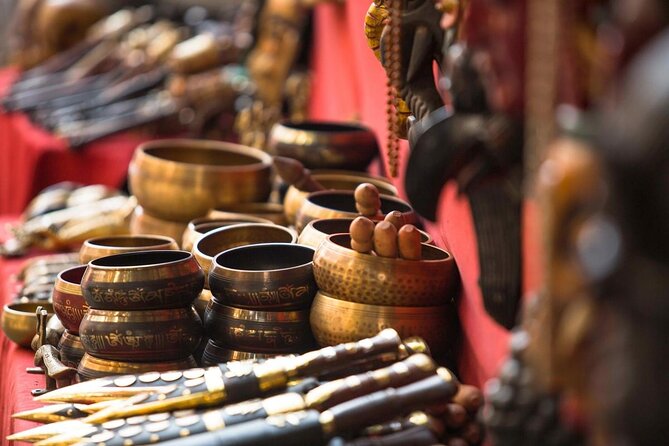
- A working temple near Thamel: Walk to a local Shaman temple and healing center rather than visiting a purpose-built sightseeing attraction.
- Private consultation: Your group receives a one-to-one session with a Himalayan Bon Shaman, with a guide translating.
- Siddartha sets the tone: He explains the beliefs, rituals, energy, and limits of the session before you meet the Shaman.
- Ceremonies may be underway: You might first observe local consultations and healing rituals, which helps you understand the setting.
- Allow up to 90 minutes: The planned duration is about one hour to one hour 30 minutes, although one account describes a session lasting about 30 minutes.
- Keep the customs in mind: A bath before visiting is suggested, and women are asked not to visit the Shaman or temple during the first four days of menstruation.
A working Bon Shaman temple near Thamel
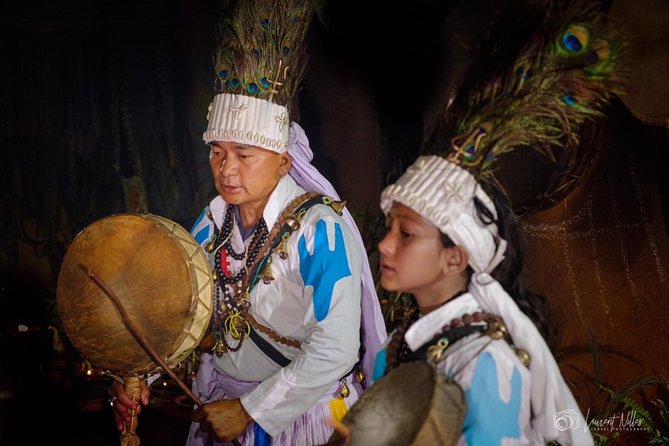
The setting is one of the strongest reasons to consider this activity. The temple and healing center are within walking distance of Thamel, Kathmandu’s main visitor district, but the experience takes place in a local center used for both training and treatment.
That distinction matters. You are not simply being shown a costume, a prop, or a folk performance arranged for a busload of people. The center serves local visitors as well as international clients, and you may see ceremonies or consultations already in progress.
I would approach the entrance quietly and respectfully. The suggested first step is to watch how the Shaman works with local people. This gives you time to take in the sounds, gestures, objects, and atmosphere before your own consultation begins.
It also helps you decide how comfortable you feel. Shamanic healing is personal, and the temple is a place of belief rather than a standard museum. You are there to observe and participate with permission, not to treat another person’s ceremony as entertainment.
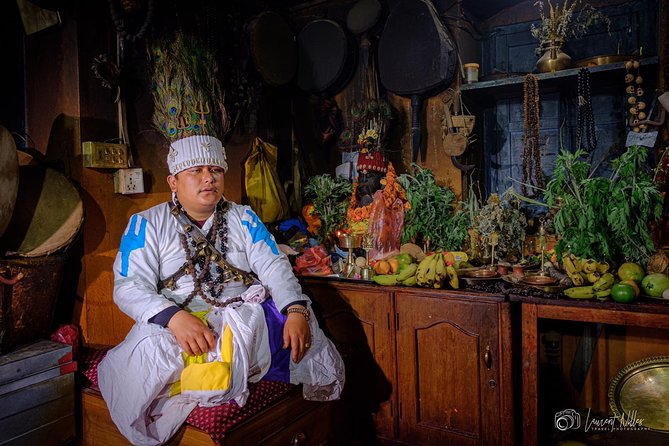
The exact details of the room, clothing, and ceremony can vary. One account expected a traditionally dressed Shaman but met a woman wearing ordinary clothes. She still performed a ritual and blessing, but the difference between the promotional image and the real setting caused disappointment. Go for the practice and the conversation, not for theatrical costumes.
Other Kathmandu days worth booking alongside this:
- Everest Base Camp Trek – 14 Days
★ 5.0 · 1,499 reviews - Private Kathmandu Sightseeing Tour | UNESCO World Heritage sites
★ 5.0 · 756 reviews - Everest Base Camp Helicopter Tour landing at Everest View Hotel
★ 5.0 · 668 reviews
What Siddartha explains before the session
The guide is an important part of this experience. Siddartha meets you and explains Shamanism before taking you to the temple. His role includes translation, but the better value is the cultural briefing that gives the session some context.
You learn about the role of energy, spirits, faith, and the history of Shamanic practice. That preparation is especially useful if this is your first contact with Himalayan Bon Shamanism. Without it, a ritual can look confusing or overly mysterious. With it, you can follow the broad purpose of the consultation and ask sensible questions.
Siddartha also explains what the Shaman can and cannot do. That is worth hearing carefully. The session is not presented as a replacement for a doctor, psychologist, or other health professional. The tradition views the Shaman as a spiritual counselor and healer, sometimes described as an early form of psychologist or psychotherapist, but that should not be confused with modern medical care.
The translation matters, too. The private consultation may include details that are difficult to follow without help, and a good translator lets you focus on the Shaman rather than trying to decode every exchange. Several comments give the guide high marks for clear English, patience, and preparation.
The private consultation and ritual healing
After the introduction, you meet the Shaman for your one-to-one consultation. The format is private to your group, which makes it more comfortable than watching a public presentation. You can listen, ask for clarification through the guide, and take part in the ritual without a crowd around you.
The consultation centers on divination and the energy or spirits believed to surround you. The advertised themes include health in the past, present, and future, the removal of negative spirits, and psychological healing through a natural spiritual method.
Here is the practical limit: these subjects are not guaranteed to come up in full. The explanation given by the operator is that the Shaman first looks for negative energy or a troubling spirit. If none is detected, the Shaman may avoid disturbing what is considered positive energy. That means you might receive a blessing or a short ritual rather than a detailed reading.
This point is essential. If you book expecting a complete medical history, a long prophecy, or a diagnosis of every worry, you could leave disappointed. If you see the meeting as a traditional spiritual consultation that may prompt reflection, the experience makes more sense.
Some people find the process surprisingly personal. The Shaman may say things that feel accurate, and the ritual can give you a quiet way to think about the concerns you brought into the room. Others may find the claims difficult to assess. Both reactions are reasonable. You should remain open, but you should also keep your judgment.
The phrase healing needs care here. In the context of this activity, it refers to Shamanic ritual and belief. It does not promise a medical cure. If you have a serious physical or mental health problem, seek qualified medical help rather than relying on this session.
Watching ceremonies before your own meeting
The option to observe other ceremonies is more valuable than it may first appear. It gives you a glimpse of how the center functions beyond your own appointment and shows that the Shaman’s work is part of an ongoing local practice.
You might see different forms of ritual or consultation, but the exact program is not fixed in the supplied details. Be ready for a real working environment, where ceremonies may already be taking place rather than a neatly timed show.
I would treat this portion as a lesson in manners as much as culture. Stay quiet, follow the guide’s instructions, and avoid assuming that every ritual is available for close inspection or photography. The information provided does not promise photographs, participation in other people’s ceremonies, or a full explanation of each ritual.
Several accounts describe seeing multiple ceremonies and finding the setting powerful and educational. That makes this activity a useful choice for someone curious about Nepalese spiritual life, even if the private consultation itself proves short.
Same mountains, a completely different kind of day:
- Half day cooking class in Thamel kathmandu
★ 5.0 · 607 reviews - Everest Base Camp Trekking
★ 5.0 · 485 reviews - Nagarkot Sunrise View and Day Hiking from Kathmandu
★ 5.0 · 471 reviews - Kathmandu: Full Day 7 UNESCO Tour with Lunch – Private/Group
★ 5.0 · 415 reviews
Timing, meeting point, and walking from Thamel
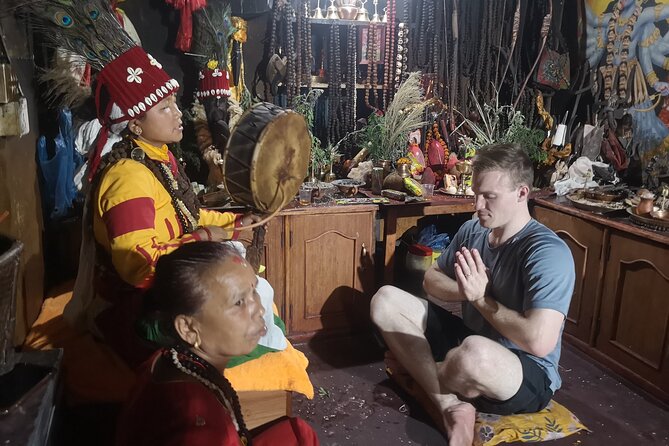
The meeting point is listed as P8F3+WX, Kathmandu 44600, Nepal, and the activity ends back at the same meeting point. The center is described as within walking distance of Thamel and near public transportation.
The planned length is about one hour to one hour 30 minutes. Build your schedule around the longer estimate, especially if you have a flight, museum booking, or meal reservation afterward. At least one account describes the actual experience as about 30 minutes, so the time can vary depending on the ceremony and consultation.
That variation is one reason not to pack the activity between two tight appointments. You may spend time receiving the introduction, walking to the center, observing what is happening, translating the consultation, and returning to the meeting point. A mobile ticket is provided, and confirmation arrives when you book.
This is a private activity for your own group, not a large shared tour. Most people can participate, and the meeting point is accessible by public transport. The supplied details do not promise hotel pickup, private vehicle transport, wheelchair access, or a specific route from your hotel, so ask before booking if any of those points matter to you.
Customs, clothing, and respectful behavior
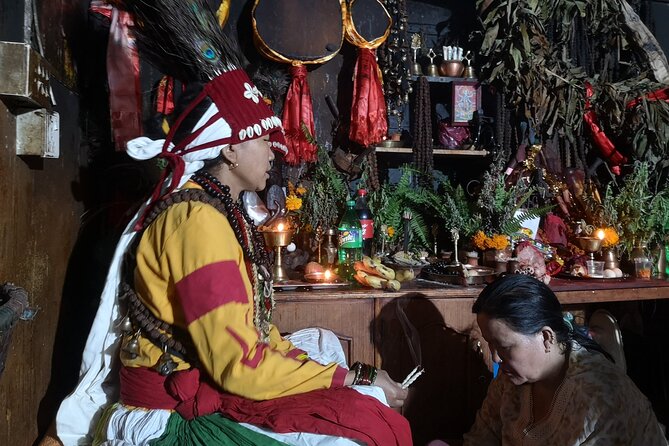
The center suggests taking a bath before visiting the Shaman temple. That is a small practical step, but it signals the respectful approach expected in the setting. Wear clean, comfortable clothing and avoid treating the visit like a costume photo opportunity.
There is also a specific restriction for women. In Shaman tradition, women do not visit the Shaman or temple during the first four days of their period. This is not a minor footnote if it affects your dates, so check the timing before paying.
The activity is based on spiritual belief. You do not need to share that belief to learn from the visit, but you should be willing to listen without mocking or trying to test the Shaman. The private format gives you room to ask questions, yet it does not turn the temple into a debate stage.
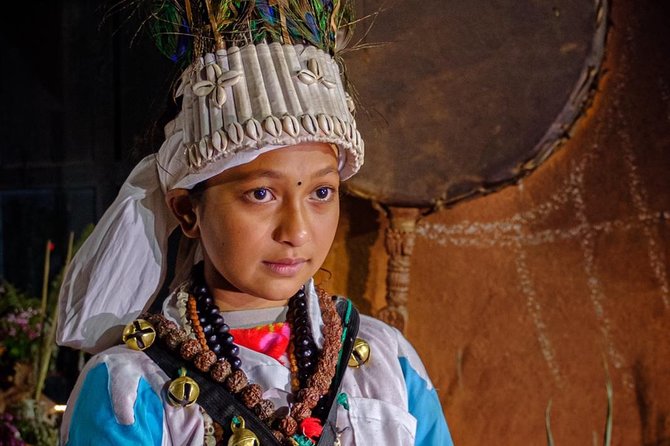
The fact that a Shaman may wear normal clothing is also worth accepting. Traditional practitioners do not always dress as the images in a tour advertisement might suggest. For me, ordinary clothing can make the setting feel less theatrical, but it can also disappoint if you were expecting a dramatic Himalayan ritual costume.
Is $40 good value in Kathmandu?
The price is $40 per person. It includes the private consultation, bottled water, and a guide who translates. It does not include a donation to the healing center, a tip for the guide, meals, or anything else not listed.
That extra donation deserves attention. The amount is not stated, so carry some local currency and ask politely about the customary contribution before the consultation begins. The same applies to tipping Siddartha or another guide. Knowing the likely extras helps you compare the total cost fairly.
At $40, the value depends on your aim. For a short, private introduction to a living spiritual tradition, with translation and cultural explanation, it is a reasonable specialty activity. You are paying for access, interpretation, and a personal meeting, not for transport, food, or a full-day tour.
It feels less worthwhile if you want a long, structured reading or a predictable healing ritual. One account considered the price high for a session of roughly 30 minutes, while other accounts found the personal and cultural value strong. Both judgments can be correct because the experience depends heavily on what the Shaman senses and how much time the center can give you.
The activity has a 4.6 rating from 42 submitted ratings, with 90 percent recommending it. That suggests a strong overall response, but the lower scores point to the central issue: manage your expectations about duration, clothing, and the amount of information you will receive.
Who will appreciate this unusual Kathmandu activity?
I would recommend it most strongly to you if you have an honest interest in Nepalese religion, ritual, and local approaches to spiritual care. It suits a first day in Kathmandu because it introduces people and beliefs you may not encounter on a standard temple walk.
It also works well for a small private group with different levels of familiarity. Siddartha’s explanation can help a beginner, while the working center gives a more direct encounter than a simple lecture.
You may enjoy it if you are comfortable with uncertainty. The Shaman may discuss worries, energy, or spirits in ways that feel meaningful to you, or the session may be restrained if no negative energy is sensed. You have to accept both possibilities.
I would hesitate if you want a guaranteed fortune-telling performance, a medical assessment, or a photo-friendly show. I would also hesitate if your schedule cannot absorb a variable duration or if the temple customs conflict with your plans.
The tour is not described as strenuous. Most people can participate, and the center is near public transport. Still, the information does not give detailed accessibility specifications, so contact the operator if you need step-free access or other assistance.
How to get the most from the meeting
Before you go, think of two or three questions you genuinely want to explore. They might concern a personal worry, a decision, or your interest in Shamanic practice. You are not guaranteed a direct answer, but arriving with a clear mind can make the consultation more useful.
Listen closely to Siddartha’s explanation of the session. In particular, remember that past, present, and future information may be offered only when negative energy is sensed. This single point prevents much of the confusion surrounding the experience.
Watch first if the opportunity arises. Observing local ceremonies helps you see the Shaman’s work in context and gives you a moment to settle into the temple.
Bring patience and respect. Do not assume that the center will look like a picture, that the Shaman will wear ceremonial clothing, or that the ritual will take a fixed amount of time. The less you demand a particular performance, the more clearly you can understand what is actually taking place.
Finally, budget for the donation and tip. These are not included in the $40 price, and the donation amount is not specified.
Should you book the Shamanism Tour in Nepal?
Book this if you want a personal cultural encounter near Thamel, a clear English introduction from Siddartha, and a private meeting with a Himalayan Bon Shaman. The chance to observe a real healing center and see local ceremonies gives the visit more substance than a simple staged demonstration.
Skip it if you need a guaranteed reading, a medical answer, or a tightly timed activity. The consultation can be brief, the Shaman may wear ordinary clothes, and a donation is extra.
For the right person, this is an unusual way to think about Kathmandu beyond temples and sightseeing stops. Go with curiosity, respect, and realistic expectations, and the $40 price can buy a memorable lesson in a living spiritual tradition.
FAQ
Where does the Shamanism Tour take place?
The Shaman temple and healing center is in Kathmandu, within walking distance of Thamel. The meeting point is P8F3+WX, Kathmandu 44600, Nepal.
How long does the experience last?
The estimated duration is one hour to one hour 30 minutes. One account describes the experience as lasting about 30 minutes, so you should allow flexibility.
Is the consultation private?
Yes. This is a private activity, and only your group participates in the booked activity.
What does the $40 price include?
The price includes a one-to-one consultation with the Shaman, bottled water, and a guide who provides translation.
Are donations and tips included?
No. A donation to the healing center and a tip for the guide are not included. Meals and items not mentioned in the activity details are also excluded.
Will the Shaman tell me about my past, present, and future?
Not necessarily. The stated approach is to discuss these matters if the Shaman senses negative energy or spirits. If no negative energy is found, the consultation may focus less on those subjects.
Should I bathe before visiting the temple?
Taking a bath before visiting is suggested. This is presented as a customary preparation for the temple visit.
Are there any restrictions for women?
In Shaman tradition, women do not visit the Shaman or temple during the first four days of their period. Check your dates before booking.
Can most people participate?
Yes. The activity is near public transportation, and most people can participate. Specific accessibility details are not provided, so ask the operator directly if you need special arrangements.
Just added around Kathmandu
- Private Half-Day Tour of Boudhanath and Pashupatinath Temples in Kathmandu★ 4.5 · 9 reviews
- Private Half-Day Tour of Kathmandu Durbar Square and Swayambhunath Temple★ 4.5 · 11 reviews
- Namobuddha Monastery Hiking Day Tour via Panauti from Kathmandu★ 5.0 · 15 reviews
- Private Half Day Budhanilkantha Tour★ 5.0 · 6 reviews
- Private Full-Day Kathmandu City Tour★ 5.0 · 9 reviews
- Private Day Tour in Kathmandu Valley Rim with Bhaktapur Sightseeing★ 5.0 · 3 reviews
- Private Day Tour: Patan and Bhaktapur from Kathmandu★ 4.5 · 6 reviews
- Private Day Tour – Sacred Journey to Namo Buddha★ 5.0 · 5 reviews
Tours, compared.
Private Kathmandu Sightseeing Tour | UNESCO World Heritage sites
Read our review →
Everest Base Camp Helicopter Tour landing at Everest View Hotel
Read our review →
Full Day 7 UNESCO Tour with Lunch – Private/Group
Read our review →
Private Bhaktapur and Nagarkot Day Tour From Kathmandu
Read our review →
Full Day Top 4 UNESCO Tour with Lunch – Private/Group
Read our review →