
Reviewed · FULL-DAY
Pokhara: Full-Day Sightseeing & Viewpoints Tour – Private/Group
Pokhara’s best sights are spread across the city, hills, and lake shore, so this private tour is a handy way to cover a lot without wrestling with directions. In roughly four to five hours, you move from a calm boat ride on Phewa Lake to waterfalls, a sacred cave, a giant Shiva statue, and one of the city’s finest viewpoints.
I like the hotel pickup and drop-off, which saves you from finding a meeting point, and I like the freedom to adjust the day around your interests. You can spend more time boating, shopping, meditating, or sightseeing. The main catch is the short schedule: this is called a full-day tour in the description, but the listed stops add up to about four hours, so the day may feel brisk.
Key points at a glance
- Phewa Lake and Tal Barahi Temple: Begin with a quiet lakeside walk or an optional canoe-style boat ride to an island shrine.
- Two unusual underground stops: Devi’s Fall and Gupteshwor Mahadev Cave sit close together, making this an efficient pairing.
- Pumdikot’s giant Shiva statue: Reach a hilltop viewpoint with broad views over Pokhara Valley and, on clear days, the Himalayas.
- A light adventure stop: The suspension bridge offers photos and a little movement without a strenuous hike.
- Private transport and guide: Your group rides in an air-conditioned vehicle with an English-speaking professional guide.
- Good short-stay value: At $40 per person, the tour can make sense if you want a broad introduction to Pokhara in limited time.
A smart way to see Pokhara in half a day
Pokhara is easy to enjoy slowly, but its main sights do not sit in one compact historic center. Phewa Lake is at the heart of the visitor area, while Devi’s Fall, Gupteshwor Cave, Pumdikot, and the World Peace Stupa require rides in different directions.
That makes a private vehicle useful. You can watch the streets and hills go by instead of spending your limited time navigating. The air conditioning also matters after time in the sun, especially if you are combining several outdoor stops.
The tour is sold as a private, custom experience, and only your group participates. That is a better arrangement than following a large crowd if you want to adjust the pace. You can ask to linger at the lake, shorten a stop that does not interest you, or give more attention to boating, meditation, shopping, or walking.
Still, keep the timing in mind. The listed visit periods are short: one hour at Phewa Lake, 15 minutes at Tal Barahi Temple, 30 minutes at Devi’s Fall, 30 minutes at Gupteshwor Cave, 30 minutes at Pumdikot, 15 minutes at the suspension bridge, and 20 minutes at the World Peace Stupa. Driving time is additional, so this is best viewed as a highlights tour rather than a slow, detailed look at every place.
A few more Pokhara trips to weigh up
- Full-Day Tibetan Cultural Tour to Tibetan Settlements Pokhara
★ 5.0 · 184 reviews - Pokhara: Full-Day Sharing Bus Tour on 7 Iconic Destination
★ 4.1 · 179 reviews - Pokhara: Full-Day Private Tour on 7 Iconic Destination
★ 4.8 · 108 reviews
Phewa Lake begins the morning gently
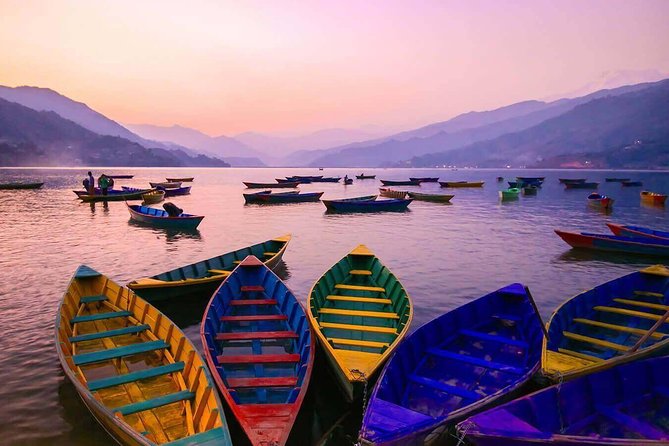
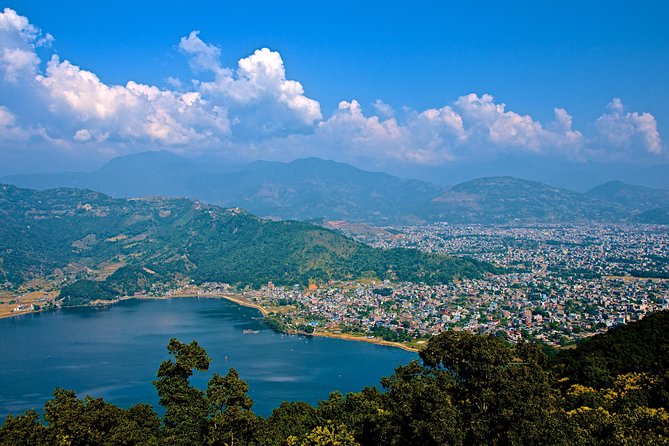
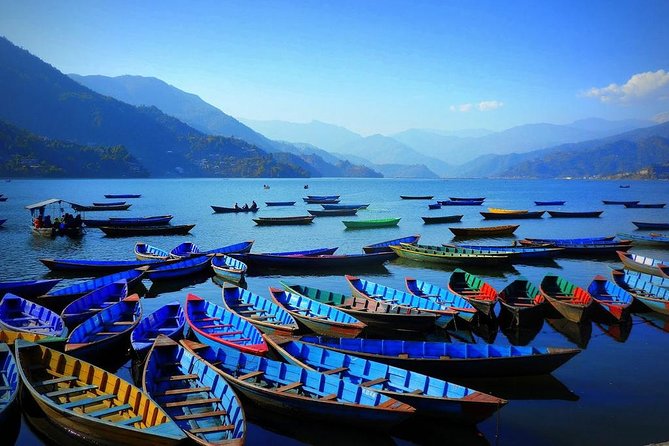
The tour opens at Phewa Tal, usually called Phewa Lake. This is the most relaxed part of the route. You can walk along the lakeside or choose an optional boat ride, with views toward the Annapurna range when the sky is clear.
The lake is especially attractive for its reflections. Hills and snowy peaks may appear in the water, though mountain views depend entirely on weather. Clouds can turn a grand panorama into a softer, closer view, so do not treat a clear Himalayan backdrop as guaranteed.
The one-hour allocation gives you enough time to settle into the day. If boating interests you, tell the guide early so the timing does not become rushed later. The available feedback gives special attention to the pleasant canoe ride and the temple stop, and that pairing makes sense: the water offers a calm start, while the shrine adds a cultural purpose to the outing.
A lakeside walk may suit you better if you prefer to stay on land or want to save time. Either way, this first stop helps you get a feel for Pokhara without asking much of your legs.
Tal Barahi Temple adds a peaceful cultural stop
Tal Barahi Temple sits on a small island in Phewa Lake. You reach it by boat, making the crossing part of the experience rather than just transportation.
The visit itself is brief, listed at about 15 minutes. That is enough for a short look around the shrine, but not enough for a long visit or extended quiet time. I would think of this as a compact cultural stop connected to the lake ride, not a separate major attraction.
The temple gives the morning a sense of place. You are not simply looking at water and mountains. You are also visiting one of Pokhara’s recognizable religious sites in a setting that feels removed from the road and city traffic.
Because the crossing is by boat, confirm with your guide how it fits into the tour’s timing. The boat ride is optional at Phewa Lake, but access to the island temple is by boat. That distinction matters if you are trying to avoid boating or keep the day moving quickly.
Devi’s Fall and Gupteshwor Cave make an efficient pair
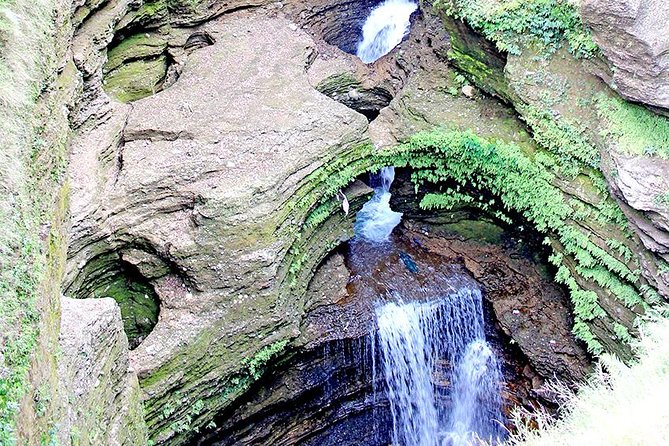
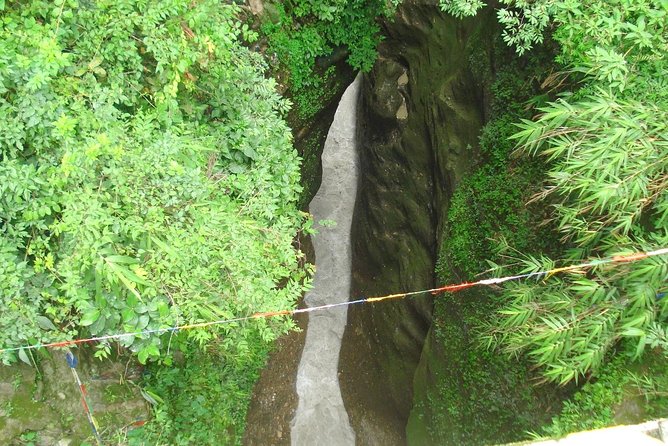
Next comes Devi’s Fall, one of Pokhara’s best-known natural sights. Water disappears into a deep gorge and continues underground, which gives the waterfall its unusual character.
The effect is strongest during the monsoon and after the rains, when water flow is heavier. At drier times, the scene may be less dramatic. You can still see the unusual channel and gorge, but do not expect the same force in every season.
The planned visit lasts about 30 minutes. That works for seeing the waterfall, taking photographs, and listening to your guide, though anyone who enjoys geology or detailed nature stops may want more time.
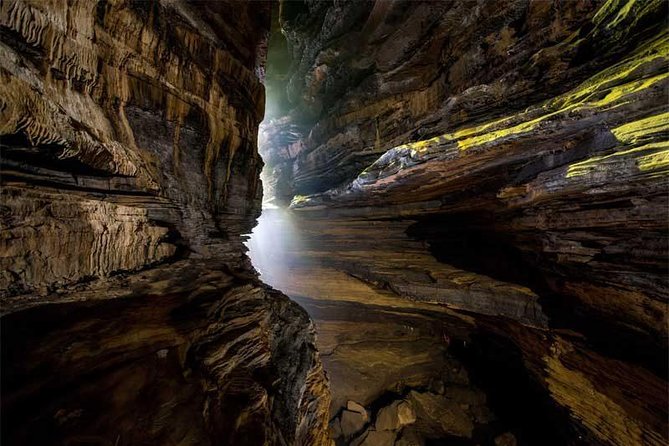
Gupteshwor Mahadev Cave is directly across from Devi’s Fall, so the two stops fit together neatly. The cave contains a Shiva shrine and offers an underground view of the water flowing beneath the temple area.
This is one of the more distinctive parts of the tour. You move from an open gorge into a sacred underground space, with the waterfall connected to both places. The cave is not simply another viewpoint. It changes the way you understand the water system beneath the surface.
The visit is also listed at 30 minutes. That is enough for a focused visit, but you should expect uneven or confined walking conditions in a cave. The supplied information says most people can participate, but it does not provide detailed accessibility information. If you have mobility concerns, ask the operator before booking.
Putting these two stops together is good use of time. You avoid a separate long transfer between them and see two sides of the same natural feature.
Same mountains, a completely different kind of day:
- ZipFlyer Nepal – The World’s Steepest Zip-line
★ 5.0 · 608 reviews - Bungee Pokhara by HighGround Adventures
★ 5.0 · 366 reviews - From Pokhara: Sarangkot Sunrise Himalayas Tour
★ 4.7 · 218 reviews - ATV Adventure Tour in Pokhara, Nepal
★ 5.0 · 194 reviews
Pumdikot trades caves for wide valley views
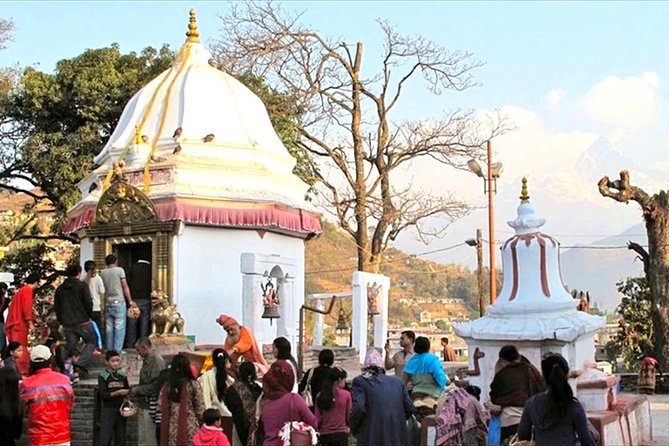
The road then climbs to Pumdikot, known for its large Shiva statue and open views across Pokhara Valley. The change in setting is welcome. After the close quarters of the cave, you get space, sky, and a higher viewpoint.
On a clear day, you may see the surrounding hills and the Himalayan range. As with Phewa Lake, visibility depends on weather. Clouds and haze can hide the peaks, so the statue and valley views are still the reliable parts of the stop.
The visit is scheduled for about 30 minutes. That gives you time to see the statue, take photographs, and look out over the valley. It is not a long hill walk or a full mountain viewpoint excursion.
Pumdikot works well for visitors who want a memorable photo without committing to a major hike. The drive does the climbing for you. If you are hoping for an extended mountain panorama, ask whether the schedule can allow extra time here, particularly if the skies look clear.
A suspension bridge keeps the pace lively
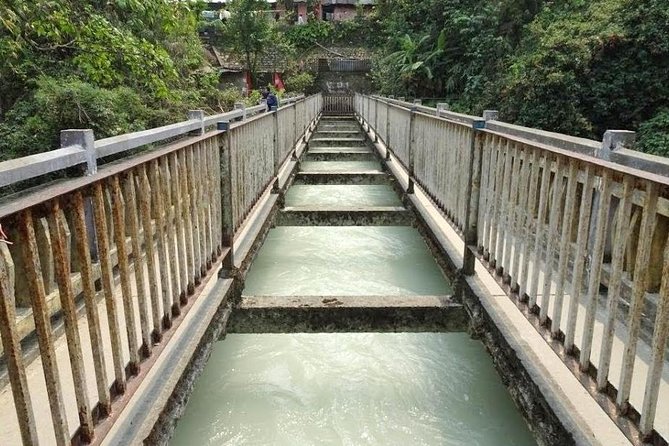
The suspension bridge is a short stop, about 15 minutes. It adds a small dose of adventure without turning the tour into a demanding activity.
You can walk across, take photographs, and enjoy the change from vehicles and viewpoints. The bridge is not presented as a long trek, so it should suit you if you want something active but have limited time.
Fifteen minutes is enough for a crossing and a few pictures. It may feel too short if you enjoy lingering, but the stop helps break up the sightseeing pattern. After the statue and before the final pagoda, it gives you a chance to move rather than simply look.
Wear footwear you find comfortable for short walks. The tour does not promise a strenuous hike, but you will still be getting in and out of the vehicle and walking at several sites.
World Peace Stupa closes with the best panorama
The final stop is the World Peace Stupa, also called the World Peace Pagoda. It is one of Pokhara’s strongest viewpoints, with views toward Phewa Lake, the city, and the Annapurna range when conditions cooperate.
Ending here is a sensible choice. The stupa brings together the main visual themes of the day: water below, hills around the city, and mountains beyond. After the smaller viewpoints and cultural stops, this is where you can step back and see how Pokhara fits together.
The planned visit is about 20 minutes. That is enough for a quick look and photographs, but it is not much time for meditation or quiet reflection. Since the tour can be customized, this is one place where you may want to request extra time if the view is clear and the setting appeals to you.
The stupa is also a good reminder to keep expectations realistic. The Himalayas are weather-dependent. A cloudy day does not cancel the value of the stop, but the famous mountain view may not appear.
What $40 buys you
The price is $40 per person. For that amount, the package includes hotel pickup and drop-off, a private vehicle with air conditioning, an English-speaking professional guide, bottled water, and monument entrance fees.
The value depends on how you use the flexibility. If you are alone or traveling as a couple, $40 per person may feel higher than simply hiring local transport for one or two stops. But the tour covers seven stops, includes a guide, and removes the work of arranging separate rides.
For a group, the value can improve, especially since group discounts are offered. A private vehicle also means you are not waiting for strangers at every stop. Ask about the group discount when booking, since the exact saving is not provided.
The included entrance fees are helpful for a short outing. You do not have to keep small admission costs in mind at each monument. Personal expenses and tips for the driver and guide are not included, so budget separately for those.
The bottle of water is 500 milliliters. That is useful, but it is not a full day’s supply, particularly if you are walking in warm weather. Bring extra water if you need more than one bottle.
Private service is the main advantage
The strongest feature here is control. You are not locked into a large group’s pace, and the tour can be adjusted around your interests. That is valuable in Pokhara, where one person may want a boat ride while another would rather spend time at a viewpoint.
The guide is there to provide information and help the day run smoothly. The available feedback specifically praises attentive guiding, which is the kind of service that matters most on a short custom tour. You should still explain your priorities at the beginning: lake time, photography, cultural sites, shopping, meditation, or the shortest possible route.
Pickup and drop-off remove a small but real travel nuisance. You do not need to reach a central meeting point, and you finish back at your hotel. Confirmation is provided at booking, and the activity is described as suitable for most people.
There is a minimum number of participants required for the experience to operate. If that minimum is not met and the tour is canceled, you are offered another date or experience, or a full refund.
Who should book this Pokhara tour?
I would recommend it most strongly to first-time visitors with limited time, families who want private transport, couples who prefer a flexible schedule, and small groups looking for an easy overview of the city.
It also suits you if you want a mix of experiences in one outing. You get water, a temple, a waterfall, a cave, a statue, a bridge, and a viewpoint. Few individual stops receive much time, but the range is impressive for four to five hours.
You may want something else if your main goal is a slow day at Phewa Lake, a long meditation visit, extensive shopping, or a serious hike. The route is broad rather than deep. Its strength is variety and convenience.
Book with the weather in mind. Clear conditions improve both the lake reflections and the Himalayan views. The waterfall is more forceful during and after the monsoon, while the cave and temple remain meaningful parts of the route in less favorable weather.
Free cancellation is available if you cancel at least 24 hours before the local start time. Cancellations or changes made within 24 hours are not refunded or accepted.
Should you book it?
Book this tour if you want Pokhara’s major highlights without spending your day planning transport. The combination of private pickup, an attentive English-speaking guide, air-conditioned travel, and a flexible route makes $40 per person reasonable, especially for a small group.
Go in knowing that the schedule is tight and the mountain views are weather-dependent. I would ask for extra time at Phewa Lake or the World Peace Stupa if those matter most to you, and I would confirm how the optional boat ride and group discount work before paying. For a fast, varied introduction to Pokhara, this is a practical choice.
FAQ
How long does the Pokhara sightseeing tour last?
The experience lasts approximately four to five hours. The listed stop times total about four hours, with travel between attractions included in the overall outing.
Is hotel pickup and drop-off included?
Yes. Pickup from and drop-off at your hotel are included in a private vehicle.
Is the tour private or shared?
It is described as a private activity, and only your group participates. Group discounts are also offered.
Is a boat ride on Phewa Lake included?
An optional boat ride is available at Phewa Lake. Tal Barahi Temple is located on an island and is accessed by boat.
What language does the guide speak?
The tour includes an English-speaking professional guide.
Are entrance fees included?
Yes. Monument entrance fees are included in the tour price. Personal expenses and tips for the driver and guide are not included.
What is the cancellation policy?
You can cancel at least 24 hours before the experience start time for a full refund. Cancellations or changes made less than 24 hours before the start time are not refunded or accepted.
Just added around Pokhara
- Pokhara: Pokhara Highlights Tour by Bus★ 3.6 · 10 reviews
- Pokhara in 5 Hours: Lake, Museum, Cave, Falls & Pagoda Hill★ 4.5 · 16 reviews
- Discover Pokhara in Style: Private Vehicle Service with Driver★ 5.0 · 5 reviews
- 7-Day Trek to Annapurna Base Camp from Pokhara★ 5.0 · 12 reviews
- Annapurna Base Camp Trek from Pokhara and Kathmandu★ 5.0 · 7 reviews
- 4 Day Mardi Himal Base Camp Trek from Pokhara★ 5.0 · 18 reviews
- 6 days Annapurna Basecamp Trek★ 5.0 · 16 reviews
- Beautiful Sarankot Sunrise with Full Day Sightseeing in Pokhara★ 4.5 · 3 reviews
Full-Day, compared.
Full Day 7 UNESCO Tour with Lunch – Private/Group
Read our review →
Full Day Top 4 UNESCO Tour with Lunch – Private/Group
Read our review →
Full-Day Tibetan Cultural Tour to Tibetan Settlements Pokhara
Read our review →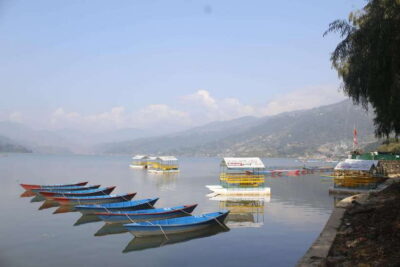
Full-Day Sharing Bus Tour on 7 Iconic Destination
Read our review →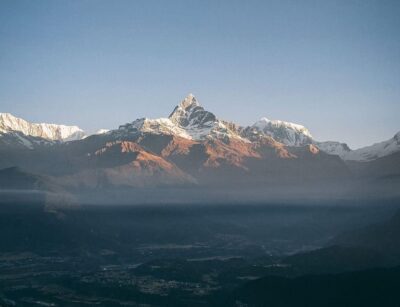
Full Day 7 UNESCO Tour with Lunch – Private/Group
Read our review →
Sarangkot Sunrise with Half or Full-Day City Tour
Read our review →
Full Day Private Top 4 UNESCO Heritage Tour W/Lunch.
Read our review →Browse the lists this tour appears in