
Reviewed · HISTORICAL TOURS
Patan Heritage Tour – Private/Small Group
Patan is best understood on foot, in the narrow lanes between its grand monuments. This small-group walk connects a 14th-century Buddhist monastery, a former royal square, working city streets, and a superb museum in about three hours. Guides such as Santosh, Baje, and Shreya Karki are known for explaining both Hindu and Buddhist traditions in clear, personal terms.
I like the group limit of five, which gives you room to ask questions and follow an interesting side street without waiting for a busload of people. I also like the flexible pace: the guide can adjust the amount of detail to your interests. The main drawback is that the advertised $5 price does not include entrance fees, and Patan Durbar Square requires about NRP 1,000 in cash.
Key points to know before you go
- Five-person maximum: This is a genuinely small walk, not a large group trailing behind a flag.
- Newar culture takes center stage: You learn how Hindu and Vajrayana Buddhist traditions meet in Patan’s courtyards, shrines, and monasteries.
- The Golden Temple is an early highlight: This 14th-century Newari Buddhist monastery gives the tour a strong religious and artistic focus.
- Patan Museum deserves its full hour: It presents Nepal’s sacred art inside a former Malla royal court.
- The pace can be personal: Guides have adjusted explanations and routes to suit individual interests.
- Carry cash for admission: The Durbar Square fee is about NRP 1,000, and other entrance charges are not included.
Why Patan makes such a good walking tour
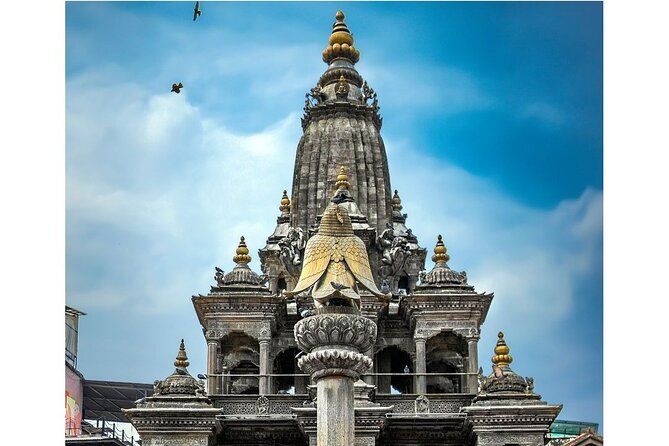
Patan, also called Lalitpur, is not simply a collection of old monuments. It is a living city where shrines sit beside ordinary homes, workshops, courtyards, and passageways. That makes a guided walk especially useful. You get the major sights, but you also get help reading the smaller details that are easy to pass without noticing.
The tour begins at Patan Dhoka, or Patan Gate. This is more than a convenient meeting point. The gate introduces the old city’s defenses and the way Malla-era rulers organized security around Patan. You also hear about the murals on the gate, giving you an immediate reason to look closely before setting off.
The walk then moves through both broad public spaces and narrow lanes. That contrast matters. The grand squares show royal power and formal religious art, while the smaller passages reveal how Patan’s traditions remain tied to daily life.
The English-speaking guide is included, and the group is capped at five people. That is a useful arrangement in a city where alleys and courtyards can make a large group awkward. You can ask about a symbol, stop for a closer look, or request more detail on Buddhism, Hinduism, architecture, or local customs.
A few more Kathmandu trips to weigh up
- Private Kathmandu Sightseeing Tour | UNESCO World Heritage sites
★ 5.0 · 756 reviews - UNESCO Seven World Heritage Tour in Kathmandu
★ 5.0 · 253 reviews - Kathmandu Private Sightseeing Tour | UNESCO World Heritage Sites
★ 5.0 · 109 reviews
Ganesh Mandir and the story behind the elephant head
The first stop is Ganesh Mandir, a shrine dedicated to Lord Ganesha. You spend about 15 minutes here, with no admission fee.
The appeal is not only the shrine itself. The guide tells the familiar story of how Ganesha received his elephant head, giving you a simple entry into Hindu mythology. If you are new to the religious traditions of Nepal, this is a useful first step before the tour turns toward Newar Buddhism.
This stop is brief, so do not expect a long temple visit. Its value comes from the explanation and from seeing how a small neighborhood shrine fits into the city’s larger religious life. You begin to notice that Patan’s sacred places are not set apart from ordinary streets. They are part of them.
The Golden Temple and Newar Buddhist tradition
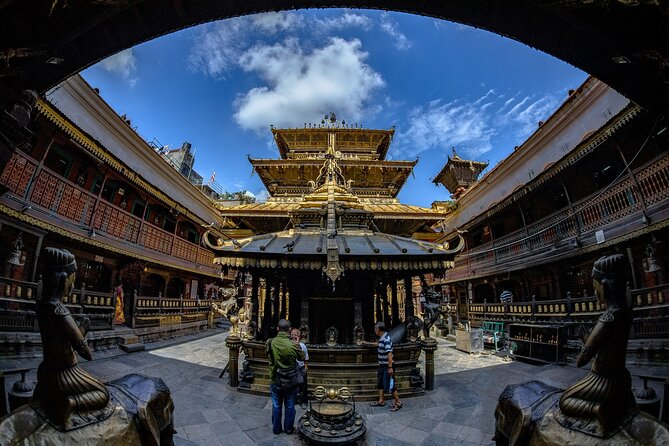
From Ganesh Mandir, the walk continues to Hiranya Varna Mahavihar, usually called the Golden Temple. This 14th-century Newari Buddhist monastery is one of the tour’s most important stops. Admission is not included, so you should expect to pay separately at the entrance.
The guide uses the monastery to explain Buddha’s teachings and the Vajrayana branches of Buddhism. The tour also places Newar Buddhism in the wider context of traditions influenced by Theravada. That discussion is valuable because the religious life of the Kathmandu Valley cannot be reduced to one neat category.
You are not simply looking at a decorated building. You are learning how Buddhist practice, art, ritual, and local identity connect. The 15-minute stop is short, so the depth of the conversation will depend on your questions and the group’s pace. If Buddhist art or religious history interests you, this is a good point to ask for more explanation.
The small group helps here. Religious symbols can be confusing when seen quickly, and a guide can explain what you are looking at without turning the visit into a lecture. The best use of the stop is to ask about the monastery’s role in Newar culture and how Vajrayana practice differs from the other Buddhist traditions introduced during the walk.
Patan Durbar Square and the Malla royal city
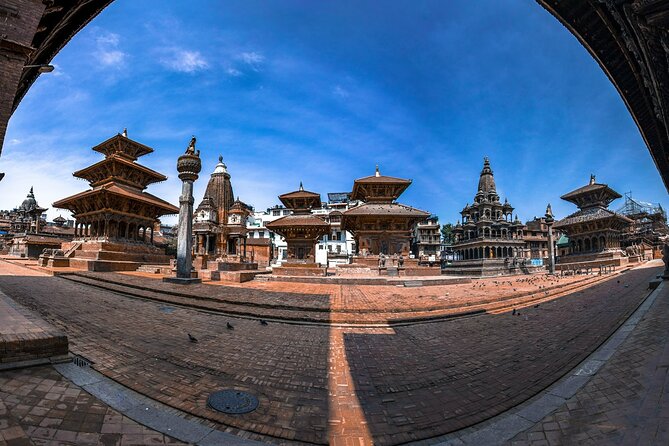
Patan Durbar Square takes about 45 minutes. It was the royal palace area where Patan’s Malla kings lived, and it brings together palace buildings, shrines, and Nepalese architectural details.
This is the most imposing part of the walk. The square gives you a clear sense of royal scale, but the guide’s context keeps it from becoming a quick circuit of photogenic buildings. You learn about the Malla rulers and how the city’s religious and political life was arranged around the palace complex.
Admission is not included. The fee for Durbar Square is listed as NRP 1,000, about US$9, payable in cash at the entrance. A donation of at least NRP 100 to the Royal Kumari is also recommended. Bring Nepalese rupees rather than assuming a card will work.
The mention of the Kumari is important, but expectations should be sensible. The tour can include discussion of the living goddess and the customs around her, but a blessing or direct encounter is not guaranteed. Ritual activity may also limit what you can see. Treat that as part of the religious setting, not as a missed promise.
The square can feel like the tour’s visual centerpiece, but I would not rush the museum afterward just to spend longer here. The palace architecture is easier to understand after the earlier discussion of Hindu and Buddhist practice, and the museum adds detail that the open square cannot provide.
Same mountains, a completely different kind of day:
- Everest Base Camp Trek – 14 Days
★ 5.0 · 1,499 reviews - Everest Base Camp Helicopter Tour landing at Everest View Hotel
★ 5.0 · 668 reviews - Half day cooking class in Thamel kathmandu
★ 5.0 · 607 reviews - Everest Base Camp Trekking
★ 5.0 · 485 reviews
Patan Museum, the strongest stop for art and context
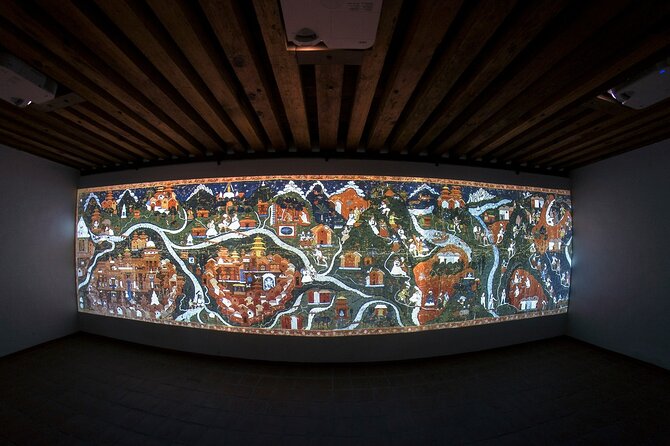
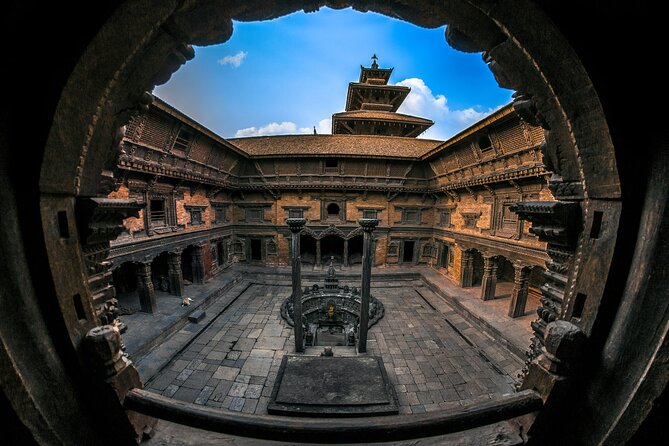
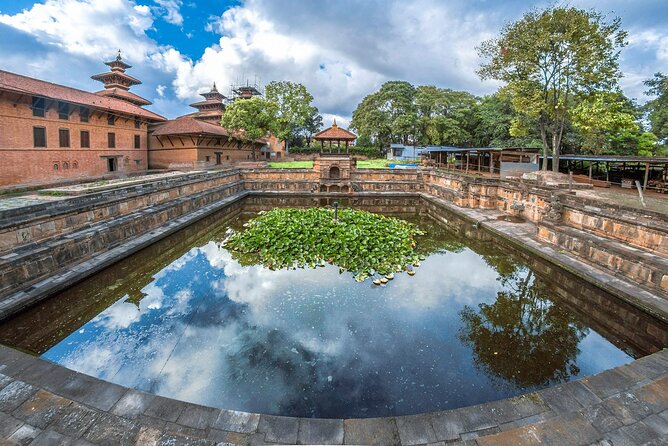
Patan Museum occupies an old residential court in Patan Durbar, one of the former Malla royal palaces. You spend about an hour here, and that generous timing is welcome.
The museum displays Nepal’s traditional sacred arts in a historic architectural setting. It is a particularly good stop if you want to understand the objects and images seen at the Golden Temple and Durbar Square. Instead of treating statues, carvings, and religious motifs as decoration, the guide can help explain their place in Nepal’s artistic and spiritual traditions.
The building matters as much as the collection. A former royal residence gives the museum a direct link to the palace complex outside. You are not leaving Patan’s story to enter a disconnected gallery. You are continuing it indoors, with more time to look carefully.
The museum is also where the tour’s balance of history, culture, and art works best. The outdoor stops give you atmosphere and architecture. Here, you can slow down and connect those impressions. If you have only a short time in Patan, this is the stop I would protect from being shortened.
Admission is separate, and the supplied information does not give a specific museum fee. Plan to pay for it in addition to the Durbar Square charge. The guide is included, but coffee and tea are not, so refreshments are your responsibility.
Returning to Patan Dhoka
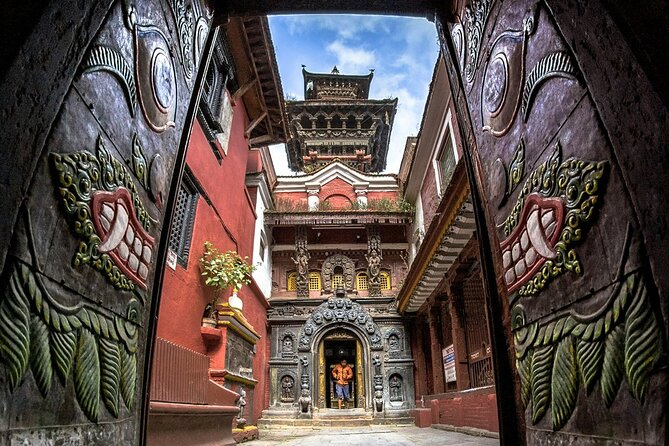
The final stop is Patan itself, with the walk ending back at Patan Dhoka. You spend about 15 minutes discussing the gate, the old city’s security, and its wall murals.
Ending where you began makes the tour easy to fit into a Kathmandu day. You do not need to arrange a pickup from a distant neighborhood or guess where the walk will finish. Patan Dhoka is also near public transportation, which helps if you plan to continue sightseeing elsewhere.
The return is more than a technical endpoint. By now, the gate can be read with greater attention. You have seen the royal center, a Buddhist monastery, and the lanes that link them. The discussion of defense and murals gives the opening landmark a second look.
What the small group changes
A maximum of five participants is one of the best features here. Patan’s smaller passages and courtyards are not well suited to a large crowd, and a small group lets the guide stop without blocking the route.
The format also supports a flexible conversation. Santosh, also referred to as Santos, has been praised for explaining both Hinduism and Buddhism and for making the walk feel friendly and respectful. Baje is described as having an excellent feel for the city’s narrow lanes, while Shreya Karki is noted for patience and cultural knowledge.
Your guide may be one of these people or another member of the provider’s team. The practical point is that the experience is guide-led rather than a fixed audio route. You can ask for more information about religion, art, architecture, or ordinary life in Patan.
The stated duration is about three hours, but one guide has allowed the walk to follow the group’s interests and pace. That flexibility is useful, though it means you should not schedule a tight appointment immediately afterward. A short tour can stretch when questions and side passages become the best part.
Price, entrance fees, and what you really pay
At $5 per person, the tour price is very low for a three-hour guided walk with a five-person limit. Its value comes from interpretation rather than transport or meals. You are paying for a local guide who connects the monuments and explains why they matter.
The headline price is not the full cost. Durbar Square admission is about NRP 1,000, or roughly US$9, in cash. Other entrance fees are also excluded, and no coffee or tea is provided. The suggested Royal Kumari donation is another small amount to consider.
That does not make the tour poor value. It simply means you should compare the total cost rather than judging it by $5 alone. You still receive an English-speaking guide, a focused route through Patan, and a small group instead of a crowded outing.
Students should note that the youth price applies to students with a valid student card. Have the card available if you book at that rate.
Who will get the most from this walk
I would choose this experience if you want a clear introduction to Patan without spending a full day on a large organized excursion. It suits first-time visitors to Kathmandu who want help understanding the relationship between Newar customs, Hindu worship, Buddhist practice, royal power, and sacred art.
It also works well for repeat visitors who have seen the main square but missed the lanes and smaller shrines. The guides’ willingness to adjust detail can make the same route feel different for an art student, a religious studies enthusiast, or someone simply curious about city life.
Most people can participate, and service animals are allowed. The route is a walking experience through streets, passages, courtyards, and historic sites, so you should be comfortable spending about three hours on foot. The supplied details do not specify a route length or step-free access, so ask the provider if you have particular mobility needs.
This is less suited to someone who wants a fast checklist of monuments with no discussion. It is also not ideal if you need every minute fixed, since the pace may change with the group’s questions and interests.
Practical advice for a better visit
Meet at Patan Dhoka and allow time to find the gate without rushing. Since the tour ends at the same place, you can plan your next activity from there.
Carry cash in Nepalese rupees. The Durbar Square fee is specifically paid in cash, and other admission charges are not part of the tour price. A small donation to the Royal Kumari is recommended as well.
Ask questions early. If you care most about Buddhist practice, sacred art, palace architecture, or the Newar community, say so at the start. The small group and flexible approach are most useful when the guide knows what you want to understand.
Keep your schedule loose after the walk. The official duration is approximately three hours, but an engaging conversation or extra time in the lanes can affect the finish. Free cancellation is available if you cancel at least 24 hours before the local start time. Cancellations or changes made later are not accepted for a refund.
Should you book the Patan Heritage Tour?
Book it if you want Patan explained rather than merely photographed. The combination of Ganesh Mandir, the Golden Temple, Patan Durbar Square, Patan Museum, and Patan Dhoka gives you a well-shaped introduction to the city, while the five-person limit keeps the walk personal.
The strongest reasons to go are the guide’s ability to explain Hindu and Buddhist traditions, the time set aside for Patan Museum, and the chance to move through smaller streets that are easy to miss alone. Just budget for admission fees, carry cash, and allow some flexibility around the three-hour estimate.
At $5 before admissions, this is an unusually affordable way to add meaning to Patan’s famous sights. I would recommend it most to curious first-time visitors and anyone who wants a friendly, adaptable walk through the Newar heart of Lalitpur.
FAQ
Where does the Patan Heritage Tour start?
The tour starts at Patan Dhoka, Lalitpur 44600, Nepal.
Where does the tour finish?
The activity ends back at the meeting point at Patan Dhoka.
How long does the tour last?
The tour lasts approximately three hours.
How many people can join the tour?
The tour has a maximum of five participants.
Is an English-speaking guide included?
Yes. An English-speaking guide is included in the tour price.
Are entrance fees included?
No. Entrance fees are not included. Entry to Durbar Square is about NRP 1,000, or approximately US$9, and must be paid in cash.
Is the Royal Kumari donation included?
No. A minimum donation of NRP 100 to the Royal Kumari is recommended, but it is not included in the tour price.
Is the tour suitable for most people?
Yes. Most people can participate, and service animals are allowed. The tour is near public transportation.
Can I cancel for a full refund?
Yes, if you cancel at least 24 hours before the experience start time. Cancellations or changes made less than 24 hours before the start time are not accepted for a refund.
Just added around Kathmandu
- Private Half-Day Tour of Boudhanath and Pashupatinath Temples in Kathmandu★ 4.5 · 9 reviews
- Private Half-Day Tour of Kathmandu Durbar Square and Swayambhunath Temple★ 4.5 · 11 reviews
- Namobuddha Monastery Hiking Day Tour via Panauti from Kathmandu★ 5.0 · 15 reviews
- Private Full-Day Kathmandu City Tour★ 5.0 · 9 reviews
- Private Day Tour in Kathmandu Valley Rim with Bhaktapur Sightseeing★ 5.0 · 3 reviews
- Private Half Day Budhanilkantha Tour★ 5.0 · 6 reviews
- Private Day Tour: Patan and Bhaktapur from Kathmandu★ 4.5 · 6 reviews
- Private Day Tour – Sacred Journey to Namo Buddha★ 5.0 · 5 reviews
Historical Tours, compared.
Private Kathmandu Sightseeing Tour | UNESCO World Heritage sites
Read our review →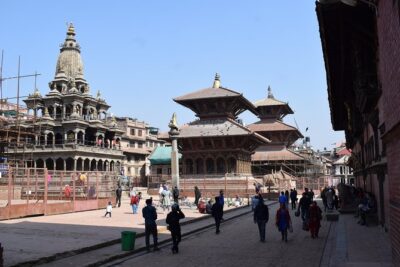
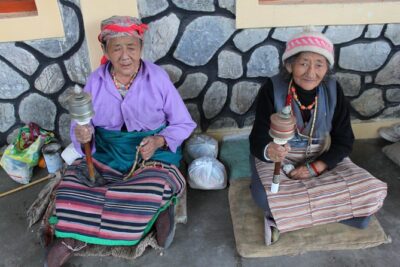
Full-Day Tibetan Cultural Tour to Tibetan Settlements Pokhara
Read our review →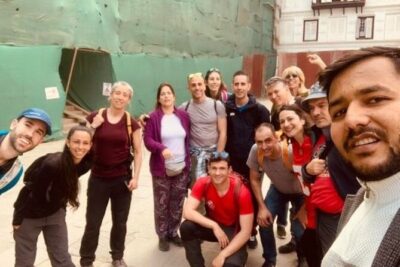
Kathmandu Private Sightseeing Tour | UNESCO World Heritage Sites
Read our review →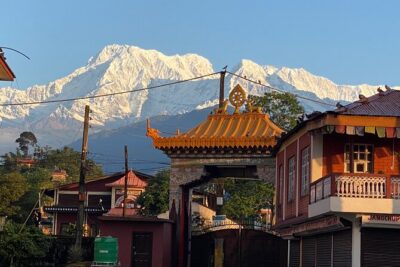
Afternoon Tibetan Cultural Tour to Tibetan Settlements Pokhara
Read our review →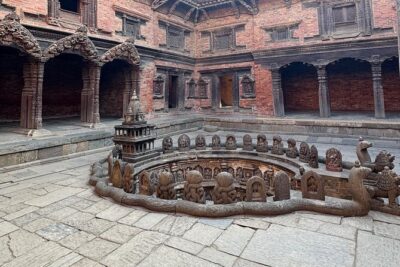
Full Day Private Top 4 UNESCO Heritage Tour W/Lunch.
Read our review →

Nagarkot Sunrise & Bhaktapur UNESCO Heritage Private Tour
Read our review →Browse the lists this tour appears in