Reviewed · TOURS
Nepal and Bhutan Tours
Kathmandu’s monkey-filled Swayambhunath and Bhutan’s cliff-top Tiger’s Nest give this tour its real punch. In eight days, you move from Nepalese shrines and Himalayan viewpoints to Bhutanese monasteries, dzongs, and mountain roads.
I like the private format, which gives your group its own vehicle, guide, and driver. I also like that the package includes the difficult-to-arrange Kathmandu to Paro and Paro to Kathmandu flights, plus Bhutan hotels, meals, and entry fees. The main drawback is the pace: eight days covers two countries, so several sightseeing days are short and the schedule leaves little room for delays or extra stops.
- Kathmandu’s Swayambhunath Stupa: Visit the hilltop Buddhist shrine known for its monkeys and broad city views.
- A scenic Nepal to Bhutan flight: The one-hour Druk Air route can offer Himalayan views in clear weather.
- Punakha Dzong: See Bhutan’s former capital and winter home of the central monastic body.
- Tiger’s Nest hike: Walk from Ramthangkha toward Paro Taktsang, Bhutan’s most famous monastery.
- Private transportation: Your group travels by private vehicle with a guide and driver in both countries.
- A useful package price: At $1,400, the tour includes regional airfare, three-star hotels, Bhutan meals, fees, and transfers, though Nepal meals and international airfare require careful checking.
Two Countries, Eight Days, and a Sharp Change of Pace
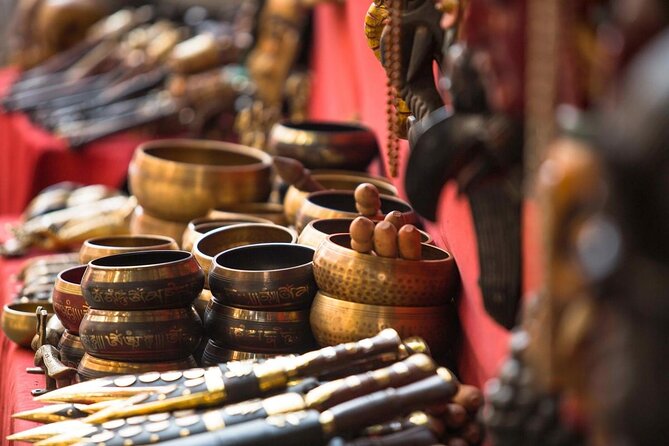
This tour is built around contrast. Nepal gives you Kathmandu’s religious sites, Thamel’s evening streets, and a Himalayan sunrise at Nagarkot. Bhutan then shifts the mood to quieter valleys, painted temples, old fortresses, and monasteries set above winding roads.
I see this as a good introduction rather than a slow, deep visit to either country. You get a taste of both, but you will spend time transferring between airports, hotels, and towns. That trade-off is worth it if your priority is seeing Nepal and Bhutan together on one organized trip.
The private setup matters here. You are not tied to a large coach or a fixed public departure. A guide and driver accompany your group, and the itinerary includes pickup, hotel transfers, and sightseeing by private vehicle. The provider is Odea Services, and no individual guide is named in the available details, so you should ask for the guide’s name before departure if that matters to you.
The tour has a 5 out of 5 rating based on 13 reviews and a 100 percent recommendation rate. The strongest praise centers on the itinerary, hotels, and guide service. One particularly useful detail is that the company helped a guest arrange a side trip to Everest Base Camp, suggesting that some tailoring may be possible, though you should confirm any extra excursion, cost, and time before booking.
Day 1: Thamel After Your Kathmandu Arrival
The tour begins at Tribhuvan Airport in Kathmandu, with pickup listed from the airport. The first day includes an evening walk along Thamel Street and a welcome dinner, with about six hours set aside for the arrival program.
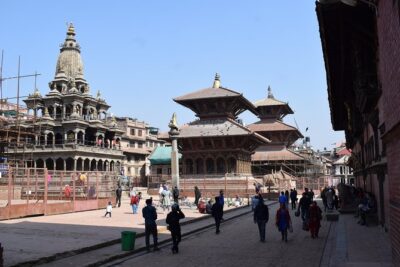
Thamel is a practical first stop. It is Kathmandu’s main tourist quarter, filled with restaurants, shops, trekking offices, and narrow streets. An evening walk lets you get your bearings without starting with a demanding temple visit after a long international flight.
The welcome dinner is one of the few clearly included Nepal meals. Since the package lists Nepal meals as generally not included, you should confirm exactly what the dinner covers and plan for other Kathmandu meals separately.
Your first night is at a three-star hotel in Nepal. That category is functional rather than luxurious. If you care about room location, quiet, or a particular neighborhood, request details before paying.
Other Kathmandu days worth booking alongside this:
- Everest Base Camp Trek – 14 Days
★ 5.0 · 1,499 reviews - Private Kathmandu Sightseeing Tour | UNESCO World Heritage sites
★ 5.0 · 756 reviews - Everest Base Camp Helicopter Tour landing at Everest View Hotel
★ 5.0 · 668 reviews
Day 2: Nagarkot Sunrise and Swayambhunath
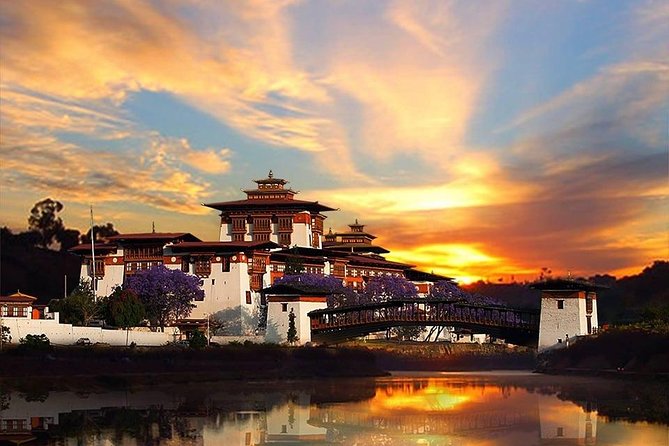
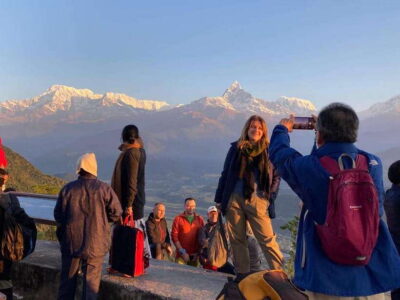
Day two starts early, with a sunrise view from Nagarkot. This is one of the tour’s most appealing Nepal moments. On a clear morning, the hill town gives you a broad Himalayan outlook, though cloud and haze can limit what you see.
The early start has a cost. You will need to wake before dawn, and the schedule then moves into a Kathmandu city tour. The listed program mentions a drive toward Kathmandu and a visit to Swayambhunath Stupa, also called the Monkey Temple.
Swayambhunath sits on a hill above Kathmandu. Its white dome, prayer flags, shrines, and watchful Buddha eyes make it one of the city’s most recognizable religious sites. The setting is active and sacred, not simply a viewpoint. Walk respectfully, follow the local flow around the stupa, and keep an eye on belongings around the monkeys.
The day is listed at about five hours, which means this is a focused visit rather than a full Kathmandu tour. The schedule does not clearly name other city sights, so do not assume that places such as Patan Durbar Square or Boudhanath are included. If you have a must-see site in Kathmandu, ask whether it can replace or add to the planned stops.
Day 3: From Nepal to Bhutan by Druk Air
Day three begins with another early morning, this time for the flight from Kathmandu to Paro. The flight takes about one hour on Druk Air. In clear weather, you may see some of the world’s highest peaks during the journey.
This flight is a major practical benefit. Booking a Nepal and Bhutan trip independently can require careful coordination between international arrivals, domestic planning, Bhutan entry arrangements, and the limited air links into Paro. Here, the Kathmandu to Paro and Paro to Kathmandu airfare is included.
The itinerary describes an airport transfer, arrival in Bhutan, and time in the Paro or Thimphu area. The day is listed at about five hours, but the exact sightseeing sequence is not fully clear. Because Paro airport transfers and mountain roads can take time, you should ask where you sleep that night and which Bhutan sights are planned after landing.
Bhutan’s roads are slow and winding. That is not a complaint about the driver or vehicle. It is simply how the country’s terrain shapes the schedule. A short distance on a map can take much of an afternoon, so the private car is more useful than it may first appear.
Day 4: Thimphu Temples and a Move Toward Punakha
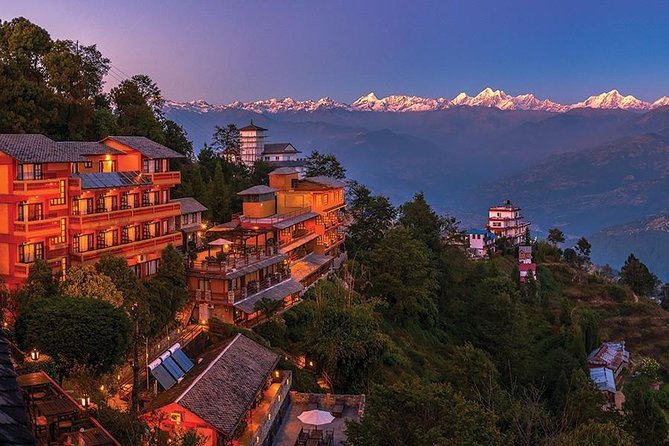
The day-four description includes Changangkha Lhakhang and Drubthob Goemba, even though the stop heading refers to Punakha. Changangkha Lhakhang is described as a 12th-century temple above Thimphu and one of the city’s oldest temples.
This is a good Bhutan introduction because it takes you beyond grand fortress architecture. A temple visit gives you a closer look at everyday religious practice, while the hillside location offers views over Thimphu. Drubthob Goemba is identified as a nunnery, adding another useful perspective on Bhutanese Buddhist life.
The day is listed at about five hours. Since the description does not spell out every transfer, confirm whether the night is in Thimphu, Punakha, or another town. That detail affects how much time you have for the next morning and how tiring the day feels.
The tour includes a professional guide and driver in Bhutan, with their salary, meals, and accommodation covered. That arrangement is valuable on a route where roads, temple etiquette, and changing elevations can make independent timing harder.
Same mountains, a completely different kind of day:
- Half day cooking class in Thamel kathmandu
★ 5.0 · 607 reviews - Everest Base Camp Trekking
★ 5.0 · 485 reviews - Nagarkot Sunrise View and Day Hiking from Kathmandu
★ 5.0 · 471 reviews - Kathmandu: Full Day 7 UNESCO Tour with Lunch – Private/Group
★ 5.0 · 415 reviews
Day 5: Punakha Dzong and the Former Capital
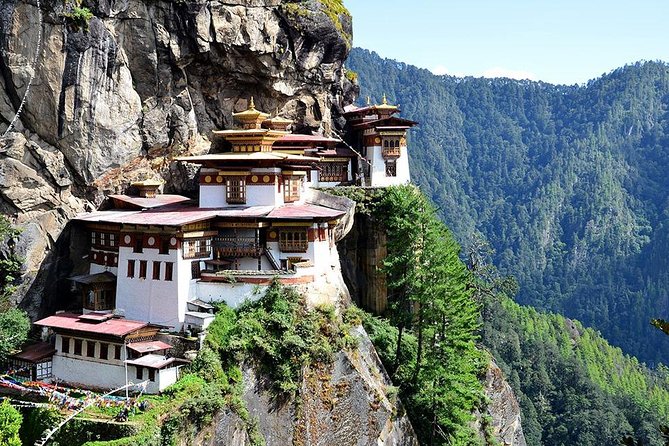
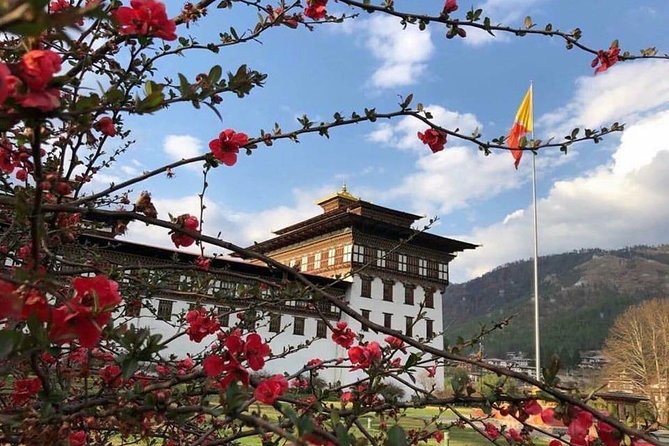
Day five centers on Punakha Dzong, even though the stop heading says Paro. The dzong was built at the meeting point of the Mo Chu and Pho Chu rivers and served as Bhutan’s ancient capital. It remains the winter home of the monks and the Je Khenpo, the chief abbot.
Punakha Dzong is likely to be one of the tour’s strongest architectural stops. Bhutanese dzongs combine religious and administrative roles, and this one’s position between two rivers gives the visit a memorable setting. Take time to notice the scale of the courtyards, the painted details, and the way the building fits into the valley.
After Punakha, the route mentions a drive to Lobeysa. The tour gives you a private vehicle, so you are not managing a public bus connection or trying to arrange a separate driver between valleys. Still, expect road time. Bhutan is not a place where every stop is close together.
The Bhutan package lists breakfast, lunch, dinner, and mineral water. It also includes museum fees and other special entry fees, along with the visa fee. Ask for a day-by-day meal plan, because the general inclusion list also separates Nepal meals from Bhutan meals.
Day 6: Drukgyal Dzong and the Tiger’s Nest Hike
Day six is the most physically demanding day. After breakfast, you drive toward Drukgyal Dzong, a ruined fortress that once helped defend the valley from Tibetan invasions. The stop adds historical context before the hike and gives you more than one reason to head into the Paro Valley.
From Ramthangkha, you hike toward Taktsang Monastery, better known as Tiger’s Nest. The itinerary allows about six hours for the day, and the hike is listed with admission included.
You should treat this as a proper hill walk, not a quick photo stop. The route rises toward a monastery fixed to a cliff, and the time required depends on your pace and rest breaks. Wear shoes with a good grip, carry water, and start with enough energy for the return journey. The supplied information does not state the exact trail length, elevation gain, or whether horses are available, so ask the operator if those details affect your decision.
Tiger’s Nest is the visual centerpiece of Bhutan. The approach matters as much as the final building. You see the monastery from changing angles as the path climbs, then enter a site tied to Bhutan’s Buddhist identity. The hike can be tiring, but it gives the trip a clear high point.
Day 7: Leaving Bhutan and Returning to Kathmandu
After breakfast, you drive to Paro airport for departure formalities. A representative assists with the airport process and says farewell before your flight back to Kathmandu.
The tour then provides a Kathmandu hotel transfer and leisure time for shopping. This is a sensible buffer after Bhutan, especially if you want to buy handicrafts, clothing, or small gifts in Thamel. It also gives you a little breathing room if the flight schedule changes.
The day is listed at about three hours, not counting the flight itself. You should not plan an ambitious Kathmandu program unless the operator confirms your arrival time and the evening schedule. Airport transfers and flight formalities can use more of the day than expected.
The return flight is included in the package, which protects you from a major extra expense. International airfare to Nepal is not included, and the Nepal visa fee is listed separately as not included, so budget for both.
Day 8: A Simple Departure From Kathmandu
The final day is a transfer to Tribhuvan Airport. The representative escorts you roughly three hours before your scheduled flight, giving you time for airport procedures.
There is no sightseeing listed for this morning. That is sensible for an international departure, but it means the tour effectively ends the night before. If you want a final temple visit or a last meal in Thamel, arrange it during day seven.
The airport transfer is one of the small services that makes a private tour less stressful. You do not need to find a taxi at dawn or explain your destination after an already busy journey. Still, confirm the pickup time directly, since it depends on your flight.
What the $1,400 Price Really Covers
At $1,400, the value depends on how you use the included services. The price covers three-star hotels in Nepal and Bhutan, private sightseeing vehicles, professional guide and driver services, Bhutan airfare from Kathmandu, Bhutan meals, mineral water, visa fees for Bhutan, museum and special entry fees, and airport transfers.
That is a substantial package for an eight-day private trip across two countries. The included regional flights alone can make a large difference, and private transport is especially useful in Bhutan.
The price does not include your international airfare, Nepal visa fee, insurance, tips, most Nepal meals, or other costs not specifically listed. The inclusion sheet mentions lunch, five breakfasts, two dinners, and a welcome dinner, while also saying meals in Bhutan include breakfast, lunch, and dinner. Because these lines overlap, ask Odea Services for a written meal breakdown before booking.
Three-star hotels are best viewed as practical bases. You should not expect resort facilities or high-end rooms at this price. The strong point is that lodging, transport, and major visits are brought together in one plan.
Who Will Like This Tour Most
I would recommend this tour to you if you want a guided first look at both Nepal and Bhutan, prefer private transport, and do not want to arrange the Kathmandu to Paro flight yourself. It suits people who value major cultural sites and mountain views more than long free periods.
It is also a good fit if you are willing to start early and accept road travel. The Nagarkot sunrise and Tiger’s Nest hike ask for energy, while the Bhutan transfers require patience.
I would think twice if you want a slow Kathmandu holiday, extensive trekking, luxury hotels, or a detailed tour of every major city square and temple. The schedule is compact, and the information provided does not promise Everest Base Camp. Extra planning may be possible, as shown by the company’s help with one Everest Base Camp request, but it should not be treated as part of the standard route.
Most travelers can participate, according to the activity information, but the Tiger’s Nest hike still deserves honest self-assessment. If steep walking is difficult for you, request a clear description of the route before paying.
Booking, Weather, and Cancellation Details
Confirmation is received at booking, and the tour is private for your group only. The meeting point is Tribhuvan Airport in Kathmandu, with a listed start time of 7:15 a.m. The activity is near public transportation, though airport pickup is offered.
Weather matters because Himalayan flights and mountain views can be affected by poor conditions. If the experience is canceled for weather, you are offered another date or a full refund.
For a full refund, cancel at least six full days before the local start time. Cancellation two to six full days ahead brings a 50 percent refund, while cancellation less than two full days ahead is nonrefundable. Changes follow the same cutoff rules, so check your flights and insurance before committing.
Should You Book Nepal and Bhutan Tours?
Book it if you want a well-packed introduction to Nepal and Bhutan with private transport, included regional flights, a guide, and a clear focus on temples, dzongs, mountain views, and Tiger’s Nest.
Before you pay, confirm four points: the exact hotel locations, the day-by-day meal plan in Nepal, the precise order of Thimphu and Punakha visits, and the physical demands of the Tiger’s Nest hike. If those details suit you, $1,400 offers solid value for a private two-country itinerary. If you prefer a slower pace, more independent meals, or longer stays in each place, a custom tour may serve you better.
FAQ
Where does the tour begin?
The tour begins at Tribhuvan Airport in Kathmandu, Nepal. The listed start time is 7:15 a.m., and pickup is offered.
How long is the Nepal and Bhutan tour?
The experience lasts approximately eight days.
Is the tour private?
Yes. Only your group participates, with a private vehicle for sightseeing in Nepal and Bhutan.
Are flights between Kathmandu and Paro included?
Yes. Airfare from Kathmandu to Paro and from Paro to Kathmandu is included.
Are hotels and meals included?
Three-star hotels in Nepal and Bhutan are included. Bhutan breakfast, lunch, dinner, and mineral water are listed as included. The package also lists five breakfasts, two dinners, lunch, and a welcome dinner, but most Nepal meals are excluded, so confirm the exact meal schedule before booking.
Is the Tiger’s Nest hike included?
Yes. The day-six visit to Taktsang Monastery, also known as Tiger’s Nest, includes admission. The itinerary allows about six hours for the Drukgyal Dzong visit and hike.
Just added around Kathmandu
- Private Half-Day Tour of Boudhanath and Pashupatinath Temples in Kathmandu★ 4.5 · 9 reviews
- Private Half-Day Tour of Kathmandu Durbar Square and Swayambhunath Temple★ 4.5 · 11 reviews
- Namobuddha Monastery Hiking Day Tour via Panauti from Kathmandu★ 5.0 · 15 reviews
- Private Full-Day Kathmandu City Tour★ 5.0 · 9 reviews
- Private Day Tour in Kathmandu Valley Rim with Bhaktapur Sightseeing★ 5.0 · 3 reviews
- Private Half Day Budhanilkantha Tour★ 5.0 · 6 reviews
- Private Day Tour: Patan and Bhaktapur from Kathmandu★ 4.5 · 6 reviews
- Private Day Tour – Sacred Journey to Namo Buddha★ 5.0 · 5 reviews
Tours, compared.
Private Kathmandu Sightseeing Tour | UNESCO World Heritage sites
Read our review →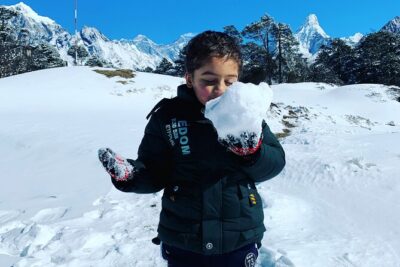
Everest Base Camp Helicopter Tour landing at Everest View Hotel
Read our review →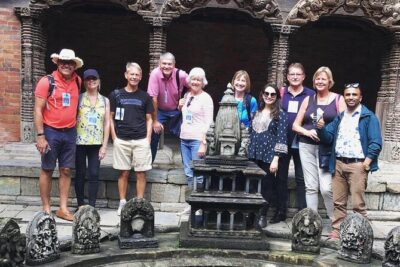
Full Day 7 UNESCO Tour with Lunch – Private/Group
Read our review →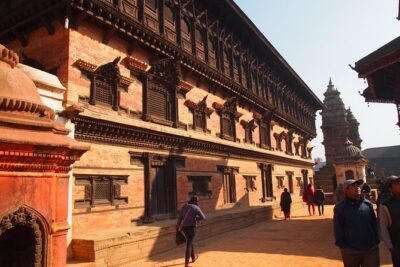
Private Bhaktapur and Nagarkot Day Tour From Kathmandu
Read our review →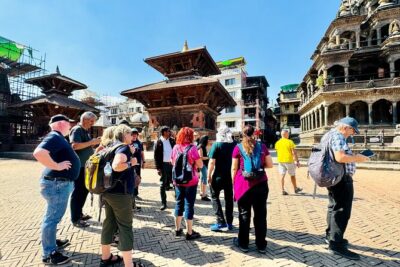
Full Day Top 4 UNESCO Tour with Lunch – Private/Group
Read our review →