
Reviewed · HIKING & TREKKING
Mohare Danda Trek
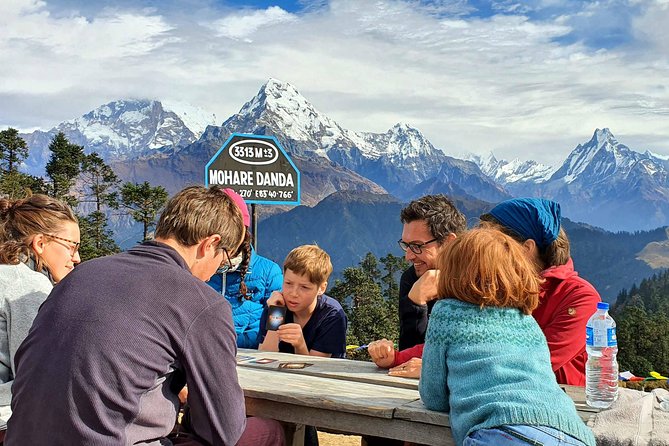
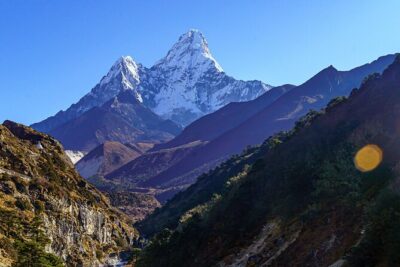
Mohare Danda offers a quieter way to see Nepal’s high mountains. This 10-day route links Pokhara with village trails, community lodges, and the 3,313-meter Mohare Danda viewpoint. On a clear morning, you may see up to 42 peaks, including Annapurna, Dhaulagiri, and Manaslu, all rising above 8,000 meters.
I especially like the community-run approach, which directs spending toward rural education, local jobs, women’s empowerment, and village development. I also like the Magar villages and homestay-style lodge experience, where daily life, food, and conversation matter as much as the mountain views.
The main drawback is the amount of road travel. You spend about six to seven hours reaching Pokhara, another road stretch getting to Beni, and another long drive back to Kathmandu. The walking is described as easier than many high-altitude Nepal treks, but stone steps and downhill sections can still test your knees.
Key points to know before booking
- 3,313-meter high point: Mohare Danda brings sunrise views across the Annapurna, Dhaulagiri, and Manaslu ranges.
- A community-focused trail: Your payment supports local education, women’s empowerment, village income, and rural development.
- Magar culture in the villages: Nagi, Tikot, and nearby settlements offer a closer look at Poon Magar traditions and daily life.
- Small group size: The trip accepts a maximum of 11 people, which should make walking pace and guide support easier to manage.
- Useful trekking gear included: A sleeping bag, down jacket, first-aid kit, oxygen monitor, permits, guide, porters, and duffle bag are covered.
- Road time is part of the deal: The route includes long drives between Kathmandu, Pokhara, Beni, and the trailhead.
Why Mohare Danda feels different from a standard Nepal trek
Mohare Danda was created as a newer community trekking route. It avoids the feel of a major trekking highway and puts more attention on village life, local income, and small community lodges.
That makes this a good choice if you want Himalayan views without signing up for a long, technical expedition. You are not heading to Everest Base Camp or crossing an extreme mountain pass. Instead, you walk through forest, ridge country, and Magar settlements, with the highest point reaching 3,313 meters.
The social purpose is central, not a footnote. The money spent on this trip is intended to help fund education, women’s work, local economies, and rural development. You still need to judge the route by its scenery and walking quality, of course, but the community model gives the trip extra meaning.
The experience is also fairly intimate. A maximum of 11 people allows the guide and porters to keep track of the group more easily than on a large departure. It can also make meals, lodge stays, and village conversations feel less packaged.
A few more Kathmandu trips to weigh up
- Everest Base Camp Trek – 14 Days
★ 5.0 · 1,499 reviews - Everest Base Camp Trekking
★ 5.0 · 485 reviews - Nagarkot Sunrise View and Day Hiking from Kathmandu
★ 5.0 · 471 reviews
Day 1: Kathmandu arrival and Thamel
Your first day begins at Tribhuvan International Airport. A representative meets you after immigration and baggage collection, then helps you reach your accommodation in Thamel.
Thamel is Kathmandu’s main visitor district, filled with hotels, restaurants, trekking shops, and travel services. The supplied schedule allows about three hours for this arrival and transfer period, though your actual timing depends on the flight and airport formalities.
Use this day to settle in rather than trying to see all of Kathmandu. You may need to check your personal gear, confirm the meeting arrangements, and ask about the route ahead. The included duffle bag, sleeping bag, and down jacket are useful, but you should still confirm what size of personal pack you want to carry.
There is no meal listed for this day. Lunch and dinner in Kathmandu are not included, so budget separately for city meals and drinks.
Day 2: The long road to Pokhara
After breakfast, you drive west along the Prithvi Highway toward Pokhara. The distance is about 200 kilometers, but the trip is expected to take six to seven hours.
This is a travel day, not a sightseeing day. Roads in Nepal can make modest distances take time, and you should expect the drive to be a real part of the experience rather than a quick transfer. The route brings you toward Phewa Tal, Pokhara’s well-known lake, where the schedule allows time in the area.
Pokhara gives you a useful change of pace after Kathmandu. It is the gateway to the Annapurna region and a place to rest before the walking begins. Since lunch and dinner in Pokhara are excluded, keep some local currency available for food, snacks, and personal purchases.
The road journey is the clearest weakness of the 10-day format. If you want the shortest possible version of the walk, ask about a condensed departure. The supplied information includes a separate four-day, three-night version, but the product described here follows a 10-day program.
Day 3: From Beni Bazaar to the walking route
The first trekking day starts with another road journey from Pokhara to Beni Bazaar. This drive takes about four hours, so the day combines transport with the beginning of the walk.
Beni is important here because it marks the practical gateway to the trail. Once you leave the road, the pace changes. You begin moving through the foothills toward villages and ridge paths rather than spending the whole day in a vehicle.
The schedule does not provide a named overnight stop for Day 3, so confirm the exact village and lodge before departure. That is a sensible question for any trek with several small settlements. You should also ask how much walking is planned after the Beni transfer, since the day already contains a long drive.
Same mountains, a completely different kind of day:
- Private Kathmandu Sightseeing Tour | UNESCO World Heritage sites
★ 5.0 · 756 reviews - Everest Base Camp Helicopter Tour landing at Everest View Hotel
★ 5.0 · 668 reviews - Half day cooking class in Thamel kathmandu
★ 5.0 · 607 reviews - Kathmandu: Full Day 7 UNESCO Tour with Lunch – Private/Group
★ 5.0 · 415 reviews
Day 4: Walking toward Nagi and Ramche
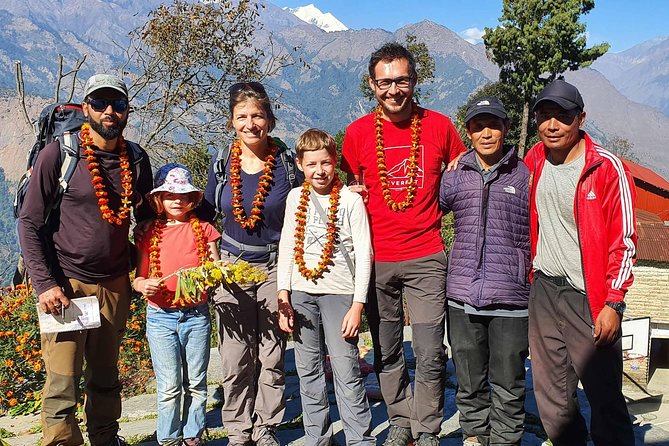
Day 4 brings the first full taste of the route’s natural and cultural character. The trail heads toward Nagi Village, with Ramche listed as the stop.
This section is designed around forests, mountain scenery, and village culture. The route is connected to Poon Magar communities, so the value lies not only in reaching a viewpoint but also in seeing how people live in these hill settlements.
The walking time shown for the day is about three hours. That is a manageable start for many people, especially after the road travel on the previous day. Still, a short schedule entry does not mean every step is easy. The notes specifically warn about joint problems and difficulty walking down stone stairs, so tell the operator in advance if knees, hips, or ankles are a concern.
Trekking poles would be sensible, although they are not listed among the included items. The operator says it can assist with a better and easier route for people who struggle with downhill stone steps. Get that advice before you start, not after your knees begin complaining.
Day 5: Nagi to Mohare Danda
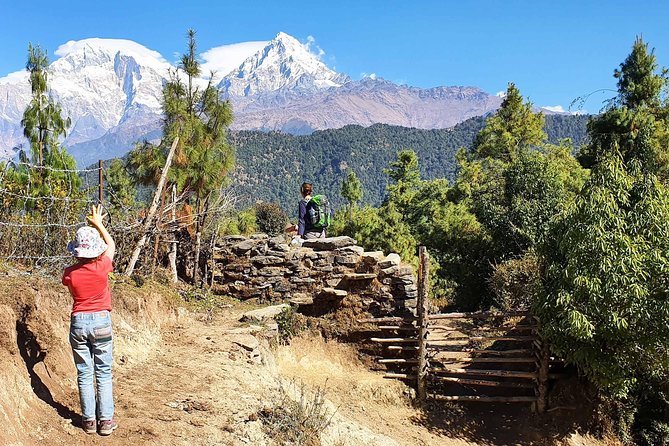
This is the main approach to the high point. Starting after breakfast in Nagi, you walk for about four to six hours toward Mohare Danda.
The route gradually takes you higher, and the reward is a ridge-top setting with wide Himalayan views. The trip information calls this the destination point of the adventure, but the following morning is when the best light arrives. The day is therefore about reaching the lodge, resting, and preparing for an early sunrise.
You should pace yourself instead of treating the walk as a race. The altitude is moderate by Himalayan trekking standards, but 3,313 meters is high enough for cold weather, thinner air, and a slower uphill rhythm. Your guide carries first-aid supplies and an oxygen monitor, and a sleeping bag and down jacket are included.
The community lodge is a major part of the experience. Conditions will not resemble a city hotel, and the point is to stay simply in a rural mountain setting. Bring patience, warm layers, and a willingness to accept a basic night.
Day 6: Sunrise from 3,313-meter Mohare Danda
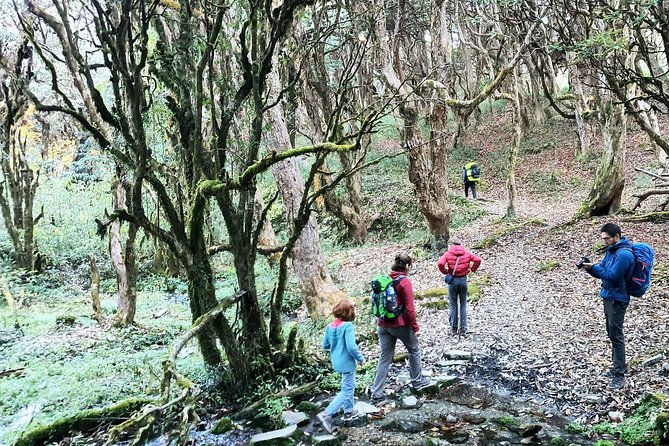
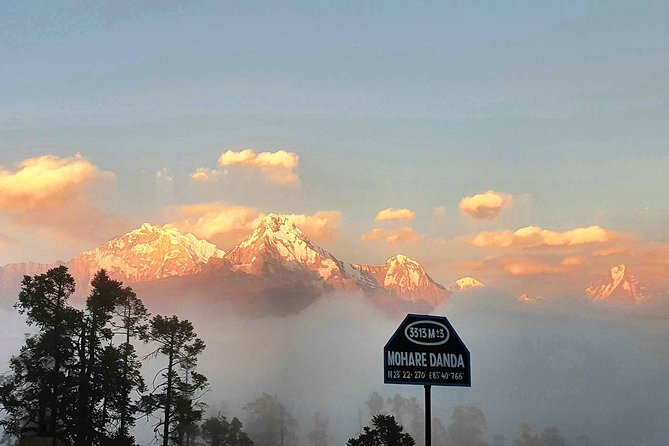
Mohare Danda is the visual high point of the trip. At 3,313 meters above sea level, it offers a sunrise position looking toward some of Nepal’s most famous peaks.
On a clear morning, the view can include up to 42 peaks. The three major names are Annapurna, Dhaulagiri, and Manaslu, each above 8,000 meters. Weather controls the show, so you should think of the mountain panorama as a strong possibility, not a guarantee.
The schedule gives 15 hours to this stop, which reflects an overnight at Mohare Community Lodge and time for the early view. Sunrise in the mountains means cold conditions and an early start, so keep your down jacket and sleeping bag close at hand.
This is also where the community goal becomes easiest to understand. You are staying at a lodge tied to a local development model, not simply passing through a famous viewpoint. Your money helps keep income in the villages and supports the stated goals of education, women’s empowerment, and rural development.
The high point is not an extreme mountaineering challenge, but the stay still requires reasonable fitness. Most people can participate according to the supplied requirements, yet you should be ready for repeated uphill and downhill walking on uneven paths.
Day 7: Ridge walking toward Tikot
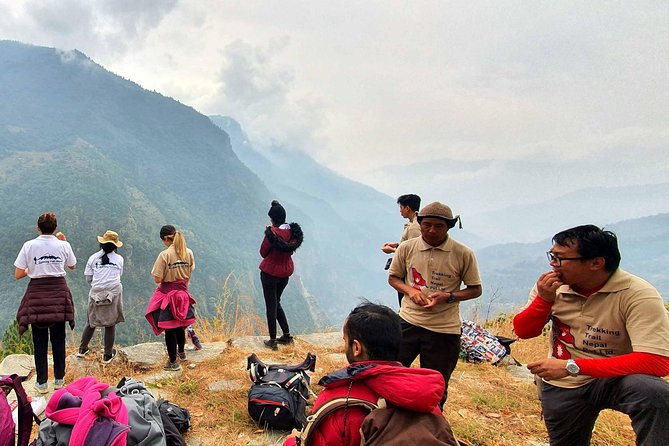
After Mohare Danda, the route heads toward Tikot Village, an ethnic Magar settlement. The day includes viewpoints at Thula Kharka and Sikha Danda.
This section shifts the emphasis from reaching the high point to moving through the hills and toward a living village. Tikot is one of the places where the cultural side of the trek becomes especially important. You can expect local settlement patterns, traditional life, and the chance to see a community that is less tied to the large trekking circuits.
The listed time is about 10 hours, making this one of the longest days. That figure may include extended time at stops, but you should still treat it as a demanding day and ask for the expected walking hours. The contrast with the three-hour Day 4 is significant.
This is the day when good pacing matters most. Eat breakfast, carry water, and keep snacks available. Drinking water, snacks, soft drinks, and bar bills are not included. The guide and porter team can help with the practical side, but they cannot replace sensible personal preparation.
Day 8: The final mountain walking day to Baseri
The final day on the mountain trail leads to Baseri, also spelled Basari in the trip details. This is where the walking portion ends before you return to the road system.
Ending at a lower village after the ridge sections gives the trek a natural finish. You have moved from Pokhara and Beni into the hills, reached Mohare Danda, visited Magar settlements, and then descended toward transport.
The listed walking time is about 10 hours. That makes Day 8 another serious day, especially after the long section toward Tikot. Downhill walking can be harder on the joints than climbing, and the operator specifically asks people with joint problems to speak up.
The route may be suitable for most people, but you should not confuse short duration with effortless walking. The trek is shorter than many Nepal circuits, yet the days can still be long and the stone steps can be awkward.
Day 9: Return from Pokhara to Kathmandu
After the mountain section, you return by road to Kathmandu. The trip takes about seven hours and includes around 12 hours allocated to the day’s stop and transfer period.
This is another long transport day, so it is best viewed as a necessary link rather than a sightseeing highlight. It gives you time to rest, sort your luggage, and reflect on the walking section.
The program does not list meals in Kathmandu or Pokhara as included. Plan for your own lunch and dinner, along with any drinks or personal expenses. Thamel is again your base, giving you access to restaurants and shops before departure.
Day 10: Airport transfer and departure
The final day is set aside for transfer to Tribhuvan International Airport. The schedule allows about three hours for the departure process.
A certificate of achievement is included after completing the Mohare Danda Trek. It is a small touch, but it gives the trip a formal closing, particularly if this is your first Nepal trek.
If your flight is later in the day, ask whether there is time to extend your stay or arrange another activity. The supplied plan says you can either say goodbye or extend your time in Nepal, but it does not specify extra tours or their costs.
What the $799 price covers
At $799 per person, the value depends on how much support you want included. The price covers the main infrastructure of a guided trek:
- Guide and porters, including wages, insurance, and gear
- Trekking permits and required documentation
- Ground transportation
- Breakfast for nine days
- Dinner for five days
- Lunch for six days
- Sleeping bag and down jacket
- First-aid kit and oxygen monitor
- Trekking map
- Complimentary duffle bag
- Baglung High Bridge visit and entry fee
- Completion certificate
That is a useful bundle. Permits, transport, porters, warm equipment, and meals can add up quickly when arranged separately. The community focus also gives the fee a wider purpose than a simple sightseeing package.
The exclusions matter. Tips for the guide and porters are not included, and neither are drinking water, snacks, drinks, bar bills, personal purchases, or lunch and dinner in Kathmandu and Pokhara. I would set aside extra money for those costs rather than treating $799 as the final amount.
The trip also offers pickup, mobile ticketing, and group discounts. Ask how the discount works before booking, since no exact percentage is provided.
Guide support, group size, and preparation
The maximum group size is 11 people. That is small enough for a guide to monitor the group, but your experience will still depend on the actual departure size and staff assigned.
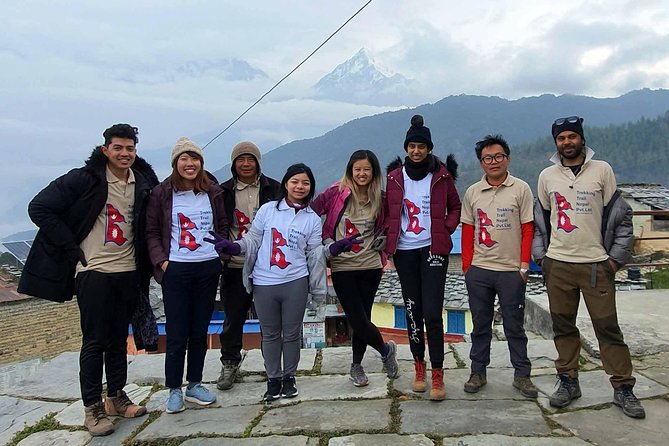
A guide named Apar is connected with the Mohare Danda program in the supplied trip information. Ask at booking if Apar will lead your departure or if another guide will be assigned. The company’s other trip material also names guides such as Lokendra, but you should not assume those staff members are on this trek.
The included first-aid kit and oxygen monitor are reassuring safety tools. They do not remove the need to speak honestly about health, pace, or discomfort. Tell the operator before arrival if you have joint trouble or difficulty descending stone stairs.
Most people can participate, according to the stated requirements, and service animals are allowed. The route is not described as technical, but you should still prepare for several long walking days, high elevation, cold mornings, and uneven surfaces.
Who should book this trek
I would choose Mohare Danda if you want:
- Himalayan views without a long expedition
- A small group and organized porter support
- Contact with Magar villages and local traditions
- A community-based model that supports rural projects
- A trek that includes warm gear, permits, transport, and meals
- A quieter alternative to Nepal’s most famous routes
I would think twice if you want every day to be spent walking. The drive to Pokhara, the transfer to Beni, and the return to Kathmandu take up a substantial part of the 10-day schedule.
I would also be cautious if you dislike basic lodges, long downhill sections, or changing weather. The route may be accessible to most participants, but the two 10-hour days deserve respect.
Booking and cancellation points to keep handy
You receive confirmation when booking. Pickup is offered, and the maximum group size is 11 people.
Cancellation is free if you cancel at least 24 hours before the experience begins. Less than 24 hours before the start time means no refund, and changes inside that window are not accepted.
The trek depends on good weather. If poor weather causes cancellation, you are offered another date or a full refund. Cut-off times use local Nepal time, so check the exact departure time carefully.
Should you book Mohare Danda?
Yes, if your priority is a quiet Himalayan trek with a clear community purpose. The strongest parts are the Mohare Danda sunrise, the possible views toward three 8,000-meter peaks, the Poon Magar villages, and the fact that local lodge and development work form part of the trip’s purpose.
Book with realistic expectations. This is not a nonstop mountain walk, and the road transfers are tiring. Day 7 and Day 8 may also be long, despite the trek being marketed as short and easier.
For a first Nepal trek, a small group, included gear, porters, meals, permits, and transport make the $799 price reasonable. Ask about the exact walking hours, the assigned guide, lodge conditions, and group discount before paying. If those answers suit you, Mohare Danda offers a thoughtful mix of views, village life, and practical support.
FAQ
Where does the Mohare Danda Trek begin?
The trip begins with arrival at Tribhuvan International Airport in Kathmandu. The walking section starts after road travel from Pokhara to Beni Bazaar.
How long does the trek take?
The full program lasts about 10 days. It includes arrival and departure in Kathmandu, road travel to Pokhara and Beni, the mountain walking section, and the return to Kathmandu.
What is the highest point of the trek?
Mohare Danda is the highest point, at 3,313 meters above sea level.
Which mountain ranges can you see?
On a clear morning, you may see up to 42 peaks, including Annapurna, Dhaulagiri, and Manaslu, each of which has peaks above 8,000 meters.
How many people can join the group?
The maximum group size is 11 people.
Are meals included?
Breakfast is included for nine days, dinner for five days, and lunch for six days. Lunch and dinner in Kathmandu and Pokhara are not included.
Is trekking equipment provided?
A sleeping bag, down jacket, first-aid medical kit, oxygen monitor, trekking map, and duffle bag are included. Guide and porter gear is also covered.
Are permits and transportation included?
Yes. Required trekking permits and documentation are included, as is ground transportation. The Baglung High Bridge visit and entry fee are also included.
What happens if bad weather cancels the trek?
If poor weather causes cancellation, you can choose a different date or receive a full refund. Free cancellation for personal reasons is available up to 24 hours before the experience starts.
Just added around Kathmandu
- Private Half-Day Tour of Kathmandu Durbar Square and Swayambhunath Temple★ 4.5 · 11 reviews
- Namobuddha Monastery Hiking Day Tour via Panauti from Kathmandu★ 5.0 · 15 reviews
- Private Half-Day Tour of Boudhanath and Pashupatinath Temples in Kathmandu★ 4.5 · 9 reviews
- Private Full-Day Kathmandu City Tour★ 5.0 · 9 reviews
- Private Day Tour in Kathmandu Valley Rim with Bhaktapur Sightseeing★ 5.0 · 3 reviews
- Private Half Day Budhanilkantha Tour★ 5.0 · 6 reviews
- Private Day Tour: Patan and Bhaktapur from Kathmandu★ 4.5 · 6 reviews
- Private Day Tour – Sacred Journey to Namo Buddha★ 5.0 · 5 reviews
Hiking & Trekking, compared.
Nagarkot Sunrise View and Day Hiking from Kathmandu
Read our review →
Browse the lists this tour appears in