Reviewed · KATHMANDU TOURS
Mera Peak Climbing
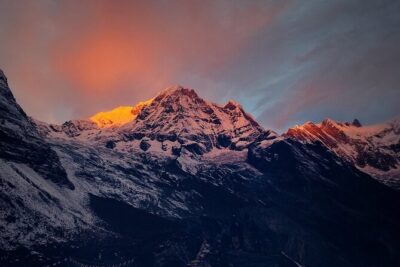
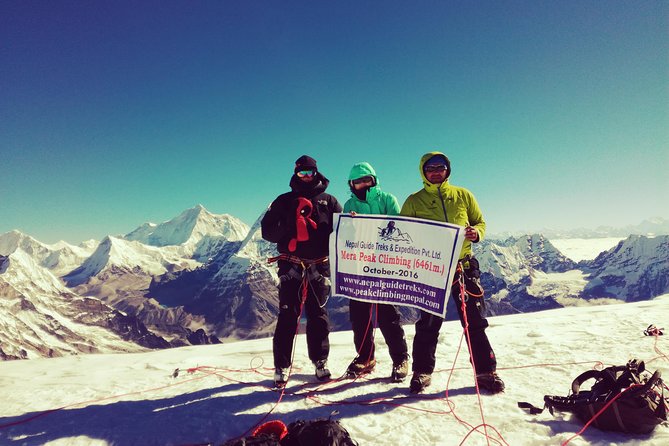
Mera Peak gives you a real Himalayan summit without the scale or cost of an Everest expedition. At 6,476 meters, it is Nepal’s highest officially permitted trekking peak, and from its upper slopes you can see Everest, Lhotse, Makalu, Cho Oyu, and Kanchenjunga. The route also reaches the less-settled Hinku and Hongu valleys, where the trip feels more remote than a standard Everest trek.
I like the combination of Sherpa culture and serious mountain scenery, plus the fact that the package includes permits, climbing equipment, Kathmandu lodging, and both tea-house and camping arrangements. The main drawback is the altitude: this is not a sightseeing walk, and the long, demanding schedule requires strong fitness, careful acclimatization, and a willingness to turn around if conditions become unsafe.
Key points at a glance
- A 6,476-meter Himalayan summit: Mera Peak is a genuine high-altitude climb, not simply a strenuous trek.
- Views of six 8,000-meter mountains: The route can reveal Everest, Lhotse, Makalu, Cho Oyu, and Kanchenjunga, along with other peaks in the Everest region.
- Remote Hinku and Hongu valleys: You spend time in wild, sparsely inhabited mountain country away from the busiest trekking routes.
- Tea houses plus camping: The trip mixes local lodging with tented nights, giving you both cultural contact and a more rugged mountain experience.
- Support from a dedicated operator: Nepal Guide Treks and Expedition provides permits, guides, food, lodging, and necessary climbing gear, though personal climbing equipment is extra.
- Flexible planning matters: Weather, snow, closed passes, flight problems, and altitude can force changes, so good communication with the guide is essential.
Why Mera Peak is a serious but approachable Himalayan climb
Mera Peak is often chosen by people who want their first 6,000-meter summit. That description needs a little care. The mountain may be less technical than Nepal’s major expedition peaks, but the altitude makes every task harder. Cold, thin air, long summit hours, snow, and fatigue can turn a manageable route into a major physical test.
You should arrive with a strong fitness level. The package is intended for adults at least 18 years old, and the group can include up to 15 people. That size is large enough to provide company but small enough for a guide team to manage, though your personal experience may depend on the final group and guide assignment.
I like that the trip builds in time rather than treating the summit as a quick add-on. The advertised duration is about 18 days, with four nights in Kathmandu and a longer period for the trek, acclimatization, and climb. At altitude, spare days are not wasted days. They give your body time to adjust and give the team room to respond to weather.
Other Kathmandu days worth booking alongside this:
- Everest Base Camp Trek – 14 Days
★ 5.0 · 1,499 reviews - Private Kathmandu Sightseeing Tour | UNESCO World Heritage sites
★ 5.0 · 756 reviews - Everest Base Camp Helicopter Tour landing at Everest View Hotel
★ 5.0 · 668 reviews
Kathmandu preparation and the Tribhuvan Airport start
The experience begins with pickup at Tribhuvan International Airport in Kathmandu. The listed operating hours are 9:45 a.m. to 6:15 p.m., Monday through Sunday, during the stated operating period. You receive confirmation when booking, and the operator is near public transportation.
Four nights in Kathmandu are included on a bed-and-breakfast plan. That is useful for more than sleep. You need time to meet the guide, check equipment, sort personal gear, and deal with any arrival problems before heading into the mountains. The exact sightseeing schedule is not provided, so I would treat Kathmandu as a preparation base rather than assume a city tour is included.
The company’s director, Prakash Devkota, is repeatedly associated with trip planning and communication. Direct contact before departure is especially useful for a climb like this, since you need clear advice about clothing, personal climbing gear, insurance, and fitness. Ask for the detailed day-by-day plan before you pay, because the supplied itinerary gives only the provider as a formal stop rather than naming each overnight village.
Through the Hinku and Hongu valleys
The main appeal of this route is its setting. The Hinku and Hongu valleys are described as wild, beautiful, and largely uninhabited. You are not simply walking from one famous viewpoint to another. The route takes you into a quieter part of the Everest region, where the sense of distance matters as much as the summit itself.
The trek combines tea-house accommodation with camping. Tea houses offer a connection with highland Sherpa communities and their customs. Camping gives the expedition a more self-contained feel, especially in places where regular lodging is limited. That combination is a practical response to the route, not a luxury choice, so you should be ready for a less predictable daily rhythm than on a standard lodge trek.
Food and accommodation during the trek are included, but the information does not specify menus or room standards. Plan for simple mountain meals rather than restaurant variety. The guidance recommends light food that is high in calories, along with ginger and garlic. I would see those suggestions as sensible ways to keep eating when altitude affects your appetite, not as a substitute for medical advice.
The Sherpa connection along the route
The highland Sherpa communities are part of what gives this climb its human character. You have the chance to encounter local culture and tradition as you move through the valleys, rather than treating the mountains as a blank backdrop. The tea-house portion of the route is particularly important here because it brings you into contact with the communities that support life in this high country.
The guide team is central to the experience. Names connected with past departures include Dandee, Dende, Sonam Sherpa, Samdu, Ming-ma, and Gelchen Sherpa. Assignments can change, so do not assume one particular guide will lead your trip unless the company confirms it.
The strongest practical theme is attentive support. Guides have adjusted plans during bad weather, snowstorms, closed passes, flight disruption, and health concerns. That flexibility matters more than a fixed promise of a summit. In the mountains, a guide who can change the plan calmly is more valuable than an itinerary that looks perfect on paper.
Same mountains, a completely different kind of day:
- Half day cooking class in Thamel kathmandu
★ 5.0 · 607 reviews - Everest Base Camp Trekking
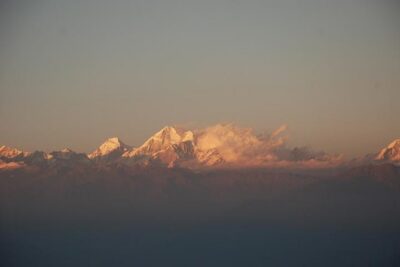
★ 5.0 · 485 reviews - Nagarkot Sunrise View and Day Hiking from Kathmandu
★ 5.0 · 471 reviews - Kathmandu: Full Day 7 UNESCO Tour with Lunch – Private/Group
★ 5.0 · 415 reviews
Acclimatization, altitude, and the summit attempt
Altitude is the central issue here. The trip’s instructions recommend drinking two to three liters of lukewarm water each day, avoiding alcohol and smoking, eating calorie-rich food, and adding ginger and garlic to meals. You are also told to speak with your guide about your condition, consult a doctor if available, and descend if symptoms do not improve.
Those points deserve serious attention. Mild altitude sickness may improve after rest, hydration, and acclimatization, but you should not assume that every headache or stomach problem is harmless. The guidance says to descend immediately in a serious case and mentions Diamox and a Gamow bag. Medication should be discussed with a qualified medical professional before the trip, and a Gamow bag is useful only if the operator actually provides one and the team knows how to use it.
The package says that all necessary climbing gear is included, but personal climbing gear is excluded. Ask for a precise equipment list. That wording could cover group equipment supplied by the company while leaving you responsible for items such as personal clothing, boots, gloves, or other individual kit. Do not wait until Kathmandu to discover that an important item is your responsibility.
The summit day is likely to be the hardest part of the trip, but the supplied information does not provide its exact distance, start time, or route details. Ask those questions in advance. You should also ask how many acclimatization days are planned, what happens if weather closes the route, and how the team decides when to turn around.
What the mountain views are worth
Mera Peak’s reward is a broad Himalayan panorama. The stated highlights include Everest at 8,848 meters, Cho Oyu at 8,201 meters, Makalu at 8,485 meters, Kanchenjunga at 8,586 meters, and Lhotse at 8,516 meters. That is an extraordinary lineup, and several other Everest-region peaks may fill the view.
The appeal is not only the number of summits. From a high trekking peak, you gain a sense of how the great mountains relate to one another. Everest is no longer an isolated name on a map. Lhotse and Makalu become part of a much larger chain of ridges, glaciers, and high passes.
Weather controls how much you see. You might have a clear morning with wide views, or a summit day shaped by cloud, wind, and snow. The right reason to book this climb is not a guaranteed photograph. It is the chance to enter a remote mountain region and make a carefully managed attempt at a high summit.
What the $3,000 price includes
At $3,000 per person, this is a major purchase, but the value depends on how much support you would otherwise need to arrange yourself. The package includes four Kathmandu nights with breakfast, Mera Peak climbing permits, tea-house and camping accommodation, food during the trek, an experienced trekking and climbing guide, and necessary climbing equipment.
Those inclusions remove several large planning tasks. Permits and high-altitude logistics are not things you want to improvise. A guide team also helps with route decisions, camp arrangements, altitude concerns, and weather changes. For a first 6,000-meter climb, that support can justify a substantial part of the price.
You still need to budget for international airfare, departure tax, personal expenses, personal climbing gear, and tips for guides and porters. The total cost will therefore be higher than the advertised price. Confirm exactly what transport, meals, porter support, insurance requirements, and gear are covered before booking.
I also like the free-cancellation rule, but it is strict. You can cancel for a full refund up to 24 hours before the local start time. Cancellations or changes made inside that 24-hour window are not accepted for a refund.
How weather and setbacks can change the plan
A high-altitude itinerary needs room for surprises. Heavy snow has closed the Amphu Laptsa Pass on some departures, making a planned Mera Peak and Island Peak route impossible. Weather has also caused delays, and internal flight problems have affected access to the mountains.
That kind of disruption is not a flaw unique to this operator. It is part of climbing in Nepal. The important question is how the company reacts. In this case, the operating team has arranged alternative plans and continued to support summit attempts when conditions allowed. You should still understand that reaching the top is never guaranteed.
Health problems can alter the plan too. One departure included stomach illness, yet the guide assessed the person’s condition and allowed a summit attempt. That does not mean you should expect to climb while sick. It shows why an honest conversation with your guide matters, and why a safe decision may mean stopping or descending.
Who should book this climb
This trip suits you if you want a high Himalayan goal, can train seriously, and accept that the summit is only one part of the experience. It is also a good match if you value local guides, practical support, and a route that includes both community contact and remote camping.
It may suit a solo participant as well. The company has organized trips for solo women and has handled arrangements before and after the climb. Still, you should confirm the group setup, guide assignment, private-room arrangements in Kathmandu, and how the operator supports solo participants before departure.
This is not the right choice if you want a relaxed holiday, a guaranteed summit, or a fully specified day-by-day schedule at the time of booking. The minimum age is 18, and strong physical fitness is required. You also need to be comfortable with simple accommodation, cold conditions, altitude risk, and possible itinerary changes.
Practical questions to ask before departure
Send the company a short list of questions before you commit. Ask for the full route, expected altitude at each overnight stop, acclimatization schedule, summit-day plan, and emergency procedures. Confirm which personal climbing items you must bring and whether a Gamow bag is available.
Ask how weather delays are handled and what happens financially if the summit cannot be attempted. You should also clarify the role of porters, tipping expectations, personal insurance, and any extra transport costs. These questions do not make you difficult. They help turn a broad 18-day promise into a plan you understand.
Pack for changing conditions, but follow the operator’s equipment list rather than buying blindly. Hydration, calorie intake, no alcohol, and regular communication with the guide are simple habits that matter. If you feel unwell, speak up early. Waiting in silence is a poor altitude strategy.
Should you book Mera Peak Climbing?
I would recommend this climb to a fit adult who wants a serious first Himalayan summit and values local support over a polished resort-style trip. The combination of Mera Peak, the Hinku and Hongu valleys, Sherpa culture, camping, and views toward six 8,000-meter mountains gives the journey real substance beyond the summit photograph.
Book it if you can accept uncertainty and prepare for a demanding altitude experience. Before paying $3,000, get the detailed itinerary and personal equipment list in writing. If the operator answers those questions clearly, this can be a strong-value route into Nepal’s high mountains. If you need an easy holiday or a fixed guarantee of success, choose a lower-altitude trek instead.
FAQ
Where does Mera Peak Climbing begin?
The experience begins with pickup at Tribhuvan International Airport in Kathmandu, Nepal.
How long does the experience last?
The advertised duration is approximately 18 days, 2 hours, and 5 minutes.
What is the minimum age?
The minimum age is 18 years.
How many people can join the group?
The activity can have a maximum of 15 people.
What accommodation is included?
The package includes four nights in Kathmandu with a bed-and-breakfast plan, followed by a combination of tea-house and camping accommodation during the trek.
Are climbing permits and equipment included?
Mera Peak climbing permits and necessary climbing gear are included. Personal climbing gear is not included, so you should request a detailed personal equipment list before departure.
What happens if I need to cancel?
You can receive a full refund if you cancel at least 24 hours before the experience start time. Cancellations or changes made less than 24 hours before the local start time are not accepted for a refund.
Just added around Kathmandu
- Private Half-Day Tour of Boudhanath and Pashupatinath Temples in Kathmandu★ 4.5 · 9 reviews
- Private Half-Day Tour of Kathmandu Durbar Square and Swayambhunath Temple★ 4.5 · 11 reviews
- Namobuddha Monastery Hiking Day Tour via Panauti from Kathmandu★ 5.0 · 15 reviews
- Private Full-Day Kathmandu City Tour★ 5.0 · 9 reviews
- Private Day Tour in Kathmandu Valley Rim with Bhaktapur Sightseeing★ 5.0 · 3 reviews
- Private Half Day Budhanilkantha Tour★ 5.0 · 6 reviews
- Private Day Tour: Patan and Bhaktapur from Kathmandu★ 4.5 · 6 reviews
- Private Day Tour – Sacred Journey to Namo Buddha★ 5.0 · 5 reviews
Kathmandu Tours, compared.
Private Kathmandu Sightseeing Tour | UNESCO World Heritage sites
Read our review →
Everest Base Camp Helicopter Tour landing at Everest View Hotel
Read our review →
Nagarkot Sunrise View and Day Hiking from Kathmandu
Read our review →
Full Day 7 UNESCO Tour with Lunch – Private/Group
Read our review →