Reviewed · KATHMANDU TOURS
Jeep Trip to Upper Mustang
Upper Mustang is Nepal at its most unusual: a dry, wind-cut corner of the Himalaya where whitewashed villages, Buddhist monasteries, and old cave settlements appear beyond the Kali Gandaki River. This 14-day private Jeep trip lets you reach Lo Manthang without committing to a long trek.
I especially like the combination of comfortable 4WD travel and serious cultural stops, from Kagbeni and Marpha to Jampa Gompa and the caves near Chhoser. I also like that the $500 restricted-area permit, Annapurna permit, TIMS card, meals, hotels, and airport transfers are built into the price. The main catch is the road itself: expect long, bumpy rides, basic guesthouses outside the cities, and a schedule that needs clarification around the return from Jomsom.
Key points before you book
- Reach Lo Manthang by road: Travel by 4WD Land Cruiser or Mahindra Scorpio instead of trekking for days through Upper Mustang.
- See ancient Buddhist sites: Visit Kagbeni Monastery, Charang Monastery, Jampa Gompa, Thubchen Gompa, and Namgyal Gompa.
- Explore Chhoser’s sky caves: The Shija Jhong cave system is dated at more than 3,000 years and has attracted archaeological excavation.
- Pay for a costly permit once: The $500 Upper Mustang restricted-area permit is included, along with Annapurna conservation and TIMS fees.
- Expect mixed accommodation: Kathmandu and Pokhara use hotels, while mountain nights are in simpler but generally clean guesthouses.
- Travel privately: Only your own group takes part, with pickup, airport transfers, an English-speaking guide, and group discounts available.
Why Upper Mustang works well by Jeep
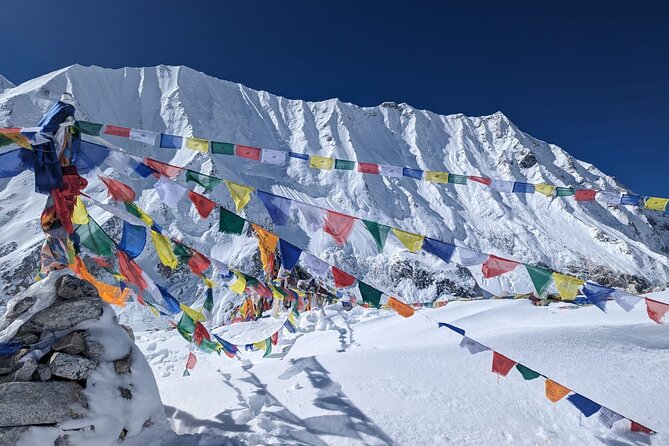
A Jeep is the practical way to cover Upper Mustang if you want the region’s culture and scenery but do not want a demanding trek. The route reaches places that would take much longer on foot, and you can carry your luggage in the vehicle rather than relying on porters.
That comfort comes with a trade-off. Roads beyond Beni are off-road, and the journey follows rough sections beside the Kali Gandaki River. A 4WD makes the route possible, but it does not make it smooth. You should be ready for dust, jolts, narrow roads, and long stretches where the scenery is more striking than the ride.
The reward is a part of Nepal that feels distinctly Tibetan. Upper Mustang has preserved old customs, monasteries, village layouts, and forms of architecture that give the trip more substance than a simple mountain drive. Lo Manthang, the former capital, is the central prize, but the smaller stops often provide the clearest sense of local life.
Other Kathmandu days worth booking alongside this:
- Everest Base Camp Trek – 14 Days
★ 5.0 · 1,499 reviews - Private Kathmandu Sightseeing Tour | UNESCO World Heritage sites
★ 5.0 · 756 reviews - Everest Base Camp Helicopter Tour landing at Everest View Hotel
★ 5.0 · 668 reviews
Days 1 and 2: Kathmandu temples and trip preparation
Your arrival day is simple. A private vehicle collects you at Tribhuvan International Airport and takes you to your Kathmandu hotel. The schedule allows about two hours for the transfer and settling in, followed by an evening meeting about the trip.
The second day is set aside for Kathmandu Valley sightseeing and preparation. You visit Swayambhunath, also called the Monkey Temple, along with Patan Durbar Square, Pashupatinath Temple, and Boudhanath Stupa. These are not filler stops. They introduce the Buddhist and Hindu traditions that continue into the Mustang route.
Patan Durbar Square brings traditional Newar architecture into view, while Pashupatinath is one of the most important Hindu temple areas in Nepal. Boudhanath gives you a strong introduction to Tibetan Buddhist culture before you head north and west toward Mustang.
Admission fees for the Kathmandu sights are not included, so keep some local currency available. Lunch and dinner in Kathmandu are also your responsibility. That gives you freedom to choose, but it means the advertised price is not fully all-inclusive in the capital.
The evening meeting matters. Use it to confirm your permits, vehicle, route, accommodation, and the return plan. The itinerary contains some unusual wording around Days 11 and 12, so this is the right time to ask exactly how your group will return from Jomsom and where the night will be spent.
Day 3: Kathmandu to Pokhara by road
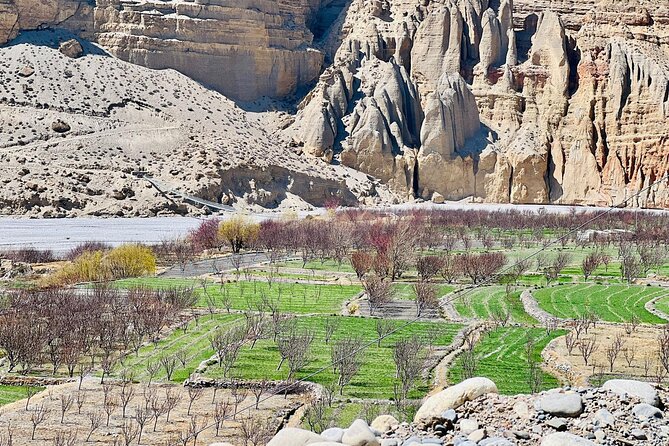
After breakfast, you drive to Pokhara, a journey listed at about six hours. The route shows a greener side of Nepal, with rivers, farms, villages, and mountain views along the way.
Pokhara is more relaxed than Kathmandu, and Lakeside is a useful place to rest before the rougher mountain section. The overnight stay also breaks up the long transfer from the capital. Your own lunch and dinner are not included here, so budget for both.
I would not treat this as a sightseeing day with many scheduled stops. It is mainly a transfer, though the countryside provides plenty to look at from the vehicle. Traffic and road conditions can affect the timing, so keep your evening flexible.
Days 4 and 5: The Kali Gandaki route, Marpha, and Jomsom
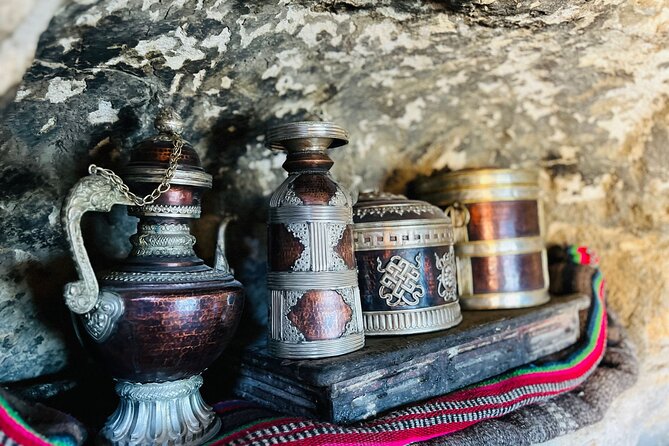
The Mustang section begins with a drive west toward Beni on paved road. After Beni, the route follows the Kali Gandaki River on off-road tracks. This change is important. The trip shifts from a standard Nepal road journey to a true remote-area expedition.
The Kali Gandaki corridor is the backbone of the route. You pass through river valleys and mountain settlements as the road heads toward the dry country. The itinerary gives only a short listed stop for the river, but the drive itself is the main experience.
The next day takes you through Kalopani and Ghasa to Marpha, known for apple farming, then onward to Jomsom. Marpha is one of the more appealing village stops because it combines local agriculture with traditional buildings and a walkable setting. Jomsom adds a local market and serves as a practical base in the Mustang region.
You then continue toward Kagbeni and visit a holy temple complex. The exact pacing may change with road conditions, so do not expect every stop to run like a city tour. Upper Mustang is best approached with patience.
Accommodation becomes simpler from this point. The trip uses lodges and guesthouses rather than luxury hotels, but the available information describes them as comfortable, clean, or quite clean. That is a fair expectation: basic mountain lodging, not resort service.
Same mountains, a completely different kind of day:
- Half day cooking class in Thamel kathmandu
★ 5.0 · 607 reviews - Everest Base Camp Trekking
★ 5.0 · 485 reviews - Nagarkot Sunrise View and Day Hiking from Kathmandu
★ 5.0 · 471 reviews - Kathmandu: Full Day 7 UNESCO Tour with Lunch – Private/Group
★ 5.0 · 415 reviews
Day 6: Kagbeni and the restricted Mustang permit
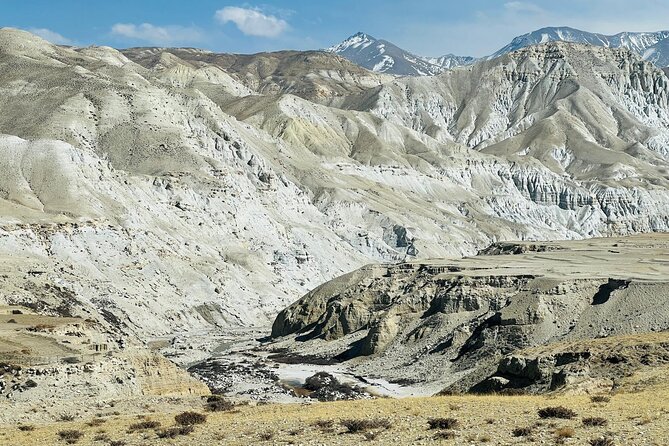
Kagbeni is one of the most atmospheric places on the route. The plan includes Kagbeni Monastery and a Buddhist school before your guide checks the special Upper Mustang permit and begins the restricted-area journey.
This permit is central to the trip. Upper Mustang is not an ordinary road excursion, and the $500 fee is included in your package. The Annapurna conservation permit and TIMS card are included too, which removes several major administrative costs from your planning.
Kagbeni also works as a cultural threshold. It is where the route turns from the lower Kali Gandaki area toward the older Tibetan-influenced settlements of Upper Mustang. Take your time here if the road schedule allows. The monastery and school offer more insight than a quick photo stop.
Day 7: Charang, Lo Gager Ghar, and Lo Manthang
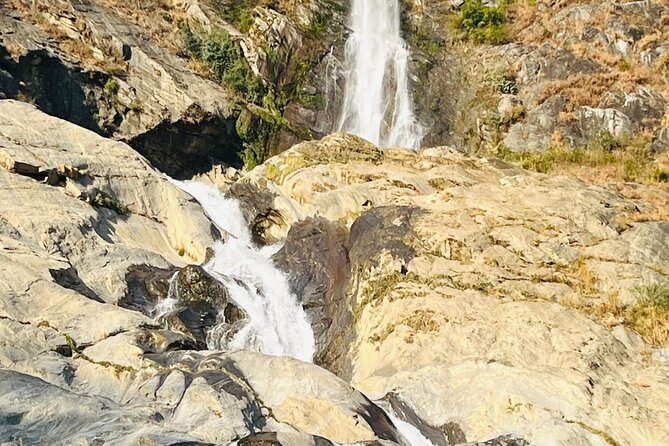
This is one of the strongest days of the trip. You visit Lo Gager Ghar Gompa, an important monastery in Mustang, then Charang Monastery before reaching Lo Manthang.
Lo Manthang was the former capital of Mustang. Its narrow alleys and traditional architecture give it a very different feel from Kathmandu or Pokhara. A Jeep tour is useful here because you arrive with more time and energy for walking through the old city rather than spending the entire day reaching it.
The itinerary also includes Jampa Gompa, described as the oldest monastery on the route and built in the fifteenth century. The exact historical details should be confirmed with your guide, but the site is clearly one of the main cultural highlights.
Do not expect Lo Manthang to feel polished or heavily developed. That is part of its appeal, but it also means services are limited. Guesthouse accommodation is simpler, meals are practical, and the roads remain rough. Bring a patient attitude and respect local customs when entering monasteries.
Days 8 and 9: Namgyal Gompa and the caves of Chhoser
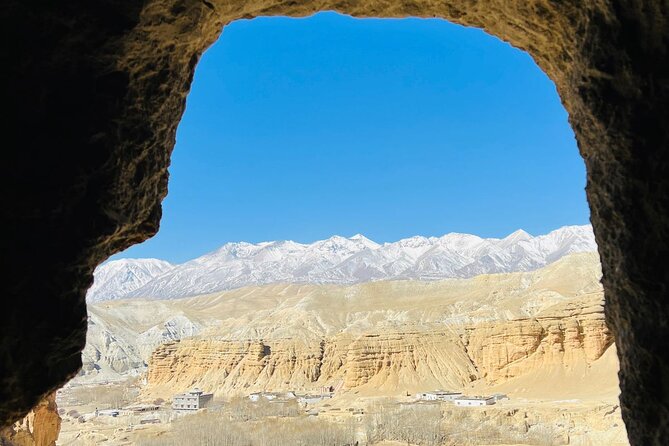
Two days are given to exploring the Mustang area around Lo Manthang. The main stops include Namgyal Gompa, the sky caves of Chhoser, and the Shija Jhong cave system.
The caves are among the most unusual features of the trip. Shija Jhong is dated at more than 3,000 years and has been examined by archaeologists. These cave settlements show how people adapted to the dry cliffs and valleys of Upper Mustang long before modern roads reached the region.
The two-day format is valuable because it avoids reducing the area to a single rushed outing. You have time for monasteries, villages, rock formations, and viewpoints without packing every stop into one long drive.
Still, the itinerary repeats the same general description for Days 8 and 9, so ask your operator for the exact plan. One day may focus on Chhoser and the caves, while another may include different monasteries or nearby villages. Do not assume the published wording gives the full detail.
The scenery: Dhaulagiri, Annapurna, and a dry Himalayan world
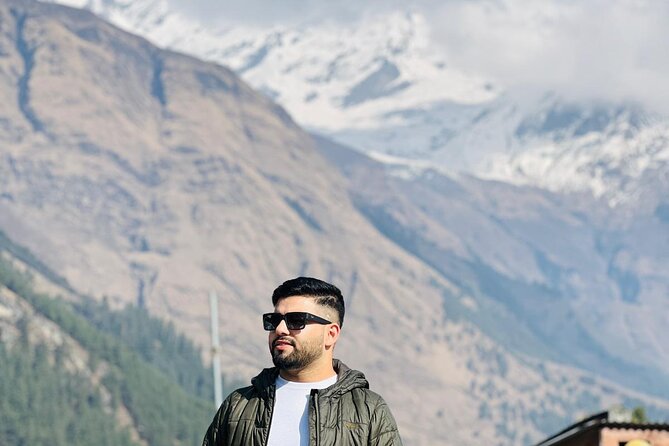
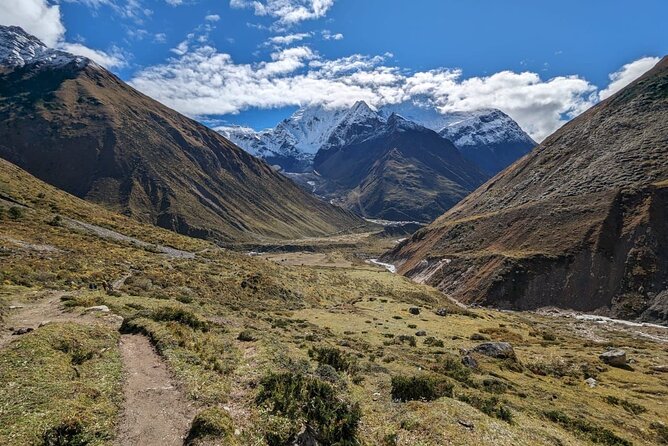
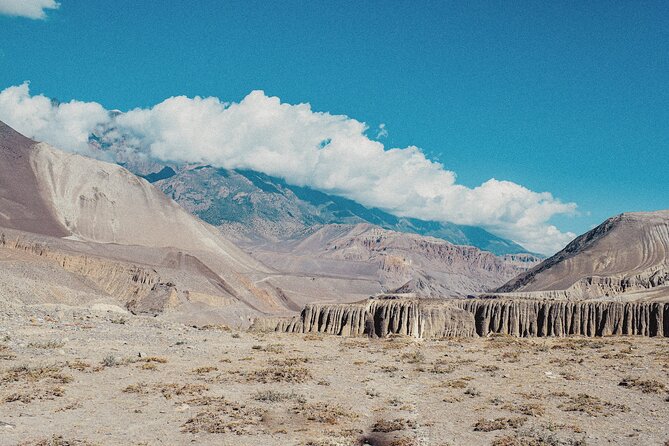
Upper Mustang is not the lush, forested Nepal many people picture. The scenery is arid, open, and shaped by wind. The contrast between pale cliffs, bare slopes, river valleys, white village walls, and blue Himalayan skies gives the route its own character.
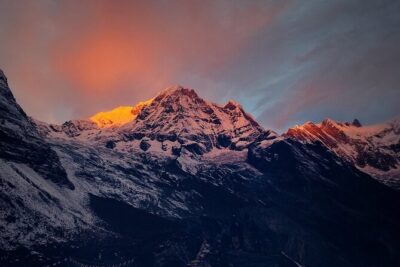
You may see major Himalayan peaks including Dhaulagiri and Annapurna. The mountain views are part of the trip, but they do not appear in a single guaranteed panorama every day. Clouds, dust, road position, and weather all affect what you see.
The dry setting also explains why the journey feels so different from Pokhara. Instead of thick greenery, you get rock formations, high valleys, and settlements built around limited water and farmland. Marpha’s apple farming is a useful reminder that this is not an empty wilderness. People have developed ways to live here for generations.
Days 10 to 12: Returning through Jomsom and Pokhara
Day 10 takes you back toward Jomsom through local villages, the Kali Gandaki River corridor, Buddhist stupas, and monasteries. You have time in the evening to explore the Jomsom market.
The schedule then becomes unclear. Day 11 is described as an early morning flight back to Pokhara, followed by Pokhara sightseeing, while the transport details mention a 4WD Land Cruiser. Day 12 is described as an eight-hour drive to Pokhara, despite the previous day already placing you there.
This may reflect alternative return arrangements, weather changes, or a copied itinerary sequence. It is the single point I would clarify before paying. Ask whether your group flies from Jomsom to Pokhara, drives from Jomsom, visits Tatopani and its hot springs, or uses a combination of these options.
One of the supplied trip descriptions includes Tatopani, natural hot springs, Muktinath, and the Korala border, but those locations are not clearly placed in the 14-day schedule provided here. Treat them as possible additions only if World Himalaya Treks confirms them in writing.
If the flight operates, it saves a long road journey. If weather disrupts it, the Jeep route may take over. The cancellation terms state that poor weather can lead to a new date or a full refund, but you should still ask how weather-related changes are handled once you are already on the road.
Days 13 and 14: Thamel and departure
Day 13 returns you to Kathmandu, with free time in Thamel for shopping. This is a useful buffer after a remote-area trip and gives you space to buy crafts, clothing, or food gifts.
The final day includes a private vehicle transfer to the international airport. Airport transfers are included, which is helpful after a long route with several moving parts.
The package includes breakfast on 13 days, lunch on 10 days, and dinner on 10 days. Lunch and dinner in Kathmandu and Pokhara are excluded, as are drinks, mineral water, boiled water, personal gear, extra hotel nights, and tips. Plan for these costs instead of assuming the $2,200 price covers every expense.
What the $2,200 price really buys
At $2,200 per person, this is not a low-cost Nepal road trip. The Upper Mustang permit alone costs $500, and the package also covers Annapurna and TIMS permits, private airport transfers, Kathmandu sightseeing with an English-speaking guide, transportation, taxes, meals, and accommodation.
The private format improves the value for couples, families, or friends who want control over the pace. Group discounts may help reduce the per-person cost, especially if you can share the vehicle with your own party.
The price makes less sense if you only want mountain scenery. A cheaper Nepal itinerary could provide that. This package earns its cost through access to the restricted Mustang zone, the cultural sites, and the logistics of arranging a vehicle and permits in a remote region.
The accommodation is part of the value calculation. Hotels in Kathmandu and Pokhara are more comfortable, while guesthouses along the road are simple. You are paying for access and coordination, not luxury.
Service, vehicles, and the human side of the trip
The company connected with this trip is World Himalaya Treks & Expeditions. Thakur is identified as the person who runs the Kathmandu office, while Mr. Dhital has arranged airport reception and trip planning for past groups. Shailesh is also noted as providing strong support during a journey.
That matters because Upper Mustang requires coordination. You need permits, a suitable vehicle, drivers familiar with rough roads, lodging reservations, and a plan for weather disruptions. Direct communication with the office before departure is wise, especially to confirm the vehicle model and the return route.
The transport is listed as a 4WD Land Cruiser or Mahindra Scorpio. A proper 4WD is not a luxury here. It is part of the safety and comfort equation on the road beyond Beni.
The supplied feedback repeatedly praises friendly drivers, clean guesthouses, good organization, and support from the office. I would give those strengths proper weight, but I would still confirm names, vehicle type, meal arrangements, and the precise schedule before departure. Good service starts with clear expectations.
Who should book this Jeep trip?
This trip suits you if you want:
- Upper Mustang’s monasteries, caves, villages, and old capital without a long trek
- A private vehicle and airport pickup
- A structured 14-day route with permits and meals arranged
- Basic but clean mountain guesthouses rather than camping
- Time in Kathmandu, Pokhara, Marpha, Kagbeni, Jomsom, and Lo Manthang
- A cultural journey as much as a mountain-view trip
It is less suitable if you dislike rough roads, want high-end hotels throughout, or need every day to follow a fixed timetable. It also requires flexibility because mountain flights and road conditions can affect the return.
Most travelers can participate, according to the activity information, but no detailed accessibility information is provided. If you have mobility concerns, ask about vehicle access, guesthouse stairs, and walking surfaces before booking.
Practical details and cancellation terms
Pickup is offered from Tribhuvan Airport, and the private activity is for your group alone. Confirmation is provided at booking, and the listed operating period runs from October 3, 2024, through December 13, 2026, from 8:15 a.m. to 6:15 p.m., Monday through Sunday.
You can receive a full refund if you cancel at least six full days before the start time. Cancellation two to six days before departure receives a 50 percent refund, while cancellation within two days receives no refund. The experience may be rescheduled or fully refunded if poor weather or an insufficient minimum number of participants forces cancellation.
Bring personal gear, drinking water money, and funds for drinks and excluded meals. Also budget for tips. Most importantly, confirm the Day 11 and Day 12 transport plan and ask whether Muktinath, Tatopani, or the Korala border is included in your specific booking.
Should you book it?
I would book this Jeep trip if your main goal is to see Lo Manthang and Upper Mustang’s Buddhist culture without trekking. The combination of a private 4WD, restricted-area permit, monasteries, cave sites, village visits, and mountain scenery gives you a strong Nepal experience for the price.
I would not book it without first resolving the return itinerary. Once the flight and driving details are clear, this is a well-rounded choice for people who value access, comfort, and local culture more than polished hotels or smooth roads.
FAQ
How long is the Upper Mustang Jeep trip?
The trip lasts approximately 14 days, including Kathmandu sightseeing, the drive to Pokhara, the Upper Mustang route, time in Lo Manthang, and the return to Kathmandu.
What is included in the $2,200 price?
The price includes airport transfers, Kathmandu sightseeing with a professional English-speaking guide, the $500 Upper Mustang restricted-area permit, Annapurna conservation and TIMS permits, government and local taxes, accommodation, listed meals, transportation, and a first-aid kit.
Is the trip private?
Yes. This is a private activity, so only your own group participates. Group discounts are also offered.
Do I need to trek on this experience?
No. The experience is designed as a Jeep trip through Upper Mustang rather than a trekking itinerary. You will still need to walk around monasteries, villages, Lo Manthang, and cave sites.
Which vehicle is used?
Transportation is listed as a 4WD Land Cruiser or Mahindra Scorpio. Confirm the exact vehicle before departure, especially if your group has several passengers or substantial luggage.
Are meals included every day?
Breakfast is included for 13 days, lunch for 10 days, and dinner for 10 days. Lunch and dinner in Kathmandu and Pokhara are not included, and drinks, mineral water, boiled water, and other food outside the itinerary cost extra.
What happens if bad weather cancels the trip?
If poor weather causes cancellation, you will be offered a different date or a full refund. The schedule may also need adjustment if weather affects transport within the region, so confirm the operator’s plan for delays before departure.
Just added around Kathmandu
- Private Half-Day Tour of Boudhanath and Pashupatinath Temples in Kathmandu★ 4.5 · 9 reviews
- Private Half-Day Tour of Kathmandu Durbar Square and Swayambhunath Temple★ 4.5 · 11 reviews
- Namobuddha Monastery Hiking Day Tour via Panauti from Kathmandu★ 5.0 · 15 reviews
- Private Full-Day Kathmandu City Tour★ 5.0 · 9 reviews
- Private Day Tour in Kathmandu Valley Rim with Bhaktapur Sightseeing★ 5.0 · 3 reviews
- Private Half Day Budhanilkantha Tour★ 5.0 · 6 reviews
- Private Day Tour: Patan and Bhaktapur from Kathmandu★ 4.5 · 6 reviews
- Private Day Tour – Sacred Journey to Namo Buddha★ 5.0 · 5 reviews
Kathmandu Tours, compared.
Private Kathmandu Sightseeing Tour | UNESCO World Heritage sites
Read our review →
Everest Base Camp Helicopter Tour landing at Everest View Hotel
Read our review →
Nagarkot Sunrise View and Day Hiking from Kathmandu
Read our review →
Full Day 7 UNESCO Tour with Lunch – Private/Group
Read our review →