
Reviewed · CITY TOURS
Full Day Private Kathmandu City Tour
Kathmandu’s great attraction is not one single monument, but the way Buddhist and Hindu worship share the same city. This private day tour puts you beside temple courtyards, a huge Buddhist stupa, hilltop shrines, and the Bagmati River cremation ghats, with a guide to explain what you are seeing. Pashupatinath can be especially powerful, though the cremation area calls for a quiet, respectful approach.
I like the private vehicle and door-to-door pickup, which saves you from sorting out Kathmandu transport between four major sights. I also like having an art historian guide, and Saraswati Ghimire is one named guide associated with the experience. She is praised for her warmth, humor, and strong grasp of the sites. The main drawback is that entry tickets, food, and drinks are extra, so the $95 price is not the full day’s cost.
Key points at a glance
- Four major Kathmandu Valley sights in one day: Visit Patan Durbar Square, Swayambhunath, Boudhanath, and Pashupatinath.
- Private touring from 9:15 a.m.: Your group travels alone, with hotel pickup and drop-off included.
- Hindu and Buddhist traditions together: See how two major faiths shape Kathmandu’s buildings, rituals, and sacred spaces.
- Pashupatinath includes the Bagmati ghats: You might see a cremation, an experience that requires sensitivity and respect.
- A guide with an art and culture focus: The tour is designed to explain meaning, not just point out buildings.
- Budget for admission fees: Entry permits, food, and drinks are not included in the $95 price.
Four sacred places, one long Kathmandu day
This is a full city orientation built around four heavyweight sights. You begin at 9:15 a.m. and spend about seven to eight hours moving between them in a private, air-conditioned vehicle.
That format matters in Kathmandu. The sites are spread across the city and valley, so a private ride makes the day simpler than arranging separate taxis or trying to fit everything into an independent walking plan. You also avoid being tied to a large group’s pace. Your party alone takes part in the tour.
The route brings together Hindu worship, Tibetan Buddhist practice, traditional architecture, royal history, and everyday religious life. You are not simply checking off four monuments. You are comparing four different ways Kathmandu’s people use sacred space.
The day may feel full. Each stop deserves time, and traffic can make city transfers unpredictable, though no exact driving times are provided. If you want long meals, slow photography sessions, or extended shopping, this schedule may feel tight. If your goal is to understand Kathmandu’s main cultural sights in one organized day, it is a practical plan.
A few more Kathmandu trips to weigh up
- Kathmandu: Full Day 7 UNESCO Tour with Lunch – Private/Group
★ 5.0 · 415 reviews - Kathmandu: Full Day Top 4 UNESCO Tour with Lunch – Private/Group
★ 5.0 · 269 reviews - Kathmandu: Full-Day 7 UNESCO Tour with Lunch – Private/Group
★ 4.9 · 247 reviews
Pashupatinath and the Bagmati cremation ghats
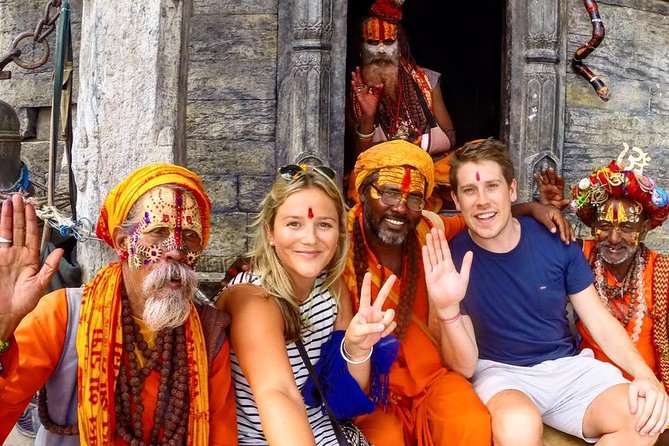
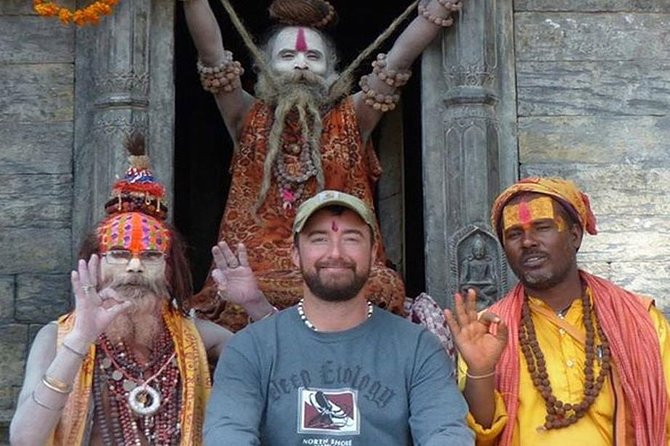
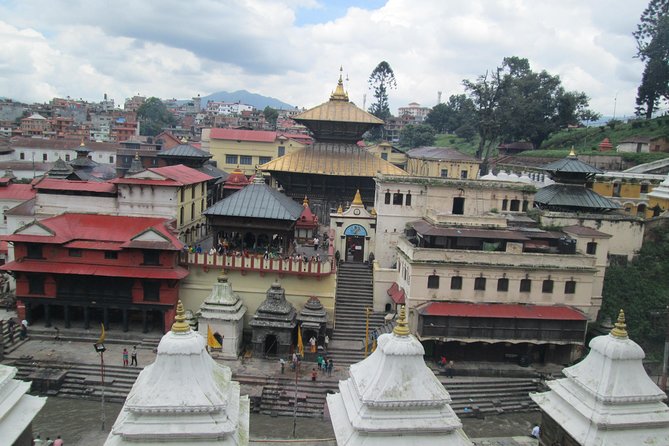
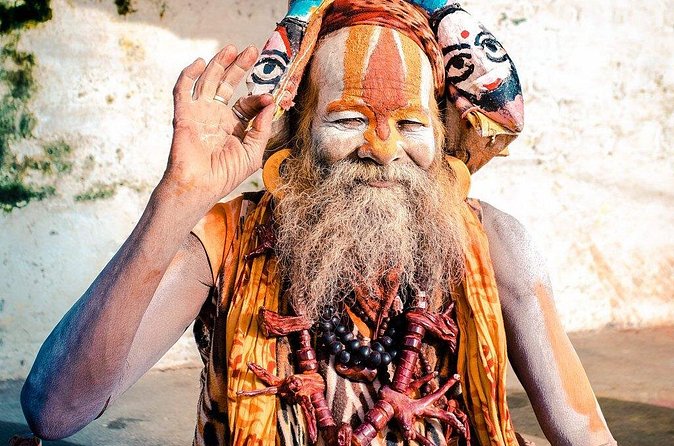
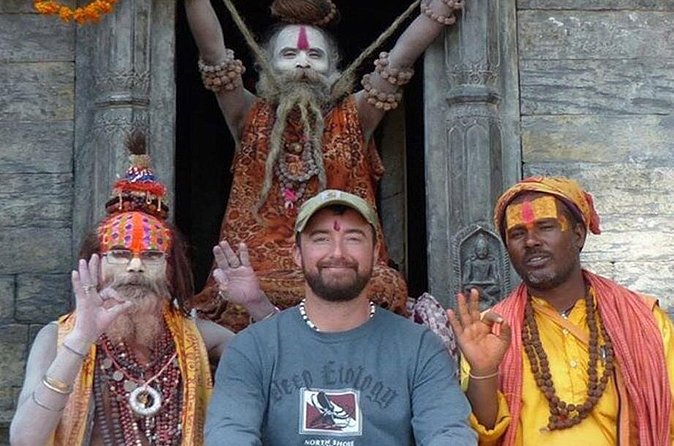
Pashupatinath Temple sits beside the Bagmati River, one of the most important Hindu religious areas in central Kathmandu. The tour introduces you to Hindu holy men and may include a view of a cremation at the burning ghats.
This is the most emotionally serious stop of the day. Cremation is not presented as a performance or a novelty. It is part of a Hindu view of impermanence, and the riverfront setting gives the visit its religious weight. Your guide can help explain the meaning behind what you see, which is especially useful when the customs are unfamiliar.
You should bring a respectful attitude here. Keep your voice low, follow your guide’s direction, and be careful with photography around mourners and funeral activity. The experience description says you may see a cremation, so treat that as a possibility, not a promise.
Pashupatinath also gives the tour a human scale. Grand buildings can tell you about rulers and artistic traditions, but the ghats show religion as a living part of the city. For many people, this is the stop they remember most. For others, it may be uncomfortable. That is not a flaw in the site, but it is something you should consider before booking.
Boudhanath’s enormous Buddhist stupa
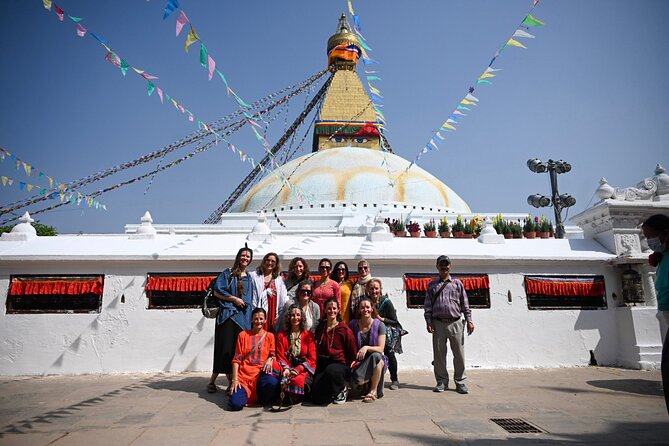
Boudhanath, also written as Bouddhanath, is described as one of Nepal’s finest stupas and lies about seven kilometers east of the capital. It is also listed as a UNESCO cultural site.
The central feature is a vast white dome topped by the familiar Buddha eyes. The scale gives the visit a different mood from the tighter temple courtyards elsewhere on the route. You can take in the structure as a major place of pilgrimage and as a piece of architecture, while your guide explains its religious meaning and place in Nepalese culture.
This is where the art historian angle should be most useful. A large stupa can look simple at first glance, but its form carries layers of symbolic meaning. The guide’s job is to help you notice those details rather than reduce the visit to a photo stop.
Boudhanath is also a good contrast with Pashupatinath. One site centers on Hindu rites beside the river, while the other is a major Buddhist pilgrimage place marked by a huge dome. Seeing both on the same day helps you understand that Kathmandu is shaped by several religious traditions at once.
Allow yourself time to look upward and around, not only at the main structure. The point is not just to arrive, take a picture, and leave. Your guide can connect the architecture with Buddhist practice and Nepal’s wider cultural story.
Swayambhunath on the hilltop
Swayambhunath is described as one of the oldest and most sacred religious sites in the Kathmandu Valley. It sits on a hilltop and is important to Buddhists from Nepal and beyond.
The elevated setting makes this stop different from Boudhanath. Instead of meeting a monumental stupa in a broad urban setting, you approach a sacred site placed above the valley. The climb or hilltop access may require more physical effort than a flat city stop, although the available information does not specify the number of steps or the exact access route.
Swayambhunath is also known by a name connected with monkeys, though the supplied tour details focus on its age, holiness, and hilltop position. The practical point is simple: wear comfortable footwear and expect a site where the setting is part of the experience.
This is another place where a guide can add real value. Religious symbols and temple layouts may be hard to read on your own. An art historian can explain what the buildings and images represent, while also placing the site within Nepalese history and culture.
I would pay attention to the contrast between the shrine’s spiritual importance and the broad view from its hilltop position. You get both a close look at a sacred place and a sense of how the Kathmandu Valley is arranged. The tour description does not promise a particular view or visibility, so think of the outlook as a possible bonus rather than a guaranteed feature.
Same mountains, a completely different kind of day:
- Everest Base Camp Trek – 14 Days
★ 5.0 · 1,499 reviews - Private Kathmandu Sightseeing Tour | UNESCO World Heritage sites
★ 5.0 · 756 reviews - Everest Base Camp Helicopter Tour landing at Everest View Hotel
★ 5.0 · 668 reviews - Half day cooking class in Thamel kathmandu
★ 5.0 · 607 reviews
Patan Durbar Square and the art of the valley
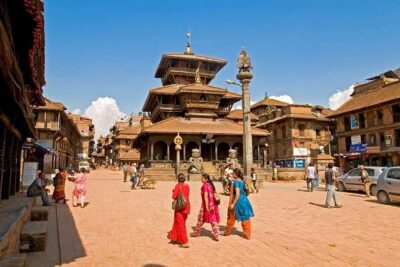
The final listed stop is Patan Durbar Square, in the city of Patan. Patan is described as one of the oldest cities among the three cities of the Kathmandu Valley, and it is especially known for traditional crafts, fine art, and architecture.
This is likely the stop that most clearly matches the guide’s art historian role. Patan’s appeal is not just one building. It is the relationship between the square, its temples, carved details, and the city’s long craft tradition.
A private guide can make a major difference here because architectural details are easy to miss. You can ask why a carving matters, how a temple is used, or how Patan’s artistic identity differs from the other parts of Kathmandu. The tour promises instruction in Nepalese religion, history, and culture, so this is a good place to ask questions rather than rush from one façade to the next.
Patan also rounds out the day. After two Buddhist sites and Pashupatinath, you get a stronger look at royal architecture and Nepal’s traditional arts. The four stops work best as a connected lesson: sacred practice, pilgrimage, hilltop worship, and the built heritage of the valley.
Admission is not included, so confirm the current entry arrangements before you go. The supplied details call this an entry permit or ticket, but they do not give the amount. You should plan for that extra cost separately.
What the private guide changes
The central benefit here is not simply having a car. It is having one person connect the sites for you.
A private guide can adjust explanations to your interests. If you care about architecture, you can spend more time on carvings and temple design. If religion interests you most, you can ask about Hindu and Buddhist customs. If you are new to Nepal, the guide can help you understand why these four places matter together.
The experience includes a professional art historian guide. That wording suggests a stronger emphasis on visual culture and interpretation than you might get from a basic transport-and-sightseeing service.
One named guide connected with the experience is Saraswati Ghimire. A single female visitor praised her friendliness, sense of humor, and knowledge, and specifically valued having a female guide. That does not guarantee who will lead your booking, but it gives you a useful name to know when considering the operator, Dream Heaven Adventure Pvt. Ltd.
A private format can also make conversation easier. You are not trying to hear a guide over a large crowd, and you can ask for clarification when a ritual or symbol is unfamiliar. The tradeoff is that a private tour does not automatically mean a leisurely tour. Four major stops in seven to eight hours still require a reasonable pace.
Transport, timing, and the real value of $95
The price is $95 per person. For a private full-day outing with hotel pickup, hotel drop-off, an air-conditioned vehicle, bottled water, and a professional guide, that can be a fair price if you value convenience and interpretation.
The value is strongest for a first visit. You get the city’s four major cultural stops without arranging separate rides or learning the route yourself. You also have a guide beside you when the sites may otherwise seem confusing.
The price is less attractive if you plan to explore slowly on your own and already have transport arranged. It is also important to remember that food, drinks, and entry tickets are not included. Your final spending will be higher than the advertised tour price.
The start time is 9:15 a.m., and the experience lasts roughly seven to eight hours. That makes it a substantial day rather than a quick orientation. Hotel pickup is offered, but the published start location is Kathmandu 44600, Nepal. Confirm the exact pickup details at booking so there is no confusion about your hotel or meeting point.
The vehicle is air-conditioned, a useful comfort feature during a day with several transfers. Bottled water is included, but meals are not. Plan accordingly, since the tour does not specify a restaurant stop or meal arrangement.
Who should book this Kathmandu tour?
I would point this tour toward first-time visitors who want Kathmandu’s main sights organized in one day. It also suits you if you prefer private transport, want to ask plenty of questions, or feel more comfortable visiting religious places with a local guide.
It is a good fit for solo visitors who want company without joining a large group. The private format means only your group participates, and the named guide Saraswati Ghimire may appeal to women seeking a female guide, though guide assignment is not guaranteed in the provided details.
This tour is also useful for independent-minded people who do not want an independent day. You keep the privacy and flexibility of a private booking while gaining local interpretation and door-to-door transport.
You may want a different plan if you dislike emotionally serious sights. Pashupatinath may include a cremation, and the visit can be confronting. You should also think twice if your ideal day involves long, unhurried time at each site, since four major attractions plus transfers fill the schedule.
The experience is rated five out of five from 15 ratings, with 100 percent recommending it. That is a small sample, so I would treat it as encouraging rather than decisive. The strongest point to me is the combination of a private vehicle and a guide who can explain both art and religious practice.
Booking details worth checking
Confirmation is provided when you book, and free cancellation is available if you cancel at least 24 hours before the local start time. Cancellations made inside that window are not refunded, and changes inside the same period are not accepted.
The tour is often booked about 10 days ahead. That is a useful planning signal if your Kathmandu dates are fixed, especially if having a private group and a preferred guide matters to you.
Most people can participate, according to the supplied information. No detailed accessibility information is provided, and the tour includes hilltop Swayambhunath, so you should ask the operator about the physical route if stairs or uneven surfaces are a concern.
Should you book it?
Book this tour if you want a well-organized first look at Kathmandu’s four major cultural sights, with private transport and a guide who can explain what the buildings and rituals mean. The best reasons to choose it are the door-to-door service, the private group format, and the chance to see Hindu and Buddhist traditions in one focused day.
Skip it if you want to set your own pace, avoid cremation sites, or keep the budget strictly below $95 plus admission fees and meals. For most first-time visitors with limited time, though, this is a sensible way to get your bearings and see the cultural core of Kathmandu without spending the day negotiating transport.
FAQ
How long does the Kathmandu city tour last?
The tour lasts approximately seven to eight hours.
What time does the tour start?
The listed start time is 9:15 a.m.
Does the tour offer hotel pickup and drop-off?
Yes. Hotel pickup and drop-off are included.
Is this a private tour?
Yes. Only your group participates in the activity.
Which sights are included?
The tour includes Pashupatinath Temple, Boudhanath Stupa, Swayambhunath, and Patan Durbar Square.
Is a guide included?
Yes. A professional art historian guide is included.
Are food and drinks included?
No. Food and drinks are not included. Bottled water is included.
Are entry tickets included?
No. Entry permits or tickets are not included in the tour price.
Can I cancel for a full refund?
Yes, if you cancel at least 24 hours before the experience start time. Cancellations made less than 24 hours in advance are not refunded.
Just added around Kathmandu
- Private Half-Day Tour of Boudhanath and Pashupatinath Temples in Kathmandu★ 4.5 · 9 reviews
- Private Half-Day Tour of Kathmandu Durbar Square and Swayambhunath Temple★ 4.5 · 11 reviews
- Namobuddha Monastery Hiking Day Tour via Panauti from Kathmandu★ 5.0 · 15 reviews
- Private Full-Day Kathmandu City Tour★ 5.0 · 9 reviews
- Private Day Tour in Kathmandu Valley Rim with Bhaktapur Sightseeing★ 5.0 · 3 reviews
- Private Half Day Budhanilkantha Tour★ 5.0 · 6 reviews
- Private Day Tour: Patan and Bhaktapur from Kathmandu★ 4.5 · 6 reviews
- Private Day Tour – Sacred Journey to Namo Buddha★ 5.0 · 5 reviews
City Tours, compared.
Sarangkot Sunrise with Half or Full-Day City Tour
Read our review →
Full Day Kathmandu City Sightseeing Tour of UNESCO Heritage Sites
Read our review →
Browse the lists this tour appears in