
Reviewed · HIKING & TREKKING
From Kathmandu: 5-Day Gosaikunda Lake Trek
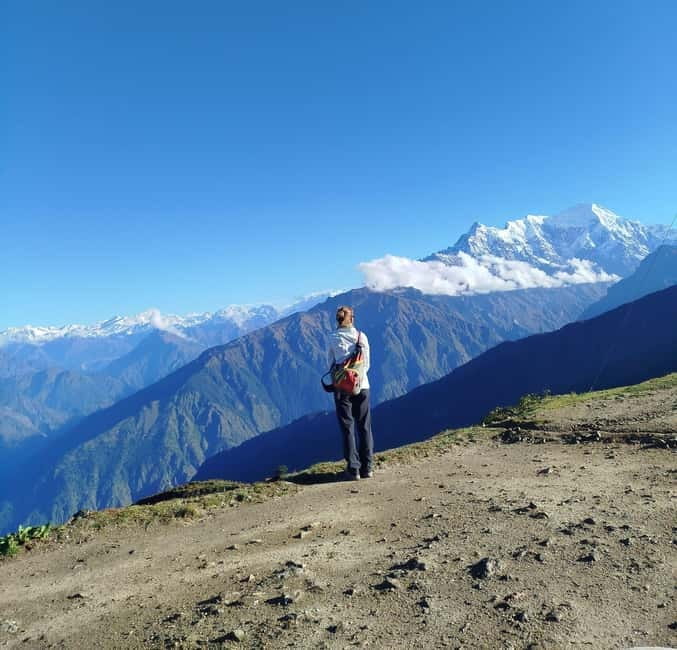
Gosaikunda is the prize here: a sacred, high-altitude lake reached by a tough but compact trek from Kathmandu. At 4,380 meters, it gives you big Himalayan views without requiring the longer schedule of the Everest or Annapurna routes.
I like the efficient five-day plan and the chance to walk through Langtang National Park, where rhododendron, pine, and bamboo forests soften the climb. I also like the practical gear loan, since a down jacket, sleeping bag, and trekking poles can save you money and luggage space. The catch is the altitude: this is a short trek, but not an easy one, and the climb to Laurebina and Gosaikunda will test your legs and breathing.
Key points at a glance
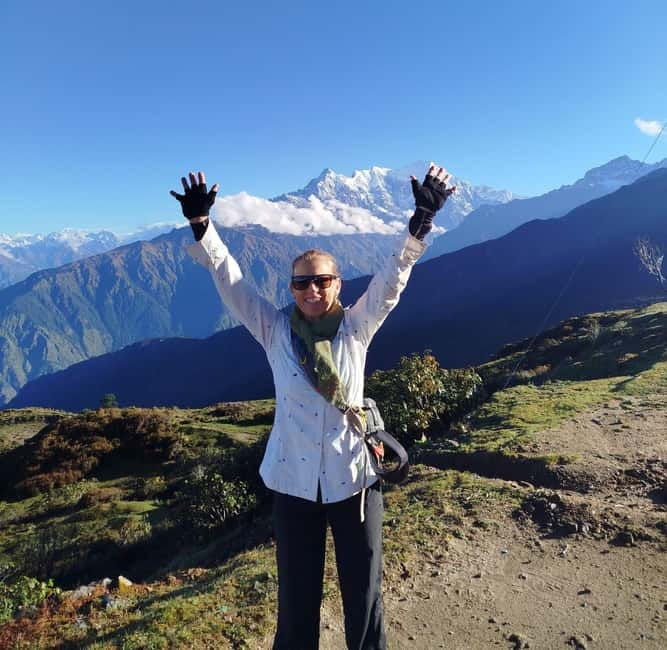
- Gosaikunda reaches 4,380 meters, making altitude the main challenge of this short route.
- Day three includes several sacred lakes, including Gosaikunda, Bhairav Kunda, Chandra Kunda, and Saraswati Kunda.
- The $179 price includes major basics, such as transport, permits, four nights of lodging, and guide service.
- The group is limited to 14 people, so you get more support than on a large coach-style tour.
- Borrowed gear is available, including a down jacket, sleeping bag, and trekking poles.
- Guide quality matters here, and guides such as Raj, Terence, and Ohm have been praised for clear planning, safety care, and good spirits.
Why Gosaikunda makes a good short trek
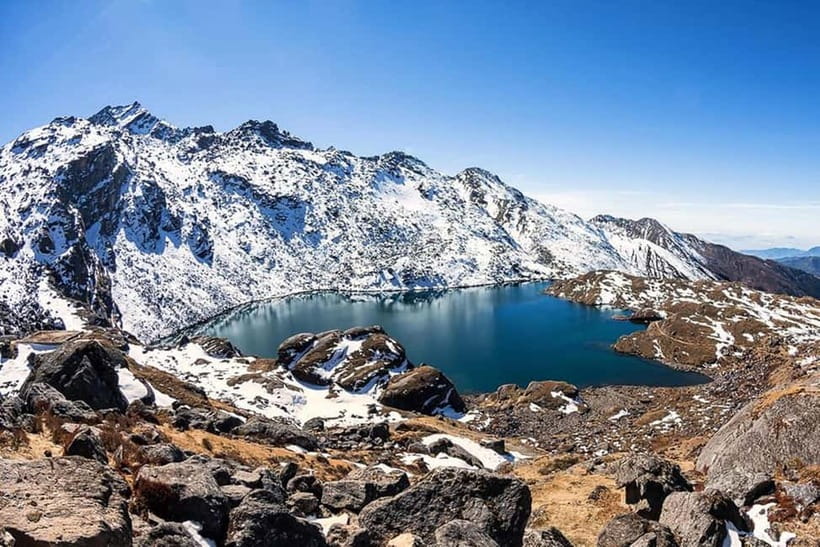
Gosaikunda is one of Nepal’s best choices when you want a real mountain trek but have only five days. The route begins with a long drive from Kathmandu, then moves into Langtang National Park and climbs through forest to the high country.
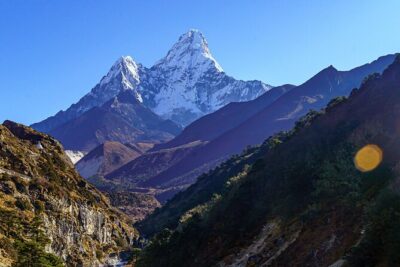
The reward is not only the main lake. You’ll also see smaller alpine lakes, broad views toward the Langtang range, and changing plant life as the trail rises. This gives the trek a useful sense of progression. You begin among green hills and terraced fields, then finish among rock, cold air, and high mountain water.
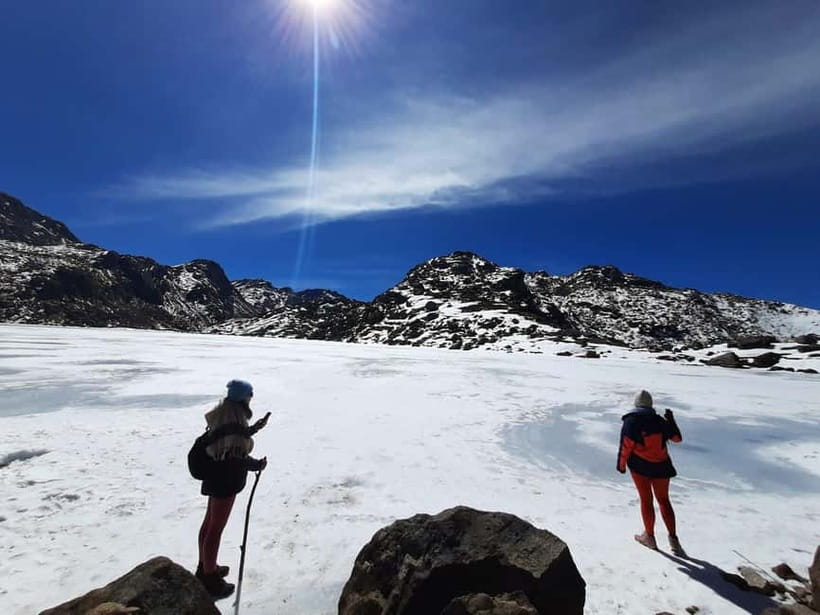
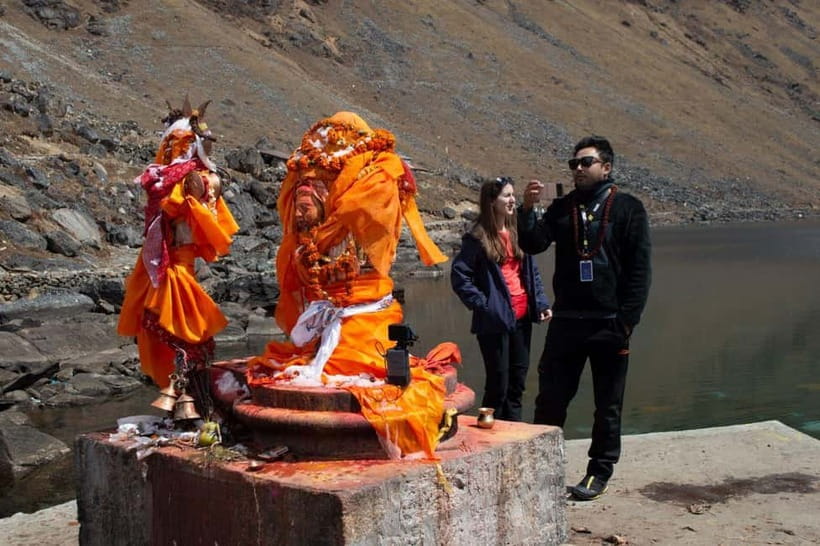
The lake has religious importance in Nepal, and it is linked with the Trishuli River. It remains frozen in winter, which gives the final approach a stark, high-altitude feel. You are not simply walking to a viewpoint. You are reaching a place with spiritual meaning and a strong connection to local culture.
The trip is offered throughout the year, but clear weather matters greatly. When skies are open, you can see the central Himalayas and Langtang range. Cloud can reduce the views, especially after you have made the effort to climb so high.
A few more Kathmandu trips to weigh up
- Everest Base Camp Trek – 14 Days
★ 5.0 · 1,499 reviews - Everest Base Camp Trekking
★ 5.0 · 485 reviews - Nagarkot Sunrise View and Day Hiking from Kathmandu
★ 5.0 · 471 reviews
Day 1: Kathmandu to Dhunche, then the two-hour walk to Deurali
The first day is split between road and trail. Hotel pickup takes you to the bus stop, followed by a drive of about five to six hours to Dhunche.
This is not a minor transfer. Roads in the hills take time, and the journey will use much of your morning and early afternoon. Still, the ride offers a useful introduction to Nepal outside Kathmandu. You can expect views of green hills, terraced fields, and distant peaks including Manaslu, Ganesh, and Langtang.
Dhunche marks the real beginning of the trek. After a short break, you walk for about two hours to Deurali, at 2,790 meters. Compared with the next day, this is a fairly gentle opening, though the combination of road fatigue and uphill walking can still be noticeable.
You sleep in a mountain guesthouse at Deurali. Four nights of guesthouse accommodation are included in the package, though the exact room setup can vary. One couple reported having private rooms throughout the trek, but you should not treat that as a guaranteed room arrangement.
Day 2: The steep climb from Deurali to Laurebina
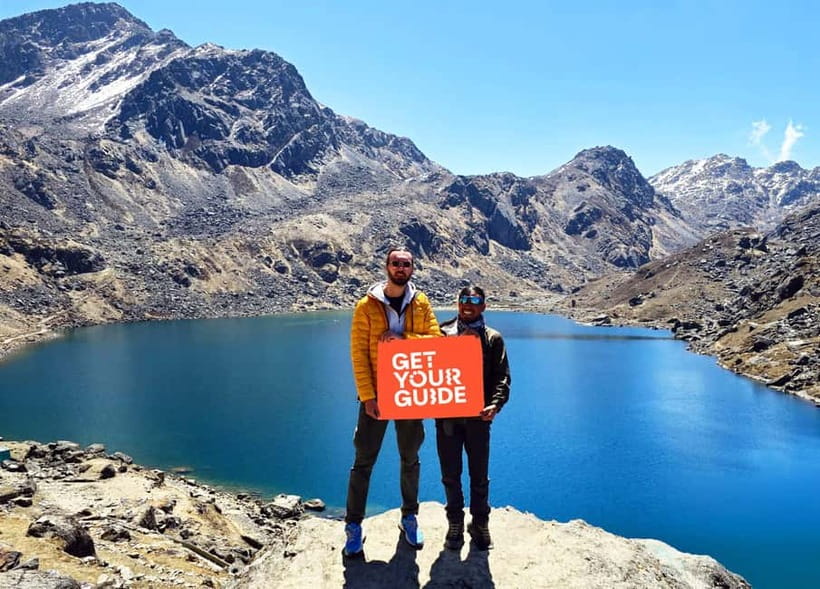
Day two is where the trip becomes serious. After breakfast and a briefing from your guide, you climb toward Laurebina at 3,910 meters, passing through Chandanbari.
The trail is steep. The distance alone does not tell the full story, because the elevation gain is the real issue. You are moving from 2,790 meters to nearly 4,000 meters in a single day, so a slow pace and regular water breaks are important.
This is also the day when a good guide earns their keep. Raj has been praised for explaining the region and communicating the plan clearly. Terence has been described as especially attentive to safety and flexible with plans, while Ohm has been credited with encouragement, local facts, and a cheerful approach. Guides can vary, but those details show what you should expect from strong support on this route: clear pacing, safety checks, and simple explanations of what comes next.
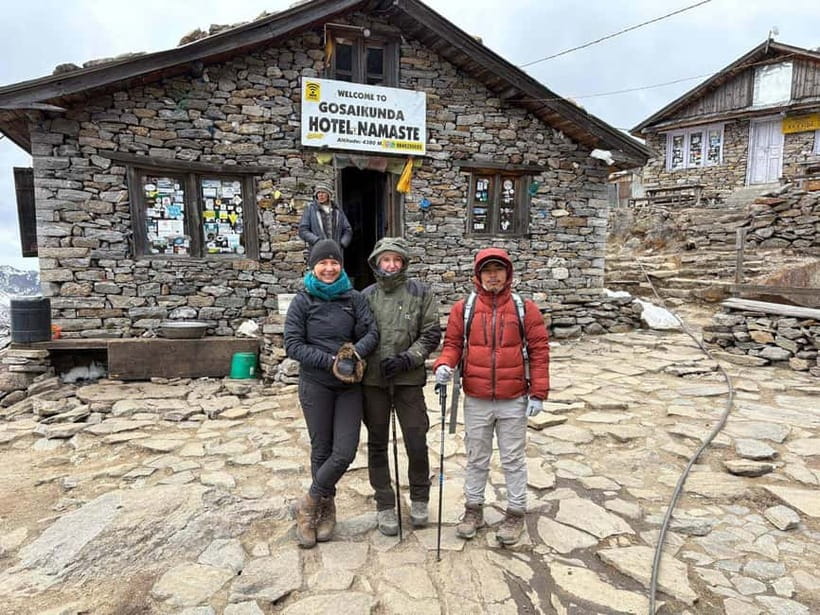
Laurebina is your overnight stop. At this height, the guesthouse is mainly a base for rest rather than a place to linger. Bring warm layers and keep your sleeping bag close. The included down jacket and sleeping bag are particularly useful here, especially if you are not carrying your own cold-weather equipment.
Day 3: Gosaikunda Lake at 4,380 meters
Day three is the centerpiece. You leave Laurebina after breakfast and walk toward Gosaikunda, an alpine freshwater lake in Langtang National Park.
The maximum altitude is 4,380 meters, so this is the day to pay close attention to your body. You may find the walking slower than expected, and the thin air can make even modest rises feel demanding. Stay close to your guide, keep your pace steady, and do not treat reaching the lake as a race.
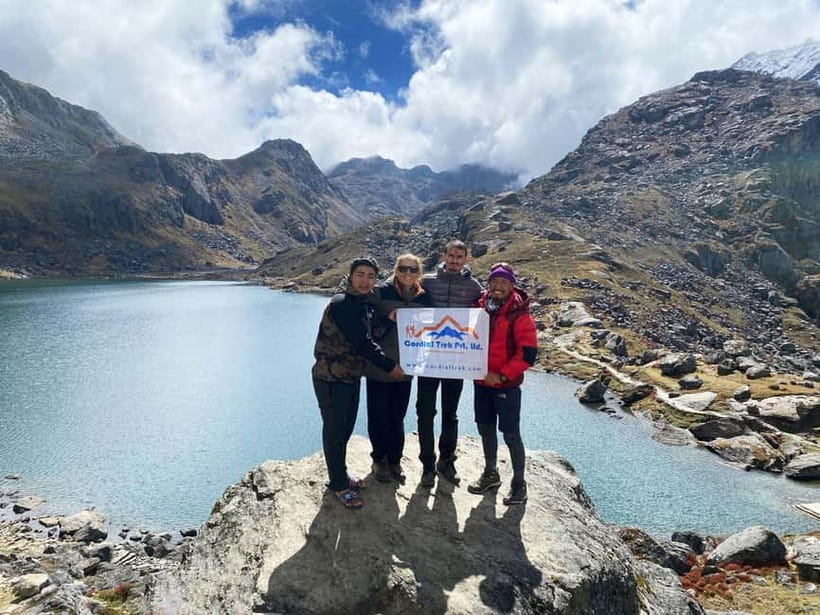
Gosaikunda is joined by several other lakes in the area. Bhairav Kunda, Chandra Kunda, and Saraswati Kunda add variety to the outing and help explain why this high basin has such strong religious and natural importance. The lake’s water feeds the Trishuli River, and it remains frozen during winter.
The Langtang range forms the visual backdrop. Clear weather is the best gift on this day, since cloud can hide the peaks and flatten the sense of height. Bring your camera, but keep it protected from cold and moisture. You should also carry cash for personal expenses, since the package does not cover everything you might buy along the way.
After exploring the lake area, you return to Laurebina for the night. That return walk matters. You do not simply reach the high point and finish for the day. You must make the trip back to the guesthouse, so save energy and keep food and water available.
Same mountains, a completely different kind of day:
- Private Kathmandu Sightseeing Tour | UNESCO World Heritage sites
★ 5.0 · 756 reviews - Everest Base Camp Helicopter Tour landing at Everest View Hotel
★ 5.0 · 668 reviews - Half day cooking class in Thamel kathmandu
★ 5.0 · 607 reviews - Kathmandu: Full Day 7 UNESCO Tour with Lunch – Private/Group
★ 5.0 · 415 reviews
Day 4: Forest trails back to Dhunche
Day four reverses the route and gives your knees a different kind of work. You descend through rhododendron, pine, and bamboo forests toward Deurali.
The forest is a welcome change after the exposed high country. It also lets you notice the plant life of Langtang National Park at a more comfortable altitude. The route then continues through another dense forest, crosses a river, and descends to Dhunche for the night.
Downhill walking can feel easy at first, but steep sections can be hard on tired knees. Trekking poles are worth using, and they are available to borrow as part of the equipment support. This is one of those small inclusions that has real value during a five-day trek.
Dhunche gives you a lower and likely more comfortable overnight stop before the final bus ride. It also completes the walking portion without forcing you to combine a long descent with a same-day drive to Kathmandu.
Day 5: The return drive to Kathmandu
After breakfast, you take the bus back to Kathmandu. The transfer ends at the Kathmandu bus station, where you are taken back to your hotel.
As on day one, allow patience for the road journey. The trip is scenic, but it is not a quick city transfer. If you have a flight or another fixed booking after the trek, leave a sensible buffer rather than planning a tight connection.
This final day is one reason the route works well for a short holiday. The walking is concentrated into a few demanding days, while the road transfers keep the overall schedule to five days.
What the $179 price really covers
At $179 per person, this is a strong value if you choose the all-inclusive option and use the included equipment.
The price covers hotel pickup and drop-off, an experienced licensed guide, bus transport between Kathmandu and Dhunche, four nights in mountain guesthouses, required trekking permits, and the TIMS card. Government taxes and service charges are also included.
The all-inclusive meal plan provides four breakfasts, five lunches, and four dinners. That matters because food costs can add up on a mountain route, and having meals arranged makes each walking day simpler. The budget option does not include meals, so check which package you are selecting before you pay.
You can also borrow a down jacket, sleeping bag, and trekking poles. Those items are especially useful for a traveler who wants to avoid buying a full set of high-altitude gear for one trip. Water purification tablets are supplied as needed, and first aid is available if required.
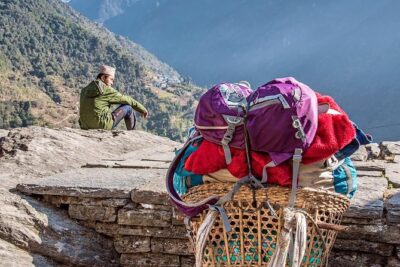
A porter is not included, but it can be added. The duffel bag is included with the porter option. If you are not used to carrying a pack uphill at altitude, paying for a porter may make the experience more comfortable. If you travel light and are fit, you may prefer to carry your own essentials.
Personal expenses, travel insurance, and meals on the budget plan are extra. Travel insurance is recommended, and it should be checked for trekking at 4,380 meters before departure.
Group size, guides, and the human side of the trek
The group limit is 14 people. That is small enough for a guide to keep an eye on walking pace and general well-being, while still giving you a chance to meet other hikers.
The guide can speak English, Hindi, or Icelandic. Several guide names have been associated with positive experiences on this route. Raj has been praised for clear communication and regional explanations. Terence has been noted for putting safety first and adjusting plans when needed. Ohm has been described as upbeat, encouraging, and good at adding local facts and fun video moments.
You should still ask who your guide will be before departure if that matters to you. A guide is not just a person who points toward the trail. On a short, high-altitude trek, the guide controls the pace, explains the day ahead, helps with practical choices, and notices when someone may need a break.
The culture side of the trip is present but not heavily programmed. You are walking through a protected area and staying in mountain guesthouses, rather than moving from one formal cultural attraction to another. That is a good fit if you prefer time outdoors and simple contact with local mountain communities.
Timing, weather, and what to pack
The trek runs throughout the year, but clear skies give you the best chance of seeing the Langtang range. Conditions at high altitude can be cold, and the lake may be frozen in winter.
Bring your passport and a recent passport-sized photograph. You must provide a passport copy and photograph at least one day before the trip so trekking permits can be processed.
A camera and cash are also listed as essentials. Add warm layers, sturdy walking shoes, gloves, a hat, sunscreen, and a small daypack. The supplied sleeping bag and down jacket reduce what you need to bring, but you should still pack clothing suitable for cold conditions.
The trek is not suitable for children under 10, people with mobility impairments, or anyone over 140 kilograms. Those limits are practical, not arbitrary. The route includes steep uphill walking, high altitude, forest trails, and a long return descent.
Who should book this Gosaikunda trek
This trip suits you if you want a short Himalayan trek from Kathmandu and are ready for concentrated physical effort. It works well for people who prefer a guide, want permits and transport handled, and do not want to organize every guesthouse and meal alone.
It is also a good option if you like a mix of mountain scenery and nature. You will see terraced hills on the road, forests in the national park, high lakes, and views toward the Langtang range. The route gives you several distinct settings in only five days.
It is less suitable if you want a relaxed walking holiday. Day two climbs sharply, day three reaches 4,380 meters, and the return to Dhunche is a long descent. You should also think twice if you dislike long bus rides or basic mountain accommodation.
The strongest reason to choose this trip is the balance between planning and independence. The guide, permits, transport, lodging, and core equipment are arranged, but you still spend most of the trip walking through a natural setting rather than following a packed sightseeing schedule.
Should you book it?
Book this Gosaikunda trek if you want serious mountain scenery in a compact five-day plan and you understand that short does not mean easy. The $179 cost is attractive, especially with the guide, permits, transport, four nights of lodging, and loaned equipment included.
Before booking, confirm three points: choose the all-inclusive meal plan if you want food covered, decide if you need a porter, and check that your insurance covers trekking at high altitude. If you can handle the steep climb to Laurebina and the 4,380-meter lake day, this is a practical way to reach one of Nepal’s memorable alpine sites without committing to a much longer trek.
FAQ
How long is the Gosaikunda Lake trek?
The activity lasts five days, including transport from Kathmandu to Dhunche and the return bus journey to Kathmandu.
What is the highest point on the trek?
The highest point is Gosaikunda Lake, at 4,380 meters.
Is transportation from Kathmandu included?
Yes. Bus transportation between Kathmandu and Dhunche is included, along with hotel pickup and drop-off.
Are meals included?
Meals are included with the all-inclusive option: four breakfasts, five lunches, and four dinners. Meals are not included with the budget option.
Is accommodation included?
Yes. Four nights of accommodation in mountain guesthouses are included.
Can I borrow trekking equipment?
Yes. A down jacket, sleeping bag, and trekking poles are available to borrow. A duffel bag is included if you choose the porter option.
What documents must I provide before the trek?
You must provide a copy of your passport and a recent passport-sized photograph at least one day before departure so the trekking permits can be processed.
Just added around Kathmandu
- Private Half-Day Tour of Boudhanath and Pashupatinath Temples in Kathmandu★ 4.5 · 9 reviews
- Private Half-Day Tour of Kathmandu Durbar Square and Swayambhunath Temple★ 4.5 · 11 reviews
- Namobuddha Monastery Hiking Day Tour via Panauti from Kathmandu★ 5.0 · 15 reviews
- Private Full-Day Kathmandu City Tour★ 5.0 · 9 reviews
- Private Day Tour in Kathmandu Valley Rim with Bhaktapur Sightseeing★ 5.0 · 3 reviews
- Private Half Day Budhanilkantha Tour★ 5.0 · 6 reviews
- Private Day Tour: Patan and Bhaktapur from Kathmandu★ 4.5 · 6 reviews
- Private Day Tour – Sacred Journey to Namo Buddha★ 5.0 · 5 reviews
Hiking & Trekking, compared.
Nagarkot Sunrise View and Day Hiking from Kathmandu
Read our review →
Browse the lists this tour appears in