Reviewed · KATHMANDU TOURS
Folklore and Everyday Life in Ancient Patan
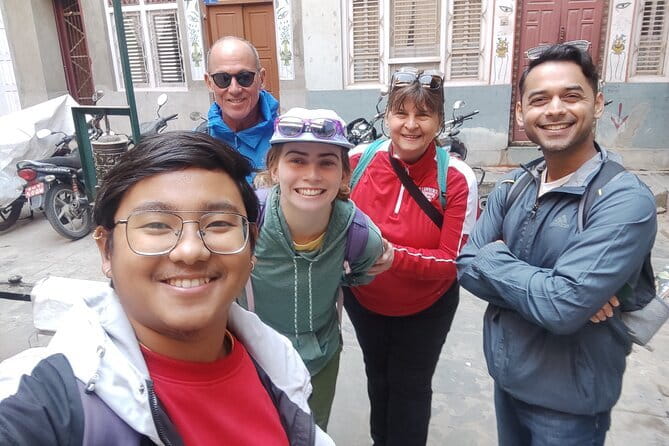
Patan’s best stories are often found away from its famous palace square. This two-hour to two-and-a-half-hour walk leads you through courtyards, monasteries, resting pavilions, shrines, and narrow lanes where old religious customs still shape ordinary life. Guide Sandip is known for his easy manner, humor, and clear explanations of both Hindu and Buddhist practice.
I like the focus on local courtyards rather than the standard monument circuit, and I like the small group limit of 10 people. The route also ends close to Patan Durbar Square, so you can add the palace museum afterward. The main thing to keep in mind is that the square itself is not included, and the $65 price covers a guide but no admission tickets or transport.
Key points to know before booking
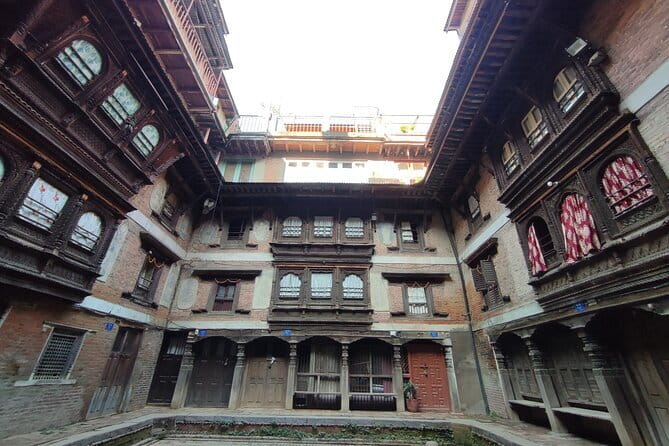
- Pimbahal opens the walk with Newar Buddhist life: See how courtyards and monastic spaces connect spiritual practice with daily routines.
- Nyakhachowk offers close-up architecture: Look for falchaa resting areas, ancestral shrines, and traditional houses.
- Nag Bahal links Patan to wider artistic currents: The guide discusses Greek and Hellenistic influence in Buddhist and Hindu imagery.
- Swotha Square is a useful finish: Tea shops and temples make it a pleasant place to pause before visiting the palace complex.
- Sandip adds the human touch: His explanations cover folklore, faith, customs, and social change, with a relaxed sense of humor.
- Patan Durbar Square is separate: Plan extra time and money if you want the palace, temples, and museum.
Why old Patan makes a better walking lesson than a quick palace visit
Patan Durbar Square gets the photographs, and rightly so. Yet the old town around it tells you more about how the city works. Sacred courtyards are not sealed museum pieces here. They are part of the town’s daily structure, connecting homes, shrines, monasteries, gathering places, and alleys.
That is the central strength of this experience. You are not simply moving from one grand building to another. You are learning how Newar communities organized space, worshipped, rested, remembered ancestors, and passed down artistic skills.
The route also places two major faith traditions side by side. Newar Buddhism and Tantric Hinduism can seem difficult to understand from a quick look at a statue or temple. A local guide can explain the beliefs and customs in plain language, then show you where those ideas appear in the built environment.
Sandip is the named guide associated with the walk. His approach, based on the available descriptions, is both informed and relaxed. He explains local culture and folklore without making the outing feel like a formal lecture. His humor is useful too. Two hours of religious symbolism and social history can become heavy, so a light touch helps.
Other Kathmandu days worth booking alongside this:
- Everest Base Camp Trek – 14 Days
★ 5.0 · 1,499 reviews - Private Kathmandu Sightseeing Tour | UNESCO World Heritage sites
★ 5.0 · 756 reviews - Everest Base Camp Helicopter Tour landing at Everest View Hotel
★ 5.0 · 668 reviews
Starting at Patan Dhoka at 10:00 am
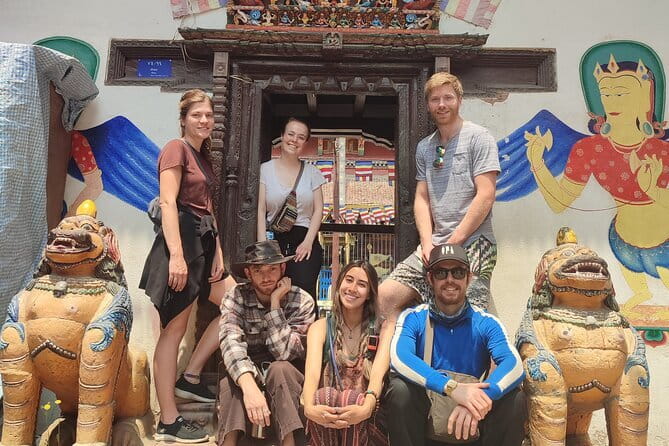
The meeting point is at Patan Dhoka, on Patandhoka Road in Lalitpur. The tour begins at 10:00 am and ends at Swotha Square. Since pickup and drop-off are not included, you need to make your own way to the start.
That arrangement suits an independent visit to Patan. The area is near public transportation, and the end point is only a few minutes from Patan Durbar Square. You can begin with the walking tour, then continue to the ticketed palace complex without having to cross town.
The timing gives you a useful morning outing, though the exact pace can vary. The stated duration is approximately two to two-and-a-half hours. Wear comfortable shoes, since the route uses narrow streets and courtyard paths rather than a single broad avenue.
A mobile ticket is provided, and confirmation comes at booking. The group can have up to 10 people, which is small enough for questions and for the guide to speak comfortably in enclosed courtyards. It is not a private tour, so expect to share the walk with other people.
Pimbahal: courtyards where faith meets daily life
The first main stop is Pimbahal. Here the focus shifts from famous monuments to the way traditional urban settlements hold spiritual and practical meaning at the same time.
Patan’s courtyards are more than pleasant open spaces. They can serve as routes, meeting places, ritual settings, and access points for surrounding homes. At Pimbahal, the guide discusses how local building patterns preserve indigenous knowledge and religious practice.
You will also see a Newar Buddhist monastery dating back many centuries. The point is not simply to admire old brick and woodwork. It is to understand how a monastery fits into the surrounding community and how Buddhist life remains connected to the town.
This is a good place to ask questions. Newar Buddhism has its own character, and the walk is designed to explain it in relation to Patan rather than treating Buddhism as one broad subject. You can also expect discussion of folklore and myths tied to the old settlement.
The stop lasts about 30 minutes and has no separate admission fee. That matters when you compare the $65 cost with a standard sightseeing ticket. You are paying mainly for interpretation and access to places you might pass without understanding, not for a long list of paid monuments.
Nyakhachowk and the details between major sights

From Pimbahal, the walk follows a smaller path toward Nyakhachowk. This section is especially useful if you enjoy architecture at street level. You will see falchaa, traditional resting shelters, ancestral shrines, and vernacular houses.
These details are easy to miss when you are hurrying toward a palace or a large temple. A falchaa may look like a simple public bench or pavilion, but it reflects the social life of the old town. An ancestral shrine can be small and easy to overlook, yet it helps show how family memory and religious custom occupy the same streets.
Nyakhachowk also contains one of the area’s important Buddhist monasteries. The guide connects the structure to the wider religious life of Patan and explains how old practices continue alongside modern ambitions.
This is where the tour’s focus on contemporary Nepal becomes important. You are not asked to think of Patan as frozen in the past. The walk considers how young Nepalis retain cultural norms while also engaging with modern values. That gives the old buildings a present-day meaning.
Allow about 30 minutes here. The setting is intimate, so a small group is a real advantage. With 10 people or fewer, you have a better chance of hearing the explanation and noticing details pointed out by the guide.
Same mountains, a completely different kind of day:
- Half day cooking class in Thamel kathmandu
★ 5.0 · 607 reviews - Everest Base Camp Trekking
★ 5.0 · 485 reviews - Nagarkot Sunrise View and Day Hiking from Kathmandu
★ 5.0 · 471 reviews - Kathmandu: Full Day 7 UNESCO Tour with Lunch – Private/Group
★ 5.0 · 415 reviews
Nag Bahal and the long reach of Patan’s art
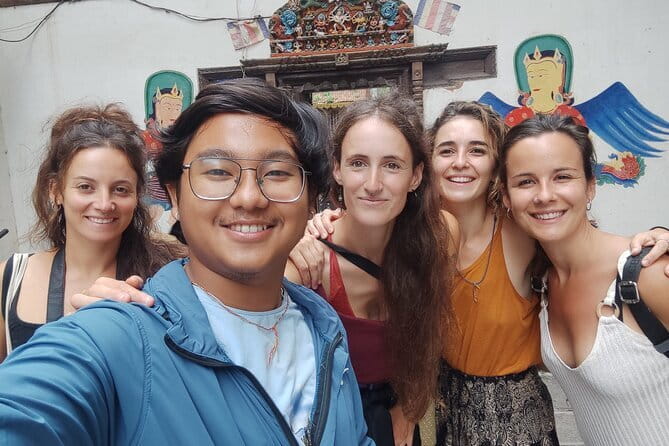
Nag Bahal, also written Nagbahaa, is one of the largest courtyards in old Patan. The open space gives the walk a change of scale after the tighter lanes and smaller courtyards.
The main subject here is the way global contact shaped local art. The guide discusses Greek influence and Hellenistic impressions in Buddhist and Hindu iconography. This is a useful reminder that Patan’s artistic traditions did not develop in isolation.
You do not need a background in art to benefit from this stop. The value lies in learning what to look for: forms, poses, decorative features, and images that reflect contact between distant cultures. The discussion also helps explain why Patan became so important for metalwork, woodcarving, and religious art.
The listed time at Nag Bahal is about 15 minutes. That is enough for an introduction, but not a full art-history class. If you want a long examination of individual sculptures or detailed photography time, this walk may feel brisk.
Still, the stop works well as a bridge between local folklore and the wider story of the Kathmandu Valley. It shows that old Patan was connected to broader trade and cultural routes, while keeping the focus on what you can see in the courtyard.
Swotha Square and your choice of what comes next
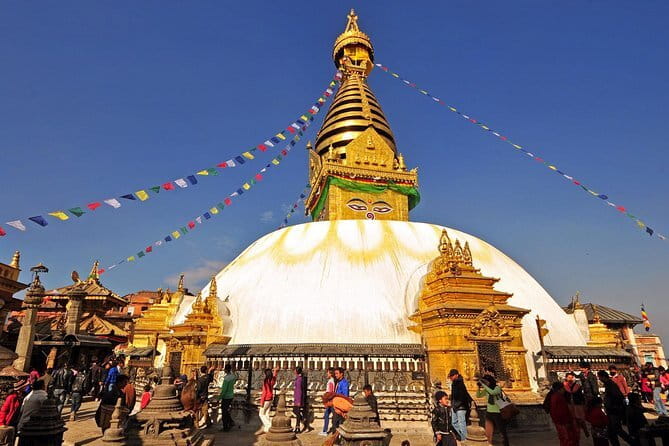
The walk ends at Swotha Square, a handsome area with temples, shrines, and tea shops. After the close lanes and courtyard stops, this is a comfortable place to slow down and decide how to spend the rest of your morning.
The guide can point you toward Patan Durbar Square, which is only a couple of minutes away. You visit that main palace complex independently, and it requires an extra admission fee. The museum inside the old palace is especially worth adding if you have the time.
This separation is both a drawback and a benefit. It is a drawback if you expected one paid tour to cover every major sight in Patan. You will need to budget separately for the square and museum, and you will not have a guide leading you through those exhibits.
It is a benefit if you want a quieter introduction before tackling the busiest monument area. The walking tour gives you context first. Then you can explore the palace complex at your own speed, rather than spending the entire outing following a guide from one headline sight to the next.
The nearby tea shops also make Swotha a practical finishing point. The tour does not include food or drinks, but you can pause there after the guided portion.
What the $65 price really buys you
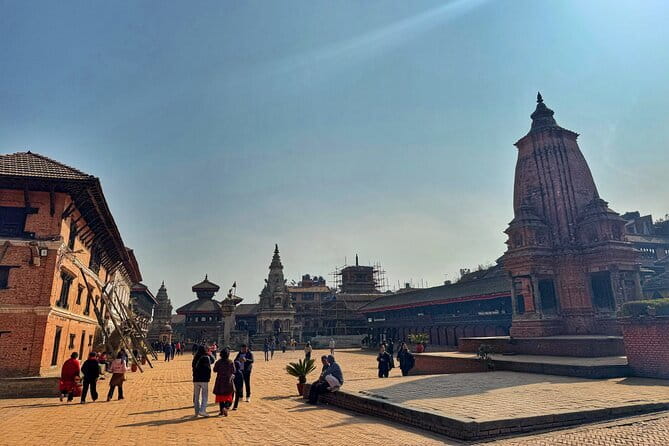
At $65, this is not the cheapest way to walk around Patan. There are no included admissions, no hotel transfer, and no meal. The price makes sense only if you want the local explanation that turns a series of courtyards into a readable part of Nepali society.
The group size helps the value. A maximum of 10 people gives the guide room to respond to questions and keeps the walk more personal than a large group circuit. The experience also covers several distinct settings: Pimbahal, Nyakhachowk, Nag Bahal, Swotha Square, and a highly regarded Buddhist monastic site described as having more than 4,000 ordained monks connected with its order.
The price is easiest to justify for a first visit to Patan, especially if you are curious about Newar traditions, Hindu and Buddhist practice, folklore, and architecture. If you only want to see the famous temples and palace courtyards, you may prefer to visit Patan Durbar Square on your own and spend the money on the museum ticket instead.
I would also factor in the guide’s role. Sandip’s explanations, humor, and attention are central to the experience. Without that human layer, the route would simply be a walk through attractive old streets. With it, the courtyards become evidence of how Patan’s communities live and remember.
Who will get the most from this walk
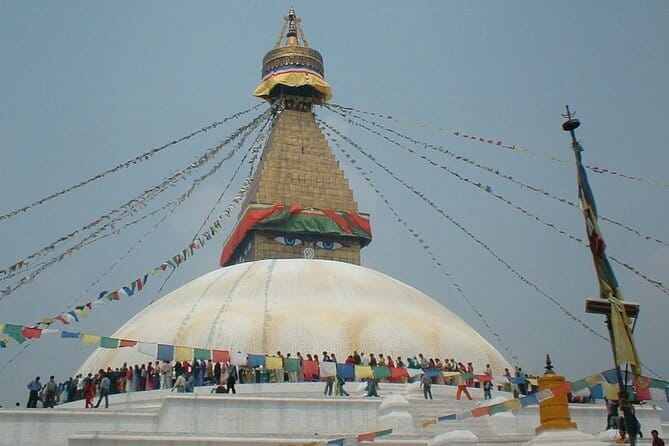
I would recommend this experience to you if you enjoy cultural context more than a checklist of monuments. It suits people who want to understand Kathmandu Valley society, not just photograph its temples.
It is also a good fit if you have already seen large religious complexes and want something more local in scale. The route focuses on ordinary urban spaces, old houses, small shrines, and courtyards that are easy to miss without guidance.
The walk should work for most people, and most participants can take part. Service animals are allowed. Still, you should be comfortable walking for up to two-and-a-half hours through narrow streets and uneven old-town spaces.
You may want a different plan if your main goal is the palace museum or an extended look at Patan Durbar Square. Those places are not part of the guided route. Add them afterward, or choose a separate experience that focuses on the main complex.
Practical details that affect your day
The tour operates with a mobile ticket, and booking confirmation is issued at the time of reservation. You arrange your own transport to Patan Dhoka, and there is no included pickup or drop-off.
The experience requires good weather. If rain or other poor conditions cause a cancellation, you are offered another date or a full refund. You can cancel for a full refund if you do so at least 24 hours before the 10:00 am start time. Changes or cancellations made later are not accepted, and the local start time controls the cutoff.
Plan extra time after Swotha Square if you want to visit the palace and museum. Since the tour lasts about two to two-and-a-half hours, an early afternoon finish is possible, depending on pace. The walk itself has no listed admission charges, but Patan Durbar Square is ticketed separately.
Should you book Folklore and Everyday Life in Ancient Patan?
Book it if you want Patan explained from the inside out. The strongest parts are the courtyard route, the attention to Newar Buddhist and Tantric Hindu practice, the discussion of folklore, and Sandip’s relaxed style. The walk gives you a better sense of how religious tradition and modern life share the same streets.
Skip it if you mainly want a guided visit to Patan Durbar Square, since that is specifically excluded. In that case, visit the palace complex independently and put the $65 toward admission and more time in the museum.
For many first-time visitors to Patan, the best plan is to do both: take this morning walk for context, then continue to the palace and museum from Swotha Square. That combination gives you the grand monuments and the quieter daily world around them.
FAQ
Where does the tour begin?
The tour begins at Patan Dhoka on Patandhoka Road in Lalitpur, Nepal.
What time does the tour start?
The stated start time is 10:00 am.
Where does the tour end?
The walk ends at Swotha Square, a few minutes from Patan Durbar Square.
Is Patan Durbar Square included?
No. Patan Durbar Square is not included in the guided tour. You can visit it independently after the walk, and extra admission fees apply.
How long does the experience last?
The walk lasts approximately two hours to two hours and 30 minutes.
What is included in the price?
An experienced local guide is included. Pickup, drop-off, and admission to Patan Durbar Square are not included.
How large is the group?
The experience has a maximum of 10 participants.
What happens if the weather is poor?
The experience requires good weather. If it is canceled for that reason, you will be offered a different date or a full refund. You can also cancel at least 24 hours before the start time for a full refund.
Just added around Kathmandu
- Private Half-Day Tour of Boudhanath and Pashupatinath Temples in Kathmandu★ 4.5 · 9 reviews
- Private Half-Day Tour of Kathmandu Durbar Square and Swayambhunath Temple★ 4.5 · 11 reviews
- Namobuddha Monastery Hiking Day Tour via Panauti from Kathmandu★ 5.0 · 15 reviews
- Private Full-Day Kathmandu City Tour★ 5.0 · 9 reviews
- Private Day Tour in Kathmandu Valley Rim with Bhaktapur Sightseeing★ 5.0 · 3 reviews
- Private Half Day Budhanilkantha Tour★ 5.0 · 6 reviews
- Private Day Tour: Patan and Bhaktapur from Kathmandu★ 4.5 · 6 reviews
- Private Day Tour – Sacred Journey to Namo Buddha★ 5.0 · 5 reviews
Kathmandu Tours, compared.

Private Kathmandu Sightseeing Tour | UNESCO World Heritage sites
Read our review →
Everest Base Camp Helicopter Tour landing at Everest View Hotel
Read our review →

Nagarkot Sunrise View and Day Hiking from Kathmandu
Read our review →
Full Day 7 UNESCO Tour with Lunch – Private/Group
Read our review →