Reviewed · TOURS
8 Days Tour in Nepal (Accommodation at 5 Star Hotel)
Nepal packs a lot into eight days here: Kathmandu’s sacred monuments, Chitwan’s jungle and river, and Pokhara’s mountain views. The route gives you culture first, wildlife in the middle, and a gentler lakeside finish.
I like the strong variety and the high-comfort hotel plan. I also like that the owner, Mani, is known for flexible communication, while guides such as Sanjaya and drivers including Binod and Ram have handled past trips. The catch is the road travel. Nepal’s highways can be rough, and private transportation is not included in the $1,400 price.
Key points to know before booking
- Four major stops in eight days: Kathmandu, Chitwan, Pokhara, then Kathmandu again.
- A full Kathmandu sightseeing day: Boudhanath, Patan Durbar Square, Pashupatinath, and Swayambhunath are all included.
- Wildlife without a long trek: Canoeing, a jungle walk, a jeep safari, and a Tharu village visit fill the Chitwan section.
- Pokhara’s best-known sights: Phewa Lake, Sarangkot sunrise, Devi’s Fall, Gupteswar Cave, and the World Peace Pagoda.
- Five-star accommodation: This adds comfort after long sightseeing and road days, though transport costs extra.
- Small print that matters: Pickup is offered, the group can reach 30 people, and six breakfasts, two dinners, and two lunches are included.
A fast, polished introduction to Nepal
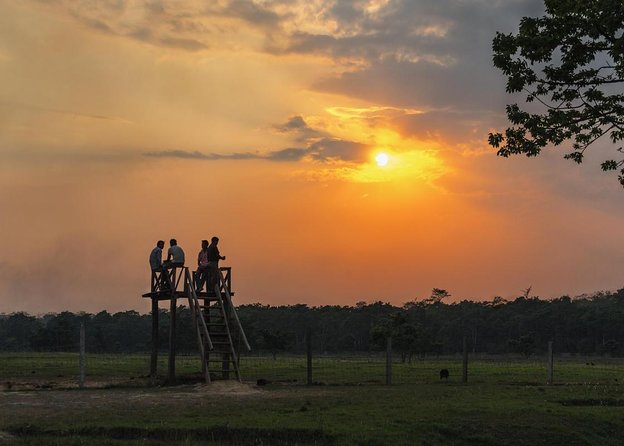
This tour is built for you if Nepal sounds appealing but planning every hotel, transfer, guide, and sightseeing stop feels like work. In eight days, you see the country’s main tourist circuit rather than spending the whole holiday in one city or committing to a trek.
The sequence makes sense. Kathmandu gives you temples and living religious traditions. Chitwan changes the mood with river excursions and wildlife. Pokhara brings open lake views and mountain scenery. You return to Kathmandu for one last evening before your flight.
The five-star hotel promise matters here. This is not a bare-bones backpacker trip, and the price reflects a more comfortable travel style. Still, ask exactly which hotels are being used and how private transportation will be arranged, since that cost is listed separately.
Other Kathmandu days worth booking alongside this:
- Everest Base Camp Trek – 14 Days
★ 5.0 · 1,499 reviews - Private Kathmandu Sightseeing Tour | UNESCO World Heritage sites
★ 5.0 · 756 reviews - Everest Base Camp Helicopter Tour landing at Everest View Hotel
★ 5.0 · 668 reviews
Day 1: Airport arrival and an easy first look at Thamel
Your trip begins with pickup at Tribhuvan International Airport. You are taken to the hotel, and the remaining time is left open for a short walk around Thamel, Durbarmarg, or nearby Kathmandu streets.
That open first afternoon is useful. Kathmandu traffic, airport formalities, and a long flight can drain your energy, so a short local walk is better than forcing in another major sight. Thamel gives you shops, cafés, and a quick first taste of the city, while Durbarmarg offers a more polished shopping and dining area within walking distance.
The plan lists about two hours for this first outing, with no admission charge. Treat it as a soft landing, not a formal guided tour. Your hotel location will make a difference, so confirm how close it is to these areas before arrival.
Day 2: Four major monuments around Kathmandu Valley
The second day is the cultural heart of the trip. You visit four important religious and historic places, each with a different mood.
Boudhanath Stupa
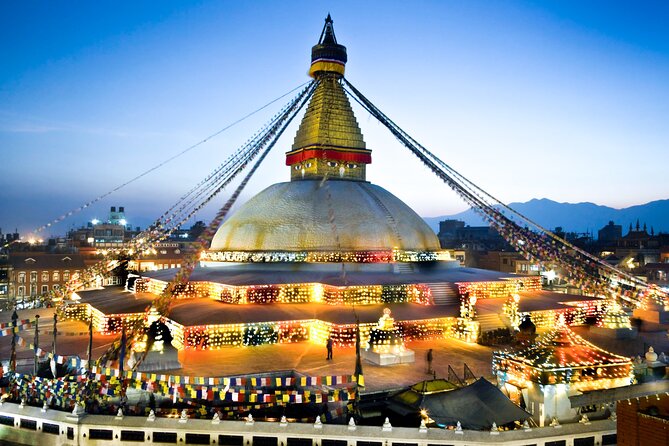
Start with Boudhanath, the great white dome ringed by prayer flags and Buddhist imagery. The setting is peaceful, but it is also a working religious center, not simply a photo stop.
You have about an hour here. Look closely at the painted eyes on the stupa and the activity around its base. Your guide can add meaning to the symbols, which is one reason a guided visit helps. The admission ticket is included.
Same mountains, a completely different kind of day:
- Half day cooking class in Thamel kathmandu
★ 5.0 · 607 reviews - Everest Base Camp Trekking
★ 5.0 · 485 reviews - Nagarkot Sunrise View and Day Hiking from Kathmandu
★ 5.0 · 471 reviews - Kathmandu: Full Day 7 UNESCO Tour with Lunch – Private/Group
★ 5.0 · 415 reviews
Patan Durbar Square
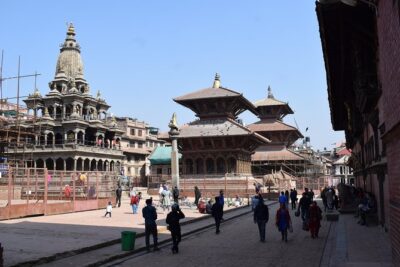
Patan Durbar Square gets two hours, and that time is well used. Within a compact area, you can see major Hindu temples, Buddhist courtyards, Krishna Temple, the Golden Temple, Mahabuddha Temple, Hiranya Varna Mahavihar, the Golden Window, and Patan Museum.
The appeal is the close concentration of carved wood, brickwork, courtyards, and shrines. You are not spending the day driving between isolated monuments. You are walking through an old urban center where religious buildings and ordinary city life sit side by side.
This is also one of the days when a guide’s ability matters most. Sanjaya is one guide associated with the company’s Nepal tours, but guide assignment can vary. If you want architectural or religious context, ask for a guide who can explain the differences between the Hindu and Buddhist sites rather than simply pointing them out.
Pashupatinath Temple
Pashupatinath occupies the banks of the Bagmati River and includes a broad collection of temples, ashrams, images, and inscriptions. The visit lasts about two hours.
This is a serious religious place, so approach it with respect. Your guide leads you through the complex and explains what you can see. The site is especially valuable for understanding Hindu practice in Nepal, but it may feel more intense and less relaxed than the quieter Boudhanath visit.
Swayambhunath
Finish at Swayambhunath, often called the Monkey Temple. The hilltop setting gives you views over Kathmandu, while the complex contains a large stupa, Buddhist statues, chaityas, temples, and painted religious images.
Two hours allows time for the religious buildings and the hilltop outlook. Be ready for steps and uneven surfaces. The day contains four major stops, so the pace is full, but not wasteful. Admission is included at each listed site.
Day 3: The road from Kathmandu to Chitwan
Day 3 is mainly a transfer day. As you leave Kathmandu Valley, the road passes through hill country with views of many ridges and, when conditions cooperate, distant mountains.
The scenery helps break up the drive, but you should not treat this as a quick hop. The road section is one of the tour’s practical drawbacks. A recent trip account specifically praised the service while also noting that Nepal’s roads are not very good. That is useful advice: carry water, keep a small day bag within reach, and expect the journey to take patience.
After reaching Chitwan, you have time to rest before a Rapti riverside walk, a Tharu cultural show, and a sunset view. The listed timing for the arrival stop is unusually brief, but the description makes clear that the afternoon and evening include several activities.
The change from Kathmandu’s temples to Chitwan’s greenery is one of the best features of the route. You move from dense city streets to a quieter area near the national park without needing to plan the transition yourself.
Day 4: Canoes, jungle paths, and a jeep safari in Chitwan
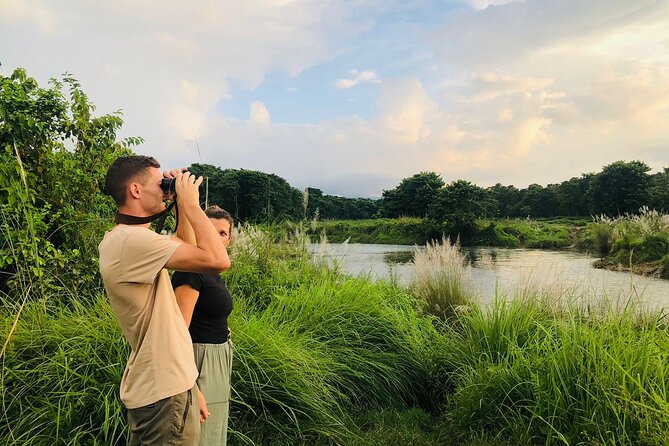
Chitwan gets the fullest activity day. It begins on the Rapti River, where canoeing gives you a low, close view of the water and riverbanks. Crocodiles and other wildlife may be visible, though no wildlife sighting should be treated as guaranteed.
The canoe outing lasts about 45 minutes and has no separate admission charge listed. Keep your camera ready, but also pay attention to the quiet. A river trip is valuable because it shows you Chitwan from a different angle than the road or forest trails.
Next comes a jungle walk of about three hours. You walk through forest near the animals’ home area, which makes this more active and direct than a drive. Follow the guide’s instructions closely and wear practical footwear. The supplied details do not promise particular animal sightings, so think of this as a chance to read the forest and look for wildlife rather than a guaranteed viewing session.
The schedule then includes Sauraha and the Elephant Breeding and Training Center for about an hour. The center is part of the planned visit, but the description does not give further detail about its current programs. If elephant welfare is important to you, ask the operator what you will observe and how the center handles the animals before confirming.
A 30-minute visit to a Tharu village follows. This adds a human side to Chitwan, showing the daily life and activities of the Tharu community. It is a short stop, so it offers an introduction rather than a long community visit.
The day ends with an open-top jeep safari lasting about four hours. This is the main wildlife outing and gives you the best chance to cover more ground inside the park. The vehicle makes the experience easier than walking for long distances, but it also makes the day quite full when combined with canoeing and the jungle walk.
If you prefer a relaxed holiday, Day 4 may feel packed. If you want a clear look at Chitwan without adding a multi-day jungle stay, it is a productive use of time.
Day 5: Rivers on the way to Pokhara, then Phewa Lake
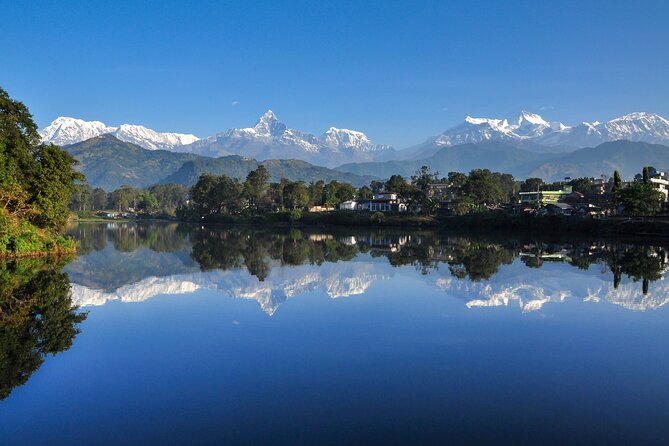
The next transfer takes you from Chitwan to Pokhara. Along the way, the route crosses or follows three notable rivers: the Trisuli, Marsyangdi, and Daraudi.
Again, the road is part of the experience and part of the cost in energy. You are trading convenience for coverage. Rather than choosing between Chitwan and Pokhara, you see both, but you should expect a substantial portion of the day to be spent in the vehicle.
Once in Pokhara, you visit Phewa Tal, the lake that defines the city. About two hours are set aside for the lake and boating, with admission included.
This is a good contrast to Chitwan. The river there is tied to wildlife and forest; Phewa is for open views, water, and a slower evening. If you have energy, use the time to enjoy the lakeside rather than treating the boat ride as just another box to check.
Day 6: Sarangkot sunrise and Pokhara’s southern sights
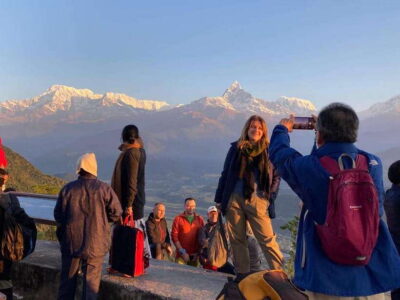
Day 6 begins early at Sarangkot, a hilltop viewpoint above Pokhara. The sunrise visit lasts about an hour and may reveal Annapurna, Manaslu, and Pokhara Valley.
The word may matters. Mountain views depend on weather and visibility, and the tour does not promise a clear Himalayan panorama. Still, the early start is worthwhile because Sarangkot is the trip’s best planned chance for a broad mountain view. Bring a warm layer if needed, since the visit takes place in the morning.
After Sarangkot, you visit Devi’s Fall for about 30 minutes. The water comes from Phewa Lake, passes through a narrow gorge, and continues toward the Seti River. It is a short stop, but the unusual underground route makes it more than a standard waterfall visit.
Gupteswar Gupha follows for an hour. The cave is described as Nepal’s longest, at 2,950 meters, and was discovered in the 16th century. The tour does not state how far into the cave you go, so ask your guide about the walking conditions and the portion included.
The final stop is the World Peace Pagoda, reached after a short hike from the city. You get the white pagoda itself and a wide view toward the lakeside from one point. The visit lasts about two hours.
This is another active day, though the walking is broken into manageable sections. The combination of sunrise, waterfall, cave, and pagoda gives you variety, but the early start followed by several stops may leave you ready for a quiet evening.
Day 7: Returning to Kathmandu and Durbarmarg
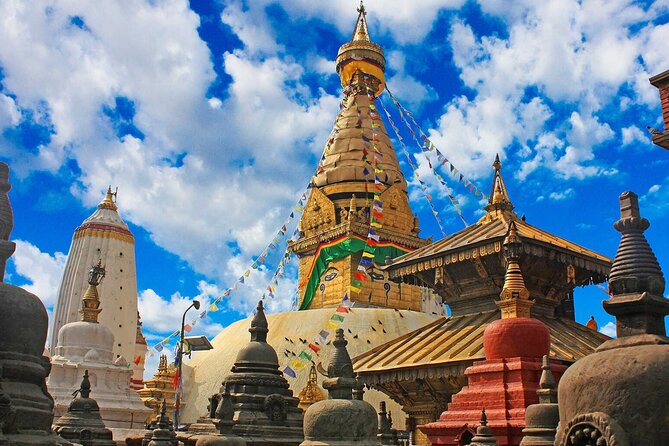
You return to Kathmandu and have time to walk around Durbarmarg. The area is known for clubs, pubs, massage centers, shopping, and views of Narayanhiti Palace.
The stop lasts about an hour and is free. It is best viewed as flexible free time after the transfer, not a major sightseeing block. If your return journey runs late, this is one part of the schedule most likely to be shortened.
I like having this final evening open. The earlier days are structured, and a free hour lets you shop, rest, or take one last walk without another temple visit. Keep purchases modest if your luggage is already full.
Day 8: Airport transfer and an easy finish
On departure day, staff take you to Tribhuvan International Airport according to your flight time. That is a useful final service, especially after a trip with several hotel changes and road transfers.
Confirm your flight time and pickup details in advance. The package includes airport pickup at the start, but private transportation is listed as not included, so ask clearly which transfers are covered by the operator and which you must pay for separately.
What the $1,400 price really buys
At $1,400 per person, this is not the cheapest way to see Nepal. The value comes from the range of places covered and the five-star accommodation, not from low-cost transport.
You receive six breakfasts, two dinners, and two lunches. Many sightseeing admissions are included, including the major Kathmandu sites, Chitwan activities, boating at Phewa Lake, Sarangkot, and Pokhara’s main attractions. That reduces the number of small payments you need to manage.
The missing piece is private transportation. Since Kathmandu to Chitwan, Chitwan to Pokhara, and Pokhara back to Kathmandu are essential parts of the route, transportation can affect the final cost quite a bit. Get a written breakdown before paying so you know if vehicles, fuel, drivers, and transfers are separate.
The maximum group size is 30. That is not a small private tour, despite the operator’s private day-tour branding. A group of 30 can slow down boarding, entrances, and meals. On the other hand, the included guide support may make the busy sightseeing days easier than handling them alone.
The company’s service record includes positive comments about clean hotels, good organization, friendly communication, and flexible arrangements. Mani, the owner, is described as easy to communicate with. Sanjaya is named as a guide, while Binod and Ram are named as drivers on different trips. These names are useful when confirming your booking, but they do not guarantee who will be assigned to you.
Who will get the most from this tour
I would choose this trip if you want to see Nepal’s main highlights without trekking. It suits first-time visitors who want temples, wildlife, lake scenery, and mountain viewpoints in one trip.
It also works well for families and small groups that value hotel comfort. The itinerary has enough variety to keep a mixed group interested, and the operator has arranged trips for groups of four, five, and ten people in the past.
I would hesitate if you want long, quiet stays in each place. Kathmandu gets one full sightseeing day, Chitwan gets roughly two days, Pokhara gets two nights of activity, and the route includes long road transfers. This is a sampler of Nepal, not a slow study of one region.
I would also think twice if you expect a fully private vehicle to be included in the advertised price. Ask before booking. That one detail can change the value calculation.
Should you book the eight-day Nepal tour?
Book it if your priority is breadth, comfort, and organized sightseeing. You will see Nepal’s major cultural sites, have a proper Chitwan wildlife program, and get Pokhara’s strongest scheduled views without building the trip piece by piece.
Skip it if road travel bothers you, if you want guaranteed mountain views, or if you need a small private group with every transport cost already covered. Before confirming, ask for the hotel names, the vehicle plan, the guide assignment, and the full price including transportation.
The cancellation rule is generous enough for normal planning: cancel at least three full days before the local start time for a full refund. Poor weather may lead to a new date or full refund. The tour starts at 9:15 am, offers mobile tickets and pickup, allows service animals, and says most people can participate.
FAQ
How long does the Nepal tour last?
The experience lasts approximately eight days. It begins with airport pickup in Kathmandu and ends with a transfer to Tribhuvan International Airport on Day 8.
What destinations are included?
The route covers Kathmandu, Chitwan National Park, and Pokhara, returning to Kathmandu before departure.
Is accommodation included?
Yes. The package specifies accommodation at five-star hotels. Hotel names are not provided, so confirm the exact properties before booking.
What meals are included?
Six breakfasts, two dinners, and two lunches are included.
Is transportation included in the $1,400 price?
Private transportation is listed as not included. Pickup is offered, but you should ask the operator which transfers are covered and what transport costs extra.
How large can the group be?
The tour can have a maximum of 30 participants. It begins at 9:15 am.
Just added around Kathmandu
- Private Half-Day Tour of Kathmandu Durbar Square and Swayambhunath Temple★ 4.5 · 11 reviews
- Namobuddha Monastery Hiking Day Tour via Panauti from Kathmandu★ 5.0 · 15 reviews
- Private Half-Day Tour of Boudhanath and Pashupatinath Temples in Kathmandu★ 4.5 · 9 reviews
- Private Full-Day Kathmandu City Tour★ 5.0 · 9 reviews
- Private Day Tour in Kathmandu Valley Rim with Bhaktapur Sightseeing★ 5.0 · 3 reviews
- Private Half Day Budhanilkantha Tour★ 5.0 · 6 reviews
- Private Day Tour: Patan and Bhaktapur from Kathmandu★ 4.5 · 6 reviews
- Private Day Tour – Sacred Journey to Namo Buddha★ 5.0 · 5 reviews
Tours, compared.
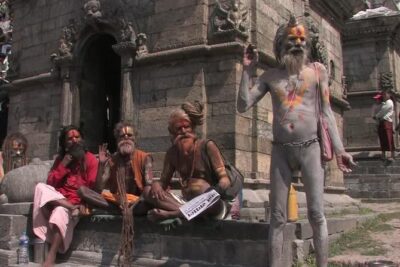
Private Kathmandu Sightseeing Tour | UNESCO World Heritage sites
Read our review →
Everest Base Camp Helicopter Tour landing at Everest View Hotel
Read our review →
Full Day 7 UNESCO Tour with Lunch – Private/Group
Read our review →
Private Bhaktapur and Nagarkot Day Tour From Kathmandu
Read our review →
Full Day Top 4 UNESCO Tour with Lunch – Private/Group
Read our review →