
Reviewed · POKHARA TOURS
Pokhara in 5 Hours: Lake, Museum, Cave, Falls & Pagoda Hill
Pokhara’s best short city tour packs water, mountains, religion, history, and a little underground mystery into one brisk outing. You move from a boat and island temple on Fewa Lake to a mountaineering museum, then on to Devi’s Fall, Gupteshwor Mahadev Cave, and the hilltop Peace Pagoda.
I like the private car and driver-guide, which lets you keep the pace comfortable and avoid sorting out Pokhara’s spread-out sights alone. I also like the range of stops: this is not just a viewpoint run, but a useful first look at the city’s faith, mountain culture, and natural attractions.
The main catch is simple: entrance fees are extra, and five hours leaves little room for long meals, shopping, or extended time at any one stop. The Peace Pagoda also involves roughly 200 steps, so you should plan your energy accordingly.
Key points at a glance
- Five major sights in four to five hours: Fewa Lake, Barahi Temple, the International Mountain Museum, Devi’s Fall, Gupteshwor Mahadev Cave, and Peace Pagoda.
- Private transport keeps the route flexible: Only your group participates, with an air-conditioned vehicle and bottled water provided.
- Pujan Thapa and Bidur have earned special praise: Both guides are noted for being punctual, courteous, helpful, and flexible.
- The mountain museum adds real depth: You’ll see exhibits on mountaineering, mountain culture, and famous climbers, including George Mallory.
- Expect extra costs at several stops: Museum, waterfall, and cave admission tickets are not included in the $40 price.
- The Peace Pagoda is rewarding but physical: The hilltop monument offers broad Annapurna views, but the final approach can be tiring.
A smart first look at Pokhara in five hours
This tour works best as an orientation to Pokhara rather than a slow, full-day exploration. The route links several of the city’s main sights, and the private vehicle matters because these places are spread across different parts of town.
You pay $40 per person for private transportation, a driver-guide, bottled water, and pickup. That is a fair price when you are sharing the cost with a small group and want a simple route through several paid and unpaid sights. It becomes less of a bargain if you are traveling alone, especially after adding entry tickets and a tip for the guide.
The schedule gives about 45 minutes at most stops and one hour at the International Mountain Museum. That is enough to see the key features and take photographs, but not enough for a long museum visit or a leisurely stay beside the lake.
The experience is private, so you are not tied to the pace of strangers. That also means you can ask questions as you go. Pujan Thapa is specifically praised for his punctuality, courtesy, patience, and flexibility. Bidur also received warm praise for guiding the day and helping shape a smooth route.
A few more Pokhara trips to weigh up
- Pokhara in 5 Hours: Lake, Museum, Cave, Falls & Pagoda Hill
★ 5.0 · 10 reviews - Private Kathmandu UNESCO Heritage Sites with Narayanhiti Museum
★ 5.0 · 6 reviews
Barahi Temple and the first look across Fewa Lake
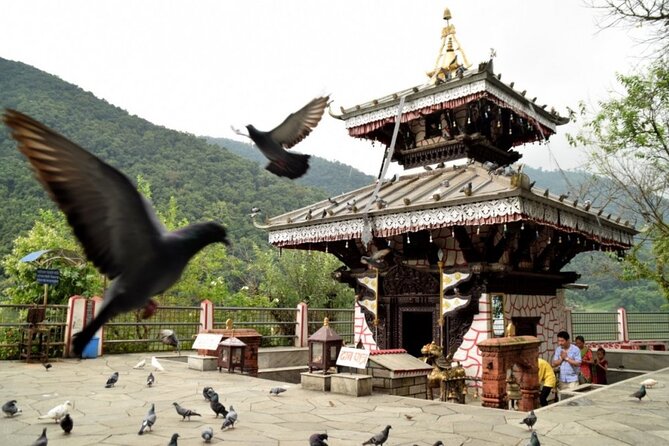
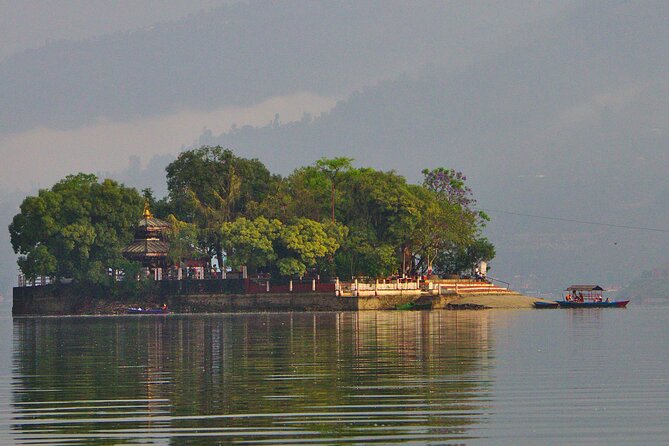
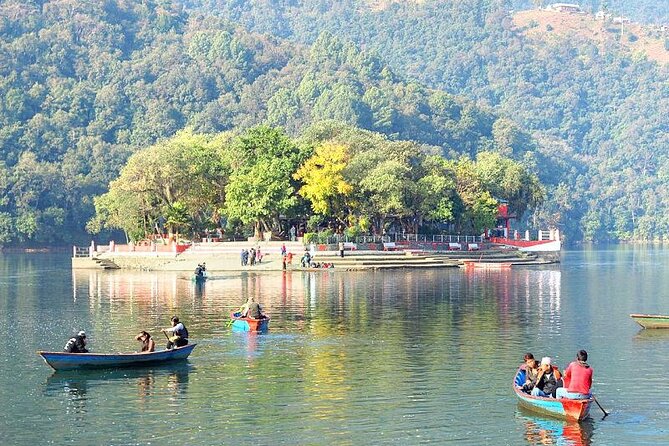
Your first stop is Barahi Temple, also called the Lake Temple or Tal Barahi Temple. It sits on a small island in Fewa Lake and is dedicated to a form of Durga. At around 45 minutes, this portion gives you a quick taste of Pokhara’s religious life and its most famous body of water.
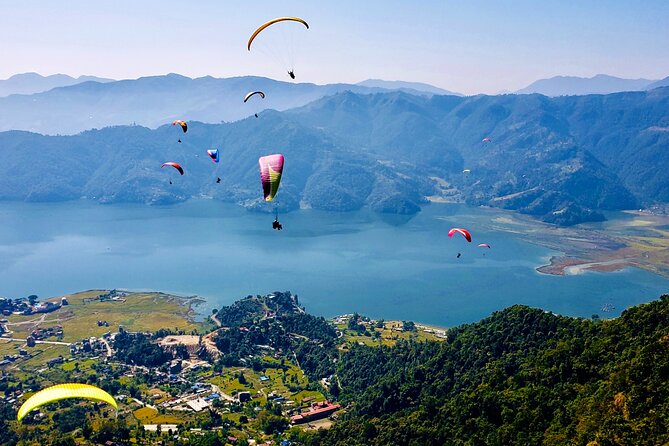
The lake setting is the real draw. You get the chance to take a boat ride and look toward the Annapurna mountain range from the water. Clear mountain views are never guaranteed, but the setting gives you one of Pokhara’s classic photo opportunities when the sky cooperates.
Barahi Temple is more than a scenic stop. It is described as the most important religious monument in Pokhara, so your guide can help place the small island shrine in the wider religious life of the city. The temple itself is compact, and the visit is best approached as a short cultural stop combined with time on Fewa Lake.
The tour description includes a boat ride, but the exact length and arrangement are not specified. Ask your guide how the boat portion fits into the 45-minute visit. If you want an especially calm lake experience, this is the place where a few extra minutes would be most useful, though the tight schedule may not allow much flexibility.
One hour with Nepal’s mountaineering story
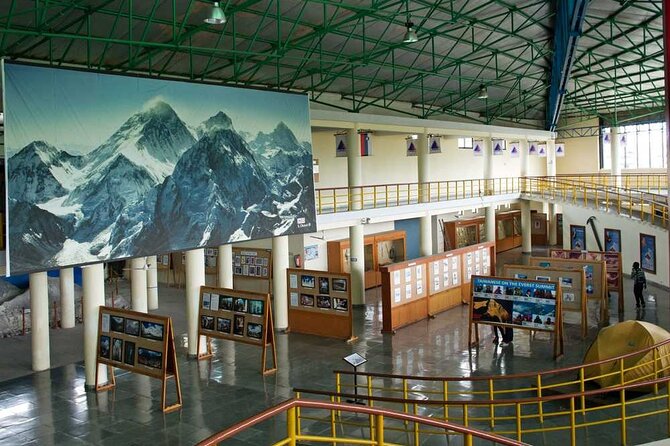
The International Mountain Museum is the longest stop, with about one hour set aside. That is a good decision. A quick photograph at a viewpoint tells you little about Nepal, while this museum gives context to the people, equipment, cultures, and expeditions connected with the Himalayas.
The museum focuses on mountain culture, history, and mountaineering in Nepal. You can expect exhibits that explain the world of high-altitude climbing and the role of major mountaineers. The terrace also provides mountain views, adding a visual link between the displays and the peaks they describe.
A particularly useful detail comes from the guiding. Pujan Thapa knew where to find George Mallory’s picture in the museum, which shows the benefit of having someone who can point you toward specific displays rather than simply dropping you at the entrance. If mountaineering is a major reason for visiting Nepal, you may want to use the full hour here.
The admission ticket is not included. Keep that in mind when comparing this tour with a cheaper car hire or an informal taxi arrangement. The museum is where the driver-guide service has the greatest educational value, since a good guide can help explain what you are seeing.
Devi’s Fall, where the water disappears underground
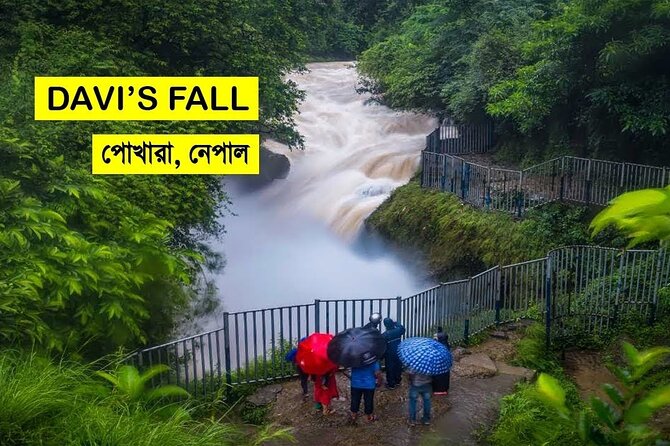
Devi’s Fall is a waterfall in Pokhara’s Kaski District. The water reaches the bottom and then forms an underground tunnel. The tunnel is described as roughly 500 feet long and about 100 feet below ground level, giving the waterfall an unusual feature beyond the drop itself.
You have about 45 minutes here. That should allow time to see the falls, take photographs, and listen to an explanation from your guide. The stop is not designed for lingering beside the water, and the tour does not include a meal or a long break at the site.
Water levels and the visual force of a waterfall can vary, so keep your expectations sensible. The attraction is the combination of falling water and the underground channel, not simply a broad scenic overlook. Your guide can help you understand where the water goes after it leaves the visible part of the falls.
Admission is extra. Since several stops require separate tickets, the $40 price is not your total spending for the day. Bring some room in your budget for the entrance fees and personal expenses.
Same mountains, a completely different kind of day:
- ZipFlyer Nepal – The World’s Steepest Zip-line
★ 5.0 · 608 reviews - Bungee Pokhara by HighGround Adventures
★ 5.0 · 366 reviews - From Pokhara: Sarangkot Sunrise Himalayas Tour
★ 4.7 · 218 reviews - ATV Adventure Tour in Pokhara, Nepal
★ 5.0 · 194 reviews
Gupteshwor Mahadev Cave and the link to the falls
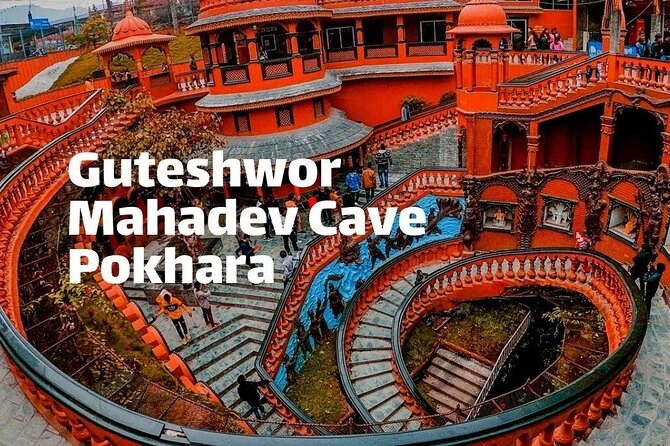
Gupteshwor Mahadev Cave is directly opposite Devi’s Fall, making this one of the most logical pairings on the route. The water from the falls passes through the cave, linking the two attractions in a way that gives the second stop more meaning.
The cave is described as mysterious and mystical, and it is also a major attraction in Pokhara. Its religious importance comes through its connection to Mahadev, a name associated with Shiva. This is a place where natural features and Hindu belief meet, so it helps to approach it as both a cave visit and a religious site.
The scheduled time is about 45 minutes. You should have enough time to enter, see the notable parts, and learn about the connection with Devi’s Fall. The cave is not a substitute for a full walking excursion, and you should not expect the same open views you get at the lake or Peace Pagoda.
An admission ticket is not included. Since the cave is opposite the waterfall, there is little wasted driving between these two stops. That efficient pairing is one reason the five-hour route can cover so much ground.
Reaching Pokhara’s Peace Pagoda
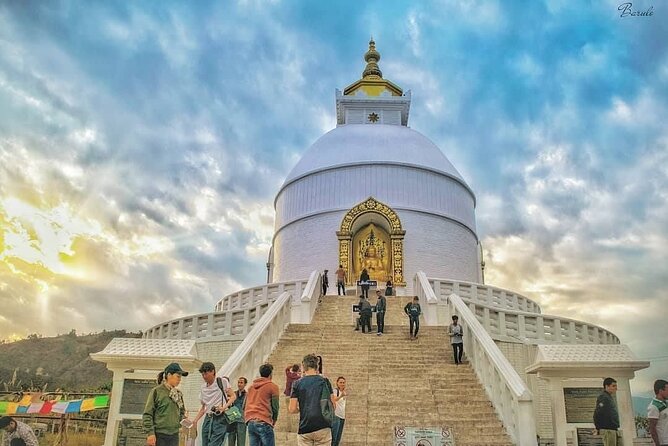
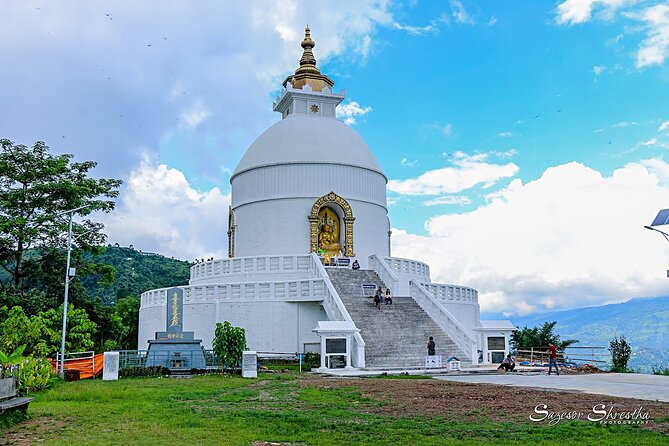
The final stop is Pokhara Shanti Stupa, usually called the Peace Pagoda. This Buddhist pagoda-style monument sits on Anadu Hill in the former Pumdi Bhumdi village area of Kaski District. It was built by Nippo, a Japanese Buddhist organization, as part of a wider message of world peace.
The hilltop setting is the reward. From here, you can look across Pokhara toward the Annapurna Range and take in a much broader view than you get from the city streets. The pagoda itself is also a calm place to pause after the busier sequence of sights.
The physical effort is worth noting. One guide was praised for patience when a visitor struggled with the roughly 200 steps to the Peace Temple. That detail tells you what the final stop can demand. The exact walking conditions are not specified, but the steps alone make this a stop where comfortable shoes and a steady pace make sense.
You have around 45 minutes here, which is enough for the climb, a look around the monument, and photographs if you move steadily. If you find the steps difficult, tell your guide early. The private format gives the group a better chance of adjusting the pace than a large shared excursion would.
The stop itself has free admission. The cost here is mainly your time and energy.
What the private format changes
The phrase private tour matters in this case. Only your group participates, and the vehicle is reserved for your route. That gives you a more personal day than a standard coach outing, especially when the timetable includes five different attractions.
Your driver also serves as your guide. This arrangement can work very well when the driver has strong local knowledge, as Pujan Thapa and Bidur appear to have done. Pujan was praised for knowing museum details, being patient on the Peace Pagoda steps, and adjusting the plan when needed. Bidur was praised for guiding the day and helping make the driving smooth.
There is one point to keep in mind. A driver-guide may not provide the same depth as a specialist museum guide or a dedicated cultural guide. The strongest value here is practical local knowledge, route planning, and a useful explanation at each stop.
The tour includes an air-conditioned vehicle and bottled water. Those are modest inclusions, but they matter during a compact sightseeing day with several vehicle transfers and walks. Pickup is offered, though the supplied details do not specify the exact pickup area or time, so confirm those details when booking.
How the $40 price measures up
At $40 per person, the tour is priced as a convenient private sightseeing package rather than a bare taxi ride. You receive private transportation, an air-conditioned vehicle, bottled water, and a driver-guide for four to five hours.
The value improves as your group grows, since the service is private and group discounts are offered. A couple or family can spread the vehicle and guide cost across several people. A solo visitor pays more per person for the same setup, though the convenience may still matter if you have only one free morning or afternoon.
Budget separately for admission tickets at the International Mountain Museum, Devi’s Fall, and Gupteshwor Mahadev Cave. Personal expenses and a guide tip are also not included. One useful point is that these costs are disclosed clearly, so you can calculate the real price before setting off.
Compared with arranging each stop yourself, the tour saves you the work of building the route and finding transport between distant sights. Compared with a slow private day, it gives you less time at each place. I would call it good value for a first visit, especially if you want a broad introduction without committing a full day.
Who will get the most from this route
I would choose this tour if you have limited time in Pokhara and want to see the major city sights in one organized outing. It is especially useful after arriving in town, before a flight, or during a short stay when you want more than a lake walk.
It also suits you if you prefer a private vehicle to public transport and want someone else to handle the route. Most people can participate, and service animals are allowed. The activity is near public transportation, although the tour itself provides private transport.
You should think twice if you want a slow cultural day, a long boat outing, or extended time at the museum. The schedule is well packed, and the Peace Pagoda steps may be tiring if walking uphill is difficult.
For families or small groups, the private format is a strong point. You can share the day, control the pace to some degree, and ask the guide to explain the stops that interest you most. Group discounts may improve the price, but the details are not provided.
Practical ways to make the five hours work
Wear shoes suited to walking and steps, especially for Gupteshwor Mahadev Cave and Peace Pagoda. Keep your camera ready at Fewa Lake and the stupa, but leave enough time to listen and look rather than turning every stop into a quick photograph.
Ask about the boat ride at Barahi Temple and confirm which entrance fees you should pay at each site. Since admission is not included, knowing the extra cost before departure will make the day easier.
If the mountain museum interests you, tell your guide. Pujan Thapa’s ability to locate George Mallory’s photograph shows how useful a specific request can be. A guide can often make a one-hour museum visit more focused.
If you are concerned about the Peace Pagoda climb, mention it at the start. The private setup gives your guide more room to be patient, as Pujan was with a visitor who struggled on the steps.
The tour can also leave a little time for shopping if the route moves efficiently. One account of the day included a detour to Helping Hands, where quality goods are made by people with disabilities, plus lunch on a hilltop. Those additions are not guaranteed parts of the tour, so treat them as possible examples of flexibility rather than promised stops.
Should you book Pokhara in five hours?
Book it if you want a well-rounded first look at Pokhara with private transport and a local driver-guide. The route gives you a lake, temple, museum, waterfall, cave, and mountain viewpoint in one manageable half-day.
The strongest reasons to choose it are the private format, the efficient route, and guides such as Pujan Thapa and Bidur, who bring courtesy, patience, and useful local knowledge. The main limits are the extra entrance fees, the short visits, and the physical effort at Peace Pagoda.
I would not choose it for a relaxed day beside Fewa Lake or a specialist mountaineering visit. For a short stay, though, $40 per person is a sensible way to cover Pokhara’s main sights without spending your limited time arranging transport.
FAQ
How long does the Pokhara tour last?
The tour lasts approximately four to five hours.
What sights are included?
The route includes Barahi Temple on Fewa Lake, the International Mountain Museum, Devi’s Fall, Gupteshwor Mahadev Cave, and Pokhara’s Peace Pagoda.
Is the tour private?
Yes. Only your group participates in the private tour or activity.
Is hotel pickup available?
Pickup is offered. The exact pickup details are not provided, so confirm the location and time when booking.
Is transportation included?
Yes. Private transportation in an air-conditioned vehicle is included.
Is a guide included?
Yes. A friendly driver-guide is included. Pujan Thapa and Bidur are named guides associated with the experience.
Are entrance tickets included in the price?
No. Entry tickets for the paid attractions are not included. Personal expenses are also separate.
Is the boat ride at Fewa Lake included?
The tour includes a boat ride as part of the Fewa Lake and Barahi Temple visit, but the available details do not specify its exact length or any separate cost.
Can I cancel for a full refund?
Yes. You can receive a full refund if you cancel at least 24 hours before the experience start time. Cancellations or changes made within 24 hours are not refunded or accepted.
Just added around Pokhara
- Pokhara: Pokhara Highlights Tour by Bus★ 3.6 · 10 reviews
- Discover Pokhara in Style: Private Vehicle Service with Driver★ 5.0 · 5 reviews
- Annapurna Base Camp Trek from Pokhara and Kathmandu★ 5.0 · 7 reviews
- 4 Day Mardi Himal Base Camp Trek from Pokhara★ 5.0 · 18 reviews
- 7-Day Trek to Annapurna Base Camp from Pokhara★ 5.0 · 12 reviews
- 6 days Annapurna Basecamp Trek★ 5.0 · 16 reviews
- Beautiful Sarankot Sunrise with Full Day Sightseeing in Pokhara★ 4.5 · 3 reviews
- Round The Phewa★ 4.5 · 8 reviews
Pokhara Tours, compared.
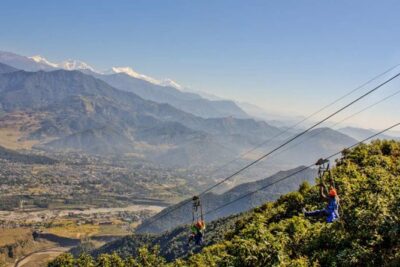
ZipFlyer Nepal – The World’s Steepest Zip-line
Read our review →

Full-Day Tibetan Cultural Tour to Tibetan Settlements Pokhara
Read our review →
Full-Day Sharing Bus Tour on 7 Iconic Destination
Read our review →
4-Day Ghorepani, Poonhill & Ghandruk Mountain Trek
Read our review →Browse the lists this tour appears in