
Reviewed · SARANGKOT SUNRISE TOURS
The Best of Pokhara: Full-Day Private Tour with Sarangkot Sunrise
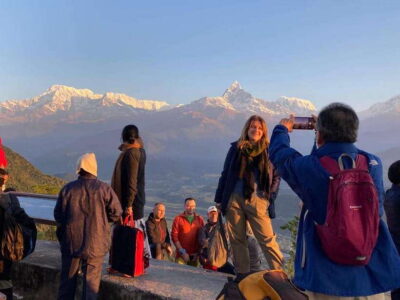
Sarangkot sunrise is the main event here. On a clear morning, you can watch the sun reach the Annapurna range and Machhapuchhre, also called Fishtail, before driving down to Pokhara’s caves, temples, gorge, waterfall, and lake. It is a smart way to see a lot when you have only one day.
I like the private car and hotel pickup, which save you from arranging several taxis before dawn. I also like the flexibility: guides such as Bidur, Pujan, Samundra, and Ram have adjusted the pace, stopped for food, taken photos, and added places such as a monastery or mountain museum when time allowed. The catch is that entry fees are extra, and the published route does not include the World Peace Pagoda.
Key points to know before booking
- Sarangkot comes first: Your pickup time changes with the season, and the mountain view depends entirely on weather.
- Eight major stops fit into one day: Expect a brisk route through caves, temples, natural sights, and Phewa Lake.
- Private transport matters: You travel only with your own group in an air-conditioned vehicle.
- The caves are not identical: Mahendra Cave is a limestone cave, while Chamere Gufa is known for its horseshoe bats.
- Guiding can shape the day: An English-speaking guide is included, but confirm that a dedicated guide, not only a driver, will accompany you.
- Budget for extras: Most attraction tickets are not included, and a boat ride on Phewa Lake costs extra.
Sarangkot sunrise sets the tone
The day begins early with pickup from your hotel in Pokhara. The exact time is given after booking because sunrise and seasonal conditions change. That early departure is not a small detail: the sunrise is the reason to book this particular tour rather than a standard city sightseeing drive.
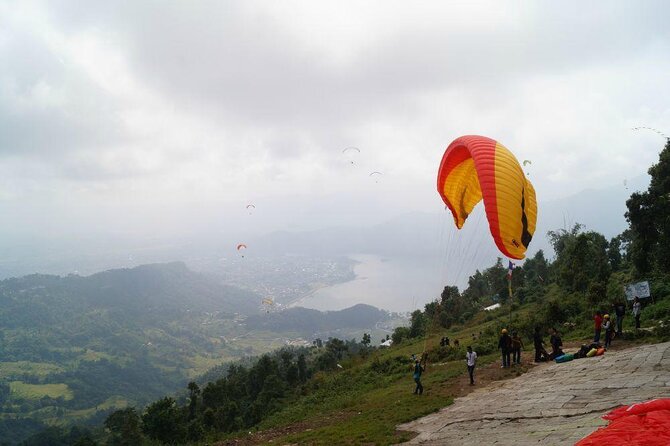
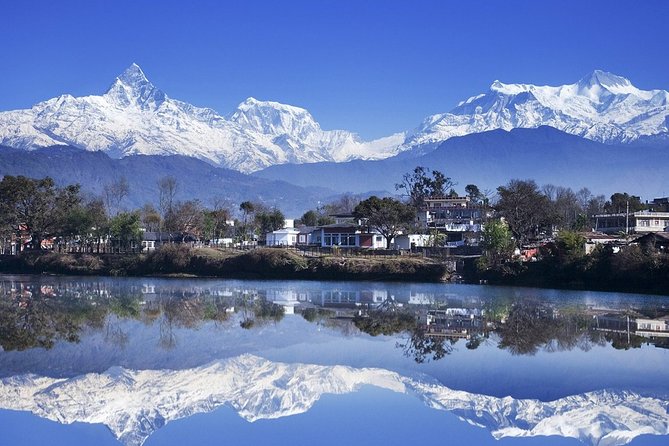
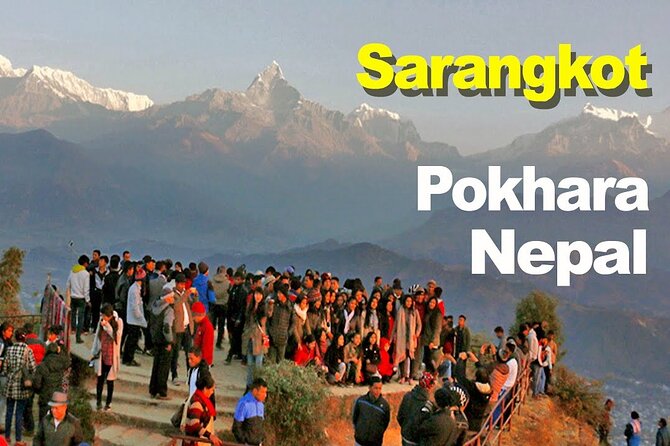
Sarangkot gives you a broad view toward the Annapurna mountains and Machhapuchhre. On a clear morning, the changing light is memorable, and guides have pointed out individual peaks and helped visitors find good places for photographs. Several guides have also taken photos, which is especially useful if you are traveling alone.
You need realistic expectations. Clouds can cover the mountains, and one poor review felt the sunrise was not worthwhile at that time of year. The operator cannot control the weather, but the seasonal limits could be explained more clearly. If the view disappears, the stop still offers a hilltop setting and temple context, but the spectacular Himalayan scene is never guaranteed.
Sarangkot is scheduled for about one hour, with admission included. Afterward, some itineraries return to the hotel for breakfast before continuing. That break can be pleasant after the early start, though you should know it may make the day feel less continuous. One person found the mid-morning pause insufficiently explained, so ask in advance if breakfast at your hotel is part of your plan.
More Sarangkot Sunrise Tours in Pokhara:
- From Pokhara: Sarangkot Sunrise Himalayas Tour
★ 4.7 · 218 reviews - Pokhara: Sarangkot Sunrise with Half or Full-Day City Tour
★ 4.8 · 100 reviews - Paragliding at Sarangkot Pokhara
★ 5.0 · 50 reviews
Mahendra Cave and Chamere Gufa offer two different cave visits
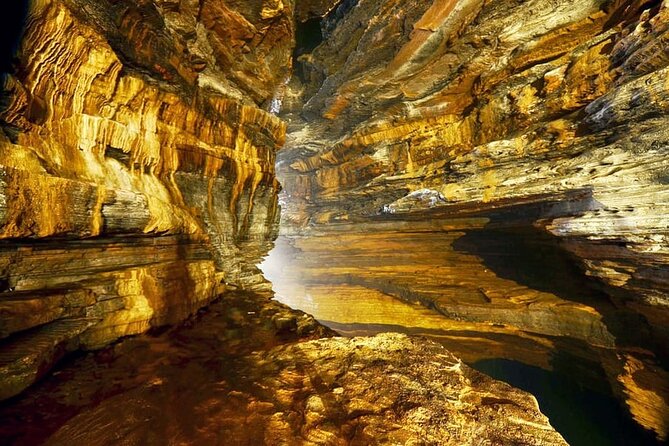
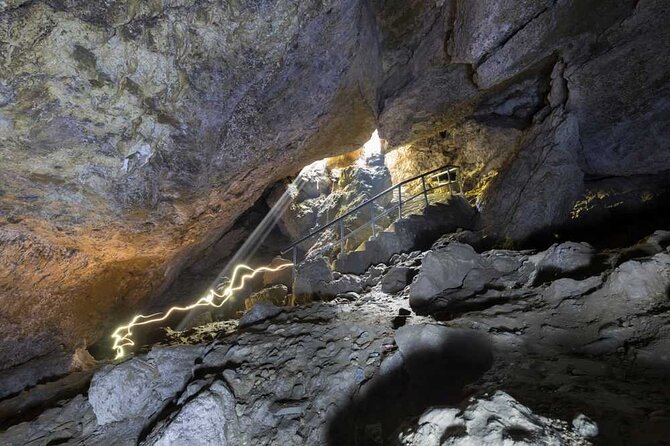
Mahendra Cave takes roughly 30 minutes. It is a limestone cave near Kali Khola, with stalactites and stalagmites. The appeal is geological rather than grand scale. You enter a dark underground space and see formations shaped slowly by water.
Admission is not included. The stop is short, so do not expect a long caving outing. The cave may also feel physically awkward for some people, since underground paths can be dark, damp, and uneven. The tour information says most people can participate, but it does not provide a detailed accessibility description.
Chamere Gufa, also called Bat Cave, is another 30-minute stop and has a different character. The chamber is associated with thousands of horseshoe bats clinging to the ceiling. That makes it one of the more distinctive stops of the day, especially if you enjoy natural oddities more than formal monuments.
The cave is described as damp and slippery. Wear shoes with a secure sole and take care on the floor and any steps. Entry is extra here too. If you dislike confined spaces, or if your mobility is limited, tell the guide before entering. One person could not enter one of the caves because of physical constraints, and the difficulty was not made clear beforehand.
Seti River Gorge is a quick look, not a major walk
The Seti River Gorge receives about 15 minutes, making it the shortest stop. The Seti flows from the mountains through Pokhara and onward toward the lowlands near Chitwan. In Pokhara, the river cuts through a narrow gorge that gives you a quick sense of the area’s rock and water systems.
The stop is best viewed as a brief photo and orientation point. If you expect a dramatic hike or a long riverside visit, you may find it thin. One dissatisfied assessment considered the gorge and Devi’s Fall a waste of time, while others appreciated seeing the river as part of Pokhara’s natural sights.
This is one place where a guide’s explanation matters. A short stop can still be worthwhile if you understand what you are looking at. If the gorge is not a priority for you, ask whether the timing can be adjusted. The tour is private, so the conversation is easier than it would be in a large group, though the listed route may limit substitutions.
Bindhyabasini Temple brings local religious life into the day
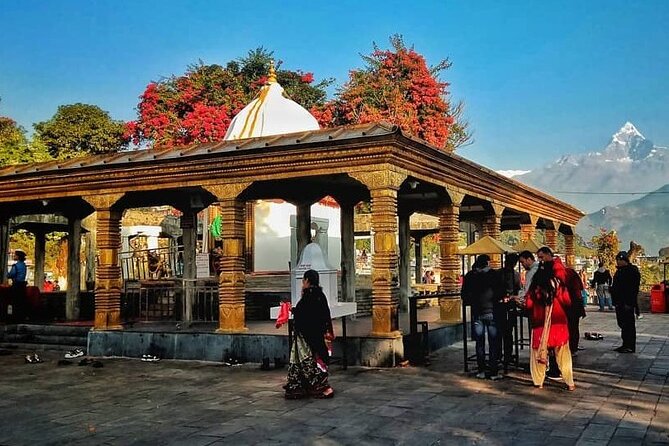
Bindhyabasini Temple is described as Pokhara’s oldest temple, located in Ward 2. It is an active place of worship, not simply a monument placed on a sightseeing circuit. The planned visit lasts about 45 minutes, longer than the gorge, and admission is free.
This is one of the strongest cultural stops. A good guide can explain how to enter, where to stand, and how to respond respectfully inside a Hindu temple. Guides including Sadichchha have helped visitors understand temple etiquette, and one guide gave a visitor a tika from a priest. Those small details can turn a quick stop into a more meaningful encounter with daily religious practice.
You should dress and behave respectfully, and follow the guide’s instructions about where visitors may go. The tour is in a private vehicle, but this is not a private religious ceremony. The temple remains a working place for local worshippers, so keep your camera and voice discreet.
A few more Pokhara trips to weigh up
- Morning Tibetan cultural tour to Tibetan settlements Pokhara
★ 5.0 · 66 reviews - Pokhara: Sarangkot Sunrise And Private Full-Day Tour
★ 4.8 · 32 reviews - Morning Half Day Tibetan cultural tour to Tibetan Settlements
★ 5.0 · 26 reviews - Pokhara: Group Joining Sarangkot Sunrise Himalayas Tour
★ 4.5 · 23 reviews
Gupteshwor Gupha and Devi’s Fall are linked
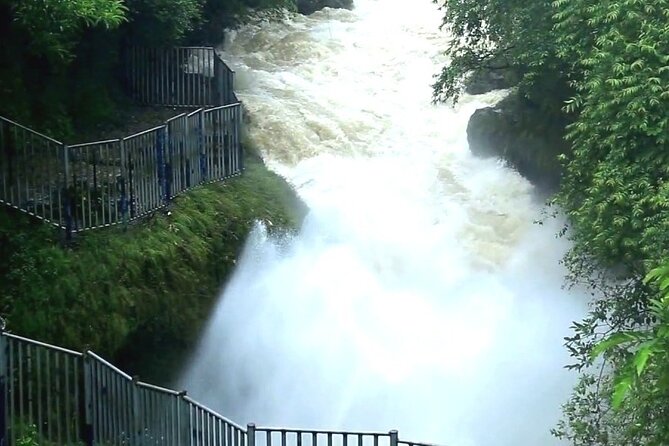
The route then moves to Gupteshwor Mahadev Cave and Devi’s Fall, which sit opposite one another. Gupteshwor Cave is associated with Shiva worship, and water from Devi’s Fall passes through the cave system. The cave visit is scheduled for about 30 minutes, and admission is not included.
This is a more religious and atmospheric stop than the first two caves. The name refers to Mahadev, a form of Shiva, and the setting combines natural rock with Hindu devotion. As with the other caves, expect dark or wet conditions and possible uneven footing.
Devi’s Fall also receives about 30 minutes. Water drops into a channel and forms a tunnel below ground, said to extend roughly 500 feet and about 100 feet beneath the surface. The sight can be powerful after enough water has passed through, but its impact varies with conditions and personal taste.
Do not assume that these two attractions will fill a large part of the day. They are compact stops. Also, the entrance charges are extra, so keep Nepalese rupees available. A French-language review specifically noted the need to plan for admission costs, a useful warning for anyone who arrives with only cards or large notes.
Phewa Lake closes the sightseeing route
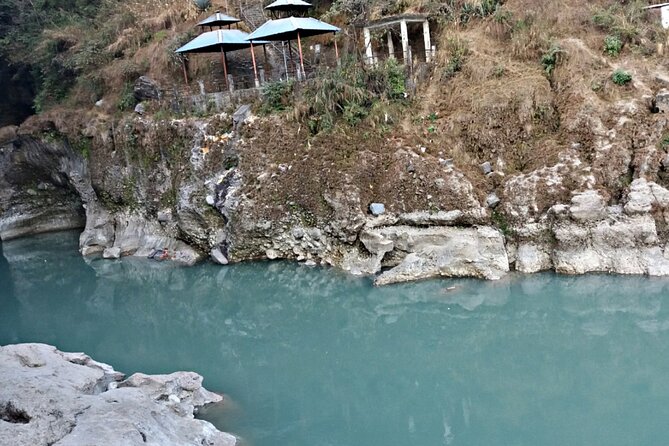
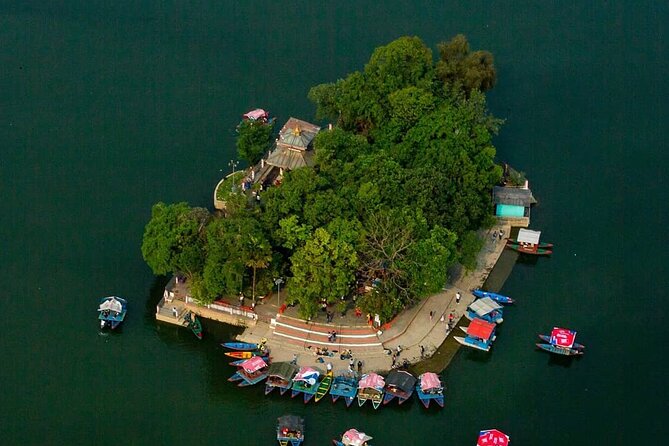
Phewa Lake, also called Phewa Tal or Fewa Lake, is the calmest part of the itinerary. The planned visit lasts about 30 minutes, and admission is free. After a morning of caves, traffic, stairs, and short stops, the water gives the day a slower finish.
The description says you will explore the lake, but the boat ride is not included in the price. You choose and pay for the boat separately at the port. That distinction matters. If you assume the $68 price covers a boat trip, you may feel the final stop is poor value.
One dissatisfied customer had only the lake activity left late in the day and asked to add the World Peace Pagoda from the Devi’s Fall area. The guide and driver were willing, but the operator initially refused without an additional charge. The pagoda was later provided without charge, but you should not count on it being part of this tour.
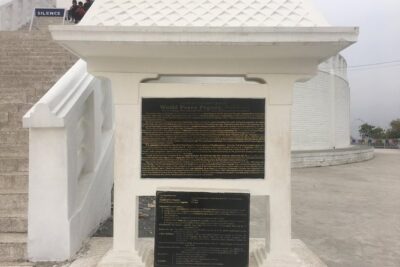
Shanti Stupa, or the World Peace Pagoda, is a notable omission for anyone wanting the full Pokhara checklist. It is not in the stated itinerary. Ask before booking if it is essential to you, and get any change in route and price confirmed in writing.
The private car is the practical advantage
The tour costs $68 per person and is private, with only your group participating. It includes hotel pickup and drop-off in Pokhara, bottled water, private transport, an air-conditioned vehicle, and an English-speaking tour guide.
That price can make sense for a solo visitor who wants one organized day without bargaining with drivers or arranging separate rides to Sarangkot, the caves, the waterfall, and the lake. It can also work well for a family or small group, especially since group discounts are offered. You pay for coordination as much as for the vehicle.
The air conditioning is a real comfort in Pokhara’s warmer parts of the day. One person also praised the clean electric car, while several others appreciated punctual drivers and comfortable vehicles. Guides and drivers have stopped at an ATM or helped find food when needed, though those favors should be treated as helpful extras, not guaranteed features.
The value is less convincing if you want only transport. A Spanish-language assessment felt that the cost was high for a car and driver, particularly because attraction tickets and the lake boat were separate. That criticism is fair. The tour earns its price when the guide actively explains local life, religious customs, and the places you are seeing.
Confirm the guide, schedule, and added stops
The experience includes an English-speaking guide, and many days have been led by people such as Bidur, Pujan, Samundra, Dipchandra, Santosh, Sadichchha, Roshan Pokhret, and Ram. The strongest days came when the guide did more than point out the next stop.
Pujan, for example, was praised for explaining local history and Nepalese life. Dipchandra adjusted the pace for an older parent. Samundra and driver Yamu looked after a solo visitor throughout the day. Bidur helped with mountain identification, photos, and safety. These details show what you should seek: a guide who can answer questions and adapt the pace.
Still, the service appears to vary. One complaint described a driver who mainly dropped the group at each location, despite the expectation of guided visits. The listing includes a guide, but it is wise to confirm before departure that you will have a dedicated English-speaking guide in addition to the driver.
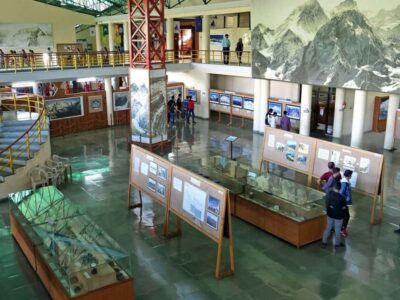
The private format allows useful requests. Guides have added a mountain museum, a Buddhist monastery, and a suspension bridge when the schedule allowed. Those additions are not promised, and the fixed route may prevent them. Treat flexibility as a possibility, not part of the guaranteed package.
What to budget and what to bring
At $68 per person, the tour is not an all-inclusive admission pass. Entry fees are excluded except where the itinerary specifically says admission is included at Sarangkot. Bindhyabasini Temple and Phewa Lake are listed as free, but Mahendra Cave, Chamere Gufa, Gupteshwor Gupha, and Devi’s Fall require separate payment.
The lake boat also costs extra. Bring enough Nepalese rupees for cave and attraction tickets, food, and the boat if you want to go on the water. Bottled water is included, but breakfast and lunch are not listed as inclusions. Some guides have helped arrange lunch or food stops, but do not assume meals are covered.
I would bring:
- Shoes with good grip for the caves
- A warm layer for the early Sarangkot start
- Nepalese cash for admissions and the boat
- A phone or camera for sunrise
- Modest clothing for temple visits
The day is listed at about seven hours, but the early pickup, breakfast pause, traffic, and any added stops can affect the rhythm. The route is full. You will see many places, but you will not spend half a day at any one of them.
Who will get the most from this Pokhara day
I would choose this tour if you have one free day in Pokhara and want an organized introduction to the city’s main sights. It is particularly useful for solo visitors, families, older relatives who need a flexible pace, and anyone who does not want to arrange multiple local rides.
It also suits people who enjoy variety. In one morning and afternoon, you move from Himalayan views to bats, limestone, a river gorge, Hindu temples, a waterfall, and a lake. That range gives you a good first taste of Pokhara.
I would hesitate if your top priorities are the World Peace Pagoda, a long boat trip, or slow visits with lots of time for photography. The schedule is brisk, and those attractions are not included. I would also think twice if you dislike caves or have difficulty with slippery, confined spaces.
The tour has a 4.8 rating from 66 reviews, with 91 percent recommending it. That is a strong record, but the lower ratings point to the exact risks: unclear communication, uneven guiding, disappointment with the gorge or waterfall, extra fees, and a route that does not include Shanti Stupa.
Should you book The Best of Pokhara?
Book it if you want maximum coverage in one private day, especially with Sarangkot sunrise as your priority. The transport, hotel service, air conditioning, and chance to adjust the pace make it more useful than piecing the route together yourself.
Before paying, confirm the pickup time, the name or role of your guide, the total admission costs, the separate boat fare, and whether any change to include World Peace Pagoda is possible. If you receive a strong guide such as Bidur, Pujan, Samundra, or Sadichchha, the day can feel personal and informative rather than like a simple taxi circuit.
My verdict: good value for a first look at Pokhara, but only if you understand the extras and accept that mountain views depend on weather. Free cancellation is available up to 24 hours before the start time, which gives you some room to adjust plans if the forecast looks poor.
FAQ
How long does the Pokhara private tour last?
The tour lasts approximately seven hours.
Is hotel pickup included?
Yes. Pickup and drop-off at your hotel in Pokhara are included. The pickup time depends on the season and is provided after booking.
Is the tour private?
Yes. Only your group participates in the activity.
Is an English-speaking guide included?
Yes. An English-speaking tour guide is listed as included, along with private transportation. Because some experiences have involved mainly a driver, confirm the guide arrangement before departure.
Is the Sarangkot admission fee included?
Yes. Admission at Sarangkot is included. Other entry fees are generally not included.
Is the Phewa Lake boat ride included?
No. A boat ride on Phewa Lake is not included, so you pay separately if you choose one.
Is the World Peace Pagoda part of the itinerary?
No. The stated itinerary includes Phewa Lake but does not include the World Peace Pagoda, also called Shanti Stupa.
What happens if I need to cancel?
You receive a full refund if you cancel at least 24 hours before the experience start time. Cancellations or changes made less than 24 hours before the start time are not accepted for a refund.
More Full-Day in Pokhara
- Full-Day Tibetan Cultural Tour to Tibetan Settlements Pokhara
★ 5.0 · 184 reviews - Pokhara: Full-Day Sharing Bus Tour on 7 Iconic Destination
★ 4.1 · 179 reviews - Pokhara: Full-Day Private Tour on 7 Iconic Destination
★ 4.8 · 108 reviews - Full Day Tibetan Cultural Tour
★ 5.0 · 12 reviews
Just added around Pokhara
- Seti George and Thrilling Suspension Bridge Tour at Pokhara★ 4.5 · 3 reviews
- Tandem Paragliding in Pokhara★ 4.8 · 8 reviews
- Pokhara: Sunrise Tour to Sarangkot★ 5.0 · 3 reviews
- Pokhara: Suspension Bridge Private Tour- 30 Min Village Walk★ 4.8 · 9 reviews
- Pokhara: Visit Best Seven Tourist Destination by Sharing Bus★ 3.4 · 10 reviews
- Pokhara Sightseeing By Bus: Day Trip★ 4.6 · 7 reviews
- Pokhara Sightseeing By Bus – Day Trip★ 3.2 · 8 reviews
- Pokhara: Sarangkot Sunrise & Panoramic Annapurna View Tour★ 4.8 · 10 reviews
Sarangkot Sunrise Tours, compared.
Sarangkot Sunrise with Half or Full-Day City Tour
Read our review →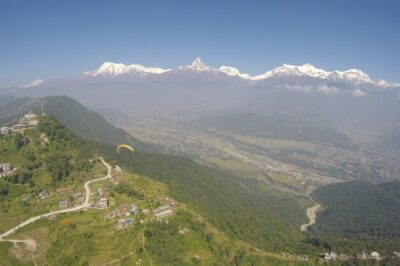
Sarangkot Village Coffee Culture and Authentic Local Life Tour
Read our review →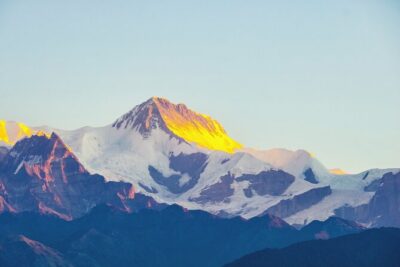
Day Hiking from Sarangkot to World Peace Stupa from Lakeside
Read our review →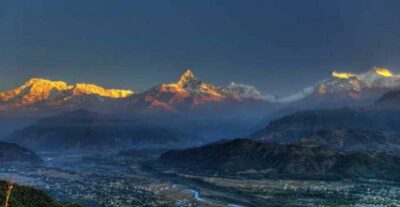
Sarangkot Sunrise & Panoramic Annapurna View Tour
Read our review →Browse the lists this tour appears in