
Reviewed · FULL-DAY
Entire Day Pokhara Complete Tour
Pokhara’s appeal is its mix of mountain views, sacred sites, strange geology, and everyday culture, and this private tour tries to cover nearly all of it in one long day. You begin at Sarangkot for sunrise, then move through lakeside sights, caves, museums, temples, a gorge, and a Tibetan settlement.
I like having an air-conditioned private car and a guide who can adjust the pace to your group. I also like the range: the International Mountain Museum gives the day real context, while Gupteswar Gupha and Devi’s Fall show Pokhara’s more unusual side. The main drawback is time. Eleven stops in 6 to 7 hours means several visits will be quick, and cloudy weather may hide the sunrise.
Key points at a glance
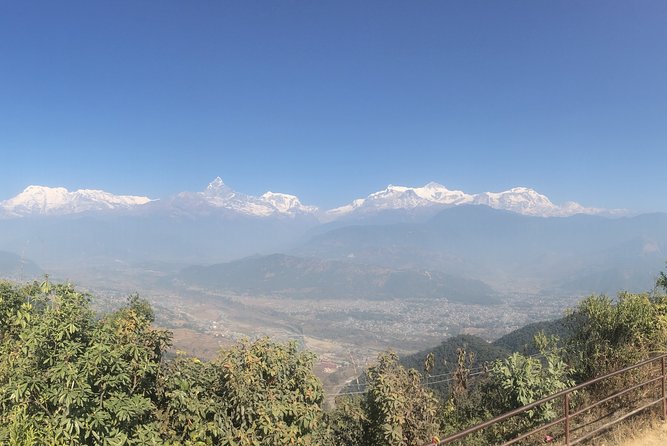
- Sarangkot starts the day with mountain views: An early visit offers a chance to see sunrise over the Annapurna range and look across Pokhara.
- Private transport keeps the route simple: You travel in an air-conditioned vehicle with only your own group.
- The tour covers culture as well as scenery: Temples, museums, caves, a gorge, and a Tibetan refugee camp give the day more variety than a sightseeing loop focused only on viewpoints.
- Gobinda provides attentive guiding: The available feedback specifically praises Gobinda for checking that the tour was going well and meeting the group’s needs.
- The International Mountain Museum may be the highlight: It explains the Himalayas, the people connected with them, and their lasting influence.
- The schedule is packed: Expect roughly 6 to 7 hours, with stops ranging from 15 to 60 minutes.
Sarangkot sunrise sets the tone
The day begins at Sarangkot, the high viewpoint above Pokhara. The aim is to watch the sun come over the Annapurna Himalayan range while taking in a broad view of Pokhara below. You have about an hour here, which is enough time to look around and take photographs if the weather cooperates.
Sunrise is the tour’s biggest promise, but it is also the least certain. Clouds can block the mountains, as happened on one tour when the sunrise could not be seen. That is not a flaw in the route, but you should treat the view as a possibility, not a guarantee.
The early start also matters. You will be visiting many other places later, so Sarangkot is not simply another viewpoint squeezed into the middle of the day. It is the opening event, and the rest of the schedule follows from it.
A few more Pokhara trips to weigh up
- Full-Day Tibetan Cultural Tour to Tibetan Settlements Pokhara
★ 5.0 · 184 reviews - Pokhara: Full-Day Sharing Bus Tour on 7 Iconic Destination
★ 4.1 · 179 reviews - Pokhara: Full-Day Private Tour on 7 Iconic Destination
★ 4.8 · 108 reviews
Phewa Tal brings you back to the water
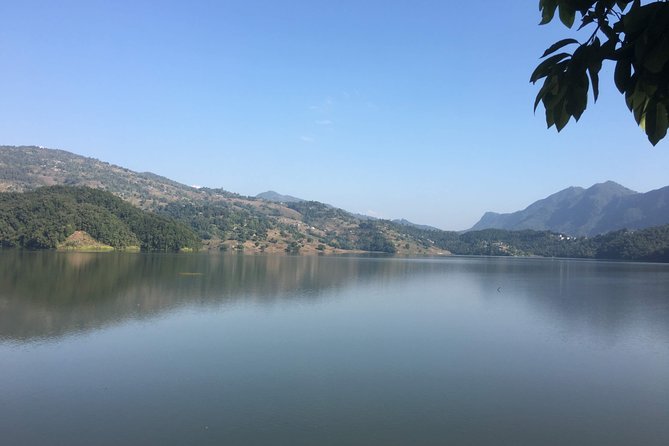
After Sarangkot, the route turns to Phewa Tal, Pokhara’s famous lake. The visit includes the Barahi Temple and time around the lake’s edge, with about 30 minutes assigned to this stop.
The temple is an important part of the visit. It gives you a chance to see a sacred Hindu site connected with the lake rather than treating Phewa Tal as scenery alone. The short time means you should expect an introduction, not a slow lakeside outing.
If you want a more relaxed experience by the water, this tour may feel hurried. Its purpose is to give you a taste of the lake and Barahi Temple before moving on to the next cluster of sights.
Devi’s Fall and Gupteswar Gupha show Pokhara’s odd side
Devi’s Fall is a quick 25-minute stop. The water runs into an underground cave network beneath the city, making this more than a standard waterfall viewpoint. The unusual part is what you cannot see from above: the water continues below ground.
Gupteswar Gupha is nearby and gives the geology a closer look. You spend about 30 minutes exploring the cave and its ancient Shiva temple. Naturally formed stalagmites add texture to the visit, while the cave’s connection with the falling water makes the two stops work well together.
The itinerary notes that during the fall you may be able to go farther inside and see the waterfall from within the cave, where it continues toward the river. The wording matters here: this is a possible part of the visit, not something to count on in every condition.
These stops are compact, so wear sensible footwear and be ready for an uneven cave setting. The tour data does not specify the exact conditions inside, so you should not expect the same easy footing as at a museum or temple courtyard.
The International Mountain Museum adds needed context
The International Mountain Museum receives about 30 minutes, and I would protect that time as much as possible. A day of viewpoints and monuments can become a blur, but this museum helps explain the Himalayas, the people who live among them, and the way the mountains have inspired people around the world.
One piece of feedback singled out the museum as the best part of the day. That makes sense. Sarangkot gives you the view, while the museum helps you understand what those mountains mean beyond a photograph.
Thirty minutes is enough for a useful visit, but not enough for a slow reading of every display. If mountain culture and Himalayan exploration matter to you, this is one place where you may wish the schedule had more room.
Same mountains, a completely different kind of day:
- ZipFlyer Nepal – The World’s Steepest Zip-line
★ 5.0 · 608 reviews - Bungee Pokhara by HighGround Adventures
★ 5.0 · 366 reviews - From Pokhara: Sarangkot Sunrise Himalayas Tour
★ 4.7 · 218 reviews - ATV Adventure Tour in Pokhara, Nepal
★ 5.0 · 194 reviews
The Gorkha Museum honors Nepal’s soldiers
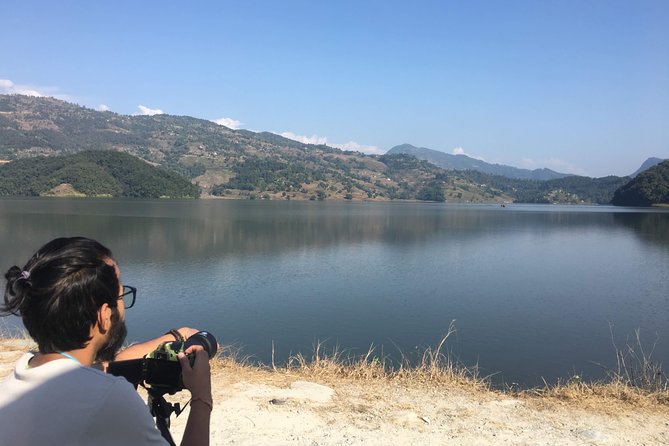
The Gorkha Museum receives a shorter 20-minute visit. Its focus is the bravery of the Gorkhas, who are respected around the world for their military service.
This stop adds a human and national story to the mountain scenery. It also breaks up the day with a museum visit before the route returns to outdoor viewpoints and religious sites.
The time is tight. You will probably get the main idea and see selected displays rather than study the museum in detail. Still, the stop is useful if you want more than scenic photographs and would like some background on a group central to Nepal’s public identity.
Seti River reveals the ground beneath Pokhara
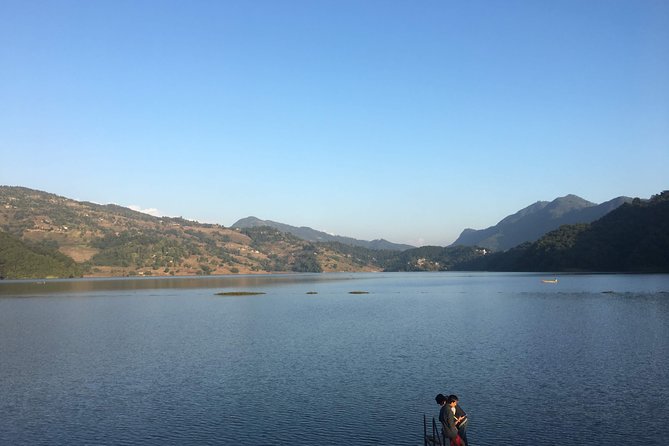
The Seti River Gorge is a 15-minute stop, followed by about 20 minutes at a viewpoint over the Seti Gandaki, reached by a high hanging bridge. The gorge shows how the river has cut through the area and helped shape Pokhara’s physical setting.
The short gorge visit is best understood as a quick look. You will not have time for a long walk or an extended riverside outing. The high bridge offers a different angle, and the itinerary describes this type of bridge as common throughout Nepal.
If you dislike heights, the bridge deserves some thought before booking. The information provided does not describe its exact height or construction, so the private format is useful here: you can discuss your comfort with the guide rather than being locked into a fixed group pace.
The World Peace Stupa closes the scenic loop
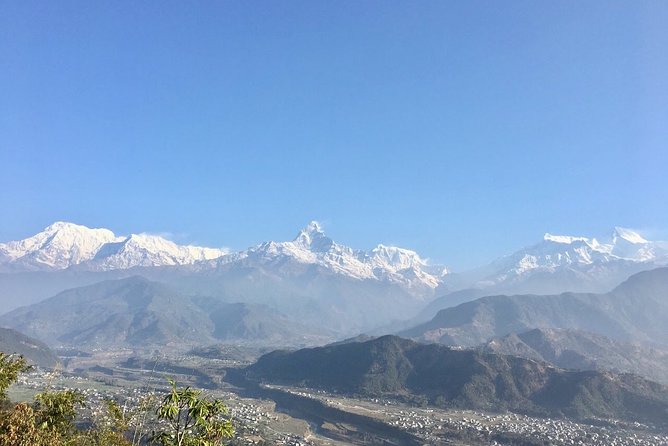
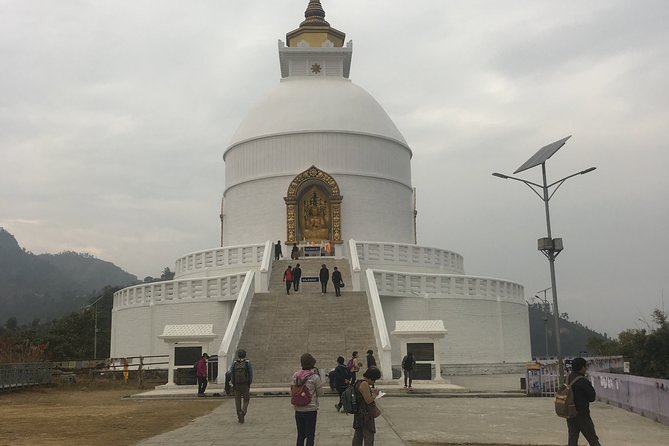
The access road to the World Peace Stupa leads to one of the tour’s broadest views. From the Peace Pagoda, you can look over Pokhara Valley and Phewa Lake, with about 45 minutes at this stop. The setting is also connected with Buddha and the idea of peace.
The schedule describes this as a sunset viewpoint, while the day begins with a sunrise visit to Sarangkot. That creates a timing question. A 6 to 7 hour tour may not cover both sunrise and sunset on the same operating schedule, so you should confirm how the provider plans the day before booking.
Even without sunset, the stupa is a strong scenic stop because it combines a high view with a Buddhist religious setting. You are not simply pulled to another lookout, you are visiting a place with a clear spiritual purpose.
Bindhyabasini shows living Hindu practice
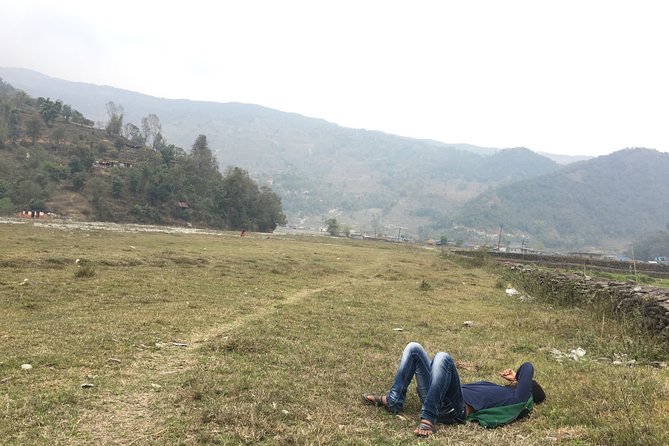
Bindhyabasini is a hilltop temple devoted to the sacred feminine in Hindu culture. You have about 20 minutes to visit and observe customs and rituals connected with worship.
This is a useful contrast with Gupteswar Gupha’s Shiva temple and the Buddhist setting at the Peace Stupa. The tour moves through several religious traditions without reducing Pokhara to one single identity.
A short visit calls for respectful observation. The itinerary does not promise a ceremony or a particular ritual at the time you arrive, so think of this as a chance to see an active sacred place, not a scheduled performance.
The Tibetan Refugee Camp adds a human story
The final listed stop is a Tibetan refugee camp, with about 30 minutes to learn about the Tibetan people who were forced into exile and created a community in Pokhara.
This can be one of the more personal stops because it shifts attention from Nepal’s temples and mountains to a community shaped by displacement. The description emphasizes the distinct Tibetan culture found here, giving you another view of how Pokhara’s identity has developed.
Half an hour allows for an introduction, but not a long cultural study. Keep your expectations grounded. You will get a brief visit within a packed sightseeing day, not an extended program centered entirely on the camp.
A private car changes the feel of the day
The tour uses an air-conditioned vehicle and is private, meaning only your group participates. That is a major practical benefit in a schedule with so many stops. You are not waiting for unrelated passengers at every viewpoint, and you can ask the guide to explain a temple, museum, or cave as you go.
The available feedback gives Gobinda particular credit for checking repeatedly that the tour was meeting expectations. That kind of attention matters more on a rushed day than grand speeches do. If Gobinda is your assigned guide, you can use that communication to clarify the timing, especially around the sunrise and sunset descriptions.
Pickup is offered, and the tour can suit most participants. Service animals are allowed, and the route is near public transportation, though the experience itself is built around the private vehicle rather than buses or walking between sights.
The $114.53 price makes sense for the right group
At $114.53 per person, this is not the cheapest way to see Pokhara. The value depends heavily on group size and how much you value private transport and a guide. A solo visitor pays the full per-person price without sharing it across companions, while a larger private group may find the arrangement more reasonable, especially since group discounts are available.
The price includes the air-conditioned vehicle and all fees and taxes. The listed itinerary also marks admission as included at Sarangkot, Phewa Tal, Devi’s Fall, Gupteswar Gupha, the International Mountain Museum, the Gorkha Museum, Seti River Gorge, and the Seti Gandaki stop. The World Peace Stupa, Bindhyabasini, and Tibetan Refugee Camp are listed with no admission charge.
Food and drinks are not included. Plan for that yourself, since the schedule is full and the tour does not promise a meal stop. The supplied details do not state whether water or snacks are provided, so do not assume they are part of the price.
Who will get the most from this tour
I would recommend this experience to you if you have limited time in Pokhara and want a broad first look at the city. It suits people who prefer a car, want a guide, and would rather connect many major sights in one outing than spend a full day at one or two places.
It is also a good match for families or small private groups who want control over the pace. The air-conditioned vehicle is especially useful when you are moving between viewpoints, museums, temples, and the cave.
You may want a different plan if you prefer long museum visits, unhurried time beside Phewa Lake, or a slow cultural encounter. Eleven stops create range, but they also create limits. The tour gives you many introductions rather than deep time at any single place.
The 4.8 rating from five submitted reviews is encouraging, though the sample is small. The most useful specific feedback is about Gobinda’s attentive guiding and the International Mountain Museum. The cloudy sunrise is an important reminder to judge the tour by its overall variety, not by one mountain view.
Booking, cancellation, and timing notes
Confirmation is provided at booking, and the experience is booked on average 38 days ahead. That advance pattern suggests you should reserve early if your Pokhara dates are fixed, particularly if you need a private vehicle and guide.
Free cancellation is available up to 24 hours before the local start time for a full refund. Cancellations or changes made within 24 hours are not accepted for a refund. Since the start is early and the schedule is weather-sensitive, check the local cancellation cut-off before you commit.
Should you book the Pokhara Complete Tour?
Book it if your priority is coverage. You will see mountains, lake, waterfall, cave, museums, gorge, bridge, Buddhist site, Hindu temples, and Tibetan culture in one private outing, with transport and entry fees handled as part of the price.
Skip it if you want a slow day or if your main goal is a guaranteed sunrise. Clouds can hide Sarangkot, and the sunrise plus sunset plan needs clarification against the 6 to 7 hour duration. For a first visit, though, the range is persuasive, and the private format gives the packed route a practical advantage.
FAQ
How long does the Entire Day Pokhara Complete Tour last?
The tour lasts approximately 6 to 7 hours.
How much does the tour cost?
The listed price is $114.53 per person. Group discounts are available.
Is the tour private?
Yes. Only your group participates in the private tour or activity.
Is hotel pickup offered?
Pickup is offered, although the provided details do not specify the exact pickup locations.
What transport is used?
The tour includes an air-conditioned vehicle.
Are entrance fees included?
All fees and taxes are included. The itinerary specifically lists admission as included at Sarangkot, Phewa Tal, Devi’s Fall, Gupteswar Gupha, the International Mountain Museum, the Gorkha Museum, Seti River Gorge, and Seti Gandaki. The other listed stops show no admission charge.
Are food and drinks included?
No. All food and drinks are excluded from the tour price.
Can I cancel for a full refund?
Yes, if you cancel at least 24 hours before the experience start time. Cancellations or changes made less than 24 hours before the local start time are not refundable.
Just added around Pokhara
- Pokhara: Pokhara Highlights Tour by Bus★ 3.6 · 10 reviews
- Pokhara in 5 Hours: Lake, Museum, Cave, Falls & Pagoda Hill★ 4.5 · 16 reviews
- Discover Pokhara in Style: Private Vehicle Service with Driver★ 5.0 · 5 reviews
- 7-Day Trek to Annapurna Base Camp from Pokhara★ 5.0 · 12 reviews
- Annapurna Base Camp Trek from Pokhara and Kathmandu★ 5.0 · 7 reviews
- 4 Day Mardi Himal Base Camp Trek from Pokhara★ 5.0 · 18 reviews
- 6 days Annapurna Basecamp Trek★ 5.0 · 16 reviews
- Beautiful Sarankot Sunrise with Full Day Sightseeing in Pokhara★ 4.5 · 3 reviews
Full-Day, compared.
Full Day 7 UNESCO Tour with Lunch – Private/Group
Read our review →
Full Day Top 4 UNESCO Tour with Lunch – Private/Group
Read our review →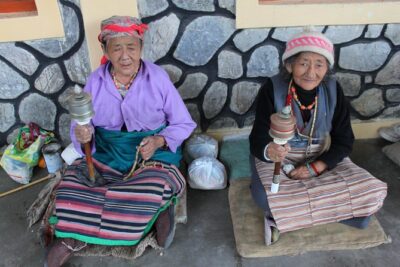
Full-Day Tibetan Cultural Tour to Tibetan Settlements Pokhara
Read our review →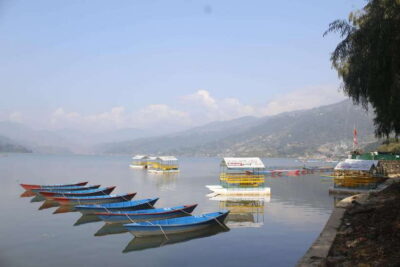
Full-Day Sharing Bus Tour on 7 Iconic Destination
Read our review →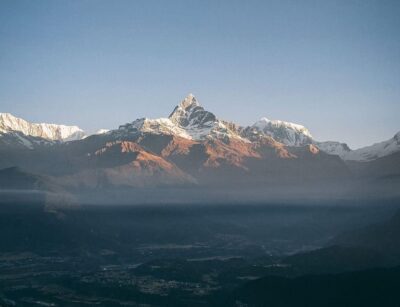
Full Day 7 UNESCO Tour with Lunch – Private/Group
Read our review →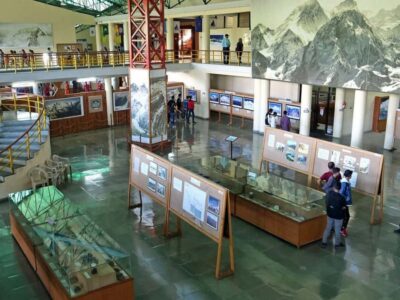
Sarangkot Sunrise with Half or Full-Day City Tour
Read our review →
Full Day Private Top 4 UNESCO Heritage Tour W/Lunch.
Read our review →Browse the lists this tour appears in