Reviewed · HIKING & TREKKING
Upper Mustang Trekking
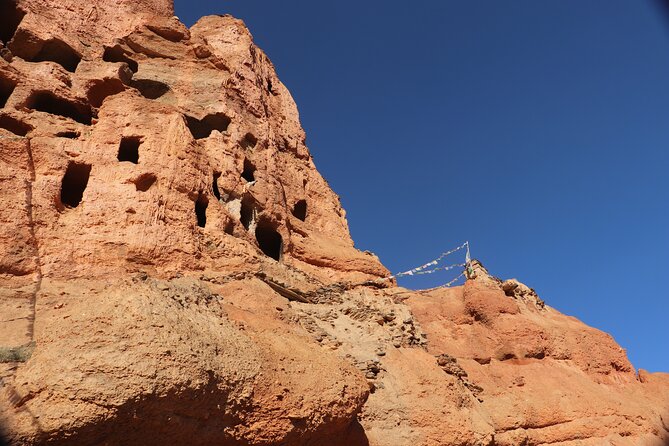
Upper Mustang feels like Nepal with the volume turned down: dry cliffs, old monasteries, stone villages, and a Tibetan Buddhist culture that has changed slowly. I like the quiet trails and the chance to spend a full day in Lo Manthang, the walled city at the center of the route. I also like that the $2,400 price includes the costly $500 special permit, domestic flights, lodges, meals, a guide, and porter support.
The tradeoff is comfort. You face long bus rides, basic tea-house lodging, dusty and windy trails, and several days of steady climbing and descent. The trek requires strong physical fitness, and the weather can affect the Jomsom flights.
Key points to know before booking
- Lo Manthang gets a full exploration day: You have time for monasteries, the King’s Palace, and the city’s distinctive lanes instead of simply passing through.
- The special permit costs $500: It is included in the tour price and covers 10 days inside the restricted Upper Mustang area.
- The route combines flights and buses: You fly between Pokhara and Jomsom, then use tourist buses between Kathmandu and Pokhara.
- The scenery changes quickly: Lower Mustang begins with classic high Himalayan views, while Upper Mustang brings dry valleys, cliff walls, farms, monasteries, and old villages.
- A guide and porter are included: One porter is provided for every two people, which matters on a trek lasting more than two weeks.
- Wind shapes the daily schedule: The Kali Gandaki Valley can become very windy after midday, so early starts are useful on the return route.
Why Upper Mustang feels unlike other Nepal treks
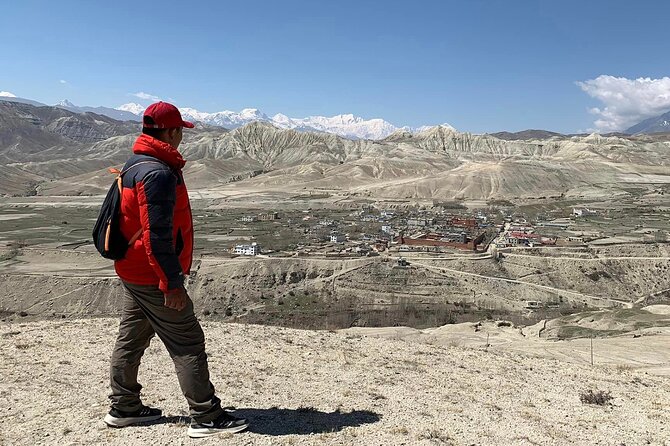
Upper Mustang lies in the rain-shadow area north of the main Himalayan range. The result is a dry, open setting with unusual colors and forms: pale cliffs, bare hills, river-cut valleys, small farm plots, and villages built close together for shelter and community.
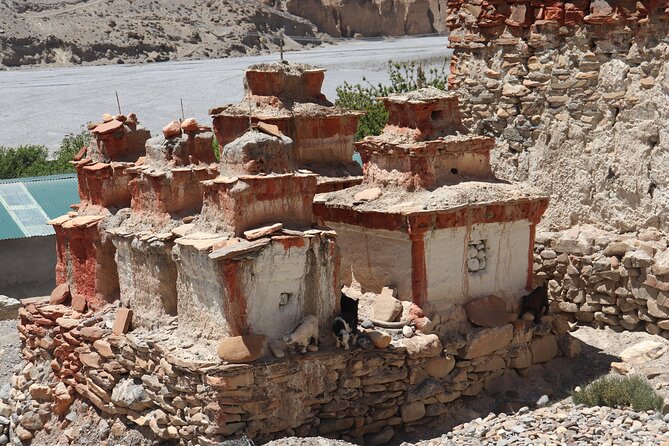
The route also carries a strong Tibetan Buddhist identity. Monasteries, gompas, prayer sites, old village walls, and local religious art are part of ordinary life here. You are not visiting a museum display. You are walking through working villages where apple gardens, farms, lodges, and religious buildings share the same small spaces.
This is not mainly a high-altitude summit trek. The route rarely exceeds 4,000 meters according to the supplied trip details, but that does not make it easy. The air is thin, the days are long, and the trail includes repeated climbs and descents. You need stamina more than technical mountaineering skills.
The area also remains less crowded than many better-known Himalayan routes. That helps preserve the feeling of distance, though it means you should expect simpler facilities and fewer backup options. Upper Mustang rewards patience. The payoff comes from the steady change in scenery and the time spent in villages rather than from one single viewpoint.
A few more Kathmandu trips to weigh up
- Everest Base Camp Trek – 14 Days
★ 5.0 · 1,499 reviews - Everest Base Camp Trekking
★ 5.0 · 485 reviews - Nagarkot Sunrise View and Day Hiking from Kathmandu
★ 5.0 · 471 reviews
Days 1 and 2: Kathmandu, permits, and preparation
Your trip begins with pickup at Tribhuvan International Airport. A representative from Everest Trekking Routes transfers you to a three-star Kathmandu hotel, where breakfast is included.
The second day is partly a paperwork day. To obtain the Upper Mustang Special Permit, you must provide your original passport and a Nepal visa. The permit process takes the day, although sightseeing in the Kathmandu Valley is available if your schedule allows.
This is a practical start rather than a dramatic one. It gives you time to recover from your flight, meet the local team, and deal with the permit before heading west. Since the restricted-area permit is central to the whole trip, keeping your original passport available is important.
The hotel stay also gives you a buffer before the long overland transfer. Kathmandu can be tiring after an international flight, and this extra day helps you begin the trek in better shape.
Day 3: The long road toward Pokhara
The morning starts with a short walk of about 10 minutes from the hotel to the tourist bus station. The bus departs at 7:00 AM and follows the Prithivi Rajmarg highway.
The first stretch includes a breakfast stop after roughly two hours, followed by a long drive. The bus journey is not the glamorous part of the trip, but it is useful to understand what you are paying for. The tour handles the Kathmandu to Pokhara transfer, so you do not need to arrange a separate ticket or negotiate transport after arriving in Nepal.
Expect a full travel day and road conditions that may slow the journey. If you prefer comfort and speed, this will be one of the less appealing portions. If you want a reasonably priced route that links Kathmandu to the trekking region, it is a sensible choice.
Day 4: Jomsom to Kagbeni
After breakfast, you transfer to the domestic airport and fly to Jomsom, at about 2,715 meters. The flight to the mountain town is short, but it places you directly into the Mustang region without using several extra days on the road.
From Jomsom, you walk for four to five hours to Kagbeni. The route includes fine Himalayan views and introduces you to the lower Mustang setting before you enter the restricted area.
Kagbeni is more than an overnight stop. It is the main gateway to Upper Mustang, and permit checks take place here. The special permit costs $500 per person for 10 days, but that cost is already included in the package price.
This first walking day lets you test your pace at altitude. Keep your expectations realistic: the route may feel manageable on paper, yet the dry air and long hours can make it tiring.
Same mountains, a completely different kind of day:
- Private Kathmandu Sightseeing Tour | UNESCO World Heritage sites
★ 5.0 · 756 reviews - Everest Base Camp Helicopter Tour landing at Everest View Hotel
★ 5.0 · 668 reviews - Half day cooking class in Thamel kathmandu
★ 5.0 · 607 reviews - Kathmandu: Full Day 7 UNESCO Tour with Lunch – Private/Group
★ 5.0 · 415 reviews
Days 5 and 6: Entering Upper Mustang through Chhusang and Chele
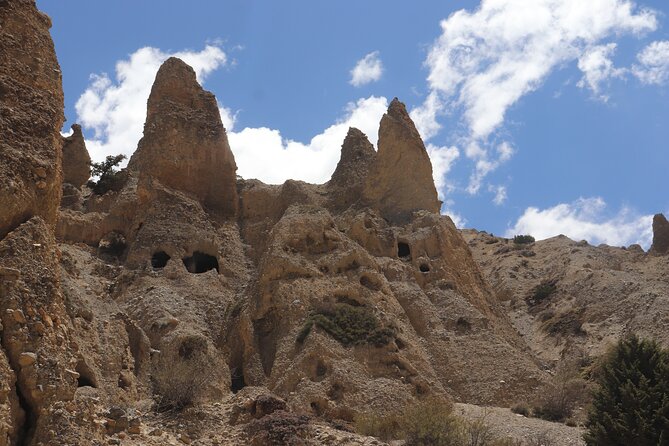
The fifth day takes you from Kagbeni to Chhusang. After leaving Kagbeni, you formally enter the Upper Mustang restricted area. The route follows the Kali Gandaki corridor and brings you closer to the villages and scenery that define the trek.
Chhusang gives you a useful first taste of the region’s compact settlements and dry valley setting. The next day continues toward Somare and Chele, with five to six hours of walking. Some sections are fairly flat, while the climb toward Syangboche becomes more demanding.
You pass an apple garden and move through terrain that feels stark but not empty. Small farms and village plots break up the bare hillsides. The contrast is one of Upper Mustang’s pleasures: a hard, dry setting made livable through careful farming.
The climb after Chele is a real test early in the trek. You should not treat the first few days as a gentle warm-up. Walk steadily, drink regularly, and let the guide set a sensible pace.
Days 7 and 8: Syangboche, Ghiling, and Tsarang
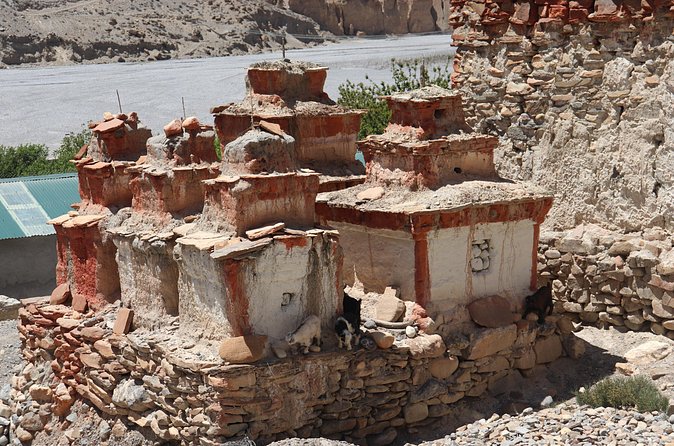
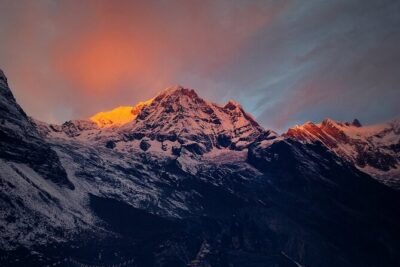
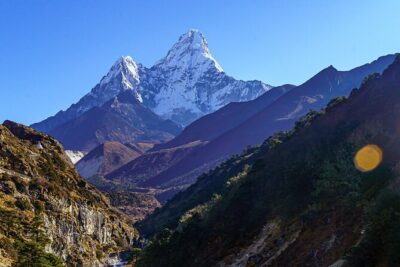
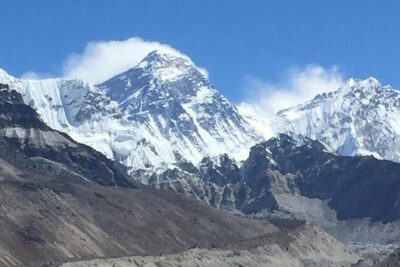
Day 7 includes a mostly uphill walk to Syangboche, with lunch and a rest stop along the way. From the route, you may see the high white peaks of Dhaulagiri, at 8,167 meters, and Annapurna I, at 8,097 meters.
These mountains provide an important visual contrast. Upper Mustang itself is dry and weathered, while the distant peaks carry snow and height. The views are not always close, but their presence gives the trek scale.
Day 8 takes you toward Tsarang through farms and the village of Ghiling. If the weather is clear, you can see more of the surrounding country and explore old monasteries around Ghiling. Tsarang is described as one of the largest villages on the route, making it a useful place to experience a more substantial settlement before Lo Manthang.
The day is also a reminder that the route is not a simple march from one famous stop to another. Farms, monasteries, bridges, villages, and dry valleys make up the experience. Sightseeing depends on weather, walking speed, and the time available at each stop.
Days 9 and 10: Arriving at Lo Manthang
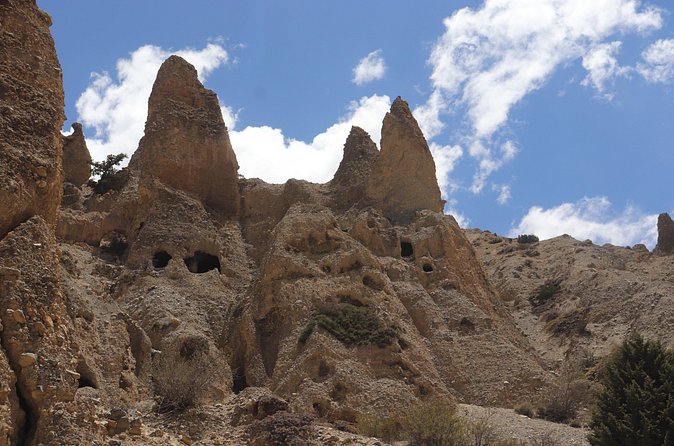
The walk from Tsarang to Lo Manthang takes about five to six hours. Along the way, you cross rivers and bridges and continue through the dry, open country that makes Upper Mustang so distinctive.
Lo Manthang is the main prize of the route. Its walled form, close-set buildings, monasteries, and royal associations give it a strong sense of place. Reaching the city on foot makes the arrival feel earned, especially after the earlier climbs.
Day 10 is set aside for exploration. You visit monasteries and the King’s Palace, and you have time to walk through the city rather than seeing it only from the trail. The colorful village details and religious decoration add interest, but the experience remains grounded and local rather than polished for mass tourism.
I consider this rest and exploration day one of the strongest parts of the schedule. A rushed visit would miss much of what makes Lo Manthang worthwhile. You can use the day to slow down, look carefully, and give your legs a break before the return journey.
Days 11 and 12: Gompas, Dhakmar, and Ghami
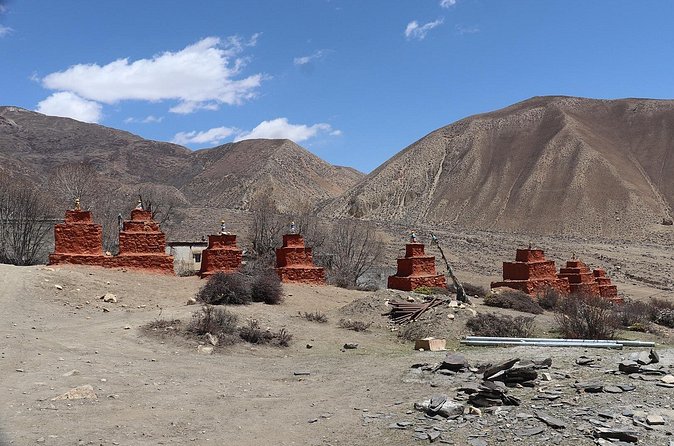
The return route begins with the walk toward Dhakmar. The first section climbs uphill to a gompa, and the day brings more views across Upper Mustang along with additional religious sites.
Dhakmar is known for its striking setting and is a memorable overnight point because the surrounding cliffs and dry slopes create a different mood from Lo Manthang’s walled streets. The trail continues to show how closely local life and religious buildings are linked.
From Dhakmar, you continue to Ghami. Ghami is another large village with a monastery, farms, and apple gardens. The route here may feel less like a long-distance wilderness walk and more like a chain of old settlements connected by footpaths.
The return direction is useful because familiar places look different from the opposite approach. You also get a second chance to appreciate details you may have missed while heading north, although the repeated sections can feel less exciting than the first pass.
Days 13 and 14: The steep descent to Chhusang and Kagbeni
Day 13 takes you from Syangboche down to Chhusang. It is a major descent of about 1,000 meters, passing through Samar, Bhena, and Chele before reaching the Kali Gandaki River.
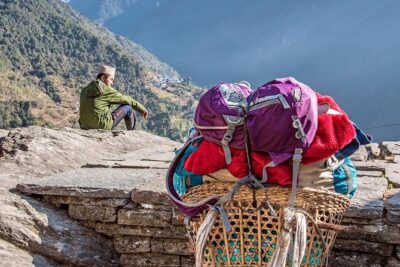
This is one of the most physically demanding parts of the trek. Downhill walking can strain knees and ankles, especially after more than a week on the trail. Trekking poles, if you use them, would be especially helpful here, though the supplied tour information does not state that equipment is provided.
The valley also becomes noticeably windier. On Day 14, you leave Chhusang early for Kagbeni because strong winds often build after noon. This timing is practical, not decorative. An early breakfast and early start can make the walk more comfortable.
By returning to Kagbeni, you complete the restricted Upper Mustang section and move back toward the more accessible lower Mustang route. The villages and river corridor remain interesting, but the emotional focus shifts from exploration to getting back to Jomsom and the flight connection.
Days 15 and 16: Jomsom and the flight to Pokhara
The walk from Kagbeni to Jomsom is short and relatively easy. In Jomsom, you check the flight schedule for the next day and have time to see the town.
The itinerary also allows time to buy apple brandy and other apple products from local makers. This is a small but appealing detail after days of walking through apple-growing areas. It gives you a direct connection to the farms you passed earlier.
Day 16 depends on the flight schedule. You may eat breakfast in Jomsom, or you may need to leave early for the airport. The flight to Pokhara takes about 25 minutes, followed by a transfer to your hotel.
Flights in mountain regions can be affected by weather, so this part of the plan requires flexibility. The inclusion of domestic air tickets is a real financial benefit, but you should not assume every departure will run at the exact advertised time.
Day 17 and 18: Returning to Kathmandu
After a night in Pokhara, you take a short transfer to the tourist bus park and board the bus to Kathmandu. The journey takes about seven hours.
Pokhara is not treated as a major sightseeing stop in this schedule. Its value is as a comfortable transition point between the mountain flight and the capital. The package includes two nights of accommodation in Pokhara with breakfast, which gives you some recovery time around the flight connection.
On Day 18, private transport takes you to Tribhuvan International Airport for your departure. The final day is simple, but the airport transfer removes one last piece of planning from a trip that already involves permits, flights, buses, and multiple accommodation changes.
What the $2,400 price covers
At $2,400 per person, this is not a budget walk. The price makes more sense when you account for the restricted-area permit alone, which costs $500 for 10 days.
The package also includes:
- Three nights in a three-star Kathmandu hotel with breakfast
- Two nights in a Pokhara hotel with breakfast
- Lodge or tea-house accommodation during the trek
- Domestic flights between Pokhara and Jomsom
- Tourist bus transport between Kathmandu and Pokhara
- Airport and hotel transfers by private car, van, or bus
- Annapurna Conservation Area permit
- A government-licensed trekking guide
- One porter for every two people
- Breakfast each day listed in the package, with 17 breakfasts included
- 16 lunches and dinners
- Government taxes and service charges
That is a substantial bundle. The package is particularly useful if you do not want to assemble the permits, flights, lodging, transfers, and support staff yourself.
The price does not include personal expenses, tips for the guide, porters, and driver, or extra hotel nights in Kathmandu or Pokhara. Budget for those separately. The meal wording also deserves attention: 16 lunches and dinners are included, not necessarily every meal for all 18 days.
Who will enjoy this trek most
I would recommend this trip to you if you want Nepal beyond the best-known routes and care about villages, monasteries, old buildings, and local daily life as much as mountain views.
It suits people who can handle:
- Several five to six-hour walking days
- Steady uphill sections and a major downhill stretch
- Dry, dusty trails
- Strong afternoon winds in the Kali Gandaki Valley
- Basic lodge and tea-house accommodation
- A long bus journey between Kathmandu and Pokhara
- A flexible flight schedule between Pokhara and Jomsom
You do not need a summit attempt or technical climbing background based on the supplied tour information, but you do need strong physical fitness. The route reaches high altitude, even if it generally stays below 4,000 meters.
This is a private tour, so only your own group participates. That gives the schedule a personal feel and allows some adjustment to requests. It also means the quality of communication with your guide matters. A government-licensed guide and porter are included, and the trip is designed around their support.
Practical details before you commit
The tour operates from March 19, 2024, through December 31, 2026, with opening hours listed as 8:45 AM to 6:45 PM daily. Booking confirmation is provided at the time of booking, and the meeting area is near public transportation.
Pickup is offered, and the tour is supplied as a mobile ticket. Bring your original passport for the permit process, along with a valid Nepal visa as required for the application.
Plan your clothing around changing conditions rather than one fixed climate. The route includes dry valleys, cold high mountain views, dusty paths, and windy river corridors. The exact equipment list is not provided, so you should confirm what luggage, sleeping items, and personal trekking gear you need to bring.
The cancellation policy is fairly clear but not especially generous close to departure. Cancel at least six full days before the start time for a full refund. A cancellation two to six days ahead receives 50 percent, while cancellation less than two full days ahead receives no refund. All cutoffs use local time.
Should you book the Upper Mustang Trek?
Book it if you want a quieter Himalayan route with a strong Tibetan Buddhist character, and if you value Lo Manthang, old villages, monasteries, and unusual dry-country scenery over polished comfort.
The best reasons to go are the full day in Lo Manthang, the included $500 permit, the private format, and the practical support of a licensed guide and porter. The biggest cautions are the long bus transfers, basic trekking accommodation, dusty trails, strong wind, and the physical effort of repeated climbs and descents.
For an active visitor who wants a distinctive Nepal experience and can accept a few rough edges, the package offers solid value. If you want short walking days, reliable luxury, or a simple point-to-point holiday, choose a different style of Nepal trip.
FAQ
How long is the Upper Mustang Trek?
The experience lasts approximately 18 days, including arrival and departure in Kathmandu, the trek, domestic flights, and bus transfers.
What is the price per person?
The listed price is $2,400 per person.
Is the Upper Mustang special permit included?
Yes. The package includes the Upper Mustang Special Permit, listed at $500 per person for 10 days.
Do I need my original passport for the permit?
Yes. You need your original passport and a Nepal visa to obtain the special permit.
What accommodation is included?
The package includes three nights in a three-star hotel in Kathmandu with breakfast, two nights in a hotel in Pokhara with breakfast, and lodge or tea-house accommodation during the trek.
Are flights included?
Yes. Domestic flights between Pokhara and Jomsom, and between Jomsom and Pokhara, are included.
Is transport between Kathmandu and Pokhara included?
Yes. The package includes tourist bus transport from Kathmandu to Pokhara and from Pokhara back to Kathmandu.
Are meals included?
Yes. The package lists 17 breakfasts and 16 lunches and dinners.
Is a guide and porter included?
Yes. A government-licensed trekking guide is included, along with one porter for every two people. Tips are not included.
Just added around Kathmandu
- Traditional Momo Making Class★ 5.0 · 10 reviews
- Kathmandu to Pokhara Premium sofa bus ticket★ 4.0 · 17 reviews
- Women Empowerment Project(Nepali cooking class & jewelry workshop★ 5.0 · 15 reviews
- Walking tour of Kathmandu with awesome local guides★ 5.0 · 4 reviews
- Wildlife Adventure in Chitwan Nepal★ 4.0 · 4 reviews
- Kathmandu 2 Nights 3 Days Chitwan Jungle Safari Tour★ 5.0 · 9 reviews
- Kathmandu Street Food Walking Tour – Eat Like a Local★ 5.0 · 3 reviews
- Walking tour of real Kathmandu through back streets.★ 5.0 · 3 reviews
Hiking & Trekking, compared.
Nagarkot Sunrise View and Day Hiking from Kathmandu
Read our review →