
Reviewed · HISTORICAL TOURS
Kathmandu Heritage & Monuments Sightseeing
Kathmandu’s sacred core is packed into a single city day on this private sightseeing tour. You’ll visit Pashupatinath, Boudhanath, Swoyambhunath, and Patan Durbar Square, with a car and driver handling the city traffic between them. I like the privacy and the freedom to pause when you need a break. The main catch is important: monument entry tickets and a tour guide are not included, so the $147 price is not the full cost.
I also like that the route brings together Hindu, Buddhist, royal, and living religious traditions rather than showing you only one side of Kathmandu. A six-hour schedule is efficient, but it can feel full, especially if you want time for photographs, quiet observation, and a proper look inside each site.
Key points to know before booking
- Four major heritage stops: Pashupatinath, Boudhanath, Swoyambhunath, and Patan Durbar Square form the heart of the route.
- Private vehicle and driver: Your party travels alone, with fuel, parking, hotel pickup, and hotel drop-off included.
- Kumari visit: Patan Durbar Square includes the tradition of the Kumari, Nepal’s Living Goddess.
- Guide not included: You will need to arrange and pay for a guide separately if you want detailed interpretation.
- Flexible pacing: A private outing lets you request more time at a monument or pause for coffee.
- Free cancellation: You can receive a full refund if you cancel at least 24 hours before the start time.
Why this route gives you a useful first look at Kathmandu
Kathmandu can feel confusing at first. Sacred courtyards sit beside busy streets, Buddhist prayer sites share the city with Hindu temples, and royal squares are woven into ordinary neighborhood life. This tour gives you a clean framework for understanding it.
The route covers four major cultural sites, though the exact order can vary. You are not simply checking off monuments. You are moving through different parts of Nepal’s religious life: Hindu worship at Pashupatinath, Tibetan Buddhist tradition at Boudhanath, Buddhist hilltop devotion at Swoyambhunath, and royal Newar architecture at Patan.
I think the private format is the strongest feature. You are not tied to strangers’ walking speed or forced to leave a site just as you begin to understand it. If your group wants extra time at a courtyard, a short coffee break, or a quicker stop at a less important section, you can ask the driver to adjust the day.
The vehicle also matters in Kathmandu. Traffic can be slow, and the sites are spread across the city. Having private round-trip transport means you do not need to arrange a rental car, find parking, or work out several separate taxi rides.
A few more Kathmandu trips to weigh up
- Private Kathmandu Sightseeing Tour | UNESCO World Heritage sites
★ 5.0 · 756 reviews - UNESCO Seven World Heritage Tour in Kathmandu
★ 5.0 · 253 reviews - Kathmandu Private Sightseeing Tour | UNESCO World Heritage Sites
★ 5.0 · 109 reviews
Starting at 9 am with a private car
The driver is scheduled to collect you from your hotel at about 9 am. Pickup and drop-off apply to selected hotels, so check your hotel address carefully before booking. A representative may meet you at the hotel the day before or on the tour day to explain the plan.
Transport includes the private vehicle, driver, fuel, and parking charges. It does not include meals, drinks, monument admission, or a guide. That distinction is easy to miss, and it changes the real budget.
The tour is private for your party only. That makes it a good choice for families, couples, or small groups who prefer to set the pace. Children must be accompanied by an adult, and the stated minimum age is 18. The activity is near public transportation, and most people can participate, but the itinerary includes major religious and historic sites where walking and standing are part of the visit.
The vehicle is best viewed as practical transport rather than a sightseeing feature. The main value is not luxury. It is the ability to move between widely separated monuments without arranging each leg yourself.
Pashupatinath, Kathmandu’s powerful Hindu center
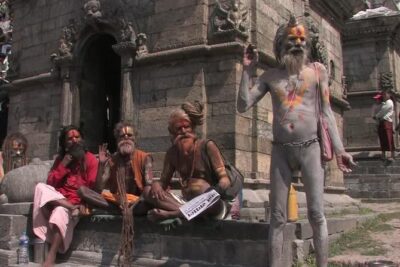
Pashupatinath is the first stop listed in the route, and it is likely to be one of the most intense. This is a sacred Hindu temple complex dedicated to Shiva, located along the Bagmati River. It is an active place of worship, not a museum arranged for visitors.
That matters when you visit. You may see priests, pilgrims, shrines, ritual activity, and religious ceremonies taking place around you. The experience is best approached quietly and respectfully. Dress modestly, follow posted restrictions, and ask before taking photographs of people or ceremonies.
The main temple has access rules that can vary by religious identity, so your driver or representative should clarify what you can enter. Even where you cannot go inside, the surrounding complex and river setting remain important parts of the visit.
Pashupatinath can be difficult to absorb quickly. Without a guide, you may see a great deal without understanding who is worshipping, what the shrines represent, or how the site functions in daily life. If Hindu traditions are unfamiliar to you, paying for a guide may be worthwhile here.
Allow yourself a quiet moment rather than treating this as a fast photo stop. The site’s importance comes from living practice, not only carved stone.
Boudhanath and the scale of the great stupa
Boudhanath brings a very different mood. The huge white Buddhist stupa is the visual center of a district shaped by Tibetan Buddhist traditions. The tour description calls it the world’s biggest stupa, and its scale is certainly the first thing you notice.
You can expect a broad circular structure, prayer activity, religious shops, monasteries, and people moving around the base. The stupa is not merely an impressive building. It is a place used for devotion, with visitors traditionally moving around it in a clockwise direction.
Take your time here if you can. The repeating movement around the stupa, the prayer wheels, and the painted details reward a slower visit. A rushed circuit will show you the shape, but not much of the meaning.
Boudhanath is also one of the easier places on this route to appreciate without expert help. You can observe the central monument and the flow of worshippers. Still, a guide can explain the symbols, the eyes painted on the structure, and the relationship between the stupa and the surrounding Buddhist community.
The private schedule helps here. If your group enjoys watching daily religious practice, ask for a little extra time at Boudhanath. If you have already visited Buddhist sites elsewhere in Nepal, you can shorten the stop and give that time to Patan.
Same mountains, a completely different kind of day:
- Everest Base Camp Trek – 14 Days
★ 5.0 · 1,499 reviews - Everest Base Camp Helicopter Tour landing at Everest View Hotel
★ 5.0 · 668 reviews - Half day cooking class in Thamel kathmandu
★ 5.0 · 607 reviews - Everest Base Camp Trekking
★ 5.0 · 485 reviews
Swoyambhunath, the hilltop Monkey Temple
Swoyambhunath Stupa, often called the Monkey Temple, adds height and a different view of Kathmandu. It is a Buddhist site associated with a hilltop setting, religious monuments, and the monkeys that give the popular name its character.
The hill is part of the appeal, but it can also make this stop more demanding than Boudhanath. The tour information does not specify the number of steps or the exact route, so your comfort will depend on your mobility and the access point used that day.
Keep belongings secure around the monkeys and avoid feeding them. That is simple practical advice, but it helps you enjoy the site without turning an amusing encounter into a problem.
The main attraction is the combination of sacred architecture and a broad city outlook. Swoyambhunath lets you see Kathmandu from above, while Boudhanath presents a more contained religious setting. Together, the two Buddhist stops show different sides of worship in the valley.
A guide is especially useful if you want to understand how Buddhist symbols, shrines, and Hindu elements can appear together in Kathmandu’s religious life. Without one, you can still enjoy the views and setting, but the details may pass by quickly.
Patan Durbar Square and the Kumari tradition
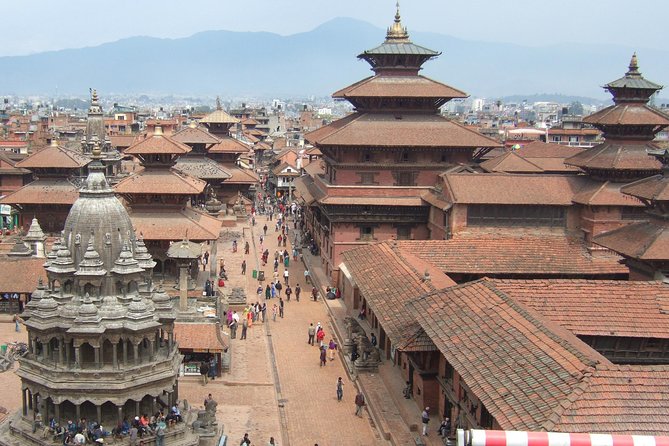
Patan Durbar Square is the architectural high point of the route. Patan, also known as Lalitpur, is known for Newar craftsmanship, courtyards, temples, and royal-era buildings. The square is more than a single monument. It is a compact group of structures that shows how court life, religious practice, and urban neighborhoods fit together.
Look closely at the carved wood, brickwork, metal details, and temple forms. This is where a guide can add real value, because the most interesting features are often small. A quick walk may leave you with attractive photographs but little sense of how the buildings connect.
The Kumari is a key part of the stop. She is known as Nepal’s Living Goddess and carries both religious and cultural importance for Nepalese people. The tradition is not a theatrical performance for tourists. It is a living belief system, so treat the Kumari’s residence and any possible appearance with respect.
Do not assume you are guaranteed to see the Kumari. The supplied tour information says the route includes the Kumari, but it does not promise a viewing or specify the conditions. Ask your guide or driver about the appropriate way to visit, and avoid photography if it is not permitted.
Patan is the place where I would most want a qualified guide. The buildings are visually striking, but their purpose and symbolism are not always obvious. If you are paying for only one guide for the day, Patan and Pashupatinath are strong candidates.
What the $147 price really covers
At $147, this is not a bargain city shuttle, but it can be fair value for a private group. You are paying for a private vehicle, driver, fuel, parking, hotel pickup, and hotel return. If two or three people share the cost, the convenience becomes easier to justify.
The figure does not cover entry tickets, food, drinks, or a tour guide. You should set aside extra money for admission and decide in advance if you want interpretation. The total cost can vary depending on the size of your group and how many extras you add.
For a solo visitor, the price is harder to defend unless you place high value on privacy and door-to-door transport. For a family or small group, it may compare well with arranging several taxis and a separate guide.
The private setup also reduces wasted time. You do not need to wait for a large group to gather, and you can ask for a coffee break if the morning feels crowded or tiring. One named guide associated with the operator is Khumud, who is noted for adapting the pace and stopping for coffee when needed, but the booking information does not guarantee that Khumud will lead your tour.
The guide question is the main decision point
This tour includes a driver, not a tour guide. That is the most important detail to understand before you pay.
A driver can take you to the right places and help with basic timing. A guide can explain Hindu and Buddhist customs, identify important carvings, describe the Kumari tradition, and help you behave appropriately at active religious sites.
You have three reasonable options:
- Take the tour with the driver only and focus on the sights and transport.
- Arrange your own guide separately.
- Ask the operator if a guide can be added for an additional cost.
The third option is worth asking about before the tour date. The operator is Walk Mountain Pvt Ltd., and the company has arranged broader Nepal itineraries as well as Kathmandu sightseeing. Named staff connected with the company include Bishnu Pandey and driver Ganesh, but staff assignments can change, so confirm who will actually accompany you.
Timing, comfort, and realistic expectations
The experience lasts about six hours. That is enough for a useful overview, but not enough for an unhurried study of every monument. You will probably spend part of the day in the vehicle, since the sites are in different areas of Kathmandu.
The private format gives you control, but it does not remove the city’s traffic or the crowds around major religious sites. Keep your expectations practical. This is a strong orientation day, not a specialist architectural tour.
The route may feel tiring if you try to give every stop equal attention. I would prioritize Pashupatinath and Patan for cultural explanation, then adjust Boudhanath and Swoyambhunath according to your interests. If you love Buddhist architecture, reverse that priority.
The coffee-break flexibility is a small but meaningful advantage. You can tell the driver when you need a pause instead of waiting for a group schedule. Food and drinks are not included, so carry or purchase them separately if needed.
Who should book this Kathmandu outing?
I would recommend it most strongly to you if:
- You have one day for Kathmandu’s major heritage sites.
- You want private transport and do not want to handle city taxis.
- You are traveling with family or a small group.
- You prefer a flexible schedule over a fixed group departure.
- You want to compare Hindu, Buddhist, and Newar traditions in one outing.
I would hesitate if you want a fully guided cultural experience with admission included in one price. This tour does not provide that. I would also hesitate if you prefer slow photography, long visits, or detailed museum-style explanation at each stop. Six hours will require choices.
The experience has a 5 out of 5 rating from 27 reviews and a 100 percent recommendation figure, which supports confidence in the operator’s general service. The most consistent praise centers on courteous organization, helpful staff, good vehicles, and flexible arrangements. Those strengths matter most when you want transport and planning taken care of.
Should you book it?
Book this tour if you want a private, efficient first day in Kathmandu and you are comfortable paying extra for monument tickets or a guide. The route covers the city’s essential religious and royal sites, and private transport makes the day far easier than arranging each ride yourself.
Before booking, ask two questions: which hotels qualify for pickup, and can a guide be added? If the answer to the second question is yes, the tour becomes a stronger cultural experience. If not, use the driver for transport and bring your own background reading.
You can cancel for a full refund up to 24 hours before the start time. Cancellations made less than 24 hours before departure are not refunded, and the operator requires a minimum number of participants for the experience to run.
FAQ
How long does the Kathmandu Heritage and Monuments tour last?
The tour lasts approximately six hours.
What time does hotel pickup take place?
The driver is scheduled to pick you up from your hotel at about 9 am.
Is hotel pickup included?
Hotel pickup is included for selected hotels. Hotel drop-off is also included for selected hotels.
Is this a private tour?
Yes. Only your party participates in the private tour or activity.
What transport is included?
Transport by private vehicle is included, along with the driver, fuel surcharge, fuel, and parking charges.
Is a tour guide included?
No. Tour guide services are not included in the stated tour price.
Are monument entry tickets included?
No. Entry tickets for the monuments are not included.
Are food and drinks included?
No. Food and drinks are not included.
Can I cancel for a full refund?
Yes. You must cancel at least 24 hours before the experience start time to receive a full refund.
Just added around Kathmandu
- Private Half-Day Tour of Boudhanath and Pashupatinath Temples in Kathmandu★ 4.5 · 9 reviews
- Private Half-Day Tour of Kathmandu Durbar Square and Swayambhunath Temple★ 4.5 · 11 reviews
- Namobuddha Monastery Hiking Day Tour via Panauti from Kathmandu★ 5.0 · 15 reviews
- Private Full-Day Kathmandu City Tour★ 5.0 · 9 reviews
- Private Day Tour in Kathmandu Valley Rim with Bhaktapur Sightseeing★ 5.0 · 3 reviews
- Private Half Day Budhanilkantha Tour★ 5.0 · 6 reviews
- Private Day Tour: Patan and Bhaktapur from Kathmandu★ 4.5 · 6 reviews
- Private Day Tour – Sacred Journey to Namo Buddha★ 5.0 · 5 reviews
Historical Tours, compared.
Private Kathmandu Sightseeing Tour | UNESCO World Heritage sites
Read our review →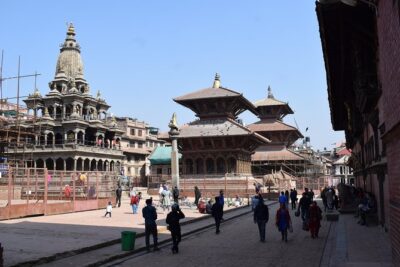
Full-Day Tibetan Cultural Tour to Tibetan Settlements Pokhara
Read our review →
Kathmandu Private Sightseeing Tour | UNESCO World Heritage Sites
Read our review →
Afternoon Tibetan Cultural Tour to Tibetan Settlements Pokhara
Read our review →
Full Day Private Top 4 UNESCO Heritage Tour W/Lunch.
Read our review →
Nagarkot Sunrise & Bhaktapur UNESCO Heritage Private Tour
Read our review →Browse the lists this tour appears in