
Reviewed · CITY TOURS
Kathmandu City in One Day with Bodhnath Stupa
Kathmandu’s most important sights are spread across a busy valley, and this tour links five of them in one long day. You move from the old royal city of Patan to Hindu cremation ghats, then on to two major Buddhist stupas and the hilltop Monkey Temple.
I like the religious variety: you see Hindu and Buddhist sites rather than spending the day inside one kind of monument. I also like the practical setup, with hotel pickup, a local guide, entrance fees at most stops, and a group limited to 12 people. The main drawback is the pace. Forty minutes at a major site can give you an introduction, but not much quiet time for wandering or photography.
Key points
- Five major stops in one day: Patan, Krishna Temple, Pashupatinath, Boudhanath, and Swayambhunath.
- A useful Hindu and Buddhist mix: The route gives you a clear look at Nepal’s two major religious traditions.
- Guide Keshar Jung Thapa: He is praised for explaining religion, culture, politics, history, and everyday life in an easy, engaging way.
- Hotel pickup and drop-off: This saves you from arranging taxis between widely separated sites.
- Small-group format: The maximum is listed as 12 people, though the general tour description mentions up to 15, so confirm the final group size.
- $95 value: The price is fair if you want transport, a local guide, and several admission tickets handled in one booking.
Five Kathmandu landmarks before dinner
If your time in Kathmandu is short, this is a sensible way to get your bearings. The tour begins at 9:00 a.m. and lasts about seven to eight hours, so you should expect a full day rather than a relaxed morning outing.
The route covers Patan, Pashupatinath, Boudhanath, and Swayambhunath, with a separate visit to Krishna Temple in Patan. These places are not interchangeable. Each shows a different part of Kathmandu Valley’s religious and political story.
You will spend about 40 minutes at Patan, 15 minutes at Krishna Temple, 40 minutes at Pashupatinath, 30 minutes at Boudhanath, and 40 minutes at Swayambhunath. Driving time between sites fills out the day, and city traffic can affect the exact rhythm.
That short-stop format is both the strength and weakness of the tour. You see a lot without having to plan a complicated route, but you will not have hours to linger at any one monument.
A few more Kathmandu trips to weigh up
- Kathmandu: 7 UNESCO Sites Tour in 1 Day (Private Tour)
★ 4.9 · 204 reviews - Day Trip to Bhaktapur and Panauti from Kathmandu
★ 5.0 · 184 reviews - The Most Beautiful 1 Day Experience in Kathmandu Nepal
★ 5.0 · 84 reviews
Patan Durbar Square and the old royal city
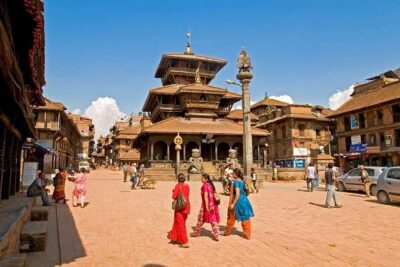
Your first major stop is Patan, also called Lalitpur. The old Durbar Square was once the heart of a royal city and remains one of the most rewarding historic areas in Kathmandu Valley.
The 40-minute visit gives you time to take in the square and its temples, but it is not enough for a slow architectural study. I would pay attention to the carved wood, brickwork, courtyards, and layered temple roofs, then listen carefully to the guide’s explanation of how Patan fits into Nepal’s past.
The itinerary lists admission to Patan as free, while Krishna Temple admission is included separately. That makes this part of the day easy to handle, since you are not stopping to sort out several ticket purchases.
The word old can sound vague, but Patan feels distinct from central Kathmandu. It has its own civic identity and artistic character. The tour gives you a short introduction rather than a full exploration, which is useful for a first visit but may leave architecture fans wishing for more time.
Krishna Temple and Patan’s sacred center
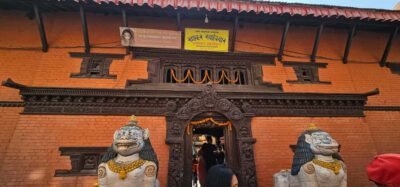
Krishna Temple receives about 15 minutes, making it the quickest stop. It is described as one of the oldest temples in the Patan area and is an important counterpoint to the larger square around it.
Do not treat this as a separate, lengthy attraction. It works better as part of the Patan visit, where you can see how royal spaces, Hindu worship, and public life were closely linked.
The short visit may suit you if you want a quick look at several landmarks. If you prefer to study carvings, observe worship, or take photographs without rushing, this is one place where the schedule will feel tight.
The admission ticket is included. That matters on a tightly timed day because you can stay with the group instead of dealing with another payment stop.
Pashupatinath, a Hindu temple and cremation site
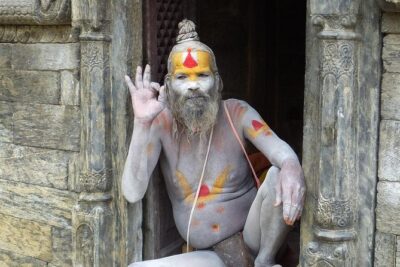
Pashupatinath is one of the day’s most significant stops. The site is a major Hindu temple complex and is also associated with cremation, which gives it a different atmosphere from the other monuments on the route.
The description allows about 40 minutes here. Your guide’s role matters especially at Pashupatinath, where religious practices and cremation customs may not be obvious to an outsider. A good explanation can help you understand what you are seeing without treating a living religious place like a museum display.
The tour materials describe Pashupatinath as a Hindu temple also known as a crematorium. That wording is blunt, but it points to the central fact you need to know: this is an active sacred area connected with death, mourning, and Hindu ritual.
Approach the visit with care and respect. The schedule does not promise a private or in-depth ceremony experience, and the site may feel emotionally serious. You are there to observe and learn, not to treat every scene as a photo opportunity.
Admission is included, and the guide accompanies you. For a first visit to Kathmandu, that combination is useful because the site can be hard to interpret on your own.
Same mountains, a completely different kind of day:
- Everest Base Camp Trek – 14 Days
★ 5.0 · 1,499 reviews - Private Kathmandu Sightseeing Tour | UNESCO World Heritage sites
★ 5.0 · 756 reviews - Everest Base Camp Helicopter Tour landing at Everest View Hotel
★ 5.0 · 668 reviews - Half day cooking class in Thamel kathmandu
★ 5.0 · 607 reviews
Boudhanath and the great Buddhist stupa
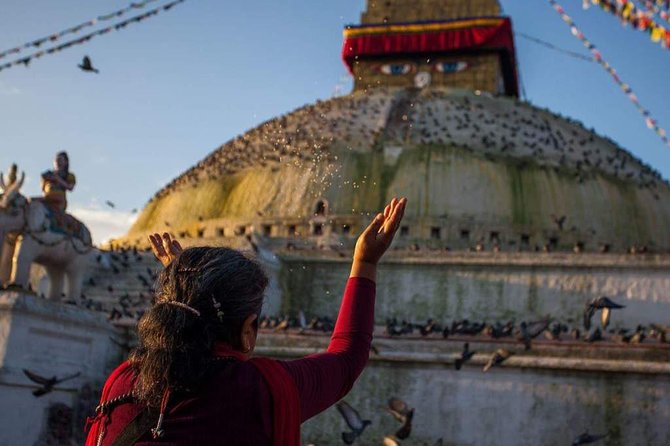
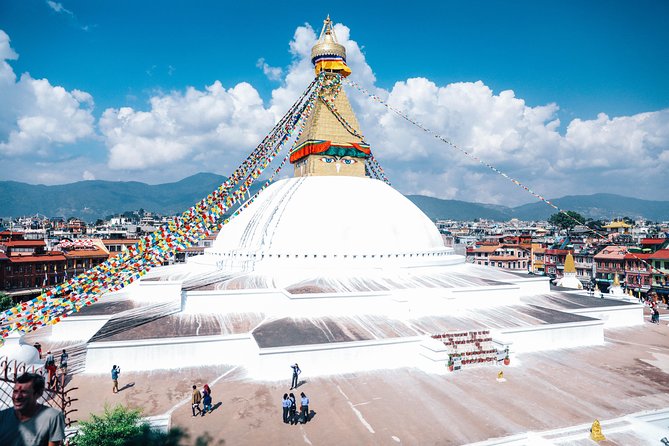
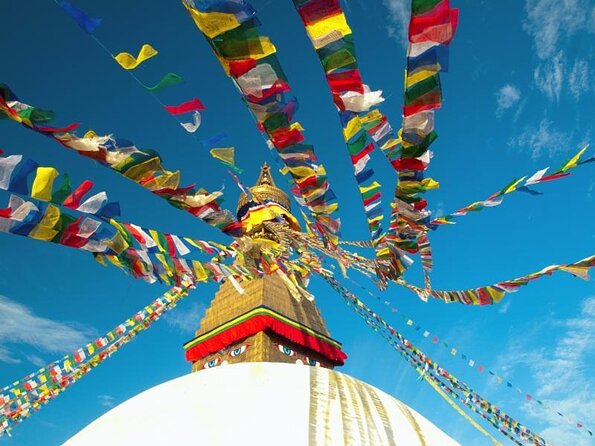
Boudhanath, also spelled Bodhnath, is the Buddhist stop that gives the tour much of its visual character. The itinerary calls it the biggest Buddhist stupa in Kathmandu, and the visit lasts about 30 minutes.
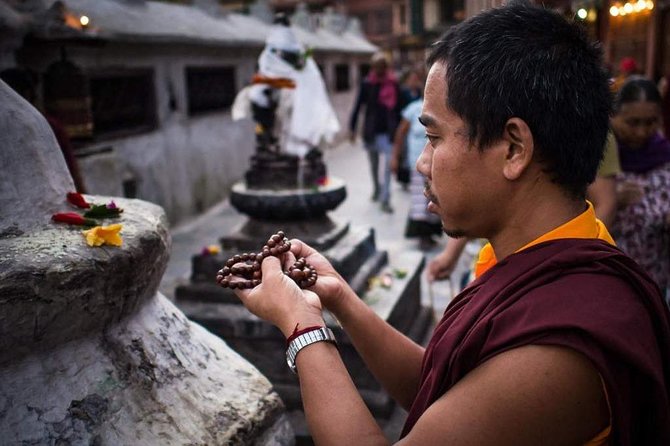
A stupa is not simply a building to enter and inspect. It is a place of Buddhist worship, and the circular form encourages movement around the monument. Your guide can explain the religious meaning behind the structure and help connect it to the wider Buddhist traditions of Nepal.
Thirty minutes gives you a useful introduction, especially when the guide explains what you are seeing. Still, the stop may feel short if you want to sit quietly, watch worshippers, explore surrounding streets, or take your time with details.
The contrast with Pashupatinath is one of the best features of the day. You move from a Hindu sacred site connected with cremation to a Buddhist center built around prayer and ritual movement. That side-by-side comparison makes Kathmandu easier to understand than a day of unrelated sightseeing.
Admission is included. You should also remember that food and drinks are not included, so any café stop or meal during the day is at your own expense.
Swayambhunath, the Monkey Temple above Kathmandu
Swayambhunath is the final major stop and is also known as the Monkey Temple. It is described as the oldest shrine complex in Kathmandu Valley and offers a view over Kathmandu Valley.
The 40-minute visit gives you time to see the shrine complex and enjoy the outlook. The view is a real payoff after a day spent among crowded streets and enclosed temple courtyards. It helps you understand how the city and its surrounding valley fit together.
The name Monkey Temple is practical shorthand, not the whole story. The site is a Buddhist shrine complex with religious importance, and your guide can explain that larger meaning while pointing out the parts that make the place memorable.
The exact experience will depend on the day’s traffic and how much time remains after the earlier stops. If you want long photo breaks, this schedule may feel compressed. If you want a final landmark and a broad view before returning to your hotel, it is a strong closing stop.
Admission is included. You should also be prepared for a visit that involves walking around a historic religious complex, though the supplied information says most people can participate.
Why the guide can make or break the day
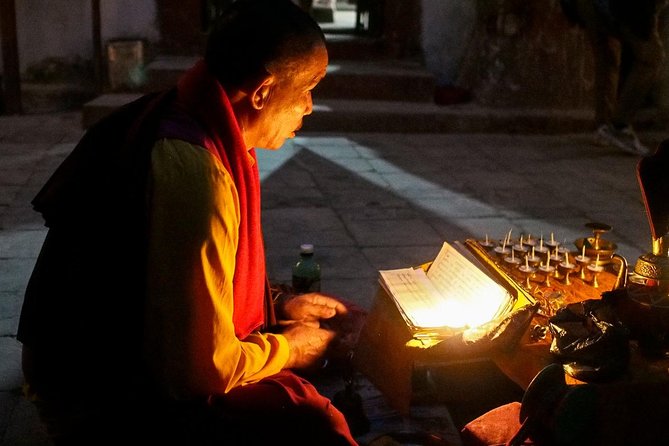
The strongest praise attached to this tour centers on the guiding. Keshar Jung Thapa is repeatedly singled out for clear explanations, patience, humor, and an ability to connect monuments with Nepal’s culture and everyday life.
That is important here because several stops are active religious places, not empty ruins. You need more than names and dates. You need help understanding why Pashupatinath matters, how Buddhist worship at Boudhanath works, and what makes Patan different from the other historic areas.
Keshar is also praised for answering questions about Buddhism and Hinduism, as well as Nepal’s history, politics, and daily life. If you have a choice of guide when booking or confirming the tour, you can ask if Keshar Jung Thapa is available. The information does not guarantee that he will lead every departure, so treat that as a request, not a promise.
A local guide also helps with the practical side of a city day. Kathmandu’s sights are spread out, and a guide can keep the group moving while giving the journey between sites some meaning.
The $95 price and what you receive
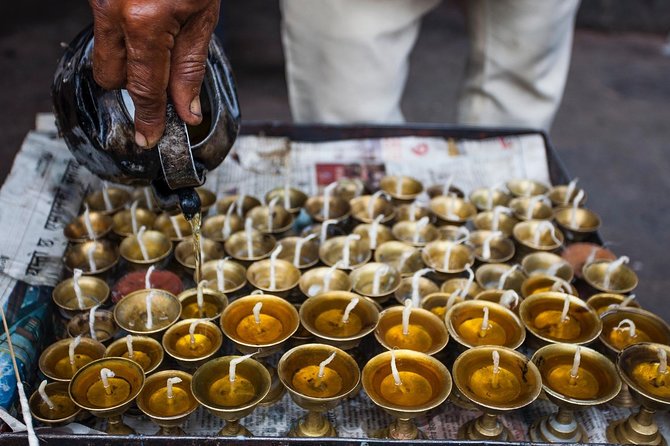
At $95 per person, this is not the cheapest way to see Kathmandu. Its value comes from combining transport, hotel pickup and drop-off, a professional local guide, taxes, handling charges, and admission tickets at the listed paid sites.
You are paying for convenience as much as sightseeing. Booking separate taxis and entrance tickets could cost less or more depending on your choices, but it would take planning and time. For a first-time visitor with only one free day, having the route organized is a real benefit.
The price makes more sense if you are staying at a hotel covered by the pickup service and want a guided overview rather than independent wandering. It is less appealing if you already know the sites, prefer to spend half a day at one square, or have easy access to a private car and a guide of your own.
Food and drinks are not included. Plan for that expense separately, although the supplied details do not specify a meal stop or lunch arrangement. The tour begins at 9:00 a.m., so you should be ready for a full day out.
Group size, timing, and the tradeoff of coverage
The additional information gives a maximum of 12 participants, while the general description says the group may be limited to 15. That is a small enough range to matter, so confirm the expected group size when you book.
A smaller group can make it easier to hear the guide and ask questions. It may also help the day move faster at entrances and during short walks. Still, the tour is not described as private. If you want a custom order, a longer evening visit to Boudhanath, or extra time at one site, ask about a private version.
One past booking was arranged privately for a family of four, with Boudhanath moved to the evening. That shows some flexibility through Mosaic Adventure, but it does not mean the standard $95 departure follows that custom schedule.
The route’s biggest practical issue is traffic. The tour covers several parts of the valley in one day, and the listed sightseeing times are fixed in short blocks. You will see the main places, but you should not expect a slow, unstructured day.
Earthquake damage and setting expectations
The tour information warns that some sites suffered major damage in the April and May 2015 earthquakes. Conditions can change over time, but you should still expect restoration work, altered structures, or areas that do not look exactly as they once did.
This note is useful because historic Kathmandu is not a perfectly preserved display. Repair work is part of the present-day experience at some monuments. It may affect what you can see or how long you can remain in certain areas.
A guide can help you understand what changed and what survived. The tour is still built around the cultural importance of these places, but you should book it for the chance to see Kathmandu’s living religious and historic center, not for a promise of untouched monuments.
Who should book this Kathmandu day tour?
I would recommend it most strongly to a first-time visitor with one day in Kathmandu, especially someone who wants cultural context without arranging every transfer alone.
It suits you if you want:
- A guided introduction to both Hindu and Buddhist sites
- Hotel pickup and return
- Several entrance tickets included
- A small-group format
- A guide who can discuss religion, history, politics, and daily life
- A full sightseeing day instead of choosing just one or two monuments
I would be more cautious if you dislike fixed schedules or need long periods for photography. The short stops at Krishna Temple and Boudhanath are the clearest limitations. Independent visitors may prefer to focus on Patan and Boudhanath at a slower pace.
The tour also suits families and small groups who want a private option. Mosaic Adventure has handled custom arrangements, including a private family day with Boudhanath visited in the evening.
Should you book it?
Book this tour if your priority is breadth, guidance, and simple logistics. For $95, you receive a well-packed day covering Kathmandu’s main Hindu and Buddhist landmarks, with transport and a local guide included.
Do not book it expecting deep time at each monument. The schedule is a sampler, and traffic or site conditions may make the day feel even tighter. If you have only one day, that tradeoff is reasonable. If you have several days in Kathmandu, use this as an introduction, then return on your own to the places that deserve more time.
Free cancellation is available when you cancel at least 24 hours before the 9:00 a.m. start. Changes or cancellations inside that period are not accepted for a refund.
FAQ
How long does the Kathmandu city tour last?
The experience lasts approximately seven to eight hours and begins at 9:00 a.m.
Which sights are included?
The route includes Patan, Krishna Temple, Pashupatinath Temple, Boudhanath Stupa, and Swayambhunath, also called the Monkey Temple.
Is hotel pickup and drop-off included?
Yes. Hotel pickup and drop-off are included in the experience.
Are entrance fees included?
Admission is included for Krishna Temple, Pashupatinath Temple, Boudhanath Stupa, and Swayambhunath. Patan is listed with free admission.
Is food included in the price?
No. Food and drinks are not included.
How large is the group?
The additional tour information lists a maximum of 12 participants. The general description mentions a limit of 15, so confirm the expected group size when booking.
Can I cancel for a full refund?
Yes, provided you cancel at least 24 hours before the experience start time. Cancellations or changes made less than 24 hours before the start are not eligible for a refund.
Just added around Kathmandu
- Private Half-Day Tour of Boudhanath and Pashupatinath Temples in Kathmandu★ 4.5 · 9 reviews
- Private Half-Day Tour of Kathmandu Durbar Square and Swayambhunath Temple★ 4.5 · 11 reviews
- Namobuddha Monastery Hiking Day Tour via Panauti from Kathmandu★ 5.0 · 15 reviews
- Private Full-Day Kathmandu City Tour★ 5.0 · 9 reviews
- Private Day Tour in Kathmandu Valley Rim with Bhaktapur Sightseeing★ 5.0 · 3 reviews
- Private Half Day Budhanilkantha Tour★ 5.0 · 6 reviews
- Private Day Tour: Patan and Bhaktapur from Kathmandu★ 4.5 · 6 reviews
- Private Day Tour – Sacred Journey to Namo Buddha★ 5.0 · 5 reviews
City Tours, compared.
Sarangkot Sunrise with Half or Full-Day City Tour
Read our review →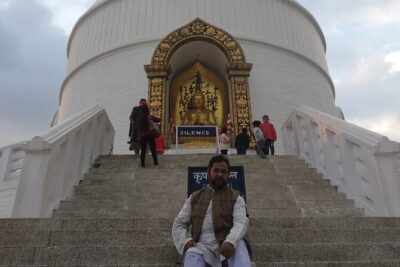
Full Day Kathmandu City Sightseeing Tour of UNESCO Heritage Sites
Read our review →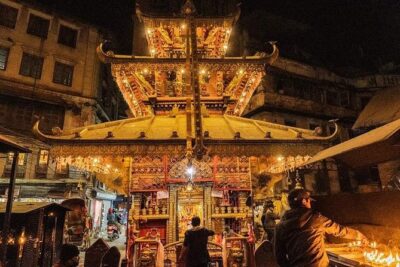
Browse the lists this tour appears in