
Reviewed · EVENING EXPERIENCES
Sound Bath (Sound Healing Session Every Evening) in Nepal
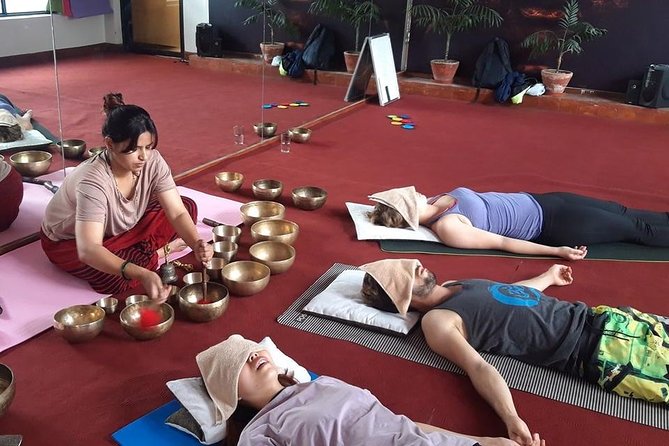
Kathmandu sightseeing can fill your head with traffic, temple bells, bargaining, and a steady stream of new sights. This one-hour evening sound bath uses specially made metal singing bowls to create a quiet reset at the Golden Temple Singing Bowls and Healing Center in Kawalakhu. You learn what the bowls do, then lie back or settle in as their tones fill the room.
I like the simple timing and central purpose: the session fits neatly after a day out, and the small private format means only your group takes part. I also like the short introduction to bowl frequencies and individual properties, since it gives the session more shape than simply listening to pleasant sounds.
The main consideration is that sound healing is a personal practice, not a guaranteed medical treatment. One person left because of aggressive hawking near the doorway, so I would arrive prepared, confirm the exact entrance, and trust your instincts if the approach feels uncomfortable.
Key points to know before you book
- A one-hour evening reset: The advertised session runs from 4:00pm to 5:00pm, with a stated meeting time of 4:15pm, so confirm the precise start when booking.
- A Kawalakhu location: You meet at the Golden Temple Singing Bowls and Healing Center in Lalitpur, Kathmandu Valley, near public transportation.
- A private group session: Only your own group participates, which can make the room feel more personal and less exposed than a large class.
- More than background music: The introduction covers singing bowls, their frequencies, and their individual properties.
- Practitioners may vary: Buddha led one highly praised session, while Swami Chaitanya Krishna is also associated with the center.
- Flexible booking protection: You can cancel for a full refund up to 24 hours before the local start time.
A quiet hour after Kathmandu’s busy streets
The appeal here is easy to understand. Kathmandu can be tiring in a good way, but the city asks for constant attention. You watch traffic, look for uneven pavement, keep track of temples and courtyards, and absorb far more sound than you expect.
The sound bath gives you one hour with no sightseeing task to complete. You are not racing to the next monument or trying to memorize another guide’s explanation. Instead, you listen to the tones of metal bowls and allow your attention to settle.
The center is in Kawalakhu, at the Golden Temple Singing Bowls and Healing Center, Lalitpur 44600. The location is described as easy to find and near public transportation, though one poor account raises a practical warning about the doorway and street hawkers. I would keep the address ready on your phone and arrange your return plan before the session begins.
The meeting point is also the end point. That matters after a relaxing hour. You do not need to find a second venue or walk to a remote pickup location.
A few more Kathmandu trips to weigh up
- Kathmandu Sunset Tour by Rickshaw Including Durbar Square Visit
★ 5.0 · 73 reviews - 3 Nights 4 Days Chitwan National Park with Tower Night Stay
★ 5.0 · 41 reviews - 3 night 4 Day Yoga & Ayurveda Retreat to Detox the Body & Mind, Nepal
★ 5.0 · 37 reviews
What happens during the 4:00pm sound bath
The session lasts about one hour. The available schedule describes it as an evening sound healing session from 4:00pm to 5:00pm, while the meeting information gives a 4:15pm start. That mismatch is small but worth checking. You do not want to arrive late, especially for a quiet activity where the room may already be settled.
The opening portion explains the singing bowls. You learn about their frequencies and the properties associated with individual bowls. This introduction helps you listen with more intention. Instead of hearing one long wash of sound, you can begin to notice changes in pitch, length, and tone.
After the explanation, the sound portion takes over. Specially crafted metal bowls are played to produce sustained frequencies. The aim is relaxation and a positive mental reset. The session description also presents the sounds as useful for reducing stress and physical pain, but you should treat those statements as the center’s approach rather than a medical promise.
The exact technique can vary by practitioner. Buddha led one session that included physical work with the bowls as well as sound therapy. That suggests some appointments may involve bowls being used in a more hands-on way, but you should ask what your session includes if that matters to you.
A private booking gives you room to settle without worrying about a large class. It also lets you ask questions about the instruments and their use. If you are new to sound healing, that personal setting may be more useful than a session where the teacher has to address a crowd.
Why the singing bowls matter
Singing bowls are metal bowls that produce a ringing, sustained tone when struck or played around the rim. At this center, the focus is on the frequencies created by different bowls and the properties connected with them.
You do not need prior knowledge of meditation or sound healing. The explanation is designed to give beginners a starting point. I like that feature because it turns the hour into both a listening session and a short cultural introduction to a familiar Nepalese craft.
The bowls are not presented simply as musical instruments. The center uses them in a healing practice intended to calm the mind and refresh the body. Some people may find that the steady sound makes it easier to stop thinking about the day. Others may find the tones too intense or simply not useful. Both reactions are normal.
The session may be especially appealing if you have spent days walking, trekking, or dealing with the physical strain of a busy itinerary. One account describes a person with trekking-related pain leaving without it, while another describes feeling rebalanced and peaceful after the session. Those are personal outcomes, not results you can count on, but they show why this activity attracts people after demanding days.
For medical pain, use common sense. A sound bath can be a calming add-on, but it should not replace professional medical care or prescribed treatment.
The private format and the role of the guide
This is a private activity, meaning only your group participates. That is one of the strongest practical features for couples, friends, and families who would rather not relax in a room full of strangers.
The guide’s role seems to combine explanation, sound work, and personal attention. Buddha was praised for a session that included both physical therapy with the bowls and sound therapy. Swami Chaitanya Krishna is also named in the center’s responses and appears connected with the healing work.
Because practitioners can bring different styles, I would ask two simple questions at the start:
- Will the session be sound-only, or will the bowls be used on or near the body?
- Is there anything I should tell you about pain, injury, or discomfort before we begin?
These questions are especially sensible after trekking. They also help set clear boundaries if you prefer not to have physical contact.
The best accounts describe the staff as friendly, welcoming, informative, and generous with their time. One session even included help arranging a taxi back to the hotel. That kind of practical assistance is useful after dark or after an hour when you may feel sleepy and disinclined to negotiate transport.
Same mountains, a completely different kind of day:
- Everest Base Camp Trek – 14 Days
★ 5.0 · 1,499 reviews - Private Kathmandu Sightseeing Tour | UNESCO World Heritage sites
★ 5.0 · 756 reviews - Everest Base Camp Helicopter Tour landing at Everest View Hotel
★ 5.0 · 668 reviews - Half day cooking class in Thamel kathmandu
★ 5.0 · 607 reviews
Getting to Kawalakhu and handling the entrance
The center is described as easy to find, and it is near public transportation. Still, the doorway deserves attention because one person reported heavy street hawker harassment nearby and decided to leave despite arriving at the right place and time.
I would not treat that account as proof that every arrival is difficult, but it is enough to plan carefully. Keep the center’s full name visible, walk with purpose, and avoid stopping in the doorway to sort out your phone. If you feel pressured, step away and contact the provider rather than forcing yourself inside.
The location is in Kawalakhu, Lalitpur, within the Kathmandu Valley. The meeting point and end point are the same, which keeps the transport plan simple. You arrange your own way there, and the center may help with a taxi afterward, but that assistance should not be assumed as a formal hotel transfer.
The stated start time of 4:15pm and the advertised 4:00pm to 5:00pm window are worth clarifying before you go. A quick message can prevent confusion and also confirm whether the session is running that evening.
Is $35.90 a fair price?
At $35.90 per person, this is not the cheapest way to spend an hour in Kathmandu. Its value depends on what you want from the session.
You are paying for a private appointment, a structured explanation of the bowls, and an hour set aside for sound-based relaxation. If you are curious about singing bowls and want a calm activity after sightseeing, the price is reasonable compared with booking a longer wellness program.
The price is less convincing if you only want free time in a quiet room. You could rest at your hotel without spending anything. The center’s value comes from the guided format, the instruments, and the chance to ask about their frequencies and properties.
The private setup improves the calculation for a couple or small group. You are not paying for a large public class where individual attention may be limited. On the other hand, the results are subjective. The strongest benefit may be mental rest rather than a clear physical change.
The advance booking pattern also suggests that you should not leave it until the last minute if the session matters to your schedule. It is booked about 23 days ahead on average, so reserving before your trip is sensible, especially if you have only one free evening in Kathmandu.
Who will enjoy this, and who may not
I would recommend this activity to you if you enjoy meditation, gentle wellness practices, or quiet cultural activities. It also suits anyone who wants to slow down after a day of temples, markets, or trekking.
It may work well for:
- First-time visitors curious about Nepalese singing bowls
- Couples or friends wanting a private, low-pressure hour
- People carrying ordinary travel stress
- Those with a free late afternoon in Lalitpur or Kathmandu
- Anyone who prefers a calm activity rather than another sightseeing stop
You may want to skip it if you dislike repetitive tones, do not enjoy guided relaxation, or expect a medically proven treatment. The language around healing and pain relief is strong, but your response may be much more modest.
The setting near the entrance is another point to weigh. If street hawking makes you uncomfortable, contact the center in advance for clear arrival instructions. A little preparation should make the visit less awkward.
Planning the session around your day
The timing works best as the final appointment of the afternoon. You can visit another part of Kathmandu earlier, leave enough time for traffic, and reach Kawalakhu before the scheduled start.
Do not place a must-not-miss dinner reservation immediately afterward. The session ends around 5:00pm, but the exact start information is inconsistent, and you may want a few minutes afterward to collect yourself and arrange transport.
Wear whatever allows you to sit or rest comfortably. The supplied details do not specify a dress code or equipment, so you should not assume that mats, blankets, or special clothing are provided. If you need a particular comfort item, ask the provider before arrival.
The activity is marked as suitable for most people and does not list a special physical requirement. Still, tell the practitioner about any concern before the sound work begins. Private participation makes that conversation easier.
The mobile ticket is convenient. Keep it available when you arrive, along with the center’s name and address. Since the activity returns to the meeting point, you do not need to manage a second location.
Cancellation and booking details worth noting
Confirmation is provided when you book. Free cancellation applies if you cancel at least 24 hours before the local start time, giving you useful flexibility if your Kathmandu plans change.
Cancellations made within 24 hours are not refunded, and changes inside that same window are not accepted. The policy uses local time, so check the deadline carefully if you are booking from another time zone.
The activity is listed as available every evening, but the practical schedule still deserves confirmation because the information gives both a 4:00pm session window and a 4:15pm start. This is a minor detail, yet it matters for a private appointment.
Should you book this Kathmandu sound bath?
Book it if you want a quiet, guided hour and you are open to sound healing as a personal wellness practice. The strongest reasons are the private format, the introduction to bowl frequencies, the convenient late-afternoon timing, and the care shown by practitioners such as Buddha and Swami Chaitanya Krishna.
Do not book it expecting a guaranteed cure for pain or a major spiritual breakthrough. Think of it as a structured pause, with the possibility of feeling calmer, lighter, or simply rested afterward.
At $35.90, I see good value for someone who wants an authentic singing bowl session rather than unstructured downtime. Confirm the start time, prepare for the Kawalakhu entrance, and ask about any hands-on work before the session. With those points sorted, this can be a gentle way to finish a full day in Kathmandu.
FAQ
Where is the sound bath held?
The session is held at the Golden Temple Singing Bowls and Healing Center in Kawalakhu, Lalitpur 44600, Nepal.
What time does the session start?
The activity is described as running from 4:00pm to 5:00pm, while the meeting information lists a 4:15pm start. Confirm the exact time when booking.
How long does the sound bath last?
The session lasts approximately one hour.
Is this a private activity?
Yes. Only your own group participates in the session.
Can most people participate?
The activity states that most people can participate. You should still tell the practitioner about any physical concerns before the session.
Can I cancel for a full refund?
Yes. You can receive a full refund if you cancel at least 24 hours before the experience start time. Cancellations and changes made within 24 hours are not refunded or accepted.
Just added around Kathmandu
- Traditional Momo Making Class★ 5.0 · 10 reviews
- Kathmandu to Pokhara Premium sofa bus ticket★ 4.0 · 17 reviews
- Women Empowerment Project(Nepali cooking class & jewelry workshop★ 5.0 · 15 reviews
- Walking tour of Kathmandu with awesome local guides★ 5.0 · 4 reviews
- Wildlife Adventure in Chitwan Nepal★ 4.0 · 4 reviews
- Kathmandu 2 Nights 3 Days Chitwan Jungle Safari Tour★ 5.0 · 9 reviews
- Kathmandu Street Food Walking Tour – Eat Like a Local★ 5.0 · 3 reviews
- Walking tour of real Kathmandu through back streets.★ 5.0 · 3 reviews
Evening Experiences, compared.
Kathmandu Sunset Tour by Rickshaw Including Durbar Square Visit
Read our review →
3 Nights 4 Days Chitwan National Park with Tower Night Stay
Read our review →
3 night 4 Day Yoga & Ayurveda Retreat to Detox the Body & Mind, Nepal
Read our review →

Pashupatinath Evening Aarati: Few Divinely Hours in Kathmandu
Read our review →
Browse the lists this tour appears in