
Reviewed · NAGARKOT SUNRISE TOURS
Explore Kathmandu in 2 Days: UNESCO Sites & Nagarkot Sunrise Tour
Kathmandu’s best sights come in a striking mix: Hindu cremation ghats, Tibetan prayer wheels, hilltop stupas, royal squares, and old Newari courtyards. This two-day private tour packs the valley’s major UNESCO landmarks into one well-organized route, then adds a 4 a.m. drive to Nagarkot for sunrise and Himalayan views.
I like the private car and guide, which let you move between scattered sights without sorting out Kathmandu traffic alone. I also like the contrast between Patan’s carved temples and Bhaktapur’s pottery square, with Prakash named as one guide who has led the tour and earned praise for clear communication and a fun approach.
The main caution is pace. Day one covers six stops and can feel full, while entrance fees, meals, drinks, and tips are extra. You also need to be ready for an early start, hill stairs at Swayambhunath, and long stretches on your feet.
Key points to know before booking
- Six cultural stops on day one: Pashupatinath, Boudhanath, Swayambhunath, Patan Durbar Square, the Golden Temple, and a thanka art center.
- A 4 a.m. Nagarkot departure: The drive takes about 1 hour and 30 minutes each way from Kathmandu, covering roughly 35 kilometers.
- Private touring: Hotel pickup and drop-off by tourist car are included, and only your group participates.
- Strong Newari focus: Patan and Bhaktapur offer carved windows, pagoda temples, palace squares, pottery, and traditional craftsmanship.
- Extra costs matter: Entrance fees are listed at NPR 4,600, or about $35, per person. Food, drinks, and gratuities are not included.
- A highly rated guide experience: Prakash is specifically praised for punctuality, communication, local knowledge, and making the two days more enjoyable.
A fast but rewarding introduction to Kathmandu
At $100 per person, this tour gives you a practical way to see a large portion of Kathmandu Valley in two days. The value comes less from any single stop and more from having private transport, a guide, hotel pickup, bottled water, and a planned route through places spread across the valley.
Kathmandu sightseeing can be tiring to arrange independently. Pashupatinath, Boudhanath, Swayambhunath, Patan, Bhaktapur, and Nagarkot sit in different directions, and the drive between them can take time. A private car does not remove traffic, but it does spare you from repeatedly arranging transport.
The tour is best for a first visit when you want a broad introduction rather than a slow study of one neighborhood. You will see religious sites used by Hindus and Buddhists, former royal centers, traditional art, and mountain viewpoints in a short space of time.
The tradeoff is depth. Two hours at a major square sounds generous, but the full day includes four major sightseeing sites before the added Golden Temple and thanka visit. If you prefer long café breaks, detailed photography, or quiet time in each courtyard, you may find the schedule demanding.
More Nagarkot Sunrise Tours in Kathmandu:
- Nagarkot Sunrise View and Day Hiking from Kathmandu
★ 5.0 · 471 reviews - Private Bhaktapur and Nagarkot Day Tour From Kathmandu
★ 5.0 · 305 reviews - Kathmandu: Nagarkot Sunrise View & Morning Hike with Lunch
★ 4.9 · 188 reviews
Day one begins at Pashupatinath Temple
Pashupatinath is one of Kathmandu’s most important Hindu temples and a key place for understanding religious life in the valley. The complex is also known for open cremation ceremonies along the Bagmati River, making this a serious and sometimes emotional stop rather than a simple monument visit.
Allow about two hours here. Your guide can help explain what you are seeing, including the temple’s importance to Hindu worship and the customs connected with the riverbank. The main Shiva temple is the visual focus, but the wider complex and riverside setting give the visit much of its meaning.
Admission is not included. The tour description lists entrance fees separately, with a total of NPR 4,600, or about $35, per person for five UNESCO World Heritage Sites. Confirm the current fee breakdown when booking, since the stated total covers several places rather than Pashupatinath alone.
Use respectful behavior here. Religious ceremonies are not staged for sightseeing, and photography may not be suitable in every area. This is one of the stops where a guide adds real value by helping you observe without getting in the way.
Boudhanath brings Tibetan Buddhist culture into view
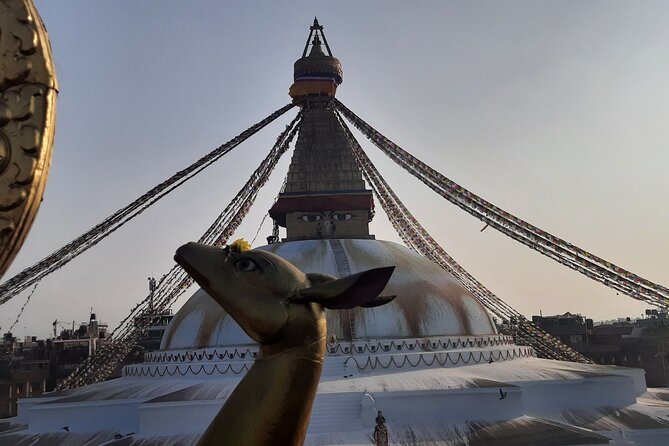
From Pashupatinath, the tour continues to Boudhanath Stupa, one of Kathmandu’s defining Buddhist sites. The great white stupa is surrounded by monasteries, prayer wheels, shops, and a strong Tibetan cultural presence.
The planned visit lasts about two hours, giving you time to walk around the stupa and study its painted details. You can also watch the rhythm of worship as people circle the monument and turn prayer wheels. The central stupa is easy to recognize, but the surrounding monasteries and streets provide much of the atmosphere.
A guide can explain how Boudhanath fits into Newar and Tibetan Buddhist traditions. The tour also includes a stop at a thanka painting school connected with the Boudha area. That makes the art center more useful than a quick souvenir stop, since you can see how traditional paintings use natural colors on cotton cloth.
The thanka visit lasts around 20 minutes and is included. Designs may show mandalas, the wheel of life, episodes from Buddha’s life, or single-point meditation images. If you are interested in buying art, take your time and ask questions, but do not feel pressured to purchase anything.
Swayambhunath rewards the climb
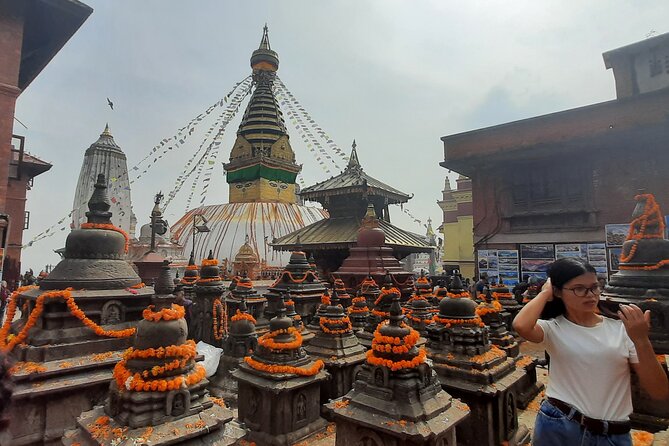
Swayambhunath, often called the Monkey Temple, sits on a hill above Kathmandu. Reaching the main stupa requires climbing a long staircase, so this is the day one stop that most clearly tests your legs.
The climb is part of the experience. As you rise, you gain changing views over Kathmandu, and the hilltop setting gives the stupa a different feel from Boudhanath’s urban courtyard. The site combines Buddhist symbolism with the wider religious character found across Kathmandu Valley.
Plan for about two hours. Wear shoes that feel secure on stairs and keep some water handy. A bottle is included for each person, but the day is long, and you will appreciate having it after the climb.
The word Monkey Temple is not just a nickname pulled from nowhere. Monkeys are part of the site’s character, though you should keep food and belongings secure. The main reason to visit remains the stupa, the hilltop setting, and the chance to see Kathmandu from above.
More UNESCO World Heritage Tours in Kathmandu:
- Private Kathmandu Sightseeing Tour | UNESCO World Heritage sites
★ 5.0 · 756 reviews - Kathmandu: Full Day 7 UNESCO Tour with Lunch – Private/Group
★ 5.0 · 415 reviews - Kathmandu: Full Day Top 4 UNESCO Tour with Lunch – Private/Group
★ 5.0 · 269 reviews - UNESCO Seven World Heritage Tour in Kathmandu
★ 5.0 · 253 reviews
Patan reveals the skill of Newar craftsmen
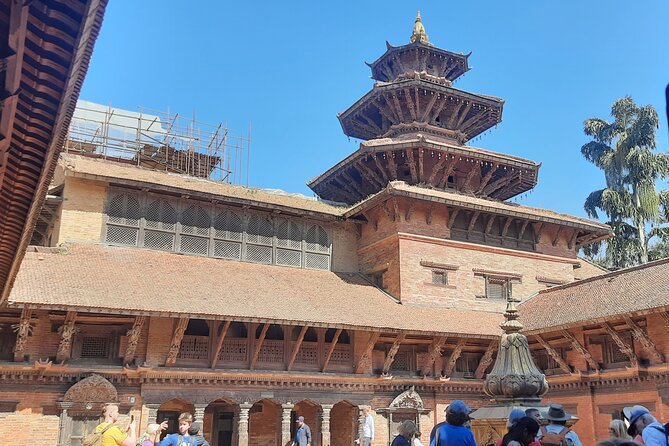
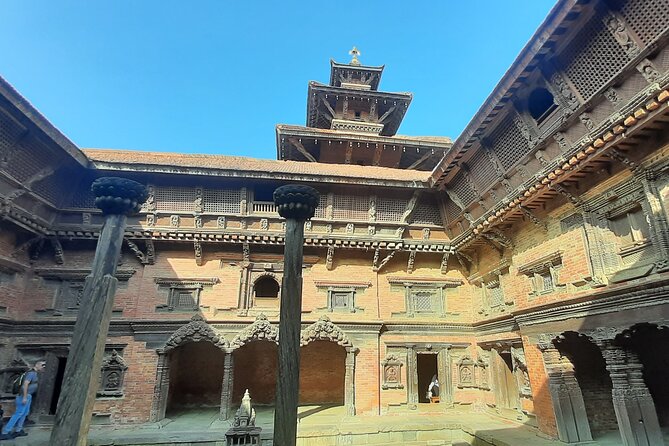
Patan Durbar Square is the artistic center of the first day. Located in Lalitpur, it presents the Newari architectural style at its strongest, with palace buildings, temples, courtyards, carved windows, and stone and wood images of Hindu and Buddhist figures.
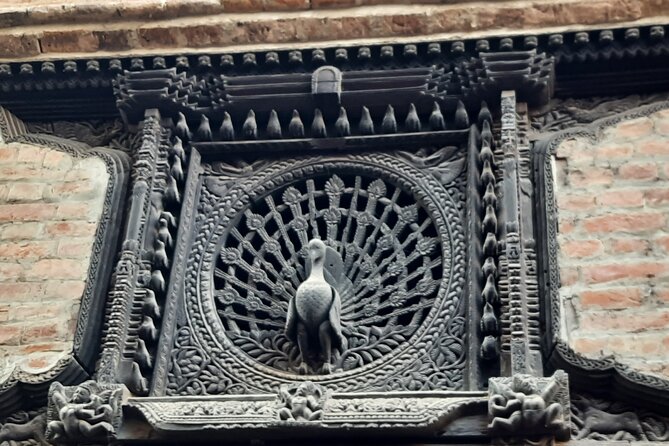
Give this stop its full two hours. Look closely rather than simply crossing the square. The carved wood windows are filled with small designs, and temple walls carry rows of figures that can be easy to miss from a distance.
The stone Krishna Temple is one of the square’s finest features. Its construction differs from the surrounding pagoda temples and gives you a useful comparison of Nepal’s religious architecture. The row of pagoda temples adds another layer, showing how several buildings can form a unified royal square while keeping their own details.
This is a good place to ask your guide about the Malla kings, who supported architecture and the arts. The point is not to memorize a list of rulers. It is to understand why so much craft is concentrated in these former palace cities.
The entrance fee is extra. Patan is also a place where a guide can help you orient yourself, since the old alleys and courtyards reward wandering but can be confusing on a tight schedule.
The Golden Temple offers a quieter Patan stop
The Golden Temple, whose formal name is Hiranya Varna Mahavihar, is a 12th-century temple in Patan. The name comes from the golden-colored front of the building, but the attraction is more than its surface finish.
The visit lasts about 30 minutes, so expect a compact stop rather than a long guided session. The temple gives you another view of Patan’s Buddhist traditions after the larger royal square. Its scale and enclosed setting can feel more intimate than the broad palace complex.
Admission is not included. Keep small cash available for the listed entrance fees and other personal expenses. Meals and drinks are also your responsibility, so ask your guide about the day’s meal timing rather than waiting until you are hungry.
Day one ends with art and a healing bowl center
The included program mentions a traditional thanka art school and a singing and healing bowl center. The thanka portion is described in detail, with paintings made on cotton cloth using natural colors. The designs can include mandalas, the wheel of life, Buddha’s life story, and meditation images.
This stop is useful if you want to connect Kathmandu’s monuments with living craft traditions. You are not only looking at finished temples. You are also seeing how religious images are made and preserved.
The day’s pace makes this a sensible final stop. After Pashupatinath, Boudhanath, Swayambhunath, Patan, and the Golden Temple, you may have limited energy for another major monument. A short art visit gives you something different before returning to your hotel.
Nagarkot starts before dawn
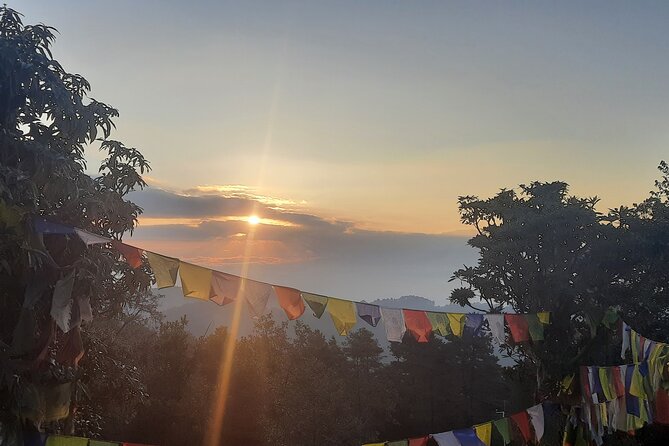
Day two begins at about 4 a.m. with a drive to Nagarkot. The trip is listed at roughly 35 kilometers and about 1 hour and 30 minutes by car from Kathmandu, though the actual timing can depend on road conditions.
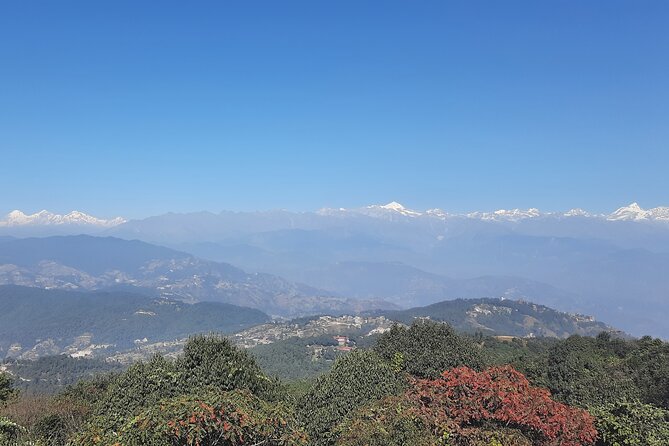
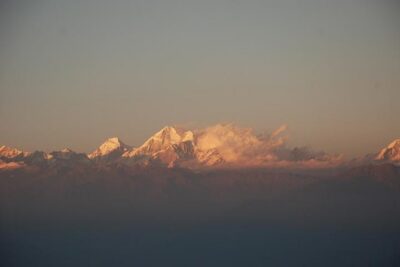
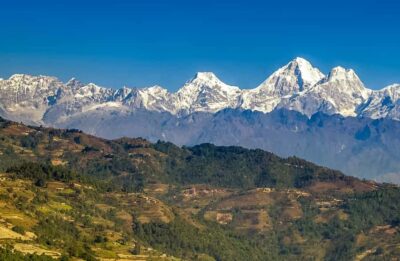
The goal is sunrise and Himalayan views, including the possibility of seeing Mount Everest and other peaks. You can also look across Kathmandu Valley toward Bhaktapur. Mountain visibility is never guaranteed, so treat the sunrise as a weather-dependent bonus rather than a promise.
The Nagarkot visit lasts about three hours and does not carry an admission charge. Bring warm clothing, since the early morning can feel cold, and remember that you are leaving before breakfast. The schedule says breakfast follows the sunrise visit, so meals remain your own expense.
This early start is the clearest test of the tour’s pace. If mountain views matter greatly to you, the departure may be worthwhile. If you dislike short nights or prefer a relaxed morning, Nagarkot could feel like work after a packed first day.
Bhaktapur feels like a different old city
After Nagarkot and breakfast, the route continues to Bhaktapur Durbar Square. Bhaktapur is known as the city of devotees and is often described as a living museum. The setting gives you another chance to see Newari architecture, but the details and rhythm differ from Patan.
Plan for about two hours in the square. The route mentions four major squares in Bhaktapur, so you should expect more than one monument viewed from a single central plaza. The old city is especially good for studying brickwork, carved timber, temple forms, and local craft.
Bhaktapur is also one of the places where the entrance fee matters. Admission is not included, so add the stated $35 per person for the five UNESCO sites to the advertised tour price. At $135 before meals and tips, the total cost is still reasonable for two private sightseeing days, but it is not a $100 all-inclusive trip.
Nyatapola Temple shows Nepal’s pagoda style
Nyatapola is the tallest temple in Bhaktapur and is dedicated to the goddess Siddhi Laxmi. Its five-level pagoda form makes it one of the clearest examples of traditional Nepali temple architecture on this route.
The visit is planned for about 20 minutes, enough to admire the structure and its stairway without turning it into a long stop. Bhairab Temple is nearby, giving you another point of comparison within the same area.
Because the stop is short, look upward and pay attention to the stacked roofs and guardian figures. The site works best as part of the larger Bhaktapur walk, not as an isolated attraction.
Dattatreya Temple and Pottery Square add local detail
Dattatreya Temple is dedicated to Dattatreya, a Hindu figure associated with Brahma, Vishnu, and Shiva. The visit lasts about 20 minutes and adds a different religious focus after Nyatapola’s architectural display.
Pottery Square provides the most direct look at traditional work in Bhaktapur. Local makers produce different items by hand, and the area also offers souvenirs. The planned visit is about 20 minutes, so you will get an introduction rather than a full workshop lesson.
I like this pairing because it keeps day two from becoming a sequence of palace squares alone. You see worship, architecture, and handmade goods in one compact route. Still, the schedule is tight. If you want to shop, inspect pottery carefully, or take photographs without rushing, you may need to decide what matters most.
What the $100 price really covers
The advertised price is $100 per person. Included are hotel pickup and drop-off by tourist car, a professional guide, the thanka art school visit, the singing and healing bowl center, and one bottle of water per person.
Not included are meals, drinks, gratuities, and entrance fees. The stated entrance cost is NPR 4,600, or about $35 per person, for five UNESCO World Heritage Sites. That puts the known minimum at about $135 per person before food and tips.
For a private two-day experience, that is a fair value if you want convenience and a guide. You are paying for transport across a difficult-to-cover valley, not just for admission to monuments. The value is weaker if you already have a car, prefer exploring alone, or plan to spend several days in Kathmandu at a slower pace.
The tour accepts group discounts, so the per-person price may work better for a small private group. Confirmation is received at booking, and free cancellation is available up to 24 hours before the start time. Within 24 hours, refunds are not available and changes are not accepted.
Who should book this two-day route
I would recommend this tour to a first-time visitor who wants to cover Kathmandu Valley’s main cultural sites quickly. It suits you especially well if you value a private vehicle, want hotel pickup, and prefer having a guide explain the religious and architectural details.
It also works for a small group with different interests. One person can focus on temples, another on photography, another on traditional art, and everyone can stay together without dealing with separate transport.
You may want a slower plan if you have mobility concerns, dislike stairs, or need regular breaks. Swayambhunath includes a long climb, day one is full, and day two begins around 4 a.m. Most people can participate, but the schedule still asks for stamina.
The tour is also less suited to someone seeking a quiet spiritual retreat. Pashupatinath, Boudhanath, Patan, and Bhaktapur are active places with many layers of daily life. The reward is seeing real religious and craft traditions, not moving through silent museum halls.
Should you book it?
Book this tour if you want an efficient first look at Kathmandu’s temples, royal squares, Buddhist art, and mountain views, all with private transport. The strongest features are the cultural range, the contrast between Patan and Bhaktapur, and the chance to have a guide such as Prakash handle the route.
Skip it if your main goal is slow exploration, long meals, or guaranteed Himalayan visibility. The $100 headline price is attractive, but plan for the additional $35 entrance fee, food, drinks, and tips. For an active visitor with only two days, it is a useful and well-packed introduction.
FAQ
Is this a private tour?
Yes. Only your group participates in the activity, and hotel pickup and drop-off by tourist car are included.
How early does the Nagarkot portion begin?
The Nagarkot drive begins at about 4 a.m. The drive from Kathmandu is listed as about 1 hour and 30 minutes each way, covering roughly 35 kilometers.
Are entrance fees included?
No. Entrance fees are extra. The stated cost for five UNESCO World Heritage Sites is NPR 4,600, or about $35 per person.
Are meals included?
No. You pay for your own meals, food, and drinks. Breakfast follows the early Nagarkot sunrise visit.
Which guide is named for this tour?
Prakash is specifically named as a guide associated with the experience. The tour includes a professional guide.
Can I cancel for a full refund?
Yes, if you cancel at least 24 hours before the experience start time. Cancellations made within 24 hours are not refunded, and changes within that period are not accepted.
More 2-Day Experiences in Kathmandu
- 2 Days Chitwan Jungle Safari Tour from Pokhara/Kathmandu
★ 4.5 · 27 reviews - 1 Night 2 Days Chitwan Jungle Safari Tour from Kathmandu
★ 3.5 · 19 reviews - From Kathmandu: Nagarkot Tour Package 1 Nights 2 Days
★ 4.8 · 10 reviews - Pokhara: 2 Day Ghorepani & Poon Hill Private Trekking
★ 4.9 · 8 reviews
More Morning in Kathmandu
- Kathmandu: Nagarkot Sunrise and Hike Tour to Changu Narayan
★ 4.7 · 151 reviews - Nagarkot Sunrise & Hike to Changu Narayan Day Tour from Kathmandu
★ 5.0 · 126 reviews - Kathmandu: Nagarkot Sunrise & Hike with Lunch -Private/Group
★ 4.9 · 122 reviews - Nagarkot Sunrise Trip & Day Hike with Lunch from Kathmandu
★ 4.5 · 83 reviews
Just added around Kathmandu
- Namobuddha Monastery Hiking Day Tour via Panauti from Kathmandu★ 5.0 · 15 reviews
- Private Half-Day Tour of Boudhanath and Pashupatinath Temples in Kathmandu★ 4.5 · 9 reviews
- Private Half-Day Tour of Kathmandu Durbar Square and Swayambhunath Temple★ 4.5 · 11 reviews
- Private Full-Day Kathmandu City Tour★ 5.0 · 9 reviews
- Private Day Tour in Kathmandu Valley Rim with Bhaktapur Sightseeing★ 5.0 · 3 reviews
- Private Half Day Budhanilkantha Tour★ 5.0 · 6 reviews
- Private Day Tour: Patan and Bhaktapur from Kathmandu★ 4.5 · 6 reviews
- Private Day Tour – Sacred Journey to Namo Buddha★ 5.0 · 5 reviews
Nagarkot Sunrise Tours, compared.
Nagarkot Sunrise View and Day Hiking from Kathmandu
Read our review →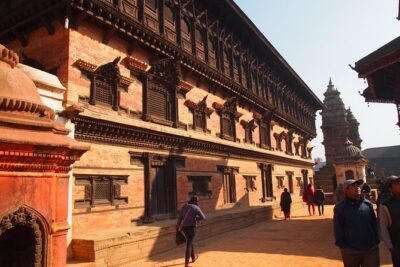
Private Bhaktapur and Nagarkot Day Tour From Kathmandu
Read our review →
Nagarkot Sunrise and Hike Tour to Changu Narayan
Read our review →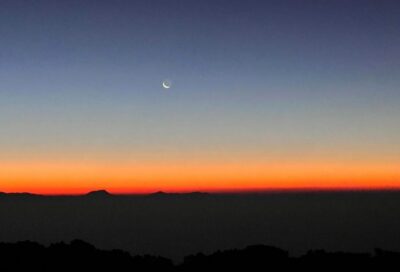
Nagarkot Sunrise & Hike to Changu Narayan Day Tour from Kathmandu
Read our review →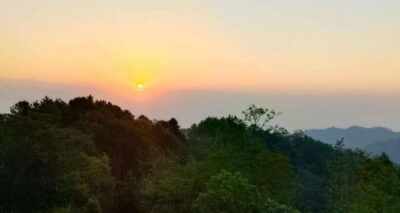
Nagarkot Sunrise & Hike with Lunch -Private/Group
Read our review →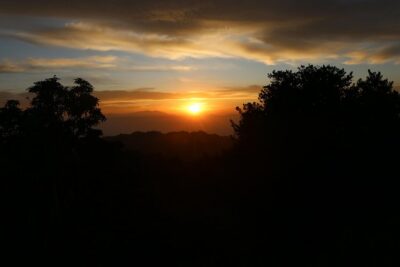
Nagarkot Sunrise Trip & Day Hike with Lunch from Kathmandu
Read our review →Browse the lists this tour appears in