
Reviewed · EVENING EXPERIENCES
Evening Photography Tour of Kathmandu
Boudhanath’s white dome glowing after sunset and Pashupatinath’s fire ceremony give this private evening tour a clear purpose: it takes you to two major sacred sites when their daily rituals are most photogenic. Your guide helps you find useful viewpoints and explains what you are seeing, so you are not simply pointing a camera at a crowd.
I like the smart pairing of Buddhist and Hindu traditions, and I like that private transportation keeps the evening simple. Guides such as Bikash and Deepa have been praised for their local knowledge, clear explanations, and polite manner. The main consideration is that this is a short photography outing, not a full Kathmandu sightseeing tour, and one past booking found the promotional image a little misleading.
Key points to know before booking
- Boudhanath after sunset: Photograph butter lamps, monks, devotees, and the white stupa during evening circumambulation.
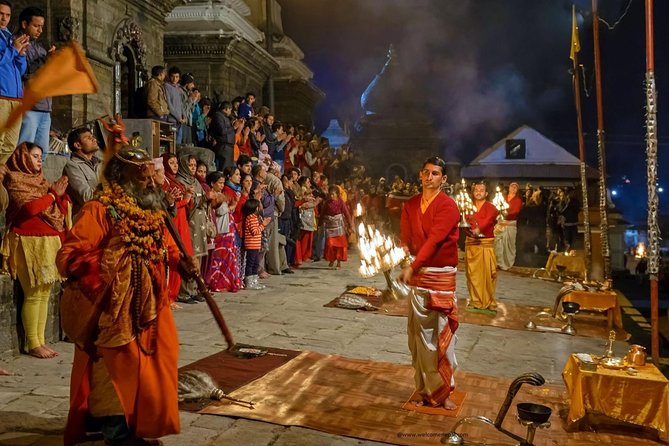
- Pashupatinath aarti: Watch chanting, singing, and fire offerings dedicated to Shiva beside the sacred Bagmati River.
- Private format: Only your group takes part, giving you more freedom than a large group tour.
- Practical value: Private transport from central Kathmandu, entrance fees, and an English-speaking licensed city guide are included.
- Photography guidance: Your guide knows where to look for useful settings and important moments, but you should still ask before photographing people closely.
- Short evening schedule: Plan on about three to four hours, with roughly one hour at each major site.
Why this evening route works for photography
Kathmandu has plenty of daytime sights, but this tour is built around what happens after the light changes. At Boudhanath, lamps begin to glow around the great white stupa. At Pashupatinath, priests perform aarti with flames, hymns, and ritual movement. These are not staged shows arranged for cameras. They are living religious practices, and that gives your photographs more meaning.
I like the route because the two places offer different visual subjects. Boudhanath gives you circular movement, rows of lamps, painted details, monks, and devotees walking around the dome. Pashupatinath gives you ceremony, fire, music, and the darkened banks of the Bagmati River.
The tour lasts about three to four hours, with approximately an hour at each stop. The remaining time is used for transportation and explanation. That is enough for a focused evening, but it is not enough to wait through every possible change in light or ceremony. If you want long exposure experiments, repeated compositions, or a slow personal visit, you may find the schedule tight.
A few more Kathmandu trips to weigh up
- Pokhara: Adventure Paragliding Trip with Photos and Videos
★ 4.6 · 50 reviews - Pokhara: Paragliding Adventure with Photos and Video
★ 4.7 · 44 reviews - Pokhara: Paragliding Adventure with Photos and Video
★ 5.0 · 7 reviews
Starting with Boudhanath’s glowing white dome
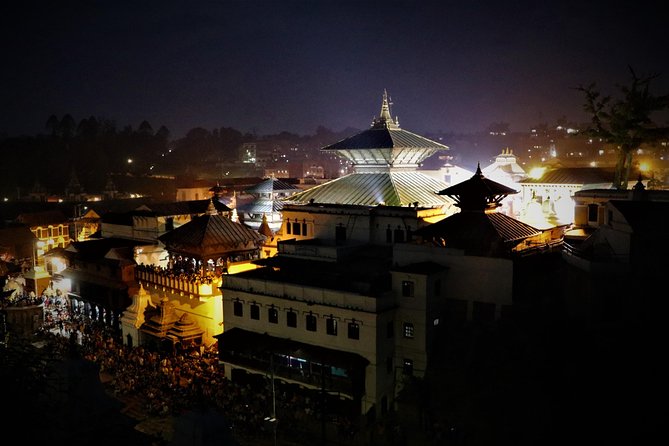
Boudhanath is one of Kathmandu’s most important Tibetan Buddhist pilgrimage centers. Its huge white dome and watchful painted eyes make it easy to recognize, but the real photography subject is the movement around it.
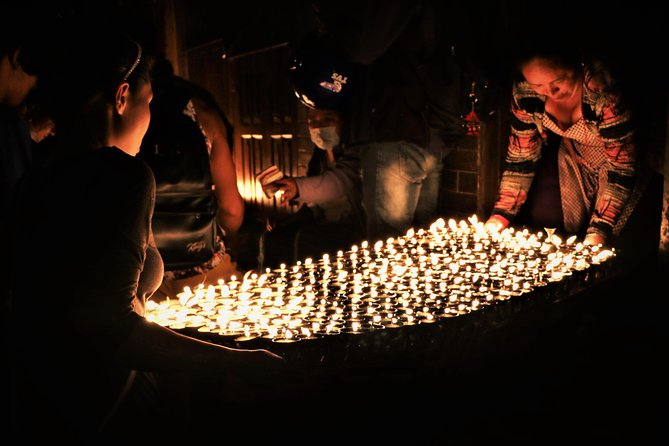
During the evening visit, devotees make a parikrama, or circumambulation, walking around the stupa as an act of devotion. Monks and worshippers light butter lamps and pray for the well-being of all sentient beings and for world peace. Once the lamps are lit, the setting takes on a very different character from a daytime visit.
Your guide’s role matters here. The stupa is visually busy, and it can be hard to know where to stand, what details deserve attention, or when a ritual moment is about to happen. The experience promises help finding settings and moments worth photographing, which is more useful than simply being dropped at the entrance with a camera.
I would use the first few minutes to watch rather than shoot. Notice the direction of the walking flow, the brightest lamps, and how people move around the circular path. Then choose one position and wait for the scene to come together. A guide can also help you understand what is appropriate, especially when people are praying.
The visit at Boudhanath is listed at about one hour, and admission is included. That removes one small task from the evening and lets you focus on the site. Still, an hour passes quickly if you are changing lenses, checking settings, and trying to work respectfully around worshippers.
You should also keep your expectations realistic. The tour helps you find opportunities, but it does not promise professional instruction, special access, or exclusive control of the space. Other devotees and photographers may be present, and your best pictures may come from patience rather than constant movement.
Pashupatinath and the fire of evening aarti
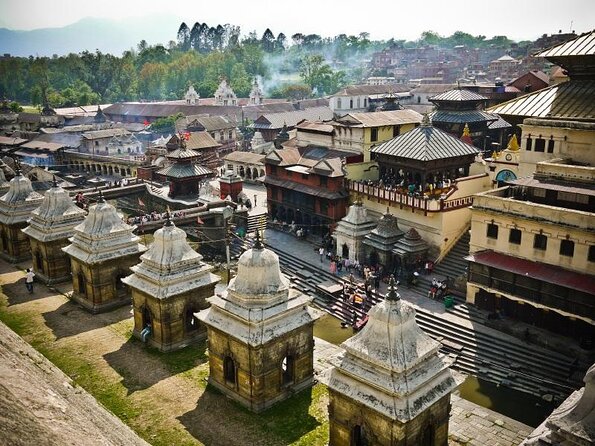
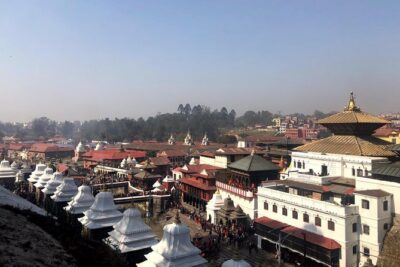
The second stop is Pashupatinath Temple, an ancient Hindu shrine dedicated to Lord Shiva. The name Pashupatinath means protector of all living beings, and the temple is one of the most important Hindu religious sites in Nepal.
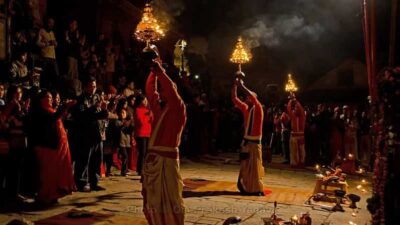
The evening aarti is the emotional center of the tour. Priests offer light from flames to the gods while sacred Vedic shlokas and hymns fill the area. Chanting, singing, and fire rituals create a strong visual and spiritual setting, especially as the evening grows darker.
The ceremony is described as taking place on the banks of the Bagmati River. The flame offerings provide obvious photographic interest, but the site deserves more than a hunt for dramatic shots. This is a sacred ritual connected to Shiva, and your guide can help explain the meaning behind the chanting, movement, and offerings.
The atmosphere may feel intense. The supplied details describe devotees dancing in a trance, linking the ceremony with Shiva’s celestial Tandav dance. That gives you a sense of the ritual’s energy, but it also means you should be aware of the people around you and avoid treating the ceremony like a performance staged only for visitors.
Again, the scheduled visit is about one hour, with admission included. That gives you time to observe the aarti and make photographs, though the available positions and visibility may vary. The tour does not state that you receive reserved seating or special access, so you should book it for guided access and context, not guaranteed front-row photography.
Pashupatinath can be a particularly good fit if you have already seen Kathmandu’s monuments in daylight and want a different kind of evening. One person who had visited most of the sites during the day still found the evening outing worthwhile because the ritual atmosphere changed the experience.
A guide makes the difference between seeing and understanding
A private guide is the strongest practical feature here. The tour is not simply a vehicle ride between two landmarks. It is designed to show you where to look and explain the religious customs unfolding in front of you.
Bikash is specifically praised for his knowledge of Kathmandu and its heritage sights, along with a professional and polite approach. Deepa is also named in the available feedback connected with the nighttime Shiva ceremony. Since guide assignment can vary, you should not assume you will receive one particular person, but these names show the kind of guiding expected from the experience.
The drive between the sites is useful too. One booking found the guide offered additional information about Kathmandu and Nepal while in the car. That turns transfer time into part of the tour rather than dead time.
Because this is private, you can ask questions without holding up a coach full of strangers. You can also tell the guide if you want more time to photograph a particular detail, within the limits of the schedule and ceremony. A private format is especially useful for photographers who prefer to work slowly or need help making respectful choices.
The guide is an English-speaking licensed city guide. The included service is interpretation and local orientation, not a stated photography master class. If you need detailed instruction in exposure, flash, composition, or post-processing, you should bring those skills with you and treat the guide as your cultural and location specialist.
Same mountains, a completely different kind of day:
- Everest Base Camp Trek – 14 Days
★ 5.0 · 1,499 reviews - Private Kathmandu Sightseeing Tour | UNESCO World Heritage sites
★ 5.0 · 756 reviews - Everest Base Camp Helicopter Tour landing at Everest View Hotel
★ 5.0 · 668 reviews - Half day cooking class in Thamel kathmandu
★ 5.0 · 607 reviews
What the $102 price really covers
At $102 per person, this is not the cheapest way to see Boudhanath and Pashupatinath. The price makes more sense if you value private transport, a dedicated guide, and a carefully timed evening visit.
Your payment includes private transportation, all fees and taxes, entrance tickets, and an English-speaking licensed city guide. It does not include dinner, bottled water, or alcoholic drinks. Those exclusions are easy to manage, but you should not expect refreshments to be part of the outing.
The value improves when two or more people share the private format, especially if a group discount applies. A solo photographer will pay more for the privacy, transport, and guidance. A small group can divide the cost while still avoiding the slower pace and fixed schedule of a larger tour.
I would compare this price with the cost and hassle of arranging evening transport independently, then deciding where to stand and how to interpret each ritual. The tour is worth more to you if you have limited time in Kathmandu, are visiting at night for the first time, or want cultural explanations alongside your photographs.
It is less compelling if you already know both sites well, have your own dependable transport, and mainly want unrestricted time with a tripod. The itinerary is focused and guided, not open-ended.
Timing, transport, and what to bring
Pickup is offered from central Kathmandu, and private transportation is included. The information does not specify the exact pickup point or departure time, so confirm those details when booking. The full outing takes roughly three to four hours.
The tour is near public transportation, but that does not replace the convenience of the included private vehicle. Evening traffic can affect how much time you spend between the two sites, which is another reason to keep your equipment simple and ready.
Bring your camera and any lenses you already know how to use. The experience states that all you need is your camera, but photographers may also want spare batteries and memory cards. Those are practical suggestions rather than included equipment, so plan your own kit accordingly.
Wear something suitable for visiting active religious sites and be ready for an evening outdoors. Bottled water is not included. Dinner is also not included, so arrange food before or after the tour rather than expecting a meal during the three to four hour schedule.
The tour requires good weather. If poor weather causes cancellation, you are offered another date or a full refund. It also requires a minimum number of participants, despite being private for your own group, so a cancellation is possible if that minimum is not met.
Photographing sacred places with care
A strong photograph is not worth disturbing someone at prayer. At both sites, begin by watching the ceremony and follow the guide’s advice about where to stand and when to raise your camera.
At Boudhanath, the walking pattern around the stupa can give your images a natural sense of movement. Butter lamps add small points of light, while the illuminated dome provides a larger shape behind them. You may get better results by staying in one place and waiting for the right arrangement of people rather than chasing every moment.
At Pashupatinath, the fire offering creates strong contrast between flame and night. Chanting and movement add sound and energy, even though your still camera cannot record them. Try to make photographs that suggest the ceremony without reducing it to a colorful spectacle.
The guide’s cultural explanation is important because context changes how you work. You are not photographing random nighttime activity. You are recording Buddhist and Hindu devotional practices at two major religious landmarks. That calls for patience, restraint, and attention to the people taking part.
Who will get the most from this tour
This experience suits you if photography is a main reason for visiting Kathmandu and you want help locating meaningful evening subjects. It also works well for a first-time visitor who wants a compact introduction to two major religious centers without arranging transport alone.
Couples, families, and small groups can benefit from the private setup. You share the vehicle and guide only with your own party, and group discounts may improve the value.
It is also a good choice if you have already visited the landmarks in daylight. The evening lamps and aarti create a different mood, and one daytime visit does not fully prepare you for the nighttime rituals.
You may want another option if you dislike photographing religious ceremonies, need a long time at one location, or expect formal camera coaching. The tour offers access, timing, and explanation, but the supplied details do not promise a dedicated photography instructor or exclusive shooting areas.
Should you book the Kathmandu evening photography tour?
Book it if you want a well-organized evening focused on Buddhist and Hindu ritual life, and if private transport and a local guide are worth paying for. The pairing of Boudhanath’s butter lamps with Pashupatinath’s fire aarti gives you two very different subjects in one short outing.
I would be especially inclined to book if you are traveling alone, have limited time, or would otherwise miss the ceremonies after dark. The strong ratings, praise for guides such as Bikash and Deepa, and the practical inclusion of transport and entrance fees all support the price.
Think twice if you want complete independence or several hours at each site. The tour is best understood as a guided cultural photography evening, not a technical workshop or an unhurried night walk. Cancel at least 24 hours before the start time for a full refund, and remember that changes made later are not accepted.
FAQ
How long does the Evening Photography Tour of Kathmandu last?
The experience lasts approximately three to four hours, with about one hour scheduled at Boudhanath and one hour at Pashupatinath.
Which places does the tour visit?
The tour visits Boudhanath Stupa and Pashupatinath Temple in Kathmandu.
Is transportation included?
Yes. Private transportation from central Kathmandu is included, and pickup is offered.
Is the tour private?
Yes. Only your group participates in the private tour or activity.
Are entrance fees included?
Yes. Admission tickets and all fees and taxes are included.
What does the tour price exclude?
Dinner, bottled water, and alcoholic beverages are not included.
Just added around Kathmandu
- Private Half-Day Tour of Boudhanath and Pashupatinath Temples in Kathmandu★ 4.5 · 9 reviews
- Private Half-Day Tour of Kathmandu Durbar Square and Swayambhunath Temple★ 4.5 · 11 reviews
- Namobuddha Monastery Hiking Day Tour via Panauti from Kathmandu★ 5.0 · 15 reviews
- Private Full-Day Kathmandu City Tour★ 5.0 · 9 reviews
- Private Day Tour in Kathmandu Valley Rim with Bhaktapur Sightseeing★ 5.0 · 3 reviews
- Private Half Day Budhanilkantha Tour★ 5.0 · 6 reviews
- Private Day Tour: Patan and Bhaktapur from Kathmandu★ 4.5 · 6 reviews
- Private Day Tour – Sacred Journey to Namo Buddha★ 5.0 · 5 reviews
Evening Experiences, compared.
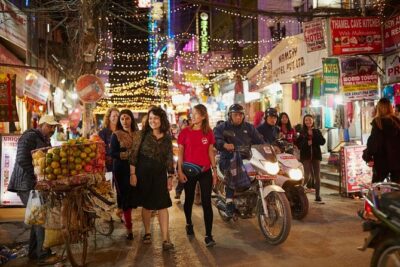
Kathmandu Sunset Tour by Rickshaw Including Durbar Square Visit
Read our review →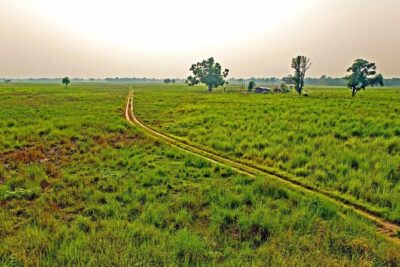
3 Nights 4 Days Chitwan National Park with Tower Night Stay
Read our review →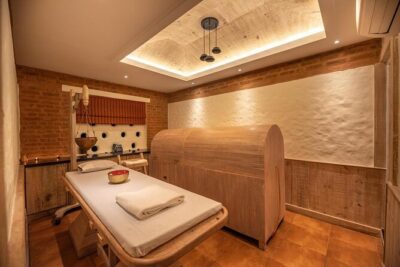
3 night 4 Day Yoga & Ayurveda Retreat to Detox the Body & Mind, Nepal
Read our review →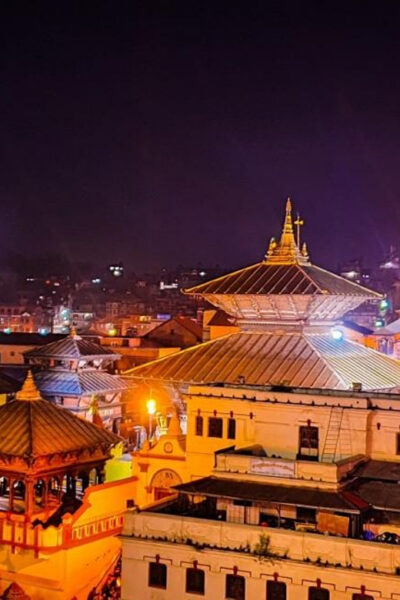
Pashupatinath Evening Aarati: Few Divinely Hours in Kathmandu
Read our review →
Browse the lists this tour appears in