
Reviewed · 1-HOUR EXPERIENCES
Kathmandu: 1-Hour Scenic Flight Over Mount Everest
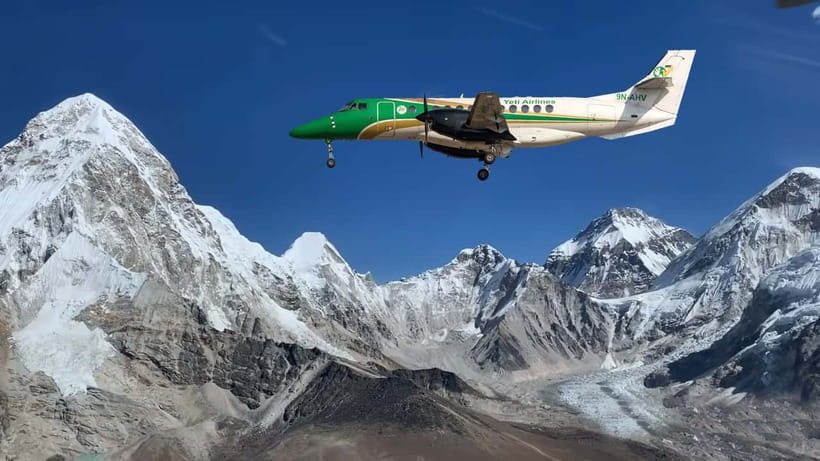
Seeing Mount Everest from the air gives you something a trek cannot: a broad view of the whole Himalayan wall at once. From Kathmandu, you fly east over rock and ice, passing Namche Bazaar, Tengboche, Ama Dablam, and the pyramid of Dorje Lhakpa in a single morning.
I like the guaranteed window seat, which removes the usual scramble for a good view. I also like the mountain guide map and the hostesses who help identify each peak. The main catch is weather. Clouds can cancel the flight, delay departure, or turn a grand mountain show into a very early airport visit.
Key points to know
- One hour above the Himalayas: The flight leaves Tribhuvan International Airport and returns to Kathmandu after a mountain-focused circuit.
- Everest is only part of the view: You may also see Gosaithan, Dorje Lhakpa, Phurbi-Chyachu, Namche Bazaar, Tengboche, and Ama Dablam.
- Every passenger gets a window seat: This is a major advantage for viewing and photographing the peaks.
- Sunrise timing matters: Early light can tint the snow and bring out the mountain shapes, but departure times depend on availability and weather.
- Expect a small aircraft group: Aircraft capacity ranges from 16 to 30 people.
- Budget $140, plus optional transport: Ground pickup and drop-off cost extra if selected, and food and drinks are not included.
Why an Everest flight works in one morning
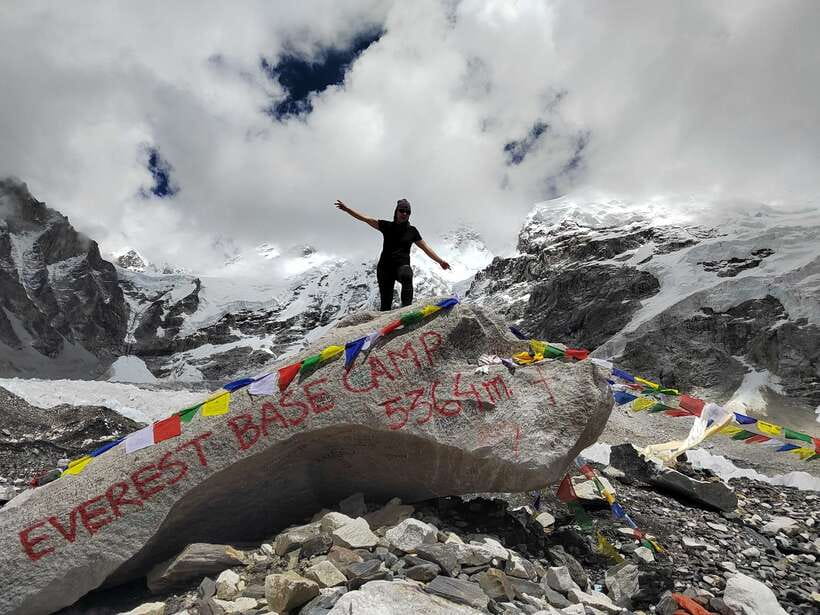
A flight over Everest is not a substitute for trekking in the Khumbu. You will not walk through Sherpa villages, feel the altitude, or spend time among the mountains. But it solves a real problem: many people have limited time in Nepal, and even a long trek cannot guarantee clear views.
In one hour, you can see a string of famous Himalayan peaks from above. The plane takes off from Tribhuvan International Airport in Kathmandu and heads east toward the Everest region. The flight is designed around the view, not around a landing in the mountains, so your experience is continuous: climb, look, listen to the mountain briefing, photograph, and return.
That broad perspective is the point. From ground level, a peak can hide behind a nearer ridge. From the aircraft, the high summits appear as a long wall of snow and dark rock. Everest itself is part of a much larger group, and the flight helps you understand that.
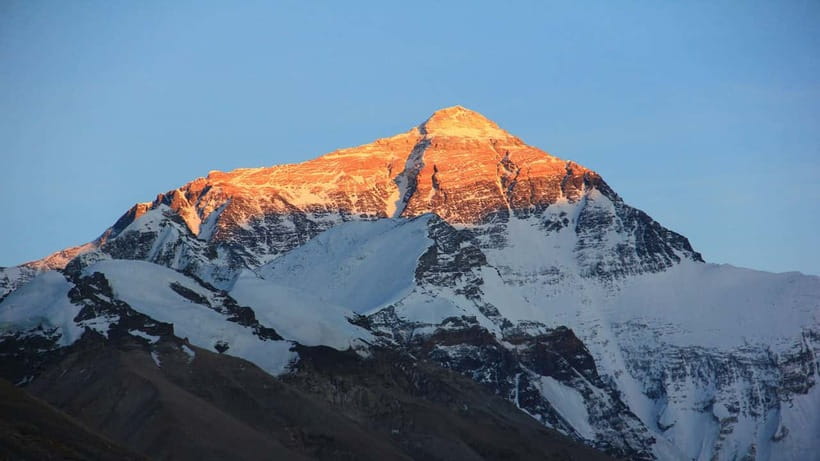
The early hour adds another layer. As the sun rises, snow peaks can take on a soft pink or gold color. Clear morning air is often the aim, but you should treat sunrise as a hope rather than a guarantee. Mountain weather changes quickly, and the flight may be delayed or canceled if visibility is poor.
A few more Kathmandu trips to weigh up
- From Kathmandu: 1 hour Panoramic Everest Flight
★ 4.4 · 175 reviews - 1 Hour Mount Everest flight from Kathmandu With Hotel Pick Up
★ 5.0 · 161 reviews - Kathmandu: 1-Hour Mount Everest Flight with Private Transfer
★ 4.7 · 98 reviews
From Kathmandu to the first Himalayan peaks
Your day begins with a pickup option in Kathmandu or Lalitpur if you pay for ground transportation. The transfer takes you to Tribhuvan International Airport. The supplied information does not give a fixed pickup time, so check the confirmation carefully and make sure you know the exact departure arrangement.
That detail matters. One booking had a pickup mix-up that woke a passenger an hour earlier than expected and left only five minutes to get an elderly family member ready. It was an unusual but important reminder to confirm the time in writing, especially if you are traveling with children, older relatives, or a group that needs extra preparation time.
At the airport, bring your passport or ID card. The flight itself lasts about one hour, but your morning will take longer once airport procedures and transportation are included. The aircraft carries between 16 and 30 people, depending on the plane used, so this is a compact group experience rather than a private charter.
Once airborne, the aircraft heads east. The first part of the flight gives you time to settle in and match the peaks outside with the visual guide provided onboard. The cabin crew moves around the plane to help passengers identify the mountains. That small service makes a real difference, since Himalayan peaks can look surprisingly alike when you first see them from the air.
Gosaithan, Dorje Lhakpa, and the changing view
One of the first named peaks on the route is Gosaithan, also known as Shishapangma, rising to 8,013 meters. It appears far to the left side of the route. You may need to pay attention to the guide’s directions, since the most famous mountain is not always the first one your eye finds.
Dorje Lhakpa, in the Langtang Himal area, is another striking marker. Its pyramid shape gives it an easy identity compared with broader, more rounded summits. This is one reason the onboard explanation is useful. You are not simply looking at a white horizon. You are learning to separate individual peaks by shape, position, and height.
To the right, the snow-covered Phurbi-Chyachu rises above the Kathmandu Valley. The changing angle of the aircraft means the view is not fixed. One side may get the better sightline on the outward flight, while the other side gets a stronger look on the return. Since everyone has a window, you are not left entirely to luck, but you should still keep your eyes open during both directions.
Passengers have found that sitting toward the front can help avoid having a propeller dominate the view. Still, a seat behind the propeller is not automatically a disaster. At cruising height, the mountain range can appear below the propeller, leaving the peaks clearly visible. The flight crew also helps both sides identify what is outside.
Everest, Namche Bazaar, and Ama Dablam
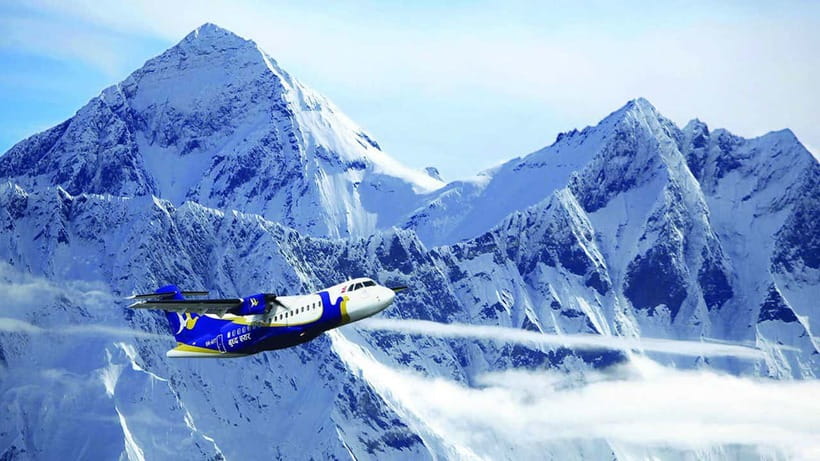
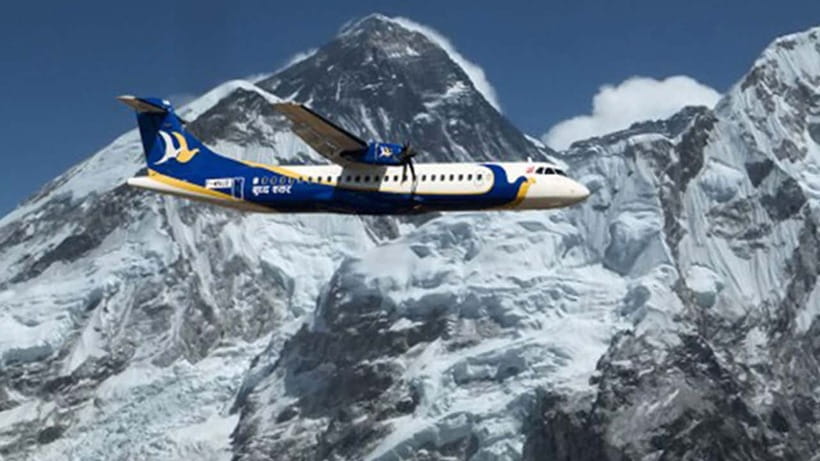
The main event is the approach toward the Everest region. Everest is called Sagarmatha in Nepal, and seeing it from an aircraft gives you a different sense of scale than a photograph or distant city viewpoint.
Do not focus only on finding the highest summit. The surrounding massifs are what make the view powerful. You look down and across at enormous formations of rock and ice, with sharp ridges, broad snowfields, and peaks packed closely together. The air route gives you a chance to see how Everest belongs to a connected mountain system rather than appearing as an isolated triangle.
The plane also passes over Namche Bazaar. From the ground, Namche is a busy mountain settlement and a key stop on the trekking route. From above, it becomes a compact cluster tucked into the folds of the Khumbu region. That aerial view is valuable even if you have no plans to trek there, because it shows how closely the settlements depend on the shape of the mountains around them.
You also get an aerial look at Tengboche and Ama Dablam. Ama Dablam is one of the most recognizable peaks in the region, with a distinctive profile that can be easier to pick out than Everest. Tengboche adds a human reference point to the scene, linking the immense peaks with the villages and routes below.
The hostesses point out these features using a mountain map. The service is not a long lecture, and that is probably for the best. You have only a short time at each viewing angle, so clear names and quick guidance help you make use of the flight.
Same mountains, a completely different kind of day:
- Everest Base Camp Trek – 14 Days
★ 5.0 · 1,499 reviews - Private Kathmandu Sightseeing Tour | UNESCO World Heritage sites
★ 5.0 · 756 reviews - Everest Base Camp Helicopter Tour landing at Everest View Hotel
★ 5.0 · 668 reviews - Half day cooking class in Thamel kathmandu
★ 5.0 · 607 reviews
Guaranteed window seats, with a few practical limits
The guaranteed window seat is one of the strongest features of this trip. You do not need to hope that another passenger will trade places or spend the flight leaning across a stranger. Every person gets a direct view outside, which is especially important when the aircraft turns and the peaks appear briefly on one side.
A window seat does not mean every photograph will be perfect. One passenger found the airplane window dirty enough to spoil some pictures. Reflections, glare, condensation, and the propeller can also affect images. You can improve your chances by carrying a lens cloth and keeping your phone or camera close, but you cannot control the condition of the glass.
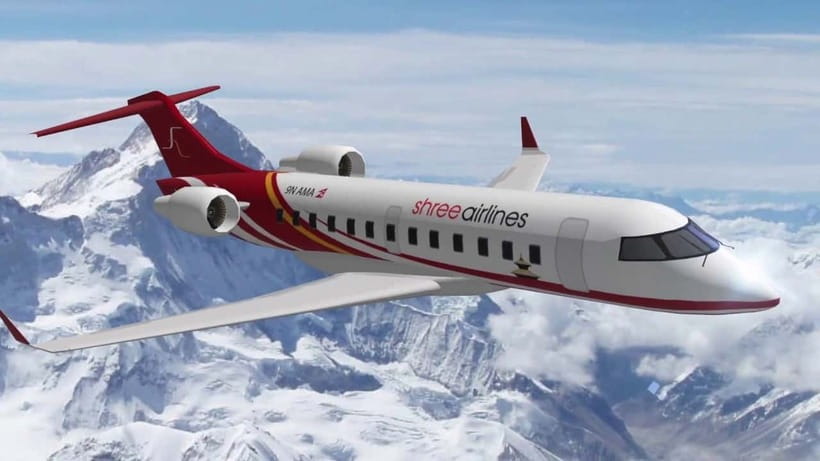
The aircraft itself may be a turbine plane operated by Shree Airlines, according to the details supplied by a passenger. Turbine aircraft are described as less noisy and smooth in the air, although the exact aircraft can vary with capacity and operations. You should expect an aviation experience first, not a luxury cabin.
The flight crew is part of the value. They explain the mountain names, point out peaks on both sides, and help you use the map. That guidance matters more than you might expect. Without it, you could spend the whole hour photographing the wrong summit or miss a peak while searching for Everest.
Weather is the biggest condition of the trip
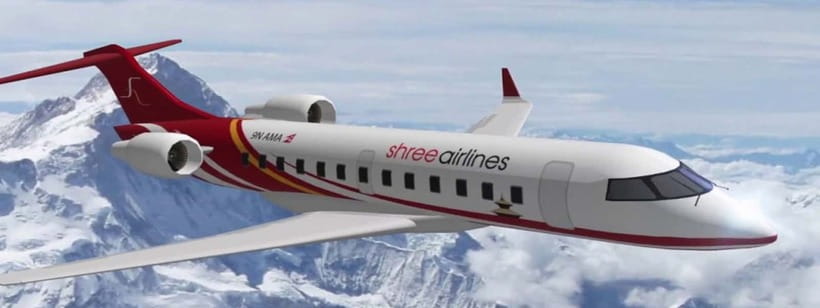
A clear view is never guaranteed in the Himalayas. Poor weather can cancel the flight, push it later, or create a long wait at the airport while the operator checks conditions. The flight needs good visibility, and that requirement is not a minor footnote. It controls the entire experience.
One morning, the flight was first canceled because of poor visibility. After a wait, passengers were given the choice of a refund or flying despite the uncertain conditions. The aircraft eventually found clear views over the Himalayas, and the mountains appeared through openings in the cloud. That is a good example of how quickly the morning can change, but you should not count on the same result.
If bad weather cancels the trip, you are offered another date. The stated cancellation policy allows a full refund when you cancel at least 24 hours ahead. If the operator cancels because of weather, you remain responsible for the airport transfer charge. That can make optional pickup less attractive if your schedule is tight or the forecast is poor.
I would keep a backup morning free if seeing Everest is a major goal. Do not schedule an important international departure immediately after this flight. Delays are possible, and weather decisions are outside the operator’s control.
Is $140 good value?
At $140 per person, this is not a cheap sightseeing ride, but it can be a sensible use of money in Nepal if you want an Everest view without committing to a trek. The price covers the one-hour mountain flight, the panoramic window arrangement, the onboard mountain guidance, and a completion certificate.
Ground transportation is included only if you select the paid transport option. Food and drinks are not included, so plan your breakfast separately. The flight is short enough that the lack of refreshments is not a serious issue, but the early start makes it useful to arrange something before or after.
The value depends on what you want. If your dream is to stand on a trail beneath Everest, this flight will feel brief. If you want to see the Himalayan range from a high, open viewpoint, it packs a lot into one hour. The guaranteed window seat also gives it an advantage over sightseeing flights where some passengers end up with poor positions.
The certificate is a pleasant extra, though it is not the reason to book. The real value lies in access to the view, the efficient timing, and the crew’s help naming the peaks.
Who should book the Everest scenic flight?
I would recommend this experience to you if you have limited time in Kathmandu, cannot fit a trek into your itinerary, or want a first look at the Everest region before traveling elsewhere in Nepal. It also suits families and mixed-age groups because the view requires no hiking, and the flight is wheelchair accessible.
It can work well for older relatives who cannot manage a mountain trail. The earlier pickup issue shows why you should confirm the schedule carefully, but the actual flight keeps the physical demands low.
Photographers should book with realistic expectations. The guaranteed window is helpful, but dirty glass, reflections, and propeller placement can affect your pictures. For the best chance of sharp mountain views, aim for a clear-weather date and be ready to photograph quickly on both the outward and return legs.
You should think twice if your schedule cannot absorb a delay or if a canceled flight would ruin your plans. The operator may offer another date, but that only helps if you have spare time in Kathmandu.
Booking advice for a smooth morning
Choose the optional hotel pickup if reaching the airport early would be difficult, but confirm the pickup time directly. The conflicting pickup experience shows that even a well-run morning can begin badly if the time is misunderstood.
Bring your passport or ID card, and keep your phone or camera ready before takeoff. You will receive a mountain map, so use it from the beginning rather than waiting until Everest appears.
Ask about the aircraft and seating arrangement when you arrive if avoiding a propeller is important to you. You cannot choose every detail in advance, but arriving early helped one passenger request a front seat. The view remains possible from behind the propeller, yet a clear window is always preferable.
Give yourself room for weather delays. The flight may leave later than planned, and the operator may need time to decide if visibility is good enough. The extra patience can pay off, but no one can promise clear skies.
FAQ
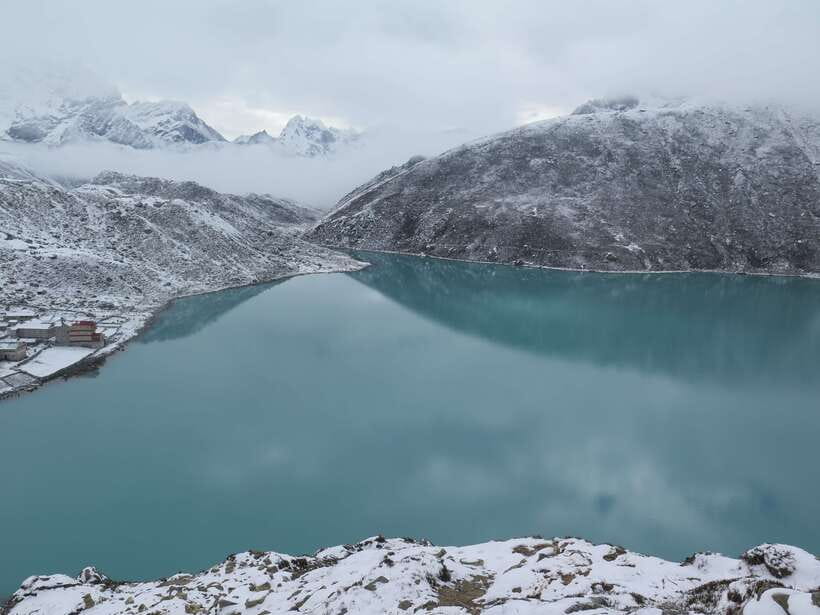
How long is the Mount Everest scenic flight?
The mountain flight lasts one hour. Your total morning will be longer because of transportation and airport procedures.
Where does the flight depart?
The flight departs from Tribhuvan International Airport in Kathmandu.
Is a window seat guaranteed?
Yes. A window seat is included for every passenger.
Which mountains and places can I see?
The route includes views of Mount Everest, Gosaithan or Shishapangma, Dorje Lhakpa, Phurbi-Chyachu, Namche Bazaar, Tengboche, and Ama Dablam. Visibility depends on weather.
Is hotel pickup included?
Hotel pickup and drop-off are available if you select the optional transportation service for an additional fee. Pickup options cover Kathmandu and Lalitpur.
What happens if bad weather cancels the flight?
You will be offered a different date. If the flight is canceled because of weather, you are responsible for the airport transfer charge.
What should I bring?
Bring your passport or ID card. Food and drinks are not included.
Should you book this flight?
Book it if you want a practical, one-hour view of Everest and the surrounding Himalayas, especially when you do not have time for a trek. The window seat for every passenger and the crew’s mountain explanations make the flight more useful than simply looking out at an unnamed wall of snow.
I would not book it as a fixed, can’t-miss connection before another flight. Weather can delay or cancel the trip, and the airport transfer fee may still apply after a weather cancellation. With one flexible morning, a confirmed pickup time, and sensible expectations about photography, this $140 experience offers a memorable look at the roof of the world without asking you to spend days on a trail.
Just added around Kathmandu
- Private Half-Day Tour of Boudhanath and Pashupatinath Temples in Kathmandu★ 4.5 · 9 reviews
- Private Half-Day Tour of Kathmandu Durbar Square and Swayambhunath Temple★ 4.5 · 11 reviews
- Namobuddha Monastery Hiking Day Tour via Panauti from Kathmandu★ 5.0 · 15 reviews
- Private Full-Day Kathmandu City Tour★ 5.0 · 9 reviews
- Private Day Tour in Kathmandu Valley Rim with Bhaktapur Sightseeing★ 5.0 · 3 reviews
- Private Half Day Budhanilkantha Tour★ 5.0 · 6 reviews
- Private Day Tour: Patan and Bhaktapur from Kathmandu★ 4.5 · 6 reviews
- Private Day Tour – Sacred Journey to Namo Buddha★ 5.0 · 5 reviews
1-Hour Experiences, compared.
1 Hour Mount Everest flight from Kathmandu With Hotel Pick Up
Read our review →
1-Hour Mount Everest Flight with Private Transfer
Read our review →
Browse the lists this tour appears in