
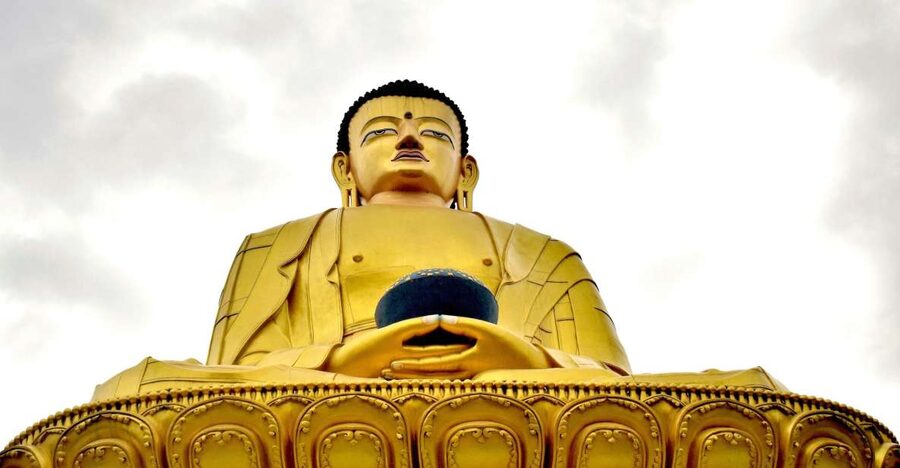
Reviewed · CITY TOURS
Kathmandu: Private City Guided Tour
Kathmandu’s greatest hits are spread across a busy valley, and this private six-hour tour brings four major sights into one well-planned day. You move by private car between Swayambhunath, Boudhanath, Pashupatinath, and Patan Durbar Square, with a guide to explain the Hindu and Buddhist traditions behind what you see.
I like the flexible private format, especially if you are traveling alone, with family, or on a tight schedule. I also like the human touch: guides such as Kapil, Saru, Bhim, Shanti, and Raj have adjusted the pace, allowed extra time at favorite sites, helped with tickets, and shared local food and shopping advice.
The drawback is simple: six hours is a lot of ground but not much time at four major monuments. Kathmandu traffic can turn a short drive into a long one, and the $40 price does not include about $22 in monument fees, meals, or drinks.
Key points at a glance
- Four major Kathmandu sights in one private outing: Visit the city’s best-known Buddhist, Hindu, and royal sites without arranging separate taxis.
- Guides shape the day around you: Kapil, Saru, Bhim, and other guides have been praised for clear explanations and flexible timing.
- Expect a fast but useful overview: You can see all four sites, but a longer stay lets you explore each one with less pressure.
- Private transport saves effort: Hotel pickup, drop-off, and a sedan, SUV, or minivan make the route easier than piecing it together yourself.
- Pashupatinath can be emotionally strong: The Bagmati River cremation area is culturally important, but you should prepare for smoke, ritual activity, and a serious atmosphere.
- Budget beyond the headline price: Allow roughly $22 per person for monument tickets, plus food and drinks.
Why this route works for a first day
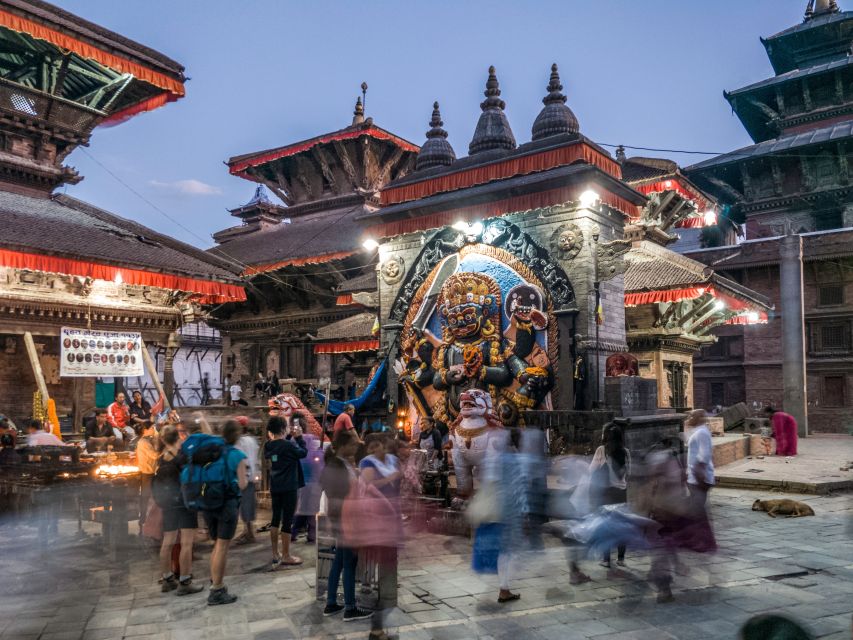
Kathmandu is not a city you understand from a car window. Its temples, monasteries, courtyards, prayer wheels, shrines, and royal squares make more sense when someone explains how Hindu and Buddhist practice overlap in daily life.
That is the main value of this tour. You are not simply driven to four photo stops. A good guide gives you a framework for reading the city: the meaning of Buddha’s painted eyes, the role of Shiva at Pashupatinath, the Newari craftsmanship at Patan, and the way Tibetan Buddhist life circles around Boudhanath.
The route also handles a practical problem. These sights lie in different parts of the Kathmandu Valley, so arranging them independently takes time and local transport skills. A private car lets you focus on the places rather than negotiating each ride.
Pickup is offered from hotels in Kathmandu, Thamel, Lazimpat, Naya Bazaar, Boudhha, Lalitpur, and Ekantakuna. The same broad area choices are available for drop-off. Confirm your exact hotel and start time in advance, since the experience is listed as six hours and traffic can affect how much sightseeing fits into that window.
A few more Kathmandu trips to weigh up
- Private Kathmandu Sightseeing Tour | UNESCO World Heritage sites
★ 5.0 · 756 reviews - Kathmandu: Full Day 7 UNESCO Tour with Lunch – Private/Group
★ 5.0 · 415 reviews - Private Bhaktapur and Nagarkot Day Tour From Kathmandu
★ 5.0 · 305 reviews
Swayambhunath, the hilltop Monkey Temple
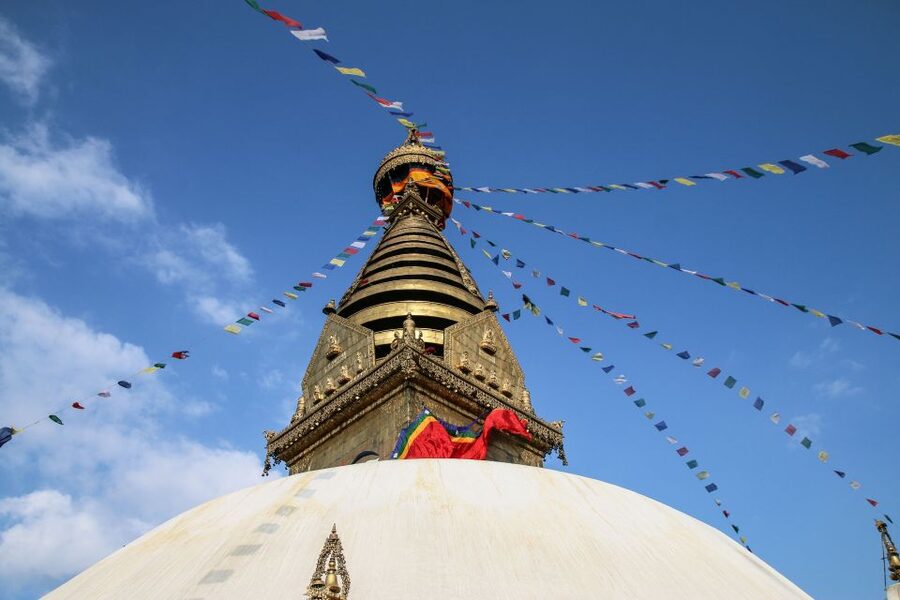
Swayambhunath is often the first stop, and it gives you an immediate sense of Kathmandu’s religious mixture. The ancient stupa sits on a hill about 77 meters above the surrounding ground, with views across the Kathmandu Valley.
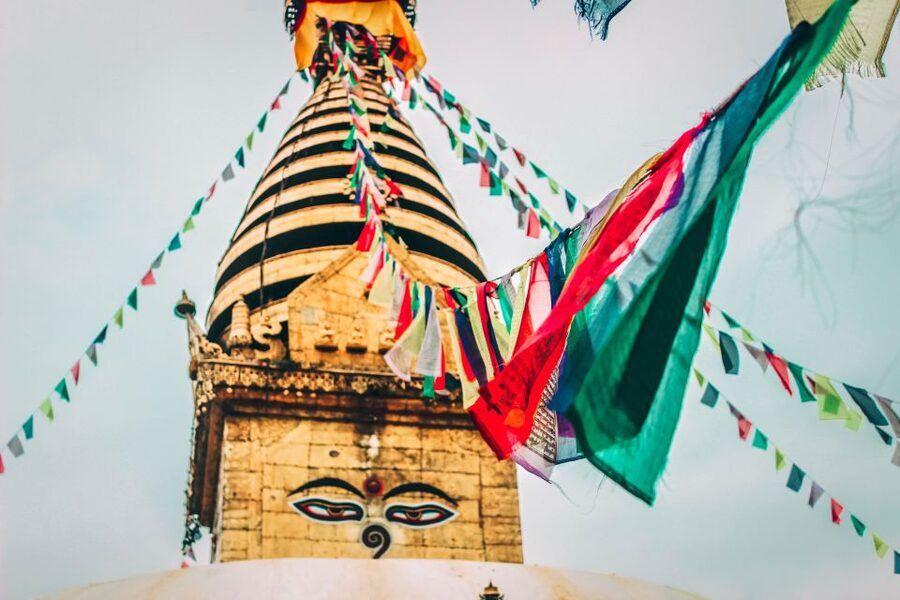
The main dome is topped by a square structure painted with Buddha’s all-seeing eyes. The design is more than decoration. It presents watchfulness and awareness in every direction, an idea your guide can connect to Buddhist belief and the daily rituals taking place around the shrine.
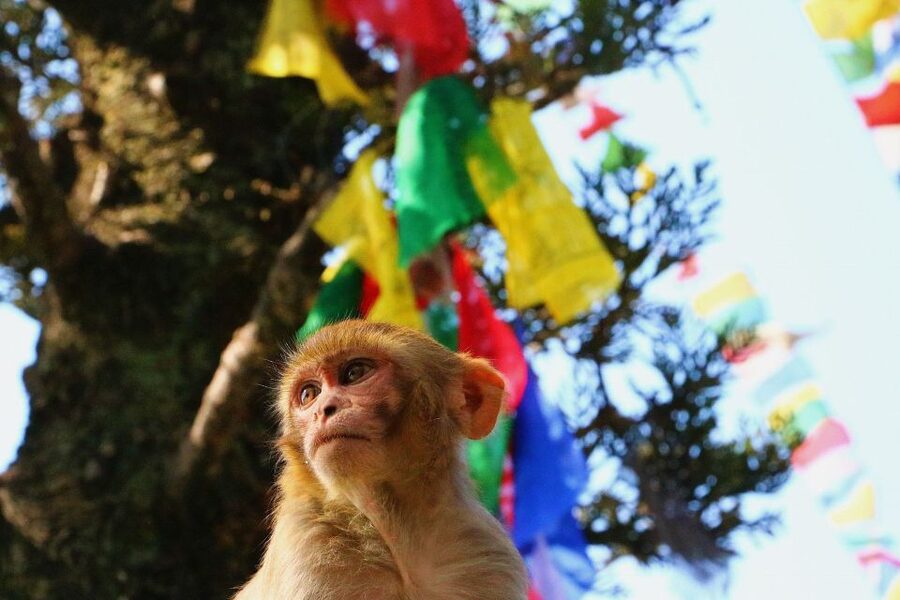
The site is also known as the Monkey Temple because monkeys live around the complex. Keep your belongings close and avoid carrying food openly. The monkeys are part of the place, but they are not trained performers and can be quick around bags and snacks.
Swayambhunath includes two Buddhist monasteries and the temple of Haratima, a deity worshipped by both Hindus and Buddhists. The Manjushree Temple and Anandakuti Bihar are within a short walk of the main area, so you may have the chance to see more than the central stupa if timing and energy allow.
This stop involves steps and uneven walking. It may be possible to adjust the visit for someone who has mobility limits, as one family used a modified route to avoid excessive stairs, but the experience is not suitable for wheelchair users. Wear shoes with a firm sole and bring water.
The hilltop setting gives Swayambhunath its visual appeal, but the real reward is the connection between the monument and the surrounding city. From above, Kathmandu looks broad and crowded, while the prayer flags, shrines, and turning prayer wheels create a much quieter focus at ground level.
Boudhanath and lunch beside the stupa
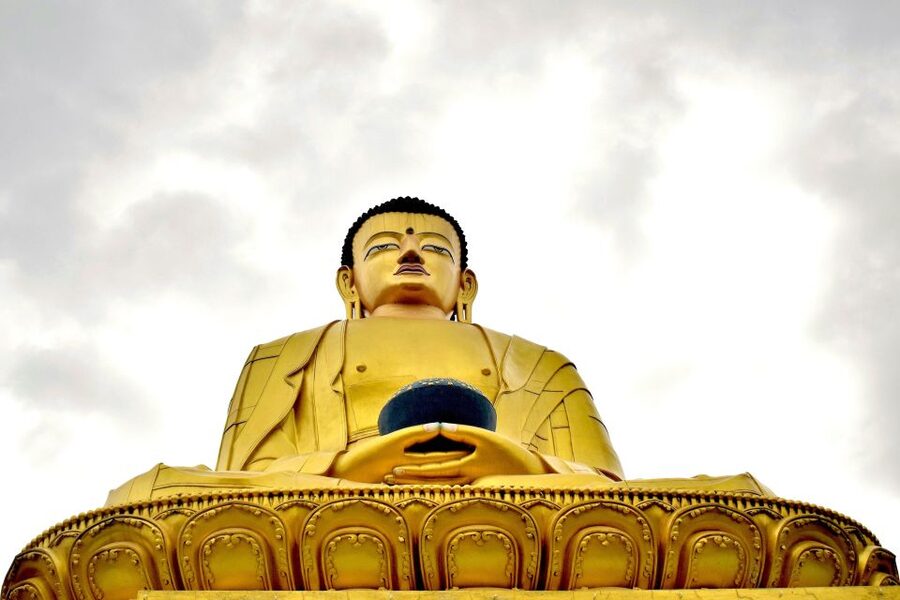
Boudhanath, also written Boudhanath or Bouddhanath, lies about six kilometers east of central Kathmandu. It is one of the world’s largest Buddhist stupas and an important center for Tibetan Buddhist practice.
The stupa’s huge white dome and square tower dominate the surrounding neighborhood. Buddhist monasteries and shops ring the open area, and you can walk around the structure while turning prayer wheels and watching worshippers complete their circuits.
Your guide can explain how the site connects to Tibetan Buddhism, the symbolism of the stupa, and the role of the surrounding monasteries. This is one of the places where a guide adds real value. Without context, you may see a giant white mound and a busy square. With context, the repeated clockwise movement, prayer flags, butter lamps, and painted symbols begin to fit together.
The tour includes free time, and Boudhanath is a natural place to use it. You might browse Tibetan handicrafts, look at religious objects, or stop for lunch. Several guides have chosen rooftop restaurants with views over the stupa, giving you a meal break without losing the atmosphere of the site.
Food is not included, so ask your guide for help if you want to try local dishes. The experience can include savory and sweet Nepali foods, and one food-focused outing took a small group to several unusual tasting spots. You should still treat lunch as an extra cost and allow enough time if food is important to you.
Boudhanath is probably the easiest stop for photographs, but try not to reduce it to a backdrop. Take a slow circuit, notice the monasteries around the square, and ask questions about what you are seeing. The open space also makes this a useful rest point after the steps at Swayambhunath.
Pashupatinath and the Bagmati River
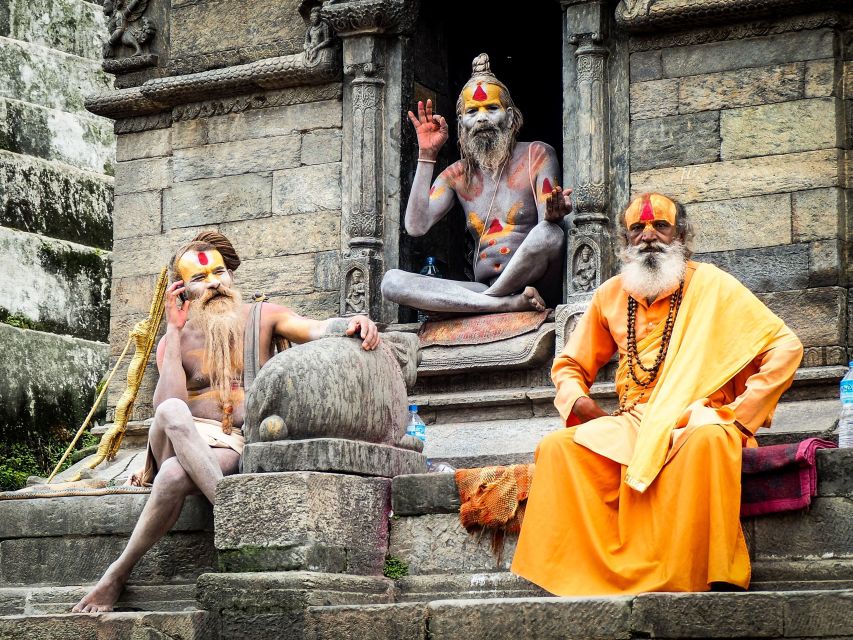
Pashupatinath is dedicated to Lord Shiva and sits beside the Bagmati River, about five kilometers east of Kathmandu. It is one of Nepal’s most important Hindu pilgrimage sites, with a main temple that has two golden roofs and four silver doors.
Non-Hindu visitors cannot enter the main temple, but you can view the exterior and surrounding religious complex. This restriction is worth knowing before you arrive. You are still seeing an active sacred site, not a museum arranged for sightseeing.
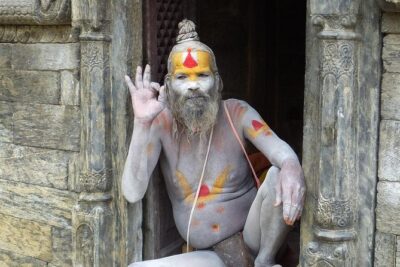
The Bagmati riverfront is also where Hindu cremation rituals take place. This can be one of the strongest cultural experiences on the tour. It is important to watch quietly, follow your guide’s instructions, and remember that the ceremonies are private religious events for the families involved.
Smoke and smell may be present near the cremation area. One guide supplied masks and explained the situation before the group entered, which is useful preparation. Bring your own mask if you are sensitive to smoke, and do not assume this stop will feel light or entertaining.
Pashupatinath rewards a respectful pace. Ask your guide about Shiva, Hindu pilgrimage, and the relationship between the temple and the Bagmati River. The site may be challenging for some people because of stairs, uneven surfaces, crowds, smoke, and the emotional weight of the cremation ghats.
It is also the stop most likely to separate a genuine cultural introduction from a simple sightseeing drive. You are not just looking at architecture. You are seeing a living religious practice that continues in the middle of Kathmandu.
Same mountains, a completely different kind of day:
- Everest Base Camp Trek – 14 Days
★ 5.0 · 1,499 reviews - Everest Base Camp Helicopter Tour landing at Everest View Hotel
★ 5.0 · 668 reviews - Half day cooking class in Thamel kathmandu
★ 5.0 · 607 reviews - Everest Base Camp Trekking
★ 5.0 · 485 reviews
Patan Durbar Square and Newari architecture
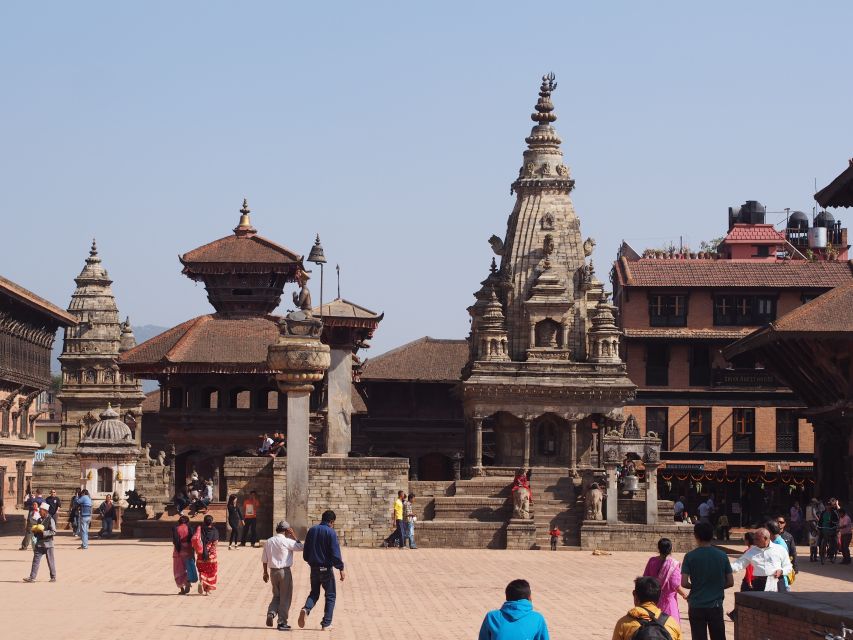
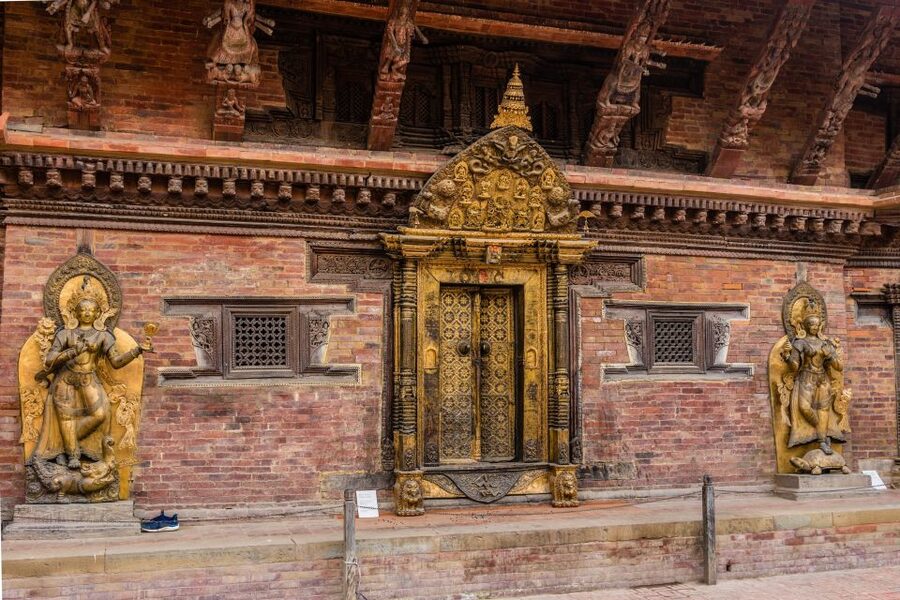
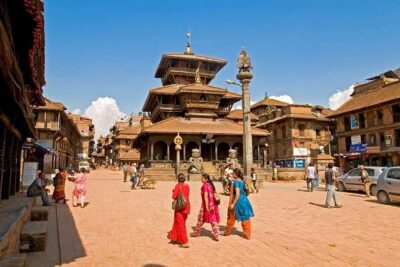
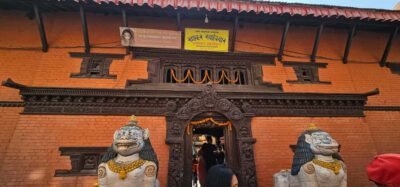
Patan Durbar Square is in Lalitpur, one of the three historic royal cities of the Kathmandu Valley. It was home to the former Patan royal family and is known for its Newari architecture, carved woodwork, courtyards, temples, and detailed metalwork.
The square’s best-known building may be the Krishna Temple, a stone temple with 21 golden pinnacles. Its design is very different from the pagoda-style temples nearby, so ask your guide to point out the contrast in construction and religious use.
Rudra Varna Mahavihar is a Buddhist monastery containing local treasures. Mul Chowk, the central courtyard, gives you a sense of how palace life and ceremonial space were organized. The square is not only a group of monuments. It is a place where royal power, craftsmanship, and religious life meet.
Patan is the stop where you will most want extra time. The carvings are easy to pass without a guide, especially when you are trying to keep up with a six-hour schedule. If architecture interests you, tell your guide at the beginning that you would rather spend longer in Patan and shorten another stop.
The route can be adjusted. One person skipped Patan and still used nearly the full six hours, which shows how quickly the driving and visits can add up. If you have only one day in Kathmandu, seeing all four sites gives you a useful overview. If you have two full days, you can visit them independently and take more time at each.
The guide makes the difference
The most praised part of this experience is the guiding. Names that appear repeatedly in the available feedback include Kapil Pandey, Saru, Bhim, Shanti, Raj, Kumar, Deepak, and Sarida. Guides are assigned by the operator, so you should not assume a particular person will lead your tour unless you request one and receive confirmation.
Kapil is especially associated with clear explanations, good time management, and an easygoing style. Several people were able to change the pace, stay longer at a temple, or ask for a different stop. Saru has been praised for explaining Nepalese culture, Hinduism, and Buddhism in a friendly way, and Shanti for making a solo visit feel personal.
That flexibility matters more than a memorized list of dates. You can ask for help with photography, local restaurants, trekking gear, or souvenirs. Guides have also helped visitors find better prices while shopping, though you should still make your own decisions and compare costs.
English, Hindi, and Nepali are available. English ability has been described as good, but the quality of a tour depends partly on how much conversation you want. Tell the guide if you prefer architecture, religion, history, food, shopping, or photography, then use the private format to shape the day around that interest.
Transport, timing, and the real cost
The $40 per person price is attractive for a private six-hour outing with hotel pickup, drop-off, a private car, and a live guide. It is particularly useful for solo visitors or short-stop passengers who would otherwise spend much of the day arranging taxis and finding each site.
The important catch is the entrance fee. Monument tickets are not included and are listed at about NPR 2,700, or roughly $22, per person. Rates can differ for nationals of South Asian Association for Regional Cooperation countries and for Chinese nationals, so check the current price at each counter before paying.
Meals and drinks are also extra. If you want rooftop lunch at Boudhanath or a local food stop, budget for it separately.
You can choose a sedan, SUV, or minivan based on group size. Several people found the driving smooth and felt safe, but Kathmandu traffic is a serious time factor. A journey that appears to take 10 or 15 minutes can take 30 minutes or more, so an early start may help, depending on availability.
The six-hour duration is best understood as a strong introduction, not a leisurely archaeological day. You may see all four places, but you will not study every courtyard and shrine. A private tour reduces wasted time, yet it cannot remove traffic or the distance between sites.
One unusual detail needs clarification. The highlights also mention a helicopter stop at Everest View Hotel for a closer view of Mount Everest. That does not fit the described six-hour private road tour of Kathmandu, which includes no helicopter flight in the inclusions. Ask the operator to confirm this point before booking if an Everest helicopter experience is important to you.
What to bring and how to prepare
Wear comfortable shoes. Swayambhunath and the other temple complexes involve walking, steps, and uneven surfaces.
Bring water, cash, your passport or another form of identification, and a face mask or protective covering. Cash is useful for entrance tickets, food, drinks, shopping, and small personal expenses.
Dress respectfully for religious sites. A head covering is not listed as required, but one person found it useful at temples. Your guide can advise you on local expectations at each stop.
Pets are not allowed, and the tour is not suitable for wheelchair users. If you have mobility concerns, tell the operator before the day begins. The route may be adjusted, but the sites themselves remain historic religious complexes rather than fully accessible attractions.
Free cancellation is available up to 24 hours before the start for a full refund, and you can reserve now while paying later. Those terms help if your Kathmandu schedule is tied to a flight or changing travel plans.
Who should book this Kathmandu tour?
I would choose this tour for a first day in Kathmandu, a short stay, a long airport transit, or anyone who wants cultural context without handling local transport. It also suits families and small groups because the pace can be adjusted and the vehicle is private.
Solo visitors get good value from the guide and car, though the per-person price may feel less attractive than it would for a group sharing the vehicle. If you have a full second day, you could save money by visiting some sites on your own and spending longer in fewer places.
You should book it if you want an efficient introduction to Kathmandu’s major religious and royal sites. You should think twice if you dislike a full schedule, have difficulty with stairs, or want extended time for photography and quiet observation.
FAQ
How long does the Kathmandu private city tour last?
The tour lasts six hours, including sightseeing, guided visits, free time, shopping opportunities, and driving between the monuments.
Which sites are included?
The route is designed to visit Swayambhunath Stupa, Boudhanath Stupa, Pashupatinath Temple, and Patan Durbar Square.
Is hotel pickup included?
Yes. Pickup and drop-off are included from listed locations in Kathmandu, Thamel, Lazimpat, Naya Bazaar, Boudhha, Lalitpur, and Ekantakuna.
Are entrance tickets included in the price?
No. Monument entry fees must be paid on the spot and are listed at about NPR 2,700, or approximately $22, per person. Prices can differ for South Asian Association for Regional Cooperation nationals and Chinese nationals.
What languages can the guide speak?
Live guides are available in English, Hindi, and Nepali.
Is the tour suitable for wheelchair users?
No. The experience is listed as unsuitable for wheelchair users because the historic sites include steps and uneven walking areas.
Just added around Kathmandu
- Private Half-Day Tour of Boudhanath and Pashupatinath Temples in Kathmandu★ 4.5 · 9 reviews
- Private Half-Day Tour of Kathmandu Durbar Square and Swayambhunath Temple★ 4.5 · 11 reviews
- Namobuddha Monastery Hiking Day Tour via Panauti from Kathmandu★ 5.0 · 15 reviews
- Private Full-Day Kathmandu City Tour★ 5.0 · 9 reviews
- Private Day Tour in Kathmandu Valley Rim with Bhaktapur Sightseeing★ 5.0 · 3 reviews
- Private Half Day Budhanilkantha Tour★ 5.0 · 6 reviews
- Private Day Tour: Patan and Bhaktapur from Kathmandu★ 4.5 · 6 reviews
- Private Day Tour – Sacred Journey to Namo Buddha★ 5.0 · 5 reviews
City Tours, compared.
Sarangkot Sunrise with Half or Full-Day City Tour
Read our review →
Full Day Kathmandu City Sightseeing Tour of UNESCO Heritage Sites
Read our review →
Browse the lists this tour appears in